


Mastering the Art of Posset: A Sublime Sumo Citrus Creation
In the realm of classic desserts, few achieve such a perfect balance of simplicity and sophistication as the posset. With minimal ingredients and maximum flavor, this quintessential British treat offers a luscious, creamy texture underscored by just the right amount of citrusy tartness. It’s a dessert that speaks of elegance without demanding hours in the kitchen, making it an ideal choice for both everyday indulgence and special occasions.
Recently, I embarked on a culinary adventure for a spring cooking Instagram challenge, seeking to celebrate seasonal flavors in a unique way. This journey led me to rediscover the humble posset, a dessert steeped in history and even mentioned in the works of Shakespeare. But more excitingly, it presented the perfect canvas to highlight an extraordinary seasonal fruit: the sumo citrus. Known affectionately as shiranui or dekopon in its native Japan, this oddly-shaped yet incredibly delicious fruit proved to be the star ingredient in a truly magical dessert.
Unveiling the Enigmatic Sumo Citrus: A Hybrid Marvel
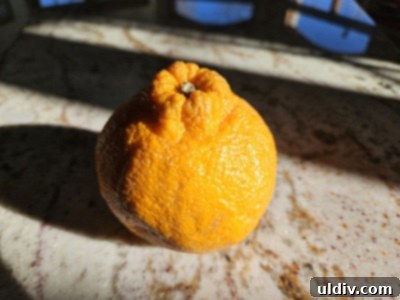
What makes sumo citrus so special? As explained by Andee Gosnell in Food & Wine magazine, this captivating fruit is a sophisticated hybrid, born from the careful crossbreeding of three beloved citrus varieties: mandarin oranges, satsumas, and navel oranges. The result is a fruit that stands out both in appearance and taste.
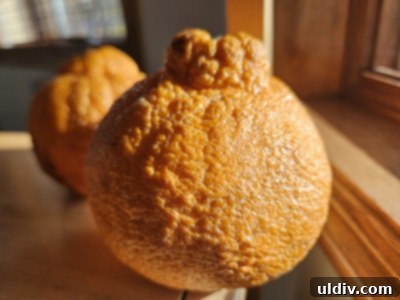
Visually, sumo citrus are easily identifiable by their generous size, often slightly smaller than a grapefruit, and their famously wrinkled, easy-to-peel skin. But it’s their flavor that truly sets them apart. Boasting an incredibly sweet profile compared to many other citrus fruits, sumo citrus can register an impressive 18 Brix on the sweetness scale, dwarfing the 12 Brix typically found in satsumas, according to The Guardian. This exceptional sweetness is balanced by a remarkably low acidity, contributing to its smooth, palatable taste. The charming “sumo” moniker itself is a nod to the fruit’s distinctive top bulb, which strikingly resembles the traditional hairstyle of a sumo wrestler, adding a whimsical touch to its allure.
A Legacy of Flavor: The Fascinating History of Sumo Citrus
The journey of the sumo citrus from an agricultural experiment to a global sensation is nothing short of fascinating. Its origins trace back to the 1970s, when Japan’s Ministry of Agriculture embarked on an ambitious quest to cultivate the “gold standard” of citrus. The goal was clear: to revitalize the nation’s fruit market by developing a less acidic, seedless, and effortlessly peelable fruit. Decades of meticulous research and cultivation bore fruit, literally, and by the 1990s, shiranui citruses had become immensely popular across Japan.
The first seedlings of this remarkable fruit didn’t make their way to the United States until 1998, initiating a careful cultivation process that spanned over a decade. It wasn’t until 2011 that sumo citrus finally debuted on American supermarket shelves, making its grand entrance at Whole Foods. Since then, it has captivated the palates of celebrities, chefs, and home cooks alike, cementing its status as a sought-after seasonal delicacy, as highlighted by Andee Gosnell in her article “Meet Sumo Citrus, the Short-Lived Fruit That Celebrities and Chefs Swear By.” Its limited season only adds to its mystique, making its appearance a highly anticipated event for fruit enthusiasts.
The Allure of Posset: From Medieval Elixir to Modern Dessert
My desire was to craft a luxurious yet minimalist dessert that would truly allow the unique characteristics of sumo citrus to shine. The elegant simplicity of Nigella Lawson’s posset recipe immediately came to mind as the perfect foundation. But for those unfamiliar, what exactly is posset?
The term “posset” carries a rich historical tapestry, evolving significantly over centuries. In the Middle Ages, a posset was far from the delightful dessert we know today. It was typically a milky, often spiced, medicinal drink, frequently consumed to aid sleep or as a restorative tonic. While potable, it was hardly celebrated for its culinary appeal. Fast forward to the modern era, and posset has undergone a remarkable transformation, becoming something altogether different and infinitely more appealing. Today’s posset is a chilled, exquisitely silken dessert, reminiscent of the finest mousse or pudding, yet remarkably simpler to prepare. Its magic lies in a mere handful of ingredients: cream, sugar, and fresh lemon or other acidic fruit juice, which combine to create an impossibly satiny texture that melts in the mouth.
As Annie Petito elucidates in her insightful article “How to Turn Any Juice into Satiny Posset,” the acidity of the citrus juice is the cornerstone of posset’s creation. It’s the essential element that triggers the cream to solidify, setting into that signature creamy, smooth texture. Without sufficient acidity, the dessert simply won’t set, remaining a liquid instead of transforming into the delightful treat it’s meant to be. This chemical reaction is a fascinating example of how simple ingredients can yield such complex and satisfying results.

The Science of Setting: Adapting Posset for Low-Acid Fruits
The key to a perfectly set posset lies in understanding the delicate balance between cream and acid. When heated cream meets acid, the acid causes the milk proteins to coagulate, creating the thick, luxurious consistency characteristic of posset. This is why traditional possets typically rely on high-acid fruits like lemons or limes to achieve their desired texture.
However, the exceptional sweetness and inherently low acidity of sumo citrus presented a unique challenge for a posset recipe. If I were to use only sumo citrus juice, the lack of sufficient acid would prevent the cream from setting properly, resulting in a runny, disappointing dessert. This is where Annie Petito’s invaluable research comes into play. In her experiments, Petito explores the use of lower-acid fruit juices for posset, discovering a brilliant solution: the judicious addition of food-grade citric acid. While one could technically add extra lemon juice to boost acidity, this would inevitably alter the delicate, unique flavor profile of the sumo citrus – an outcome I was keen to avoid.
Petito’s ingenious method involves preparing a precise citric acid solution: “Dissolve 20 grams citric acid in 30 grams of water—and use it to bring any juice to a pH of 2.6 (the sweet spot to ensure that the posset sets and won’t be too tart).” This scientific approach allows for the perfect pH balance, ensuring the posset sets beautifully without compromising the natural, nuanced flavor of the primary fruit. By carefully incorporating this solution, the integrity of the sumo citrus taste is maintained, while the structural requirements for a luscious posset are met.

Crafting the Perfect Sumo Citrus Posset: A Velvety Delight
Embracing Petito’s wisdom, I incorporated the citric acid solution into my sumo citrus posset. The outcome was nothing short of exquisite. The dessert boasted a velvety, impossibly smooth texture that truly melted on the tongue, each spoonful infused with the delicate sweetness of sumo citrus, perfectly balanced by a subtle, refreshing tartness. It was a testament to the power of thoughtful ingredient combination and a touch of scientific precision.
This experience underscored the importance of understanding the underlying principles of cooking. Had I not come across Petito’s detailed article, my attempt at a sumo citrus posset might have ended in failure. The addition of citric acid was the secret ingredient, transforming a potential culinary misstep into a triumphant, magical treat – all made possible by one of the season’s most exciting and enchanting fruits. It also highlights the versatility of posset as a dessert base, capable of showcasing a wide array of fruit flavors with the right adjustments.
Tips for Making Exceptional Posset
- Quality Ingredients: Always start with fresh, high-quality heavy cream and sugar. The fewer ingredients, the more each one matters.
- Gentle Heat: When heating the cream and sugar, do so gently, ensuring the sugar fully dissolves without scorching the cream.
- Precise Acid: Measure your fruit juice and any added citric acid carefully. Too little acid, and it won’t set; too much, and it will be overly tart or curdle.
- Simmer, Don’t Boil: Once the acid is added, a brief simmer is usually sufficient to activate the setting process. Avoid aggressive boiling, which can lead to a grainy texture.
- Strain for Smoothness: For the silkiest posset, consider straining the mixture through a fine-mesh sieve before pouring it into serving dishes.
- Chilling is Crucial: Allow ample chilling time – at least 4 hours, or preferably overnight – for the posset to set fully and develop its luxurious texture.
- Garnish Thoughtfully: Enhance your posset with simple garnishes like fresh fruit segments, a sprinkle of zest, or a delicate sprig of mint.

Beyond Posset: Exploring Seasonal Citrus Desserts
The joy of seasonal cooking extends far beyond posset. If you’re a fan of rich, creamy desserts and the vibrant flavors of seasonal citrus, I highly recommend exploring other delightful options. For an equally delicious and super creamy use of seasonal citrus, consider preparing a panna cotta with candied blood oranges. The deep, ruby hues and distinct flavor of blood oranges, coupled with the smooth texture of panna cotta, create another unforgettable dessert experience that celebrates the bounty of the season.
Your Culinary Journey Awaits
Have you ever ventured into making posset, or do you have a go-to favorite citrus fruit that inspires your seasonal cooking? I’d love to hear about your experiences and discoveries in the comments below. Share your tips, triumphs, and perhaps even your own favorite posset variations. Let’s continue to celebrate the art of home cooking and the unparalleled flavors that seasonal ingredients bring to our tables!