
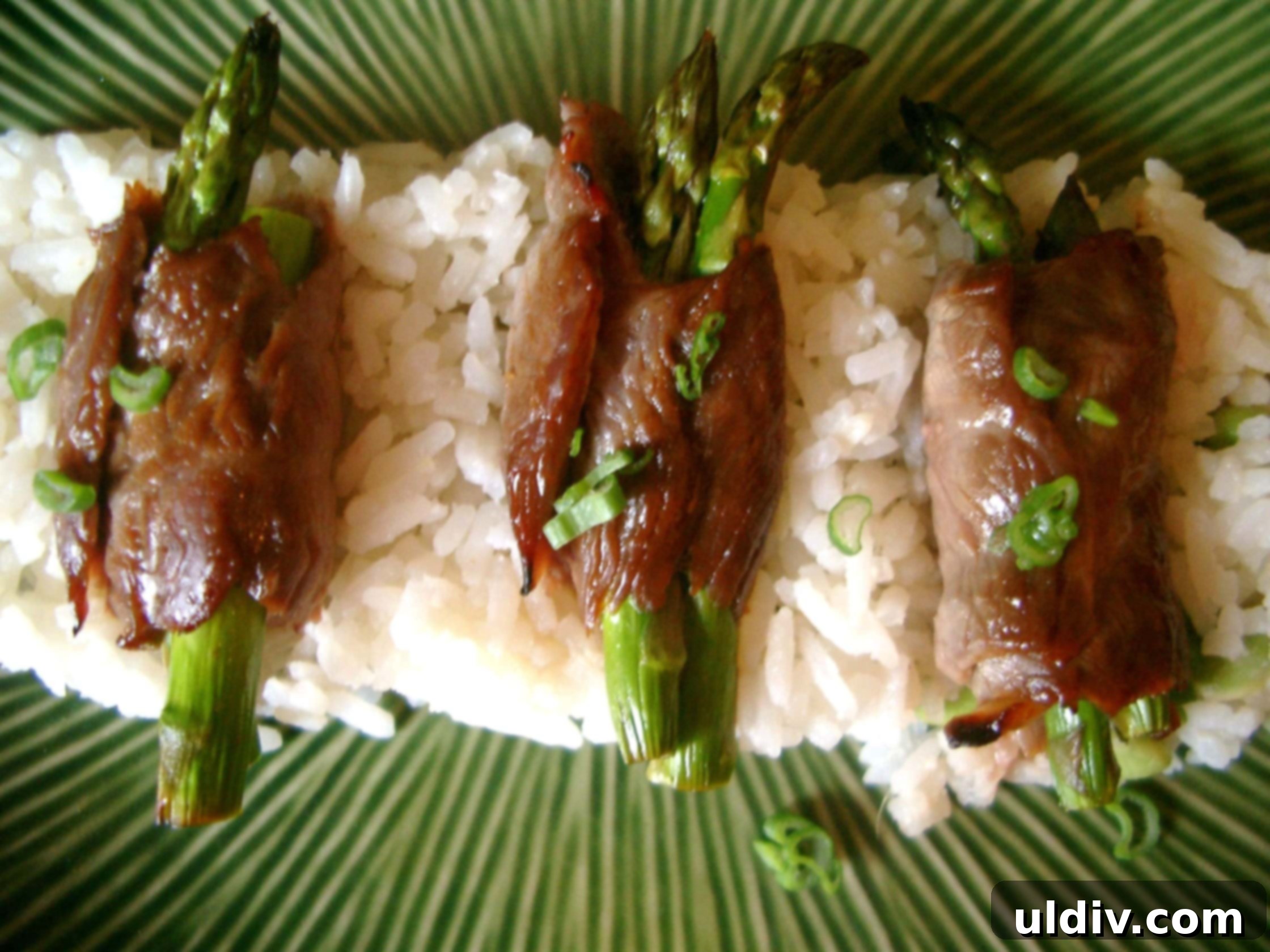
Craving a dish that’s both exquisite and approachable? Dive into the world of **Beef Negimaki Rolls** – a Japanese-inspired delight that perfectly marries tender, thinly sliced steak with crisp asparagus and fresh scallions, all enveloped in a rich, sweet, and savory soy glaze. These rolls aren’t just a meal; they’re an experience, offering a symphony of textures and flavors in every bite. Whether you’re planning an elegant appetizer for a special occasion or a wholesome, flavorful weeknight dinner, these Negimaki rolls are guaranteed to impress.
The beauty of Beef Negimaki lies in its simplicity and profound taste. Originating from Japanese cuisine, “Negimaki” literally translates to “scallion roll,” traditionally featuring thinly sliced beef wrapped around scallions. This recipe elevates that classic by incorporating vibrant green asparagus, adding a delightful crunch and a hint of earthy freshness that perfectly complements the savory beef and the aromatic scallions. The star of the show, beyond the carefully selected ingredients, is the homemade sweet soy glaze. This sticky, umami-packed sauce caramelizes beautifully as the rolls cook, creating a glossy finish and an irresistible flavor profile that balances sweetness with a deep, savory richness.
Why Beef Negimaki Rolls Should Be Your Next Go-To Recipe
This dish holds a special place in many hearts, including that of my daughter during her college years. Living a busy life with a constantly shifting schedule, the ability to prepare delicious, wholesome meals without extensive time or specialized equipment was invaluable. Beef Negimaki fits this bill perfectly. It’s a recipe that feels gourmet but is surprisingly easy to execute, making it ideal for anyone with a demanding schedule or limited kitchen resources. The minimal ingredient list and straightforward cooking techniques mean less stress and more enjoyment in the kitchen.
Beyond its ease, affordability is another significant advantage. For around $5.00 per serving, these rolls offer a far more indulgent and nutritious alternative to typical student fare like instant ramen or takeout pizza. It proves that healthy, satisfying, and even a little luxurious eating is well within reach, regardless of budget constraints or culinary skill level. This recipe is a genuine step up, transforming simple ingredients into a meal that’s both comforting and exciting. It encourages culinary exploration without intimidation, offering a delicious escape from the everyday.
The Magic of the Sweet Soy Glaze
The heart and soul of these Beef Negimaki Rolls, aside from the fresh ingredients, is undoubtedly the sweet soy glaze. This isn’t just any sauce; it’s a meticulously balanced marinade that doubles as a finishing glaze, infusing the beef and vegetables with layers of flavor. Comprising reduced sodium soy sauce, mirin (Japanese sweet rice wine), rice wine vinegar, a touch of sesame oil, and brown sugar, it strikes a perfect harmony between salty, sweet, tangy, and nutty notes. Mirin contributes a subtle sweetness and a beautiful sheen, while rice wine vinegar adds a gentle acidity that cuts through the richness of the beef. Sesame oil imparts a characteristic toasted aroma, and brown sugar helps create that desirable caramelized finish.
This glaze does more than just flavor; it tenderizes the beef during the marinating process, ensuring each roll is succulent and juicy. When reduced, it transforms into a thick, syrupy consistency that clings to the cooked rolls, delivering an intense burst of umami with every bite. The versatility of this glaze also means it can be adapted. A pinch of red pepper flakes can introduce a subtle heat, or a dash of grated fresh ginger can add an aromatic zest. Experimenting with the glaze allows you to personalize this dish to your palate, making it a truly adaptable recipe for any home cook.
Mastering the Art of Rolling: Tips for Perfect Negimaki
While the concept of rolling steak around vegetables might sound intricate, it’s remarkably simple with a few helpful tips. The key to elegant and sturdy Negimaki rolls begins with the beef. Flank steak is an excellent choice for its flavor and ability to be sliced thinly against the grain, which is crucial for tenderness. To make slicing easier, consider partially freezing the flank steak for about 15-20 minutes before cutting. This firms up the meat, allowing for cleaner, thinner slices that are easier to roll without tearing. Aim for slices that are about 1/8 to 1/4 inch thick – thin enough to be pliable but robust enough to hold their shape during cooking.
When assembling, consistency is important. Prepare your asparagus and scallions by trimming the tough ends and cutting them into uniform 3-inch lengths. This ensures even cooking and a visually appealing roll. Lay each slice of steak flat, placing 2 asparagus spears and 1 scallion piece at one end. Roll tightly, much like a jelly roll, keeping the filling snug. Don’t worry if your first few aren’t perfect; practice makes perfect, and they’ll taste delicious regardless! Once rolled, arranging them seam-side down in your marinating dish helps them hold their shape. The marinating step is not just for flavor; it also helps bind the rolls slightly before cooking, making them more resilient.
Key Ingredients: What You Need to Know
Understanding the role of each ingredient enhances the cooking experience and helps you make informed choices, even when considering substitutions.
- Flank Steak: Chosen for its lean profile and robust flavor. When sliced thinly against the grain, it becomes surprisingly tender. Alternatives include skirt steak, sirloin, or even thinly sliced chicken breast for a poultry version.
- Asparagus Spears: These provide a fresh, crisp texture and a slight sweetness that balances the savory beef. Look for vibrant green spears with tight tips. Green beans or thinly sliced carrots could be interesting alternatives.
- Scallions (Green Onions): Essential for that classic Negimaki flavor. They become slightly sweet and tender when cooked, adding an aromatic depth. You can use the white and light green parts.
- Reduced Sodium Soy Sauce: Forms the base of our savory glaze. Using reduced sodium allows you to control the saltiness. Tamari is an excellent gluten-free alternative.
- Mirin: A sweet Japanese rice wine that contributes sweetness, depth, and a beautiful gloss. If unavailable, a dry sherry or sake with a pinch of sugar can be a substitute, though the flavor profile will differ slightly.
- Rice Wine Vinegar: Adds a crucial tangy note, brightening the overall flavor of the glaze. Apple cider vinegar can work in a pinch, but rice wine vinegar’s milder acidity is preferred.
- Sesame Oil: A finishing oil that provides a distinctive nutty aroma. Use sparingly as its flavor is potent.
- Brown Sugar: Balances the saltiness and acidity, and helps create the beautiful caramelization during cooking. Honey or maple syrup can also be used.
Cooking Methods and Tips for Perfection
While this recipe suggests roasting, Beef Negimaki rolls are wonderfully versatile in terms of cooking methods. Roasting at 450 degrees Fahrenheit for 8-10 minutes is ideal for achieving a slightly charred exterior and tender interior, while also allowing for hands-off cooking. A baking rack placed on a baking sheet ensures even cooking and prevents the bottoms from getting soggy. For a more intense sear, you can also pan-fry these rolls in a hot skillet with a little oil. This method creates a fantastic crust, though it requires a bit more active cooking to turn each side. Regardless of the method, don’t overcrowd your cooking surface, as this can steam the rolls instead of searing them, leading to less browning.
Once the rolls are cooked, the reduced marinade becomes your finishing touch. While the rolls are roasting, bring any leftover marinade to a boil in a small pot and let it simmer for 1-2 minutes until it thickens slightly. This concentrated glaze adds an extra layer of flavor and a beautiful shine, truly elevating the dish. Drizzle generously over the cooked rolls just before serving to maximize flavor and presentation.
Serving Suggestions & Variations
These Beef Negimaki Rolls are fantastic on their own as an appetizer, but they truly shine as a main course when served alongside a few complementary dishes. Cooked rice, whether white, brown, or even a mix of wild rice, is a classic pairing, absorbing the delicious glaze and providing a satisfying base. For an added textural element and nutritional boost, garnish your rolls with a sprinkle of toasted sesame seeds before serving. A simple side salad with a ginger-sesame dressing, steamed edamame, or a light miso soup would complete the meal beautifully, creating a balanced and authentic Japanese-inspired spread.
Feeling adventurous? The beauty of Negimaki is its adaptability. Consider stuffing the rolls with other vegetables like thinly sliced carrots, bell peppers, or even blanched green beans. For a spicier kick, add a dash of sriracha or a pinch of red pepper flakes to your glaze. If you prefer poultry, chicken negimaki is a delicious alternative, offering a lighter take on the classic. For a vegetarian option, firm tofu or tempeh, cut into strips and marinated, can be used in place of beef, creating a flavorful plant-based dish that still captures the essence of Negimaki. The possibilities are endless, allowing you to tailor this recipe to your preferences and available ingredients.
Meal Prep and Storage
One of the many benefits of Beef Negimaki Rolls is their excellent suitability for meal prepping. You can prepare the rolls by slicing the beef and vegetables, assembling them, and marinating them up to 24 hours in advance. This means on a busy weeknight, all you need to do is pop them in the oven, reduce the sauce, and dinner is ready in under 15 minutes. Cooked leftovers store well in an airtight container in the refrigerator for up to 3-4 days, making them perfect for lunch the next day. They can be gently reheated in a microwave or a skillet, though for best texture, a quick reheat in a toaster oven or air fryer will help maintain some crispness.
Embrace the culinary journey with these Sweet Soy Beef Negimaki Rolls. They offer a delightful blend of flavors and textures, promising a satisfying meal that’s both easy to prepare and impressive to serve. Enjoy crafting this delightful dish and making it your own!
Recipe: Sweet Soy Glazed Beef Negimaki Rolls with Asparagus and Scallions
Beef Negimaki
Print
Pin
Rate
Ingredients
- ½ cup reduced sodium soy sauce
- ¼ cup mirin Japanese sweet rice wine
- 3 tablespoons rice wine vinegar
- 1 teaspoon sesame oil
- 1 tablespoon brown sugar
- 1 ½ pounds flank steak
- 1 pound fresh asparagus spears
- 1 bunch scallions
- 2 cups cooked rice for serving
- Sesame seeds for garnish
Instructions
-
Preheat oven to 450 degrees F (230 C). Place a baking rack in a large baking sheet. Set aside.
-
In a small bowl, combine soy sauce, mirin, rice wine vinegar, sesame oil, and brown sugar for the marinade. Whisk well to combine. Set aside.
-
Lay flank steak flat on a cutting board. To ensure tenderness and ease of rolling, slice very thin pieces against the grain and on an angle. Partially freezing the steak for 15-20 minutes beforehand can make slicing easier. You should yield approximately 30 thin pieces of steak.
-
Prepare the vegetables: Cut off the tough, woody bottoms of the asparagus spears. Trim the root ends of the scallions. Cut both the asparagus and scallions into uniform 3-inch pieces.
-
To assemble the steak rolls, lay one piece of thinly sliced meat flat on a clean work surface with the narrower end facing you. Place 2 pieces of asparagus and 1 piece of scallion at the end of the meat closest to you. Carefully and tightly roll the meat up, jelly roll style, ensuring the vegetables are securely tucked inside. Place the finished roll seam-side down in a large, shallow glass dish. Repeat this process with the remaining steak, asparagus, and scallions. Once all rolls are assembled, pour the prepared marinade evenly over them. Marinate for at least 15 minutes to allow flavors to meld, or for a deeper infusion, refrigerate for up to 24 hours, turning occasionally to ensure all sides are coated.
-
After the marinating time, arrange the steak rolls on the prepared baking rack and sheet, leaving a little space between each roll. Roast in the preheated oven for about 8 to 10 minutes, or until the beef is browned and slightly charred at the edges, and cooked to your desired doneness. While the rolls are roasting, pour any remaining marinade from the glass dish into a small pot. Bring to a boil over medium-high heat and cook for 1-2 minutes, stirring occasionally, until it thickens slightly into a glossy glaze.
-
Carefully remove the steak rolls from the oven. Transfer them to a serving dish. Drizzle generously with the reduced, thickened marinade.
-
Garnish the rolls with a sprinkle of sesame seeds and serve immediately with fresh, hot cooked rice for a complete and satisfying meal.