
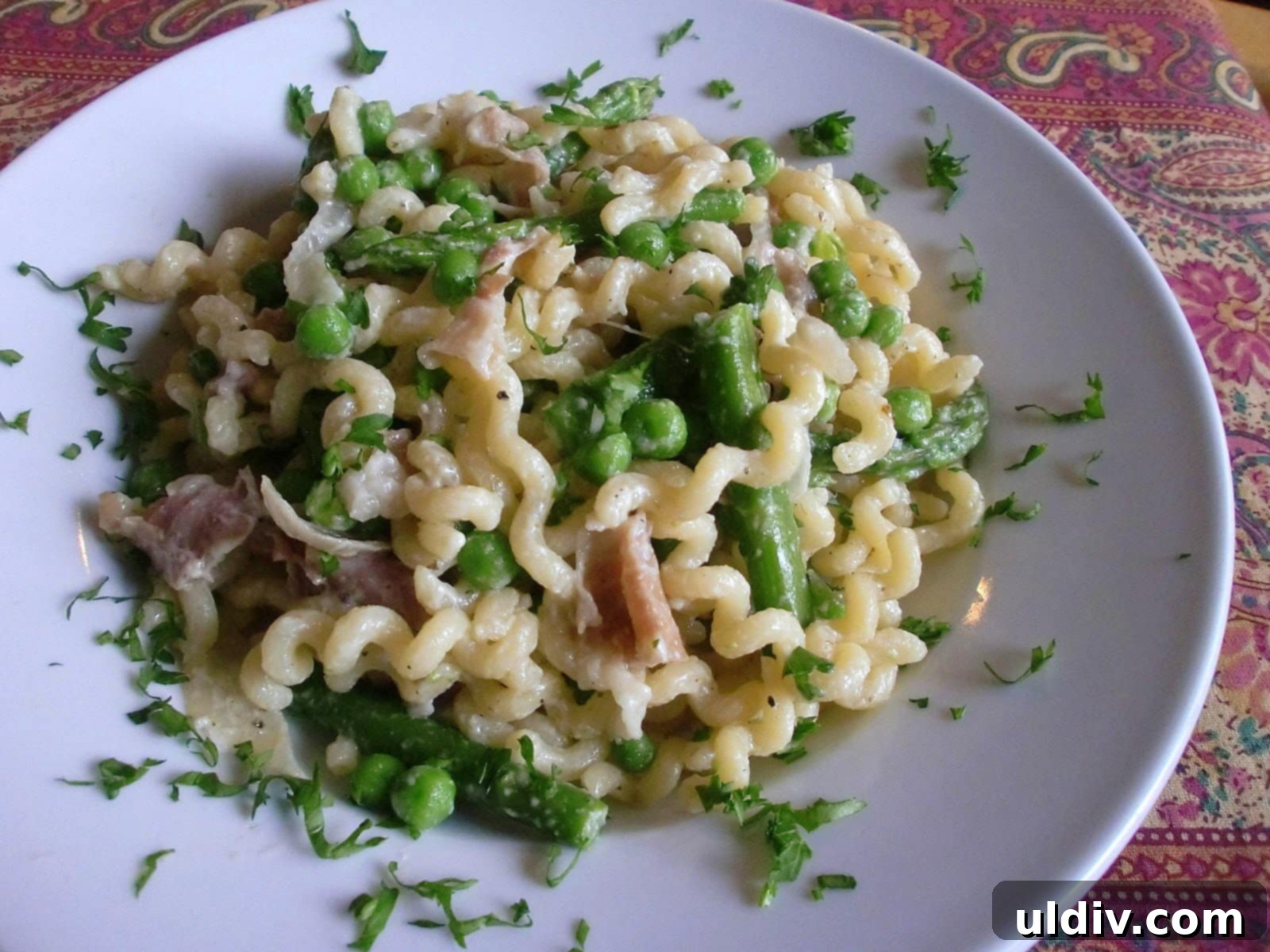
Transform your weeknight dinner routine with a dish that combines speed, freshness, and an exquisite blend of flavors: **Goat Cheese Pasta with Prosciutto, Asparagus, and Peas.** Forget the store-bought marinara and embrace the vibrant tastes of spring in this light, creamy, and irresistibly satisfying entrée. This recipe isn’t just about getting food on the table quickly; it’s about celebrating seasonal ingredients and creating a truly memorable meal with minimal effort.
Pasta often serves as the cornerstone of quick meals, but this particular recipe elevates simple ingredients into a gourmet experience. It perfectly captures the essence of spring with the delicate sweetness of fresh peas and the tender crunch of asparagus, all brought together by a lusciously tangy goat cheese sauce. The crispy, savory notes of prosciutto add a depth that makes every forkful a delightful discovery.
Preparing perfect pasta is an art, but it’s an accessible one. With a few key techniques, you can ensure your pasta is perfectly cooked every time, providing the ideal foundation for this delicious sauce. These foundational tips are crucial for achieving that authentic Italian texture and ensuring your pasta truly shines in any dish.
- Boil Generously: Always use a large pot and plenty of water – ideally about 4 to 5 quarts for every pound of pasta. This allows the pasta ample space to move freely, preventing it from clumping together and ensuring even cooking. Think of it as giving your pasta room to dance.
- Stir Early: For the first minute or two after adding pasta to boiling water, give it a good stir. This simple action is key to preventing strands from sticking to each other or to the bottom of the pot. Resist the urge to add oil to the water; it can make the pasta too slippery, hindering the sauce’s ability to cling to it later.
- Salt Abundantly: Season the cooking water generously with salt – 1 to 2 tablespoons for a pound of pasta. This isn’t just for flavor; it seasons the pasta from the inside out, making it taste better on its own and ensuring it enhances the sauce, rather than just being a neutral base. The water should taste like the sea.
- Drain, Don’t Rinse: Once your pasta reaches the perfect al dente stage, drain it thoroughly but do not rinse it with cold water. Rinsing removes the beneficial starch on the pasta’s surface, which is essential for binding with the sauce. Hot pasta also absorbs more sauce and flavor, creating a more cohesive and delicious dish.
This Goat Cheese Pasta with Prosciutto, Asparagus, and Peas recipe cleverly uses “double-duty” cooking to streamline the preparation process. By adding the asparagus to the boiling pasta water during the last few minutes of cooking, you achieve perfectly tender-crisp, vibrant green asparagus without using an extra pan. This not only saves time but also infuses the cooking water with subtle vegetable flavor, which we’ll put to good use later.
Speaking of pasta water, don’t discard it all! Reserving about a cup of the starchy cooking water is a secret weapon for creating a silky-smooth sauce. The starch acts as a natural emulsifier, helping the goat cheese and other ingredients bind together beautifully, resulting in a rich, velvety consistency that coats every strand of pasta.
The foundation of our flavorful sauce begins with sautéing. Thinly sliced shallots, diced prosciutto, and minced garlic are gently cooked together in olive oil. This step is critical; as the prosciutto crisps, its fat renders out, deeply enriching the olive oil and infusing it with its savory, slightly salty essence. The shallots soften and sweeten, while the garlic releases its aromatic punch, creating an incredibly fragrant base. Once these ingredients are beautifully caramelized, a healthy splash of white wine is added. This acts as a deglazing agent, lifting all those delicious, browned bits from the bottom of the pan and incorporating them into the sauce, adding even more complexity and depth.
The star of the sauce, of course, is the goat cheese. Infused with herbs, its creamy texture and distinctive tangy flavor melt effortlessly into the deglazed pan, forming a luxurious, smooth sauce. This tangy profile of the goat cheese provides a wonderful counterpoint to the salty prosciutto and the sweetness of the spring vegetables. Finally, a burst of freshness comes from the addition of sweet peas and a generous scattering of freshly chopped parsley, which brightens the entire dish and adds a final touch of herbaceous aroma and color.
Like many exceptional pasta dishes, this Goat Cheese Pasta with Prosciutto, Asparagus, and Peas pairs wonderfully with simple accompaniments. A crusty, bakery-fresh loaf of bread is perfect for soaking up every last drop of the delectable sauce, and a crisp glass of white wine—perhaps the same one you used for deglazing—completes the dining experience, making it feel like a special occasion even on a busy weeknight.
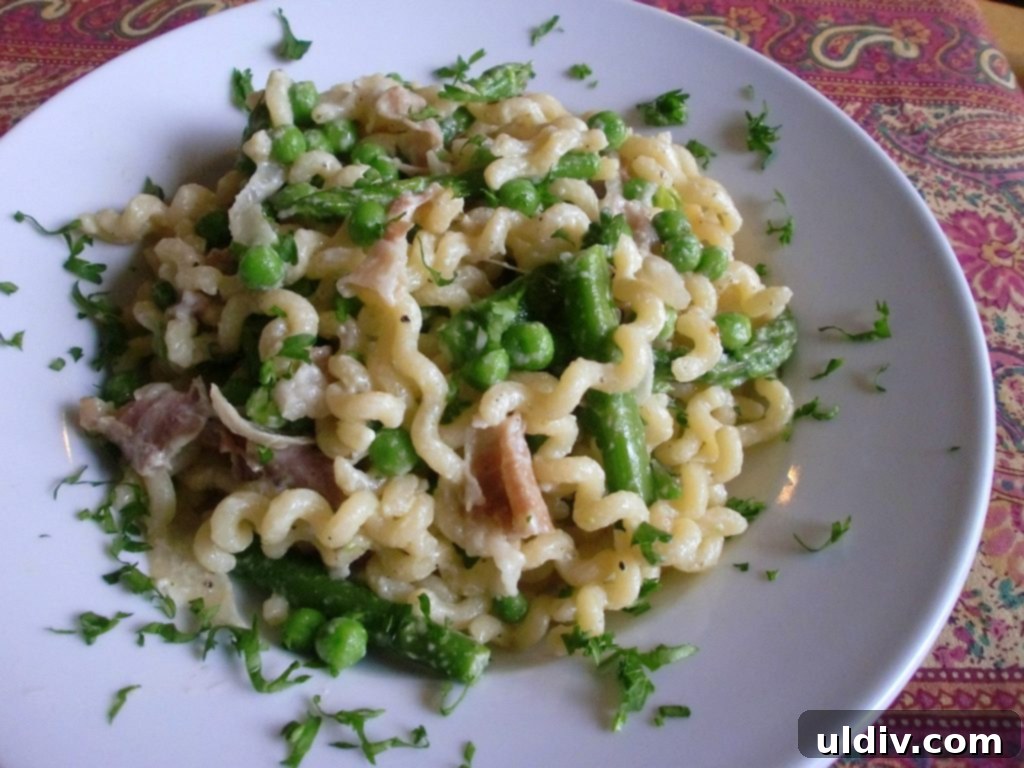
Recipe: Goat Cheese Pasta with Prosciutto, Asparagus, and Peas
Creamy Goat Cheese Pasta with Crispy Prosciutto, Asparagus and Peas
Print
Pin
Rate
Ingredients
- 1 pound pasta such as fettuccine or fusilli
- ½ pound fresh asparagus cut in 2-inch pieces
- 1 tablespoon extra virgin olive oil
- 1 large shallot thinly sliced or finely diced
- 4 ounces prosciutto diced into small pieces
- 4 garlic cloves minced
- ½ cup dry white wine such as Pinot Grigio or Sauvignon Blanc
- 1 (4 to 5) ounce log herb goat cheese softened at room temperature
- 1 ½ cups fresh or frozen peas thawed if frozen
- ½ cup fresh parsley finely chopped
- Salt and freshly ground black pepper to taste
Instructions
-
Begin by cooking your chosen pasta. In a large pot of generously salted boiling water, cook the pasta for approximately 7 minutes, or according to package directions until al dente. During the last 2 minutes of pasta cooking, add the cut asparagus pieces to the boiling water. Continue cooking until the asparagus is tender-crisp and bright green. Before draining, reserve 1 cup of the starchy pasta water. Then, drain the pasta and asparagus thoroughly.
-
While the pasta cooks, prepare the flavorful sauce. In a large sauté pan set over medium-high heat, add the olive oil. Once shimmering, add the thinly sliced shallot, diced prosciutto, and minced garlic. Sauté these ingredients for 6 to 8 minutes, stirring occasionally, until the shallots are softened, the garlic is fragrant, and the prosciutto is slightly crispy and has rendered its fat. Pour in the white wine and use a wooden spoon to scrape up any browned bits that have accumulated on the bottom of the pan; these bits are packed with flavor. Reduce the heat to low, then add the softened herb goat cheese. Stir constantly until the goat cheese has completely melted into a smooth, creamy sauce. Stir in about ½ cup of the reserved pasta water along with the peas, and heat through for 1-2 minutes until the peas are warmed. Add more pasta water if a thinner sauce consistency is desired.
-
Transfer the cooked pasta and asparagus to a large serving bowl. Pour the creamy goat cheese sauce over the pasta mixture and toss gently to ensure everything is evenly coated. Stir in the freshly chopped parsley. Taste and season generously with salt and freshly ground black pepper as needed. Serve immediately and enjoy the delightful harmony of flavors!
Why You’ll Love This Spring Pasta Recipe
This Goat Cheese Pasta isn’t just a recipe; it’s an experience. Here’s why it’s destined to become a staple in your kitchen:
- Effortlessly Elegant: Despite its sophisticated flavor, this dish is surprisingly simple to prepare, making it ideal for both busy weeknights and entertaining guests.
- Seasonal Delight: It truly celebrates the bounty of spring, bringing fresh, vibrant flavors to your table.
- Perfectly Balanced: The rich tang of goat cheese, the savory crispness of prosciutto, and the sweetness of asparagus and peas create a harmonious flavor profile that’s both comforting and exciting.
- Quick & Convenient: With prep and cook times combining for just over 20 minutes, a delicious homemade meal is always within reach.
Customizing Your Goat Cheese Pasta
One of the beauties of a simple pasta dish is its versatility. Feel free to adapt this recipe to your preferences or what you have on hand:
- Vegetable Variations: While asparagus and peas are classic spring choices, consider adding other seasonal vegetables. Cherry tomatoes, sautéed spinach, tender broccoli florets, or even blanched green beans would all be delicious additions.
- Protein Power: If prosciutto isn’t your preferred meat, crispy pancetta or even shredded rotisserie chicken could work well. For a vegetarian option, simply omit the prosciutto and add a pinch of smoked paprika for a smoky depth, or introduce toasted walnuts for crunch.
- Cheese Choices: Don’t have herb goat cheese? Plain goat cheese with a sprinkle of dried Italian herbs or fresh thyme and rosemary would be an excellent substitute. For a milder flavor, a creamy feta or even a blend of cream cheese and a little Parmesan could offer a similar texture.
- Herb It Up: Experiment with different fresh herbs. Dill, mint, or basil could add interesting twists to the overall flavor.
- Spice It Up: A pinch of red pepper flakes added with the garlic can introduce a subtle warmth and kick to the sauce.
Serving Suggestions for a Complete Meal
To round out your meal, consider these thoughtful pairings:
- Crusty Bread: As mentioned, a fresh baguette or artisan bread is essential for soaking up the delicious sauce.
- Simple Side Salad: A light green salad with a vinaigrette dressing would provide a refreshing contrast to the creamy pasta. Think mixed greens, cucumber, and a light lemon-herb dressing.
- White Wine Pairing: A crisp, dry white wine like a Sauvignon Blanc or an unoaked Chardonnay would complement the tangy goat cheese and fresh vegetables beautifully.
- Lemon Wedge: A squeeze of fresh lemon juice over the finished dish can brighten all the flavors, especially if you enjoy a more zesty profile.
This Goat Cheese Pasta with Prosciutto, Asparagus, and Peas is more than just a meal; it’s a testament to how simple, quality ingredients can be transformed into something extraordinary. Its ease of preparation and unforgettable taste make it a perfect choice for anyone looking to add a touch of spring elegance to their dinner table. We hope you enjoy making and savoring this delightful dish as much as we do!