
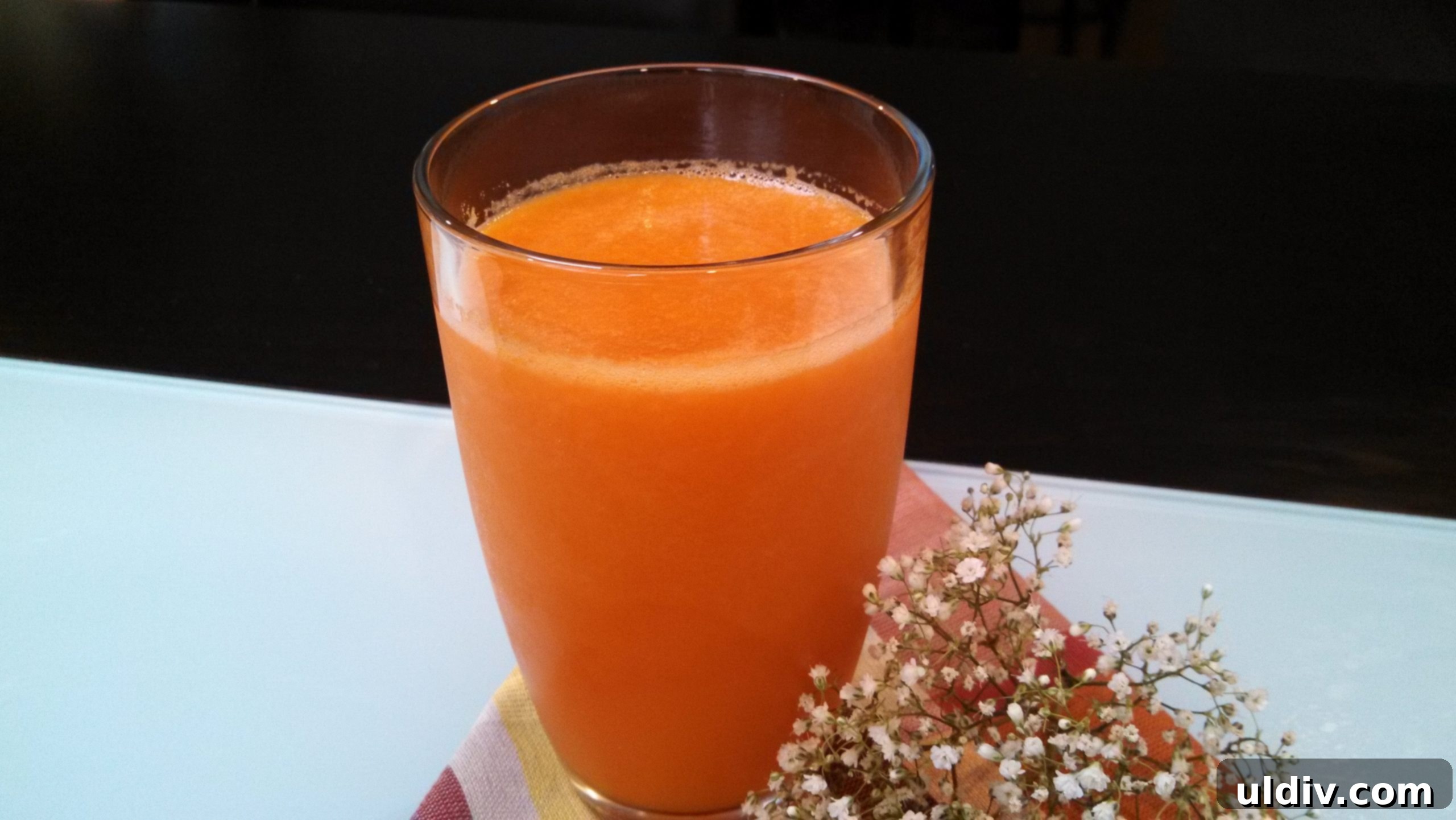
Discover the Secret to Perfect Homemade Carrot Juice: A Refreshing and Healthy Blender Recipe
Last weekend, I stumbled upon an incredible sale on organic baby carrots at my local grocery store. Unable to resist such a healthy bargain, I stocked up with several large packs, envisioning a week of nutritious meals. Typically, I enjoy carrots raw as a snack, lightly sautéed as a side dish, or roasted alongside savory chicken. However, with a busy schedule looming, I found myself short on time but still determined to make the most of my fresh produce. My immediate thought turned to an old favorite: homemade carrot juice! It seemed like the ideal, quick, and remarkably healthy solution to utilize my abundance of carrots. What could possibly be simpler than blending carrots into a delicious, vibrant juice? Little did I know, the path to a perfectly smooth and refreshing carrot juice was not as straightforward as I initially imagined.
The Unexpected Challenge: When Simple Juicing Goes Wrong
I must confess, with a touch of embarrassment, that a seemingly simple task like making carrot juice can indeed go awry – significantly so. Despite my past experiences and a vague recollection of my aunt’s method, I couldn’t quite remember the critical details. I knew carrots were inherently fibrous and required liquid to transform into a drinkable juice, but the precise carrots-to-water ratio eluded me. My goal was clear: a light, drinkable carrot juice. What I consistently produced, however, was a thick, unappetizing carrot puree. It became painfully obvious that my concoction desperately needed more water, but determining the right amount proved to be a perplexing challenge. How much water would achieve the ideal consistency? And, crucially, how much would dilute it into something entirely flavorless and watery? This culinary conundrum left me with a fridge full of carrot mush and a growing sense of frustration.
Seeking a Solution: Unlocking the Secrets to Velvety Carrot Juice
After several disappointing attempts and a rather messy kitchen, I decided to abandon my trial-and-error approach and turn to the vast resources of the internet. A quick search led me to a promising recipe on the Vitamix website, a brand renowned for its high-performance blenders and innovative recipes. Their approach immediately caught my attention, as it incorporated not only water but also ice cubes, a detail I hadn’t considered. Eager to reclaim my juicing aspirations, I followed their instructions meticulously, and to my delight, the results were an absolute success! The combination of water and ice cubes yielded a perfectly light, smooth, and incredibly refreshing juice – a stark contrast to my previous pulpy failures. This successful endeavor revitalized my confidence and proved that even seemingly simple kitchen tasks can benefit from a well-researched recipe.
The Perfect Carrot Juice Recipe: A Vitamix Inspired Blend
This simple yet brilliant recipe transformed my raw carrots into a delightful beverage. It’s quick, easy, and requires minimal ingredients, making it ideal for a nutritious boost any time of day.
Ingredients:
- 1 ½ cups chopped carrots (peeled if desired, but not strictly necessary for organic carrots)
- 1 cup cold water
- 1 cup ice cubes
- 1 tsp lemon juice concentrate (freshly squeezed lemon juice works just as well!)
Step-by-Step Instructions for Blending Your Refreshing Carrot Juice:
The beauty of this recipe lies in its simplicity. With just a few steps, you’ll have a vibrant, nutrient-packed drink ready to enjoy.
- Prepare Your Ingredients: Ensure your carrots are washed and roughly chopped into manageable pieces. While baby carrots are convenient, any type of carrot will work beautifully. For best results, use a high-speed blender.
- Combine in Blender: Carefully place all the listed ingredients – the chopped carrots, cold water, ice cubes, and lemon juice concentrate – into your blender jar. The ice cubes are crucial here; they not only chill the juice but also help achieve that desirable light and smooth texture, preventing the mixture from becoming too warm from the blending process itself.
- Blend to Perfection: Secure the lid on your blender and start blending on a low speed, gradually increasing the speed to high during the first 30 seconds of the process. Continue blending for approximately one minute, or until all the ingredients are uniformly combined and the mixture has transformed into a smooth, consistent liquid. You might need to use a tamper (if your blender has one) to push down ingredients and ensure a thorough blend, especially if you don’t have a high-powered blender. The goal is to break down all the fibrous carrot bits into a smooth, drinkable consistency.
- Serve Immediately: Once blended to your satisfaction, transfer the vibrant carrot juice from the blender directly into a glass. Serve it immediately to enjoy its peak freshness, crisp taste, and refreshing chill. No straining is necessary for this recipe, thanks to the powerful blending action and the perfect liquid-to-solid ratio.
The Joy of a Perfect Blend: Taste and Texture
I was utterly delighted with the outcome. My previous attempts yielded thick purees, but this recipe delivered a truly remarkable juice. It was no longer a dense concoction, but a velvety, smooth, and incredibly healthy beverage. The flavor was pure and delicately sweet, with a refreshing zing from the lemon. It felt good to finally crack the code to homemade carrot juice that tasted as good as it looked. Finding this particular recipe was a game-changer for my kitchen adventures, proving that sometimes, a little online research can save a lot of culinary headaches and result in pure satisfaction.
Why Incorporate Carrot Juice into Your Diet? The Abundance of Health Benefits
Carrot juice is not just delicious; it’s a powerhouse of nutrition that offers numerous health advantages. This vibrant drink is packed with vitamins, minerals, and antioxidants, making it an excellent addition to any healthy lifestyle.
- Rich in Beta-Carotene: Carrots are famously rich in beta-carotene, a powerful antioxidant that the body converts into Vitamin A. Vitamin A is crucial for maintaining healthy vision, supporting immune function, and promoting healthy skin.
- Boosts Immunity: Beyond Vitamin A, carrot juice also provides Vitamin C and various B vitamins, all of which contribute to a robust immune system, helping your body fight off infections and illnesses.
- Supports Skin Health: The antioxidants in carrots, especially beta-carotene, protect skin cells from damage caused by free radicals and UV radiation. Regular consumption can lead to a healthy, radiant complexion.
- Aids Digestion: While juicing removes some fiber, carrot juice still contains soluble fiber and promotes healthy digestion, helping to prevent constipation and support gut health.
- Heart Health: Potassium in carrots helps regulate blood pressure, while antioxidants contribute to cardiovascular well-being by reducing oxidative stress and inflammation.
- Detoxification: Carrot juice is known for its ability to support liver function, aiding in the body’s natural detoxification processes.
By making fresh carrot juice at home, you get to enjoy all these incredible benefits without any added sugars or preservatives often found in store-bought versions.
Tips for Enhancing Your Homemade Carrot Juice Experience
While the basic recipe is fantastic, there are always ways to customize and enhance your juicing experience.
- Add Other Fruits and Vegetables: Experiment with adding other ingredients for flavor and extra nutrients. A small piece of fresh ginger adds a spicy kick and digestive benefits. An apple or an orange can boost sweetness and Vitamin C. A handful of spinach or kale can introduce more greens without overpowering the carrot flavor.
- Sweeteners: If your carrots aren’t sweet enough, a small dash of honey, maple syrup, or a few dates can be blended in. However, fresh carrots usually provide ample natural sweetness.
- Storage: While best enjoyed immediately, you can store leftover carrot juice in an airtight container in the refrigerator for up to 24 hours. The nutritional value, however, begins to diminish over time.
- Utilize Carrot Pulp: Don’t discard the leftover carrot pulp! It’s rich in fiber and can be incorporated into muffins, cakes, soups, or even homemade vegetable broth, ensuring zero waste.
- Blender Power: A high-speed blender is ideal for achieving the smoothest consistency without needing to strain. If using a less powerful blender, you might need to blend for a bit longer or add a splash more water.
Embracing Kitchen Failures: A Lesson in Culinary Resilience
In this particular instance, what appeared to be the “easy way out” of using up my carrots proved to be anything but simple. My initial attempts at making carrot juice were, frankly, epic failures. I tried, I failed, and I needed help. This experience served as a potent reminder that even seasoned home cooks encounter mishaps in the kitchen. I don’t know about you, but occasionally, I experience a culinary disaster that makes my self-esteem take a significant beating. It’s easy to feel discouraged when a recipe doesn’t turn out as planned, or when you find yourself with an unpalatable creation.
However, these mistakes and failures are an inevitable part of the learning process. They are opportunities to research, experiment, and ultimately, grow as a cook. My carrot juice saga taught me the value of seeking out reliable recipes and not being afraid to ask for guidance (even if it’s from the internet!). Every kitchen “oops” is a chance to refine your skills and expand your knowledge. So, the next time a dish doesn’t quite hit the mark, remember that it’s just a stepping stone to a future success. Embrace the imperfections, learn from them, and keep on cooking. I just hope tomorrow will be better, and with this perfect carrot juice recipe in hand, I’m certainly off to a great start! 🙂