
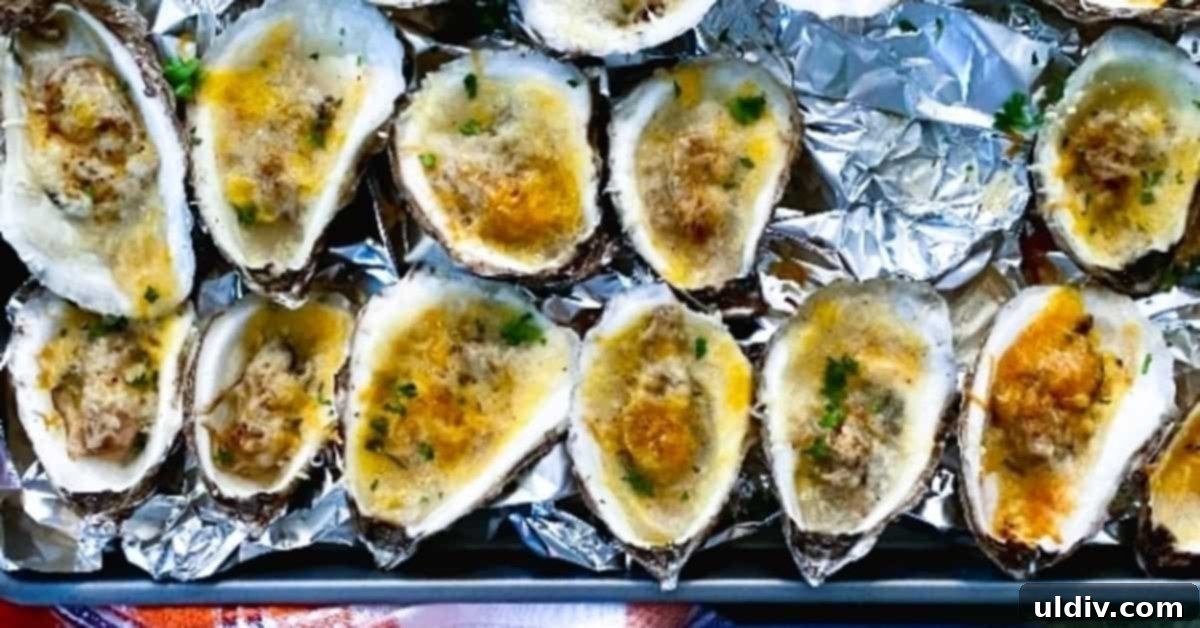
Indulge in the exquisite taste of these briny **Baked Oysters**, an appetizer that promises to elevate any occasion. Perfectly simple yet undeniably elegant, this recipe features succulent oysters on the half shell, generously topped with a blend of Parmesan and sharp cheddar cheeses, a zesty kick of Creole seasoning, and a sprinkle of fresh parsley. It’s a truly memorable way to enjoy one of the ocean’s most prized delicacies, making it one of the best oyster recipes you’ll discover.
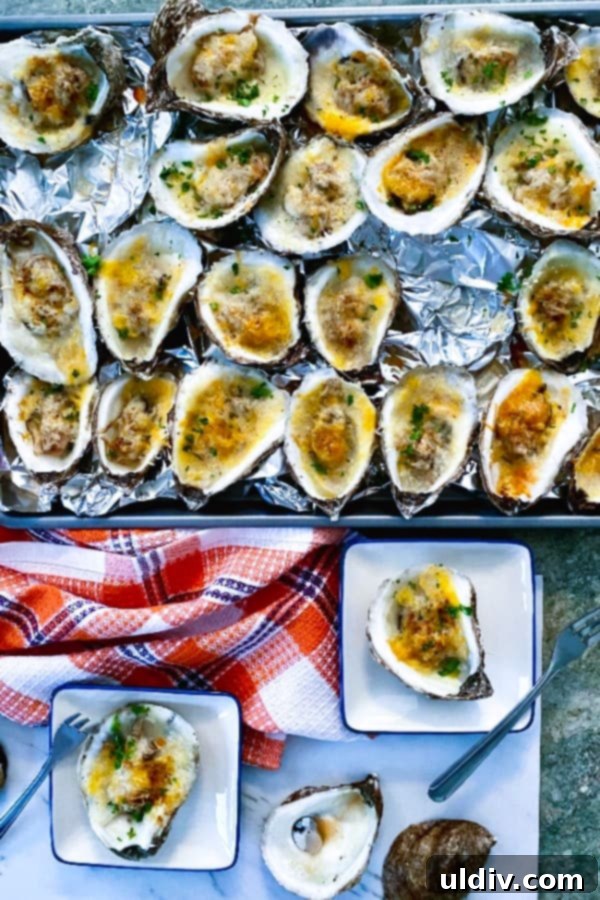
How to Prepare Irresistible Baked Oysters in the Shell
These savory and cheesy baked oysters offer a sophisticated yet straightforward culinary experience. They are an ideal starter, whether you’re hosting an intimate dinner party or preparing for a festive gathering. I often serve them alongside other delightful small bites such as antipasto skewers, charming mini BLT crab cake sandwiches, or classic deviled eggs with dill pickles for a truly impressive spread. The beauty of this recipe lies in its simplicity and the vibrant flavors it delivers.
This fantastic oyster recipe requires just five core ingredients: freshly shucked oysters on the half shell, high-quality Parmesan cheese, sharp cheddar cheese, aromatic Creole seasoning, and a garnish of fresh parsley. This combination makes them perfect for a relaxed afternoon snack or an elegant New Year’s Eve appetizer that is sure to impress your guests. The idea for this delightful dish was introduced to me by my nephew during the unique circumstances of the 2020 pandemic. He and his wife spent those initial uncertain days of stay-at-home orders with my husband and me at our Jersey shore home. If there was a silver lining to those challenging times, it was the abundance of good food prepared in my kitchen and the cherished moments spent with family. This method has since become one of my favorite ways to cook oysters, transforming a simple ingredient into a remarkable culinary treat.
Gathering the Key Ingredients for Your Baked Oysters
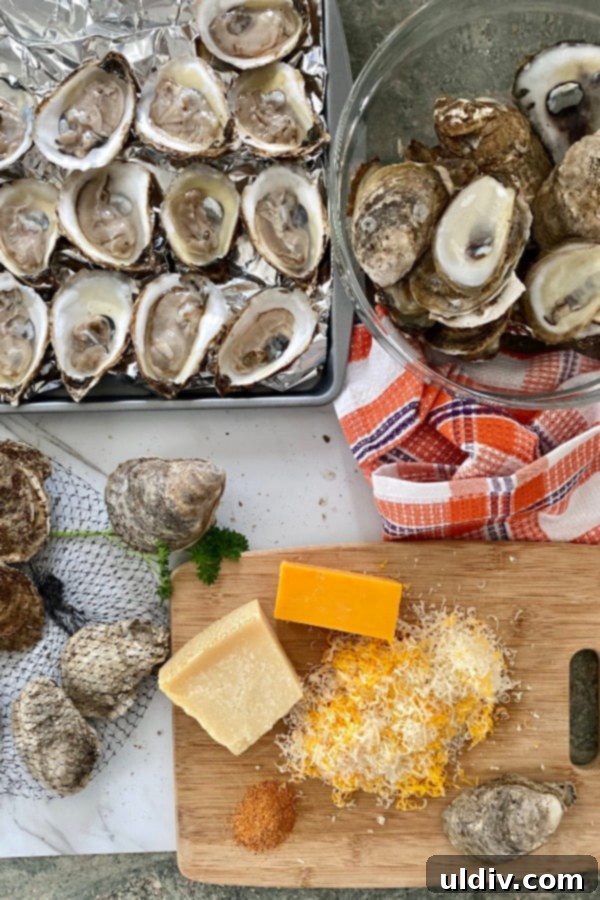
Creating these deliciously briny, cheesy, and subtly spicy baked oysters begins with selecting and preparing a few high-quality ingredients. Each component plays a vital role in building the dish’s incredible flavor profile and texture. Here’s what you’ll need to assemble:
- Fresh Oysters: The foundation of this dish. Opt for fresh, plump oysters from a reputable seafood supplier. Their natural brininess is essential.
- Creole Seasoning: This spice blend provides a fantastic depth of flavor with a mild, aromatic heat. It typically includes paprika, garlic powder, onion powder, thyme, oregano, and cayenne pepper. If you don’t have Creole seasoning, a mix of paprika, a pinch of cayenne, garlic powder, and a dash of dried herbs can be a good substitute.
- Parmesan Cheese: Adds a salty, nutty, and savory umami note. Freshly grated is always superior for melting and flavor.
- Cheddar Cheese: Provides a creamy texture and rich, tangy flavor that complements the oysters beautifully. Sharp cheddar works best for a pronounced taste.
- Fresh Parsley: A vibrant herb that offers a fresh, clean finish and a pop of color, balancing the richness of the cheese and spice.
When selecting your oysters, look for ones with tightly closed shells, indicating freshness. If any are open, tap them gently; they should close. Discard any that remain open, as they may not be alive. Storing oysters properly is also crucial. Keep them in their shell, cup-side down, on a bed of ice in the refrigerator, covered with a damp cloth, and consume them within a day or two of purchase for optimal freshness and safety.
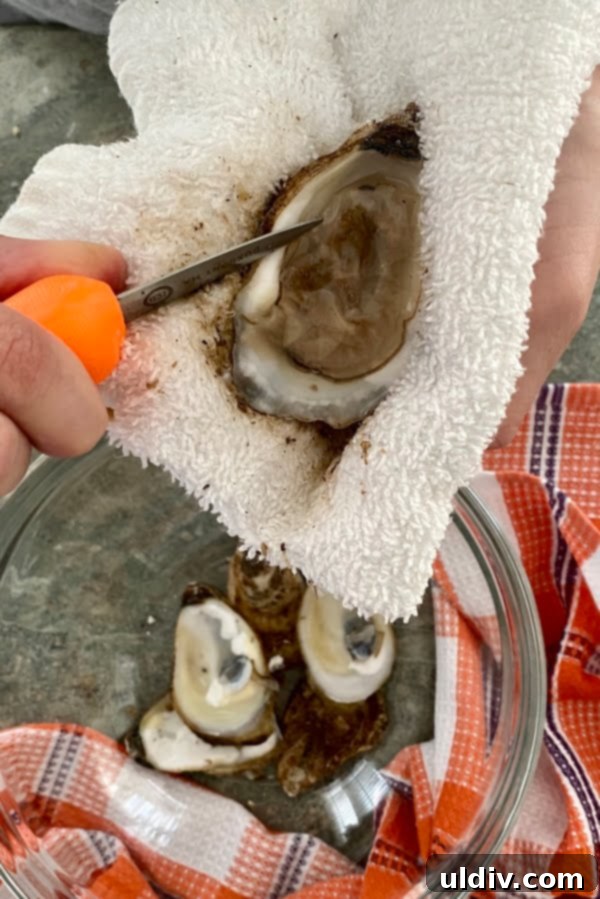
Mastering the Art of Shucking Oysters: A Step-by-Step Guide
For many, the idea of shucking oysters can be a bit daunting, conjuring images of intricate techniques and potential mishaps. However, with the right tools and a little practice, you can become a pro in no time. It’s a skill that truly enhances the experience of enjoying fresh seafood, ensuring you get the freshest oyster possible, complete with its precious “liquor.”
If you prefer to bypass the shucking process entirely, you have convenient options. Many well-stocked seafood counters offer already shucked oysters, which are a fantastic time-saver. You can also find cleaned, ready-to-use oyster half shells or even reusable stainless steel oyster shells online, perfect for presentation if you’re using pre-shucked or pre-cooked oysters. But for those ready to embrace the challenge, here’s how to shuck oysters safely and effectively:
- Prepare Your Oysters: Start by purchasing fresh, high-quality oysters. Before shucking, give the shells a thorough rinse under cold running water. This crucial step removes any loose sand, dirt, or tiny shell fragments that could otherwise end up in your delicate oyster meat.
- Gather Your Tools: You’ll need a sturdy oyster shucking knife, which has a short, thick blade designed for prying. For safety, a dish towel or a specialized oyster shucking glove is essential. Place the towel on a stable work surface. Position an oyster flat side up on the towel. Fold the towel over half of the shell to protect your hand, then place your hand firmly on top of the towel. Alternatively, if you have oyster shucking gloves, wear them to provide excellent grip and protection, allowing you to skip the towel method.
- Locate the Hinge: Identify the hinge of the oyster. This is the narrow end where the two shells meet and are connected. It’s the weakest point of the shell and your entry point.
- Insert the Knife: Carefully insert the tip of your oyster knife into the hinge. Apply gentle but firm pressure.
- Twist and Pop: With the knife tip securely in the hinge, twist the knife back and forth. You should feel it slide into the hinge. With a slight amount of force, you will hear and feel the hinge pop open. This indicates you’ve successfully separated the two halves of the shell.
- Sever the Top Muscle: Once the hinge is open, run the knife along the top inside of the flat shell. This action cuts the adductor muscle that holds the oyster firmly to the shell. Remove and discard the top shell.
- Release the Oyster: Next, run the knife carefully under the oyster meat to detach it from the bottom shell. Be extremely cautious not to spill any of the precious liquid surrounding the oyster, often referred to as “the liquor.” This briny juice is packed with flavor and is an integral part of the oyster’s taste experience.
- Ready to Use: Your freshly shucked oysters, nestled in their half shells with their flavorful liquor intact, are now perfectly ready to be used in this delicious baked oyster recipe.
Expert Cooking Tips for Flawless Baked Oysters
This baked oyster recipe is not only quick to assemble but also incredibly rewarding. To ensure your oysters turn out perfectly golden, cheesy, and utterly delicious every time, here are a few invaluable chef-approved cooking tips:
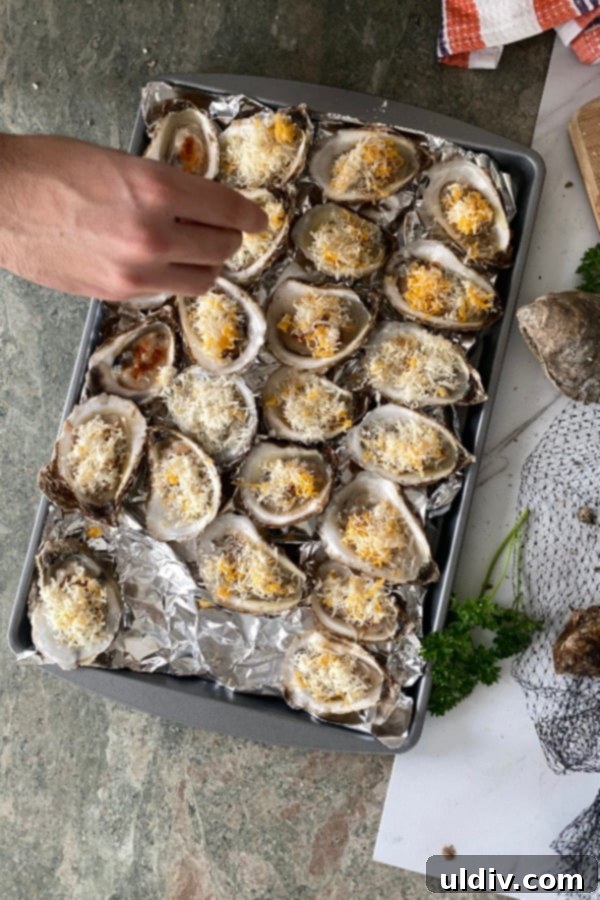
- The Foil Bed Trick: To keep your oysters stable and prevent them from tipping over and losing their precious “liquor” (the natural briny juices), use a large, rimmed baking sheet. Take a generous sheet of heavy-duty aluminum foil – it should be about 1.5 times the size of your baking sheet. Crinkle it up into a loose, uneven bed and place it directly into the baking sheet. Nestle the shucked oysters into the depressions created by the crumpled foil. This clever trick ensures they remain upright, preserving all their flavorful juices and making for easier handling.
- Freshly Shredded Cheese is Key: While pre-shredded cheese might seem like a convenient shortcut, it’s crucial to freshly shred your Parmesan and cheddar cheeses, either by hand with a box grater or using a food processor. Pre-shredded cheeses often contain anti-caking agents like cellulose or potato starch, which can inhibit proper melting, resulting in a less smooth and desirable texture. Freshly shredded cheese melts beautifully and evenly, creating that perfect golden crust.
- Fine Shredding for Balanced Flavor: Finely shredding your cheeses is important for two reasons. First, it allows the cheese to melt more quickly and uniformly. Second, and perhaps more importantly, only a small amount of cheese is needed for each oyster. Finely shredded cheese ensures that the rich flavor of the cheese enhances, rather than overpowers, the delicate, briny taste of the fresh oyster. You want a harmonious blend, not a cheese bomb.
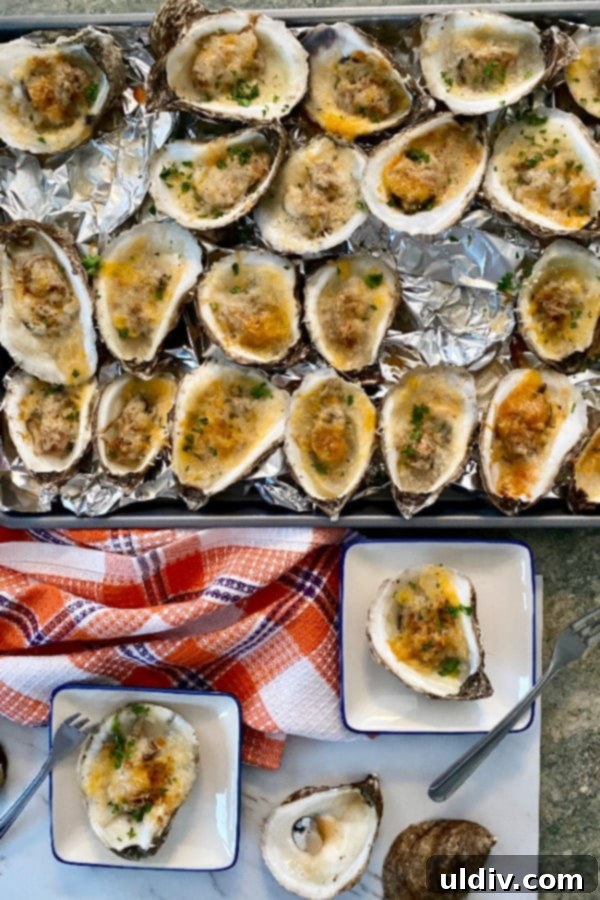
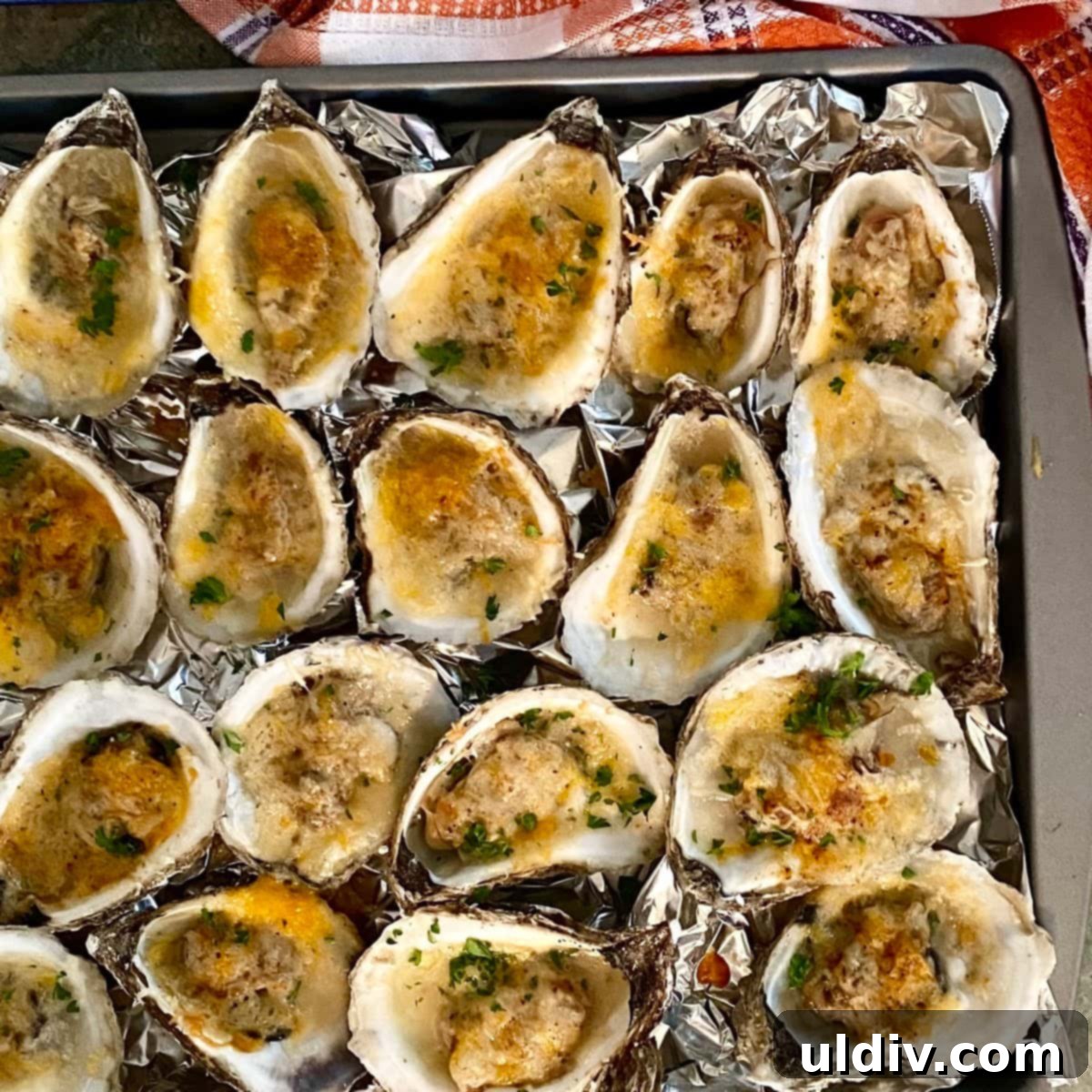
- Perfect Doneness Indicators: Keep a close eye on your oysters as they bake. They are ready when the cheese topping is completely melted, bubbly, and has achieved a beautiful golden-brown hue. The edges of the oyster meat might curl slightly, and the liquor will be simmering. Overcooking can make oysters tough, so remove them from the oven promptly once they reach this delectable stage.
- Preheat Properly: Always preheat your oven to the specified temperature (375°F or 190°C) for at least 15-20 minutes before placing the oysters inside. A properly preheated oven ensures even cooking and a consistent golden crust on your cheese.
Perfect Pairings: What to Serve with Baked Oysters
These salty, cheesy baked oysters are a culinary delight that stands wonderfully on their own, offering a burst of flavor in every bite. However, their versatility means they can also be beautifully complemented by a variety of sauces, garnishes, and side dishes, enhancing the overall dining experience. Think about contrasting flavors and textures to truly make them shine.
For a bright and acidic counterpoint, a simple squeeze of fresh lemon juice is always a classic choice. The acidity cuts through the richness of the cheese and highlights the oyster’s natural brininess. Other excellent condiment options include a tangy cocktail sauce, a creamy tartar sauce, or a fiery prepared horseradish for those who enjoy a bit of heat. For a more sophisticated touch, consider a classic vinegary mignonette, which can be easily made with finely minced shallots, black pepper, and red wine vinegar. You can even experiment with flavored mignonettes using champagne vinegar or citrus zest.
If you’re looking to transform these appetizers into a more substantial meal, consider pairing them with simple yet satisfying sides. Alongside these baked oysters, I highly recommend serving Parmesan Buttered Noodles, which offer a comforting and delicate backdrop. For a complete and balanced meal, add your favorite seasonal vegetable. Roasted asparagus, lightly steamed green beans with a touch of garlic, or tender roasted broccoli florets are all excellent choices that provide freshness and a healthy crunch. For beverages, crisp white wines like Sauvignon Blanc or Muscadet, dry sparkling wines, or even a light lager can beautifully complement the flavors of the oysters and cheese.
Explore More Irresistible Seafood Recipes
If you have a passion for seafood, you’ll love exploring these other delicious and easy-to-make recipes that celebrate the bounty of the ocean:
- Tuna Ceviche: Fast & Fresh!
- Crispy Coconut Shrimp
- Portobello Mushrooms Stuffed with Crab
- Roasted Shrimp with Parmesan
- Blackened Tuna Bites
Join Our Culinary Community: Share Your Creations!
We absolutely love hearing from you! If you decide to whip up these easy and truly awesome *baked oysters*, we’d be thrilled to know about your experience. Your feedback is invaluable, and it helps our community grow.
Please take a moment to leave a comment below and consider giving this recipe a star rating – I genuinely read and do my best to reply to all your comments. Even better, snap a fantastic photo of your culinary masterpiece and share it on Instagram! Make sure to tag @amycaseycooks so we can admire your work; I often feature your incredible creations on my Insta stories. It’s truly inspiring to see how you bring these recipes to life in your own kitchens.
For more fabulous foodie stories, helpful cooking tips, and a plethora of delicious recipes, be sure to check out our Facebook and Pinterest pages. Let’s connect and share the joy of cooking!
Recipe: Easy Baked Oysters
Easy Baked Oysters
These briny baked oysters are super delicious! The easy to prepare appetizer features oysters on the half shell, Parmesan and cheddar cheeses, Creole seasoning, and parsley.
Rating: 5 out of 5 stars (from 13 votes)
Prep Time: 10 minutes
Cook Time: 15 minutes
Total Time: 25 minutes
Servings: 24 oysters
Calories: 114 kcal per serving (2 oysters)
Author: Amy Casey
Ingredients
- 24 shucked oysters
- Creole seasoning, to taste
- ½ cup finely shredded Parmesan cheese
- ½ cup finely shredded sharp cheddar cheese
- 2 tablespoons freshly chopped parsley
Instructions
- Preheat oven to 375 degrees F (190 degrees C).
- On a large rimmed baking sheet, place a large crinkled piece of aluminum foil. This will create an uneven bed that helps hold the oysters in place during baking.
- Carefully arrange the shucked oysters on their half shells in the prepared baking sheet, nestling them into the foil.
- Sprinkle each oyster with a pinch of Creole seasoning, followed by approximately 1 teaspoon of Parmesan cheese and 1 teaspoon of cheddar cheese. Adjust quantities to your preference.
- Bake the oysters for about 15 minutes, or until the cheese is melted, bubbly, and beautifully golden brown.
- Remove the baked oysters from the oven. Garnish generously with the freshly chopped parsley before serving immediately.
Video Tutorial
Notes
- Using a large rimmed baking sheet with a crinkled foil bed helps stabilize the oysters, preventing spillage of their flavorful liquor.
- Always opt for freshly shredded cheeses over pre-shredded varieties. Pre-shredded cheese contains anti-caking agents that can hinder proper melting and affect texture.
- Finely shred the cheeses to ensure they melt evenly and don’t overpower the delicate flavor of the oysters. A small amount goes a long way.
- Oysters are perfectly baked when the cheese topping is thoroughly melted and turns a rich golden-brown color. Watch them closely to avoid overcooking.