

Unlock the Secret to Longer-Lasting Bananas: Stop Them From Ripening Too Fast!
Do you love bananas but constantly find yourself racing against the clock as they turn brown too quickly? Or perhaps you’re a devoted fan of delicious banana bread, but wish you had more control over when your bananas reach that perfect, overripe stage for baking? If you’re anything like us, the struggle is real! At my Instagram page, you’ll see a recurring theme: our undeniable love for banana bread. It’s a staple in our home, a testament to how much my family cherishes this comforting dessert. But here’s the thing – while overripe bananas are essential for that moist, flavorful bread, sometimes you just want to enjoy a fresh, yellow banana for longer.

The quest for perfectly ripe bananas that don’t spoil overnight is a common household challenge. We’ve all been there: buying a fresh bunch only to find them dotted with brown spots just a day or two later. This rapid ripening can lead to food waste and frustration, especially when you had plans for those pristine yellow fruits. But what if there were simple, effective strategies you could employ right in your own kitchen to significantly extend the life of your bananas, keeping them fresher, longer? Fortunately, there are proven methods to slow down this natural process, giving you more control over your fruit and reducing waste.
The Science Behind Banana Ripening: Understanding Ethylene Gas

To truly understand how to keep bananas fresh, we first need to delve into the science of ripening. Bananas, much like apples, avocados, mangoes, and pears, are climacteric fruits. This means they continue to ripen after being harvested, largely due to the production of a natural plant hormone called ethylene gas. As an article published on the esteemed Eat This, Not That! website explains, “Ethylene may sound scary, but don’t worry, it’s completely natural. It’s a gas that helps to ripen fruit or vegetables into that perfect, juicy produce that we all know and love.” This gas is not only responsible for softening the fruit and enhancing its sweetness but also for changing its color from green to yellow, and eventually to brown.
Crucially, the ethylene gas is primarily released through the stems of the bananas. This is a vital piece of information because it provides us with the key to slowing down the ripening process. By creating a barrier around the stems, we can effectively contain the ethylene gas, preventing it from spreading and accelerating the ripening of the entire fruit. The same “Eat This, Not That!” article elaborates on this principle: “Because ethylene production happens quickly, it’s important for bananas to have little exposure to carbon dioxide in order to delay ethylene from releasing. In order to keep bananas from ripening during transport, special boxes or ripening rooms are used. Once bananas hit your preference in ripeness, they will last 3 days in the refrigerator. Bananas also last 2 to 3 months in the freezer.” This insight underscores the importance of managing ethylene exposure, both for commercial vendors and for home consumers alike, offering a scientific basis for practical storage solutions. (“20 Foods You Should Never Store Near Each Other”)
Effective Strategies to Keep Your Bananas Fresher, Longer
Armed with the knowledge of ethylene gas, we can now explore several tried-and-true methods to significantly extend the shelf life of your beloved bananas. These techniques are simple, cost-effective, and easy to implement in any kitchen.
1. The Power of Stem Wrapping: Plastic Wrap vs. Aluminum Foil

Understanding that ethylene is released from the stems gives us a direct target for intervention. This is precisely why you often observe bunches of bananas at the grocery store with their stems pre-wrapped in plastic – vendors employ this tactic to slow down the ripening process, ensuring the fruit remains appealing to customers for a longer period. The principle is straightforward: wrapping the stems creates a physical barrier, trapping the ethylene gas and preventing it from circulating and accelerating the ripening of the rest of the banana.
Both plastic wrap and aluminum foil work wonderfully for this purpose. While plastic wrap is a common choice, if you’re like me and aim for minimal waste, aluminum foil is an excellent reusable alternative. I personally prefer wrapping the stem of each banana individually for optimal results. While wrapping the entire bunch’s stem together offers some benefit, separating them and wrapping each stem independently maximizes the isolation of ethylene gas, leading to a more effective slowdown in ripening for each fruit. Simply tear off a small piece of foil and tightly wrap it around the black top stem of each banana. This simple act can add several days to your bananas’ shelf life, keeping them perfectly yellow and firm for much longer.
2. Hanging Your Bananas: A Simple Yet Effective Method

Another often-overlooked method to prolong banana freshness is simply hanging them from a hook. This technique isn’t just for aesthetic display; it serves a practical purpose in preventing premature ripening. When bananas lie on a flat surface, pressure points can develop, causing bruising and accelerating the ripening process in those areas. Hanging bananas allows for even air circulation around the entire fruit, preventing these pressure spots. Additionally, it ensures that any ethylene gas that does escape from the stems is less likely to become trapped around the fruit, allowing it to dissipate more effectively into the air. While I haven’t personally tried this method extensively, it’s widely recommended and certainly worth incorporating into your routine if you have the counter space or a dedicated banana hanger.
3. Refrigeration: Timing is Everything
Refrigeration can be a great way to extend the life of bananas, but timing is crucial. Bananas should *not* be refrigerated when they are still green. The cold temperature can prevent them from ever fully ripening, resulting in a starchy, unpleasant taste and texture. However, once your bananas have reached your desired level of ripeness – whether that’s perfectly yellow for snacking or starting to get a few brown spots for baking – moving them to the refrigerator can significantly slow down further ripening. While the peel may turn brown or black due to the cold, the fruit inside will remain fresh and firm for another 3 to 5 days, or even up to a week. This is an excellent tip for those moments when you’ve bought a large bunch and know you won’t consume them all at once.
4. Freezing for Long-Term Preservation
For ultimate long-term storage, freezing is your best friend, especially if you foresee your bananas becoming overripe before you can use them. Freezing is ideal for those bananas that have reached their prime for baking or smoothies. The process is simple: first, peel the bananas. You can then freeze them whole, sliced, or even mashed, depending on your intended future use. For slices, arrange them in a single layer on a baking sheet and freeze until solid, then transfer to an airtight freezer bag or container. This prevents them from sticking together, making it easier to grab just what you need. Frozen bananas can last for 2 to 3 months in the freezer without significant loss of quality. They are perfect for smoothies, “nice cream,” or incorporating directly into your favorite banana bread or muffin recipes.
5. Other General Tips to Keep Bananas Fresh
Beyond these core methods, a few general storage practices can also contribute to longer-lasting bananas. Always store bananas away from other ethylene-producing fruits like apples, avocados, and tomatoes. Keeping them separate prevents the cumulative effect of ethylene gas, which can accelerate ripening for all fruits involved. Additionally, storing them in a cool, dry place – away from direct sunlight or heat sources – will help maintain their freshness.
The Balancing Act: When Overripe is Just Right

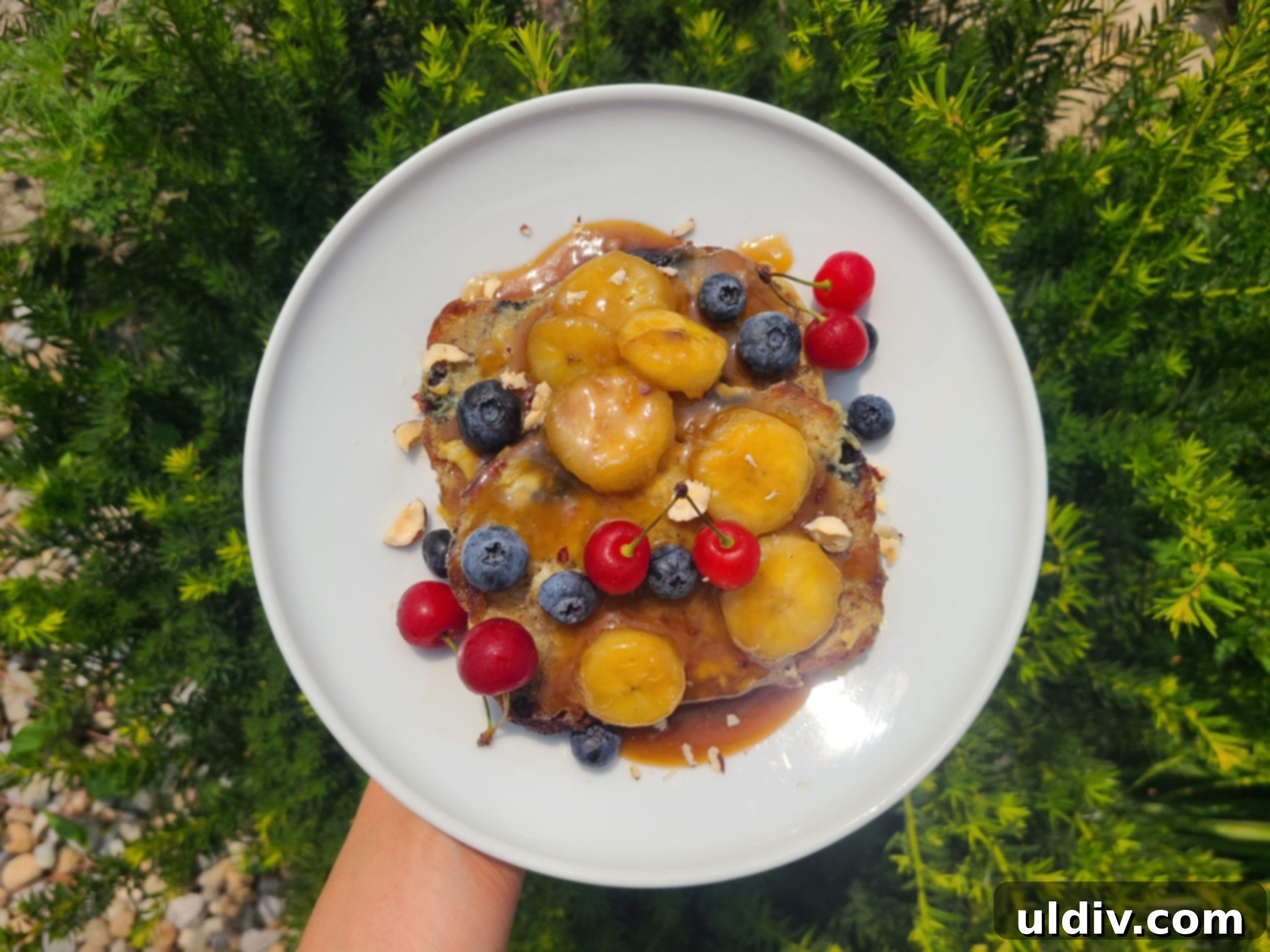
While the goal of these tips is to prevent bananas from over-ripening too quickly, it’s important to acknowledge that some level of ripeness, even over-ripeness, is highly desirable for certain culinary applications. Those dark brown, spotty bananas that might seem past their prime for eating raw are actually gold for baking. Their sugars are concentrated, providing intense sweetness and moisture, making them perfect for classics like banana bread, muffins, and pancakes. Once my bananas turn that ideal shade of brown, I either freeze them immediately for later use or transform them into a delicious banana bread. I love to elevate my banana bread with toppings like fresh fruit, homemade jams or preserves, or a tangy lemon curd, as you can see in the picture above.
For those who prefer plant-based options, I also enjoy making a vegan banana bread. I’ve shared some fantastic vegan substitutions and product recommendations in this post, which can help you create a delightful dairy-free and egg-free version of this beloved treat.
Beyond Banana Bread: Creative Culinary Inspirations
Even ripe (but *not* overripe) bananas offer a wealth of culinary possibilities. They add natural sweetness and a creamy texture to a variety of dishes. Here are just a few ideas for incorporating bananas at different stages of ripeness into your cooking:
- Smoothies: A ripe banana is the ultimate base for any smoothie, adding creaminess and natural sweetness. Pair it with berries, spinach, almond milk, and a scoop of protein for a nutritious meal or snack.
- Nice Cream: Blend frozen ripe bananas in a food processor until smooth and creamy for a healthy, dairy-free ice cream alternative. Add cocoa powder, peanut butter, or other fruits for flavor variations.
- Pancakes and Waffles: Mash ripe bananas and incorporate them into your pancake or waffle batter for added moisture and flavor. They can even act as an egg substitute in some recipes.
- Oatmeal Topping: Sliced ripe bananas are a fantastic natural sweetener and texture enhancer for your morning oatmeal.
- Energy Bites: Combine mashed ripe bananas with oats, nut butter, and chia seeds for quick, no-bake energy bites.
For more specific recipes and ideas using ripe bananas, I invite you to explore some of my previous posts. You’ll find delightful creations like mango crepes, refreshing smoothies, and unique desserts that highlight the versatility of this incredible fruit. Check them out here, here, here, and here.
Final Thoughts: Enjoying Bananas on Your Own Terms
By understanding the science of ethylene gas and implementing these simple yet effective storage methods – from individual stem wrapping and hanging to strategic refrigeration and freezing – you can take control of your bananas’ ripening process. Say goodbye to wasted fruit and hello to perfectly fresh bananas whenever you desire, or the ideal overripe ones for your next baking adventure. Empower yourself to enjoy this versatile fruit exactly how and when you want it, reducing food waste and maximizing flavor.
Do you have any unique tips or clever tricks for storing bananas to prolong their life? We’d love to hear them! Share your insights and experiences in the comments below – your wisdom might just be the next great discovery for fellow banana lovers!