
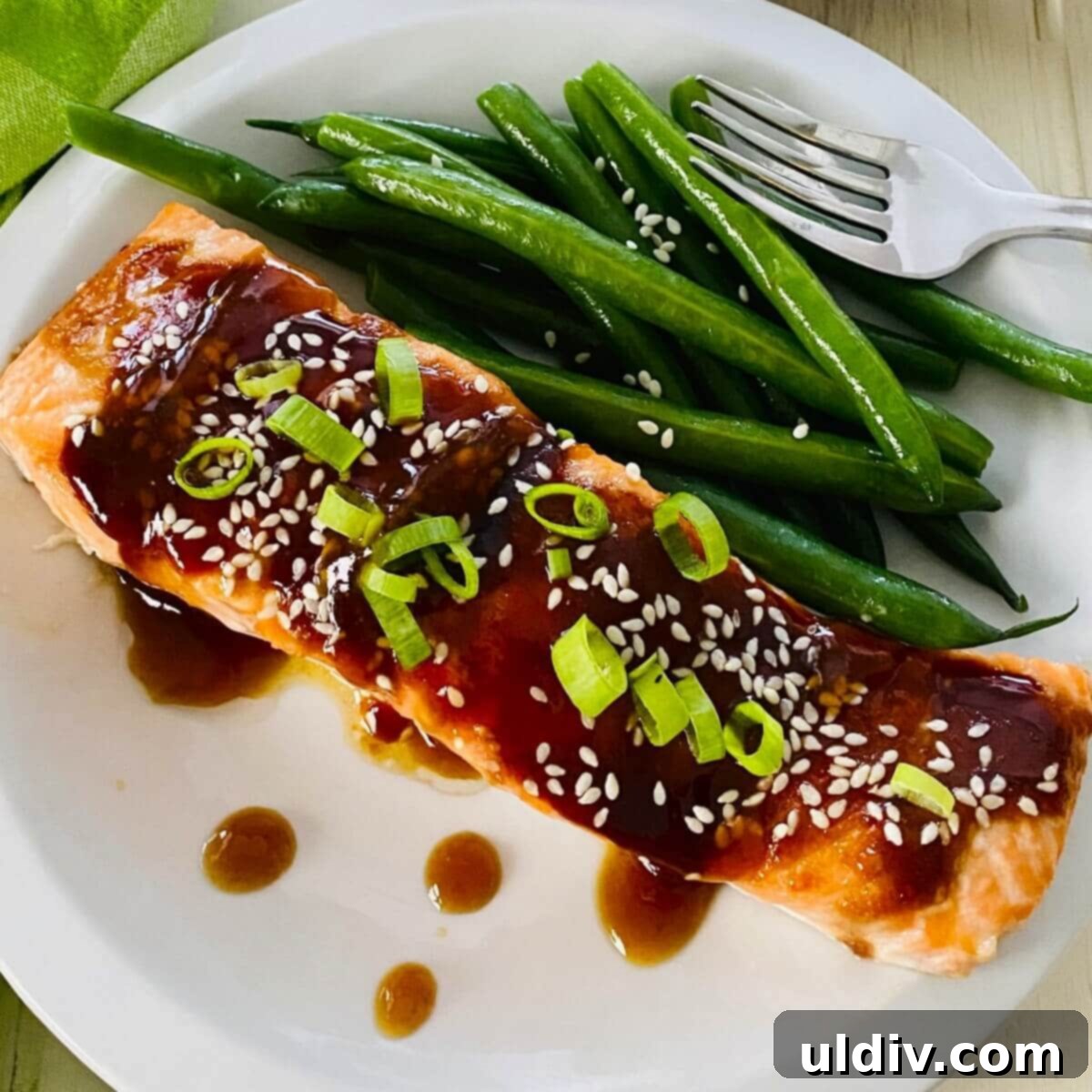
Welcome to the ultimate guide for crafting the most exquisite **Baked Teriyaki Salmon** you’ll ever taste. Forget expensive restaurant bills; this recipe empowers you to create a culinary masterpiece in your own kitchen with incredible ease. Imagine tender, flaky salmon fillets, perfectly glazed with a rich, sweet, and savory homemade teriyaki sauce, complemented by a hint of smoky hoisin. This dish is not just a meal; it’s an experience, transforming a simple weeknight dinner into an unforgettable feast ready in approximately 20 minutes. Its irresistible flavor profile has consistently delighted even the most discerning palates, including my personal chef clients and my husband, who insists this homemade teriyaki sauce is a must-have on *everything*!
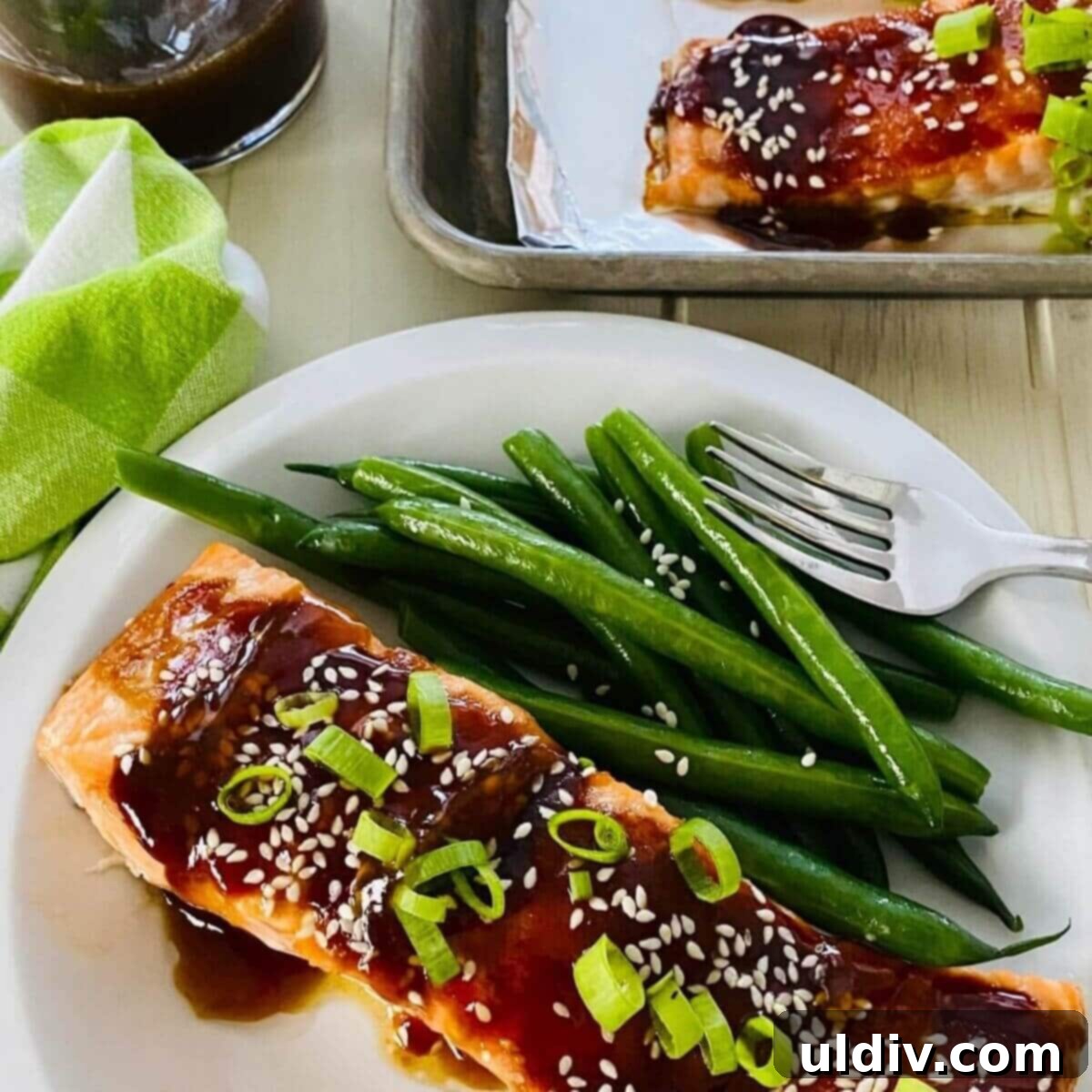
The beauty of this baked salmon recipe lies in its simplicity and the depth of its Asian-inspired flavors. The buttery texture of the salmon stands up beautifully to the bold, umami-rich glazes, creating a harmonious balance that is both satisfying and incredibly fresh. Whether you’re seeking a quick-to-make family favorite for a busy weeknight or a show-stopping entrée for entertaining guests on the weekend, this recipe is your answer. It draws inspiration from my popular hibachi shrimp recipe, a testament to my love for vibrant, easy-to-prepare Asian dishes.
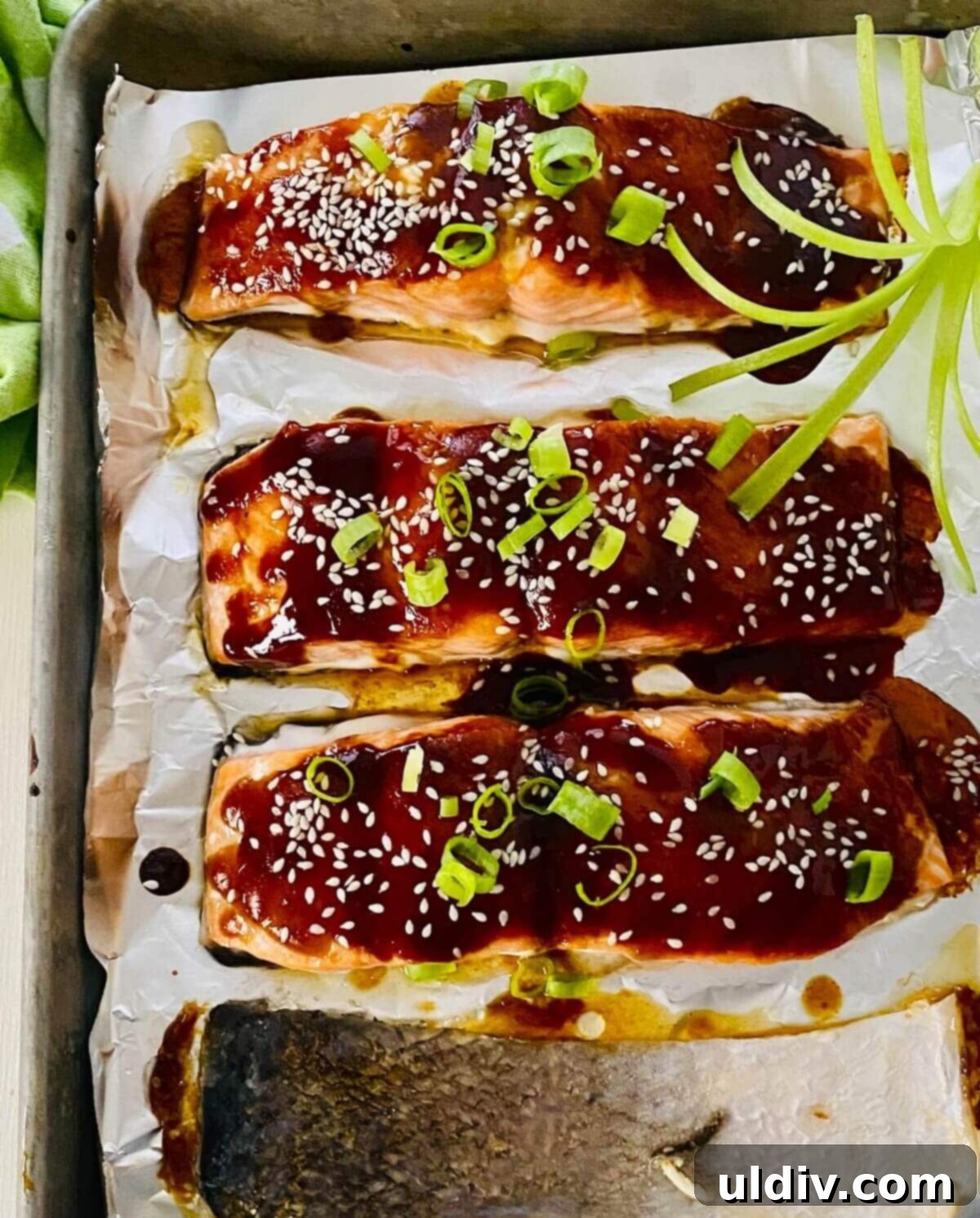
Why You’ll Adore This Baked Teriyaki Salmon Recipe
This isn’t just another salmon recipe; it’s a culinary game-changer that delivers on taste, convenience, and impressive results. Here’s why this Baked Teriyaki Salmon will become a staple in your meal rotation:
- Gourmet Restaurant Quality at Home: Prepare to impress yourself and your guests. This teriyaki salmon recipe is bursting with authentic, bold Asian flavors that rival dishes served at high-end restaurants. The perfect balance of sweet, savory, and umami in the homemade teriyaki sauce, combined with the smoky notes of hoisin, creates an unforgettable dining experience right in your home.
- Effortlessly Easy & Quick to Make: Simplicity is key. Many of the ingredients for the homemade teriyaki sauce are likely already in your pantry. There’s no lengthy marination required for the salmon, meaning you can whip up this elegant entrée in about 20 minutes from start to finish. It’s perfect for busy weeknights when you crave something special without the fuss.
- Unmistakably Delicious: The secret to its incredible taste lies in the double layer of flavor. A preliminary brush of sweet and smoky hoisin sauce provides a foundational depth, while the vibrant homemade teriyaki sauce adds a glossy, rich glaze. The natural richness of the baked salmon perfectly complements these robust Asian sauces, resulting in a dish that is deeply satisfying and incredibly moreish.
- Healthy and Nutritious: Salmon is a powerhouse of omega-3 fatty acids, protein, and essential vitamins. Baking it with a light, flavorful sauce keeps it healthy while maximizing taste. It’s a wholesome meal that doesn’t compromise on indulgence.
- Versatile for Any Occasion: Whether you’re cooking for one, preparing a family dinner, or hosting a gathering, this recipe scales beautifully. Its impressive appearance makes it suitable for special occasions, while its quick prep time makes it practical for everyday enjoyment.
Essential Ingredients & Smart Substitutions
Crafting this incredible Baked Teriyaki Salmon requires a few key components, many of which are common in Asian cuisine and readily available at most grocery stores or online. Focusing on fresh, quality ingredients will elevate your dish to restaurant-level perfection. For precise measurements, please refer to the complete recipe card below.
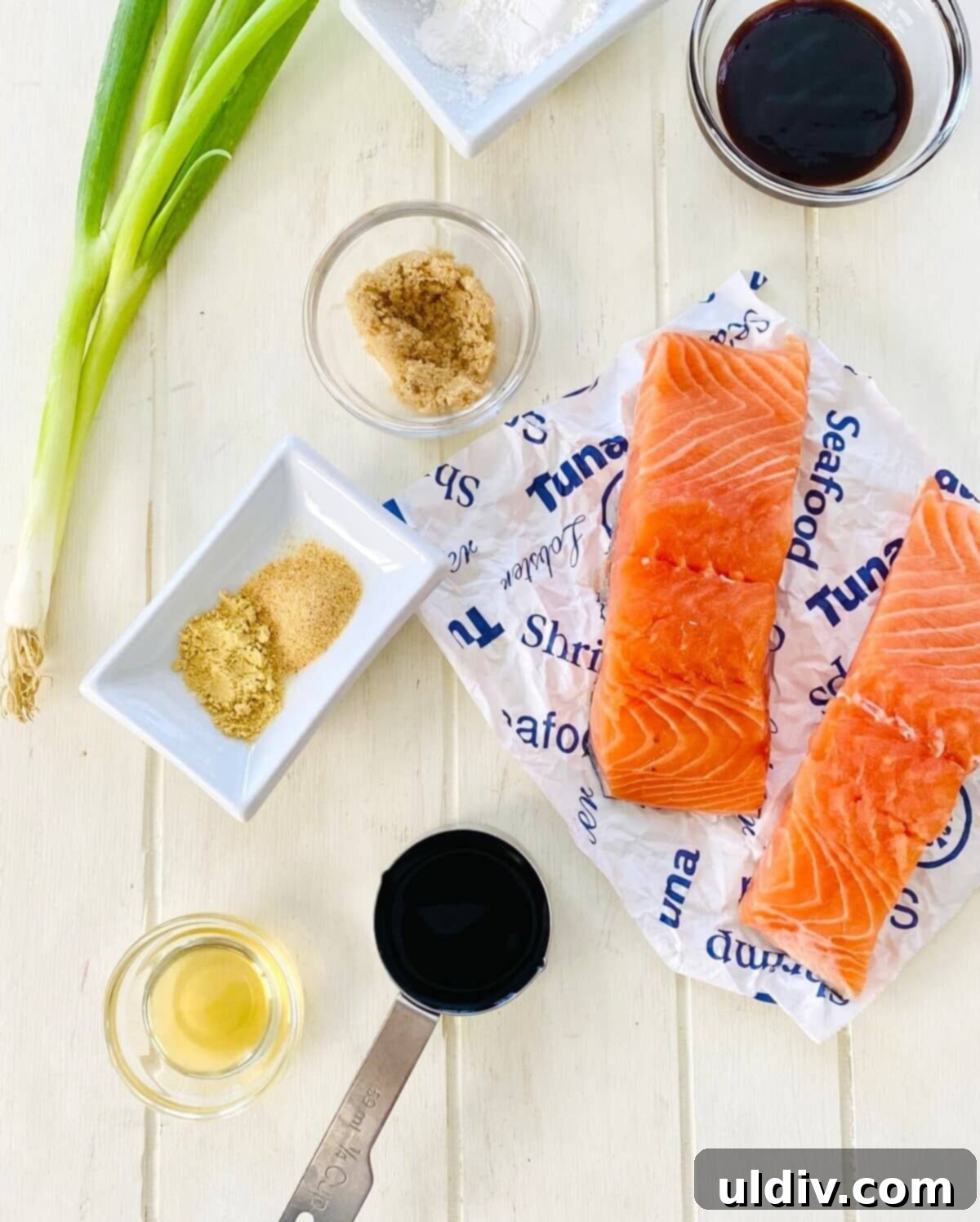
- Salmon Fillets: The star of the show! Opt for fresh, high-quality salmon fillets, whether skin-on or skinless. Skin-on salmon tends to stay moister and crisps up nicely if you desire. Aim for pieces of similar thickness (around 1.5-2 inches) for even cooking. Sockeye, Coho, or Atlantic salmon are all excellent choices.
- Hoisin Sauce: This rich, savory, and slightly sweet Asian barbecue sauce adds a wonderful smoky depth to the salmon before baking. It creates a fantastic base layer of flavor. For a gluten-free option, ensure you choose a certified gluten-free hoisin sauce. In a pinch, a good quality regular barbecue sauce with a touch of soy sauce (or tamari) can be used, though the flavor profile will differ slightly.
- Water: Used to thin out and balance the teriyaki sauce, ensuring the perfect consistency. Divided into two portions for different stages of sauce preparation.
- Reduced Sodium Soy Sauce: I recommend reduced-sodium soy sauce to give you better control over the overall saltiness of your dish. If you use regular soy sauce, you might want to omit or reduce any additional salt. For a gluten-free version, tamari is an excellent 1:1 substitute that offers a similar umami punch.
- Light Brown Sugar: Provides sweetness and helps achieve that beautiful caramelization on the salmon. Dark brown sugar can also be used for a deeper molasses flavor, or granulated sugar works if that’s all you have on hand, though it will be less complex.
- Honey: Adds another layer of natural sweetness and contributes to the sauce’s glossy texture. Maple syrup or agave nectar can be used as alternatives for a slightly different sweet note.
- Ginger Powder: A staple in Asian cooking, ginger powder provides a warm, aromatic spice. While powder is convenient, fresh grated ginger (about 1 teaspoon) can be used for a more vibrant, pungent flavor.
- Garlic Powder: Offers a mellow garlic flavor that blends seamlessly into the sauce. If using fresh garlic, finely mince 1-2 cloves for every ½ teaspoon of powder.
- Cornstarch: This is our secret weapon for thickening the teriyaki sauce to a perfect, spoon-coating glaze. It creates that desirable sticky texture that adheres beautifully to the salmon. Arrowroot powder is a suitable alternative for thickening.
- Green Onions: Thinly sliced green onions (scallions) are primarily used as a fresh, aromatic garnish, adding a pop of color and a mild oniony bite that brightens the dish.
- Sesame Seeds: Toasted sesame seeds provide a delightful nutty flavor and a pleasing textural contrast. They also contribute to the dish’s appealing visual presentation.
Crafting Teriyaki Salmon in Your Oven: A Step-by-Step Guide
Get ready to create a truly delicious and effortlessly elegant meal. This step-by-step guide will walk you through preparing perfect baked teriyaki salmon, ensuring a moist, flavorful fillet every time.
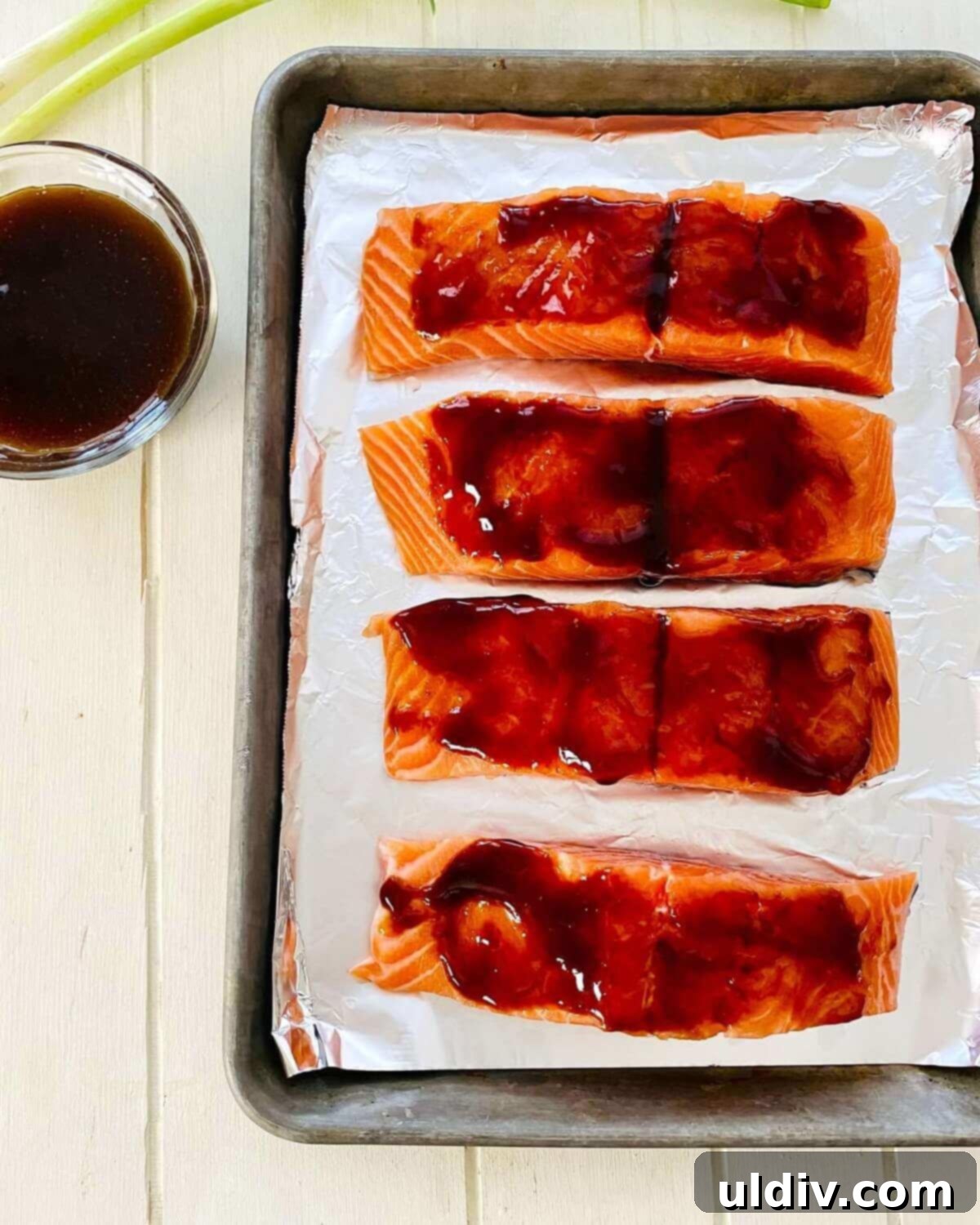
1. Prepare the Salmon: Begin by preheating your oven to 400 degrees Fahrenheit (200°C). Line a quarter-size baking sheet with aluminum foil or parchment paper for effortless cleanup. Place your salmon fillets onto the prepared baking sheet. Using a pastry brush, evenly coat each salmon fillet with the smoky hoisin sauce. This initial layer creates a foundational flavor that will deepen during baking. Set the salmon aside as you prepare the teriyaki glaze.
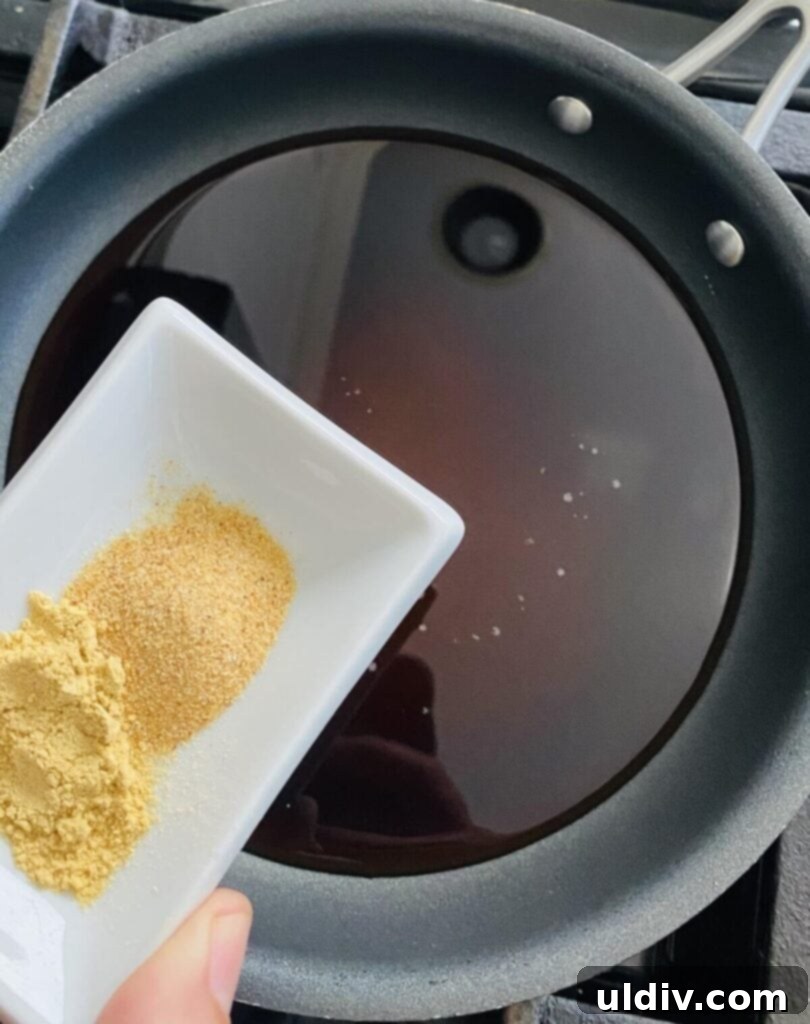
2. Whisk the Teriyaki Base: In a small saucepan, combine ½ cup of water, reduced sodium soy sauce, light brown sugar, honey, ginger powder, and garlic powder. Whisk these ingredients together until well combined. This forms the flavorful base of your homemade teriyaki sauce.
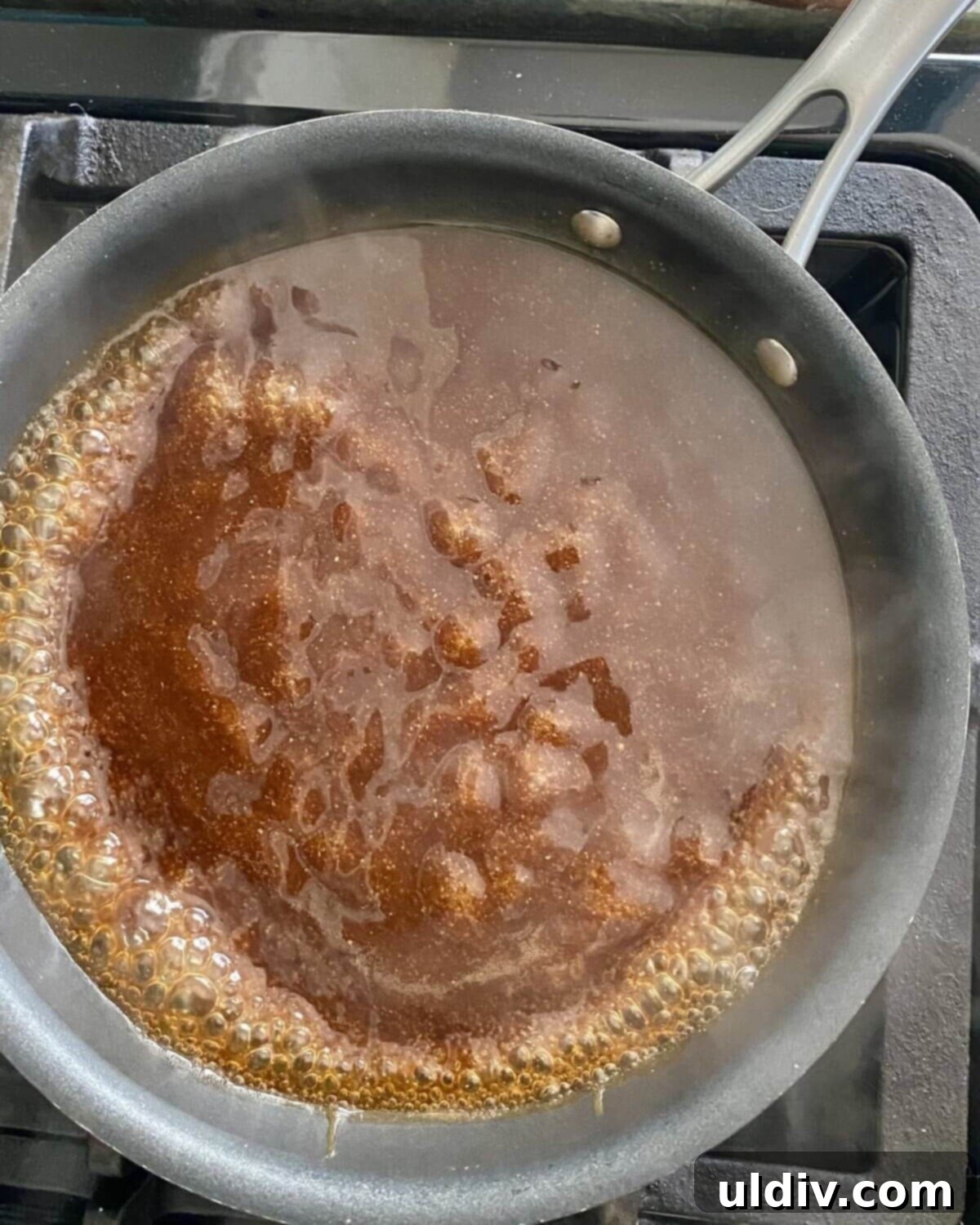
3. Thicken the Teriyaki Sauce: Place the saucepan over medium-low heat and bring the teriyaki mixture to a gentle boil. Let it boil for about 1 minute, stirring occasionally, ensuring it doesn’t boil over. While the sauce is simmering, in a separate small bowl, combine the remaining ¼ cup of water with the cornstarch, stirring until the cornstarch is completely dissolved. Slowly pour this cornstarch slurry into the boiling teriyaki mixture, whisking continuously. Continue to cook and stir for another 1-2 minutes until the sauce thickens enough to coat the back of a spoon. Remove the thickened teriyaki sauce from the heat.
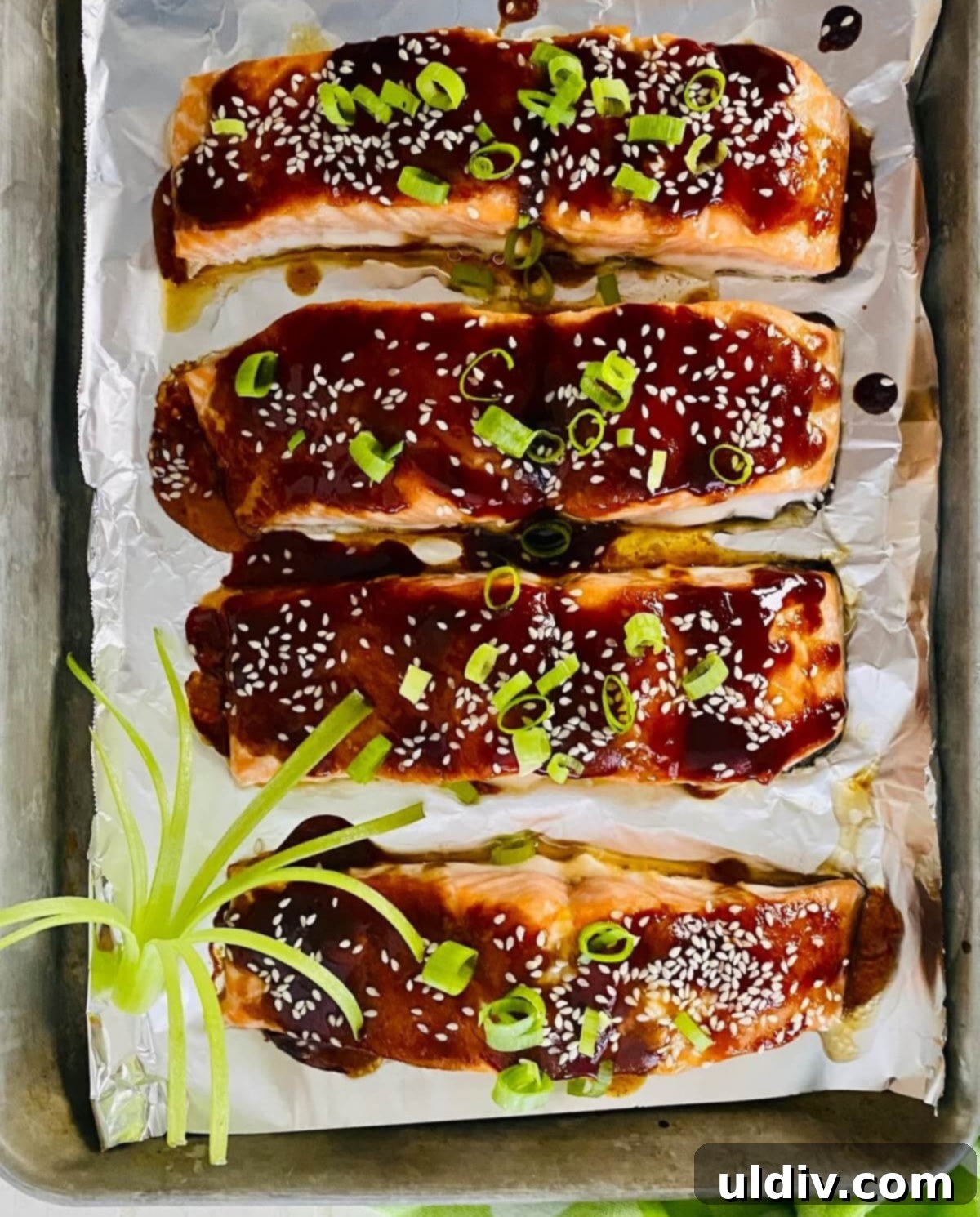
5. Bake to Perfection: Transfer the baking sheet with the salmon to your preheated 400°F (200°C) oven. Bake for approximately 12 to 15 minutes. The precise cooking time will depend on the thickness of your salmon fillets. For best results, use a meat thermometer to check for an internal temperature of 145°F (63°C) at the thickest part. The salmon should be flaky and opaque throughout.
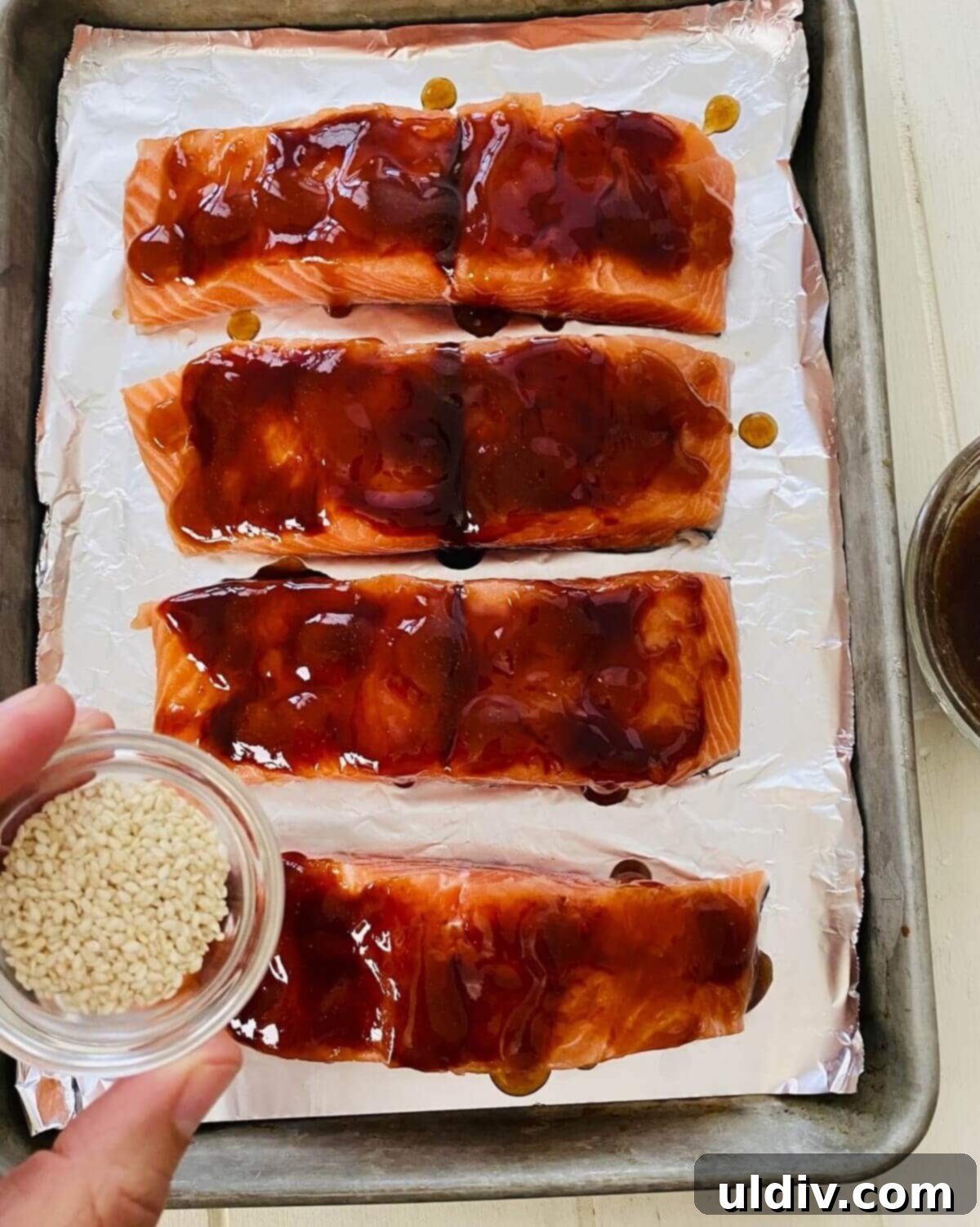
4. Glaze and Garnish: Once your teriyaki sauce is ready, generously drizzle about 2 teaspoons of the rich, glossy sauce over each hoisin-brushed salmon fillet. Ensure an even coating. Then, sprinkle each piece of salmon with sesame seeds. The sesame seeds will toast slightly in the oven, adding a delightful crunch and nutty aroma.
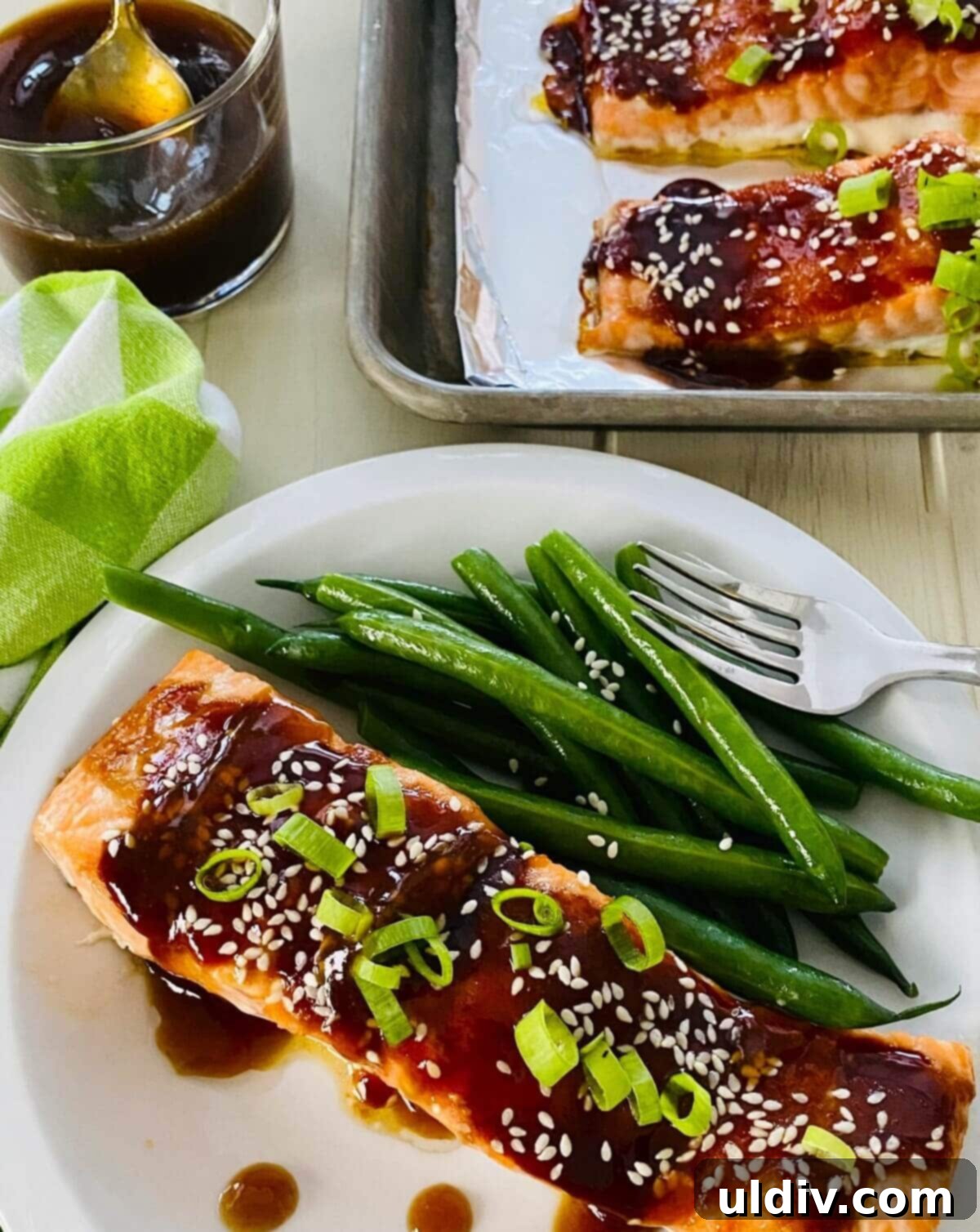
6. Serve and Savor: Once the salmon is perfectly cooked, remove it from the oven. For an extra boost of flavor, drizzle a little more of the warm teriyaki sauce over the fillets just before serving. Finish by sprinkling with fresh, thinly sliced green onions. Your restaurant-quality Baked Teriyaki Salmon is now ready to be enjoyed! Serve immediately with your favorite side dishes.
Pro Tip: For remarkably easy cleanup, always line your rimmed baking sheet with aluminum foil or parchment paper. This simple step prevents any sticky sauce from baking onto the pan, saving you scrubbing time.
Delicious Variations to Explore
This Baked Teriyaki Salmon recipe is incredibly versatile and can be adapted to suit your taste preferences or whatever ingredients you have on hand. Don’t hesitate to get creative!
- Explore Different Fish Varieties: While salmon is fantastic, this teriyaki glaze pairs wonderfully with many other types of fish. Consider trying swordfish, halibut, mahi-mahi, bluefish, haddock, or cod for equally delicious results. Adjust baking times as needed for different fish thicknesses.
- Amp Up the Heat: If you enjoy a touch of spice, easily add some heat to your teriyaki sauce. Incorporate a pinch or two of chili pepper flakes, a dash of Sriracha, or a few drops of hot sesame oil along with the garlic powder and ginger powder. Start with a small amount and taste as you go to achieve your desired spice level.
- Make it a Sandwich or Wrap: Transform leftovers or create a unique meal by serving the baked teriyaki salmon on a toasted long roll or in a soft tortilla. Add some shredded lettuce for crunch, thin slices of fresh pineapple for a sweet and tangy contrast, and a drizzle of tartar sauce or a spicy mayo for an extra layer of flavor.
- Add Citrus Brightness: A squeeze of fresh lime or orange juice over the salmon just before serving can add a vibrant, zesty finish that beautifully cuts through the richness of the teriyaki sauce.
- Grill or Pan-Sear: While this recipe focuses on baking, the salmon can also be grilled or pan-seared. For grilling, brush with hoisin, then grill until almost cooked through, brushing with teriyaki sauce during the last few minutes. For pan-searing, sear skin-side down until crispy, flip, then finish cooking, glazing with teriyaki sauce.
Storing and Reheating Your Teriyaki Glazed Salmon
Proper storage ensures your delicious leftovers stay fresh and tasty, ready for another meal. Here’s how to best store and reheat your teriyaki glazed salmon:
Storage: Any leftover baked teriyaki salmon should be stored promptly in the refrigerator. Place the cooled salmon fillets in an airtight container. When stored correctly, the salmon will remain fresh and delicious for 3 to 4 days.
Reheating: To maintain the salmon’s moisture and flavor, the microwave is generally the best method for reheating fish. Place the salmon on a microwave-safe plate. Heat it on 60 percent power for 1 to 2 minutes initially. Continue heating in 30-second intervals until the salmon is heated through to your desired temperature. Be careful not to overheat, as this can dry out the fish. Alternatively, you can gently reheat it in a preheated oven (around 275°F/135°C) for 10-15 minutes, covered with foil, until warm.
Amy’s Top Tips for Perfect Baked Teriyaki Salmon
Achieving perfectly cooked, moist, and flavorful salmon is easier than you think with these expert tips:
- Uniform Thickness is Key: When purchasing salmon, try to select fillets that are roughly the same thickness, ideally around 1.5 to 2 inches thick. This ensures that all pieces cook evenly and reach perfection at the same time, preventing some pieces from drying out while others are still undercooked.
- Master the Internal Temperature: The secret to moist and succulent salmon is to cook it to the right internal temperature. For perfectly cooked salmon that is flaky yet still juicy, aim for an internal temperature of 145 degrees F (63°C). A quick-read digital meat thermometer is an invaluable tool for this, allowing you to check the temperature without overcooking. Insert the thermometer into the thickest part of the fillet.
- Don’t Waste Leftover Teriyaki Sauce: If you find yourself with extra homemade teriyaki sauce, don’t let it go to waste! This versatile sauce is incredible. Serve any remaining sauce alongside your baked salmon for those who prefer an extra flavorful coating. Beyond fish, it’s fantastic brushed on grilled or baked steak, pork chops, shrimp, or chicken. You can also drizzle the homemade sauce over cooked vegetables like broccoli, carrots, zucchini, or mushrooms for a quick and flavorful side dish.
- Pat Salmon Dry: Before brushing with hoisin sauce, gently pat the salmon fillets dry with paper towels. This helps the hoisin and teriyaki glazes adhere better to the fish, ensuring a more even and flavorful coating.
- Don’t Crowd the Pan: Ensure your salmon fillets are placed in a single layer on the baking sheet with a little space between them. Crowding the pan can lead to steaming rather than baking, which might result in less crispy edges and a less appealing texture.
Frequently Asked Questions About Baked Teriyaki Salmon
Here are answers to some common questions that arise when preparing this delicious baked teriyaki salmon:
Absolutely! Frozen salmon works perfectly for this recipe. The key is to ensure the fish is completely thawed before you begin with Step 1 of the recipe. Thaw it overnight in the refrigerator or use the cold water thawing method if you’re short on time. Pat it dry thoroughly before proceeding.
No, there’s no need to cover the salmon while it bakes for this recipe. Leaving it uncovered allows the delicious teriyaki sauce to caramelize beautifully on the surface, creating that appealing glazed finish and intensifying the flavors. Covering it might steam the fish and prevent this desirable texture.
This recipe can easily be made gluten-free! The primary ingredient to watch out for is soy sauce. Simply substitute the reduced-sodium soy sauce with tamari, which is a gluten-free alternative that tastes very similar. Also, ensure your hoisin sauce is certified gluten-free, as some brands may contain wheat.
The best way to determine if salmon is cooked is by checking its internal temperature with a digital meat thermometer. It should reach 145°F (63°C) at its thickest part. Visually, cooked salmon will flake easily with a fork and appear opaque throughout. Avoid overcooking, as this can lead to dry salmon.
While homemade teriyaki sauce offers superior flavor and allows for ingredient control, you can certainly use a good quality store-bought teriyaki sauce in a pinch. If using store-bought, I recommend choosing one that is low in sodium and doesn’t contain excessive additives. You can still add a brush of hoisin sauce as a base layer for extra depth.
Perfect Pairings: What to Serve with Teriyaki Salmon
Elevate your Baked Teriyaki Salmon meal with these fantastic side dish suggestions that complement its rich flavors and textures:
- Rice Classics: A bed of fluffy white rice is a timeless and perfect accompaniment, soaking up all the delicious teriyaki glaze. For more adventurous rice options, try my flavorful Better Than Takeout Fried Rice or the lighter, equally satisfying Cauliflower Rice Pilaf.
- Noodle Dishes: Serve this delectable baked salmon over a generous portion of garlic sesame noodles for a complete and satisfying Asian-inspired meal. The noodles provide a wonderful textural contrast and absorb the extra sauce beautifully.
- Fresh & Crispy Appetizers: Start your meal with a refreshing dish like these tasty and fresh vegetable spring rolls, ideally served with a peanut dipping sauce, for a light and vibrant beginning.
- Steamed or Roasted Vegetables: Healthy and delicious vegetable sides are always a great choice. Options like steamed or roasted green beans, tender broccoli florets, asparagus spears, snap peas, or a medley of stir-fried bell peppers and carrots would be fantastic. A simple preparation with a drizzle of sesame oil and a sprinkle of sesame seeds ties everything together.
- Asian-Inspired Salads: A crisp Asian-style salad with a light vinaigrette, shredded cabbage, carrots, and edamame offers a refreshing counterpoint to the richness of the salmon.
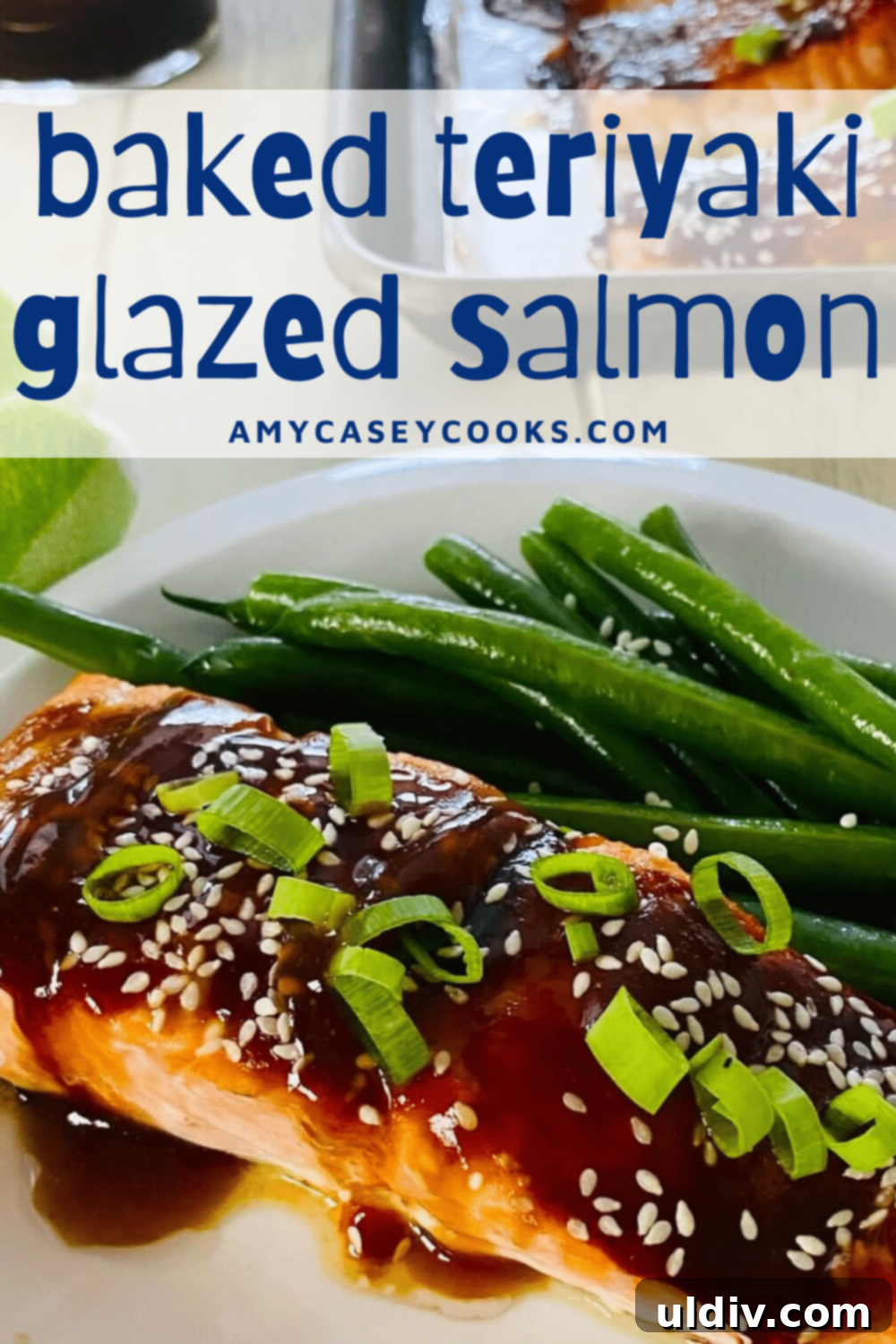
Discover More Irresistible Salmon Recipes
If you’ve fallen in love with this Baked Teriyaki Salmon, you’ll be thrilled to explore other fantastic salmon creations. Salmon is incredibly versatile, and there’s a world of delicious preparations to discover. Here are some more salmon recipes that are sure to become new favorites:
- Lump Crab Cake Stuffed Salmon: An elegant dish featuring flaky salmon stuffed with a succulent crab cake mixture.
- Salmon Baked in Foil: A simple, healthy, and incredibly easy method for perfectly cooked salmon with minimal cleanup.
- Roasted Salmon Caesar: A delightful twist on the classic Caesar salad, featuring perfectly roasted salmon.
- Pecan Crusted Honey Mustard Salmon: A flavorful salmon dish with a crunchy pecan crust and a sweet and tangy honey mustard glaze.
- Fresh Salmon and Caper Cakes: A delicious alternative to crab cakes, these salmon cakes are packed with flavor and freshness.
One More Thing…

Did you try this amazing recipe?
Your feedback means the world to me! Please let me know how it turned out by leaving a comment and a star rating below. I’d also love to see your culinary creations! Share your photos on Pinterest, Instagram, and Facebook, and be sure to tag me @amycaseycooks so I can admire your work!
Happy Cooking! ~ Amy
Recipe Card
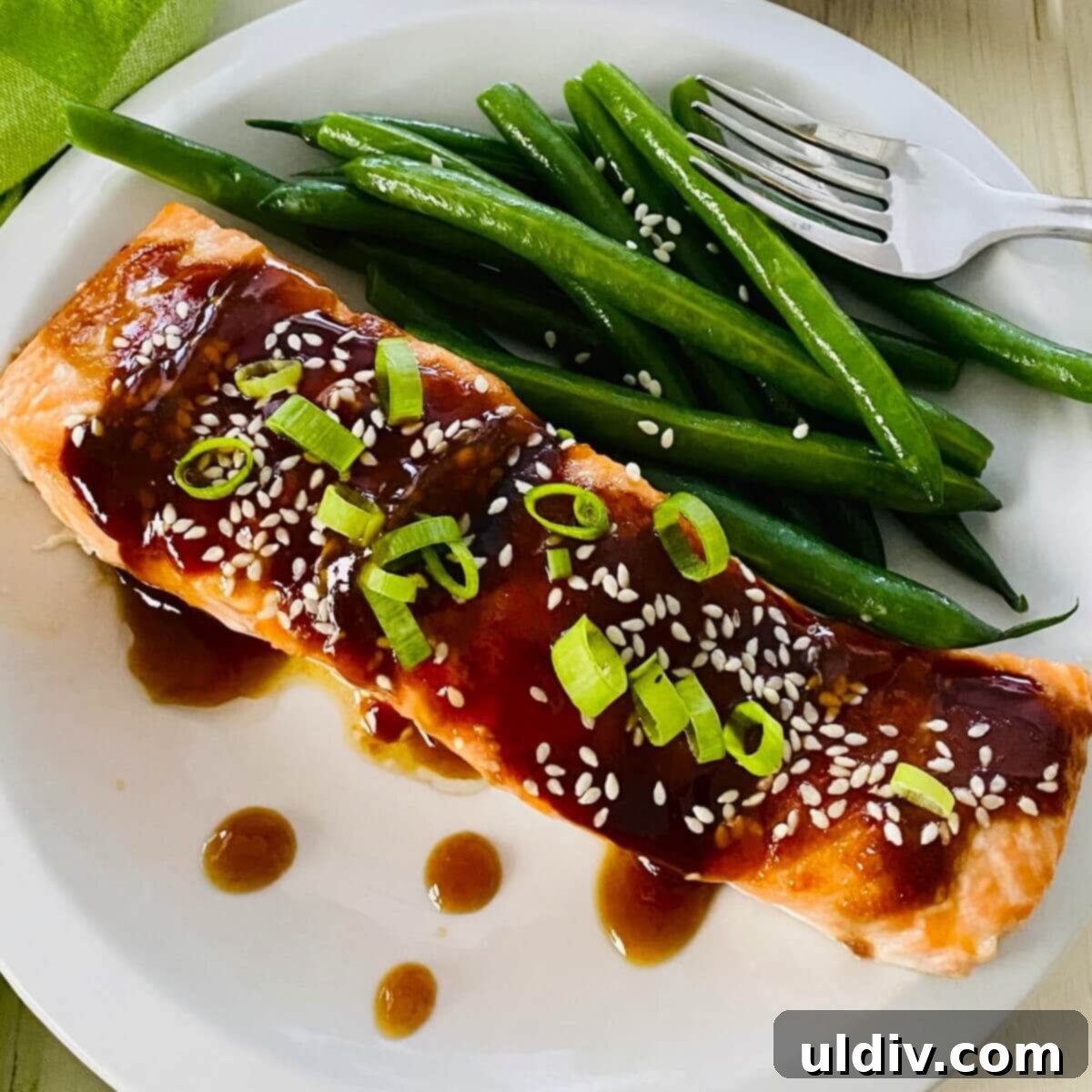
Baked Teriyaki Salmon
This baked teriyaki glazed salmon recipe rivals even the best restaurants. The incredibly easy dinner entrée is ready in about 20 minutes. The salmon fillets are drizzled with sweet smoky hoisin sauce and a simple homemade teriyaki sauce. This baked salmon teriyaki is truly delicious and a guaranteed crowd-pleaser!
Pin Recipe
Rate Recipe
5 minutes
15 minutes
20 minutes
4 servings
415 kcal
Amy Casey
Ingredients
- 4 salmon fillets
- 2 tablespoons hoisin sauce
- ¾ cup water, divided
- ¼ cup reduced sodium soy sauce
- 1 tablespoon light brown sugar
- 1 tablespoon honey
- ½ teaspoon ginger powder
- ½ teaspoon garlic powder
- 2 teaspoons cornstarch
- 2 teaspoons sesame seeds
- 2 green onions, thinly sliced
Instructions
- Preheat oven to 400 degrees F (200°C). Line a ¼ size baking sheet pan with foil or parchment paper for easy cleanup.
- Place the salmon fillets on the prepared baking sheet. Brush each fillet generously with the hoisin sauce. Set aside.
- In a small pot over medium-low heat, combine ½ cup of water, the reduced sodium soy sauce, light brown sugar, honey, ginger powder, and garlic powder.
- Bring the teriyaki mixture to a gentle boil and continue boiling for 1 minute, stirring occasionally. Watch carefully to prevent it from boiling over.
- In a separate small bowl, combine the remaining ¼ cup water and the cornstarch. Stir until the cornstarch is completely dissolved, forming a slurry.
- Slowly pour the cornstarch mixture into the simmering teriyaki mixture, whisking constantly. Stir and continue cooking until the sauce thickens enough to coat a spoon, typically about 2 minutes. Remove the thickened teriyaki sauce from the heat.
- Drizzle about 2 teaspoons of the prepared teriyaki sauce over each piece of hoisin-brushed salmon.
- Sprinkle the salmon with the sesame seeds.
- Bake in the preheated oven for 12 to 15 minutes, or until an internal temperature of 145 degrees F (63°C) is reached at the thickest part of the salmon. The salmon should be flaky and opaque.
- Remove the salmon from the oven. Drizzle with more of the remaining teriyaki sauce for extra flavor and garnish with the thinly sliced green onions.
- Serve immediately with your favorite side dishes and enjoy!
Notes
Purchase pieces of salmon that are the same thickness: Fish fillets that are uniform in thickness (about 1.5-2 inches is ideal) will cook more evenly, ensuring every piece is perfectly done at the same time.
Take the salmon’s temperature: For moist and delicious salmon every time, cook it to an internal temperature of 145 degrees F (63°C). A quick-read digital thermometer is indispensable for accurately checking the temperature.
Leftover teriyaki sauce?: Don’t discard any remaining homemade teriyaki sauce! It’s fantastic served with the salmon for those who love extra flavor. You can also brush it on steak, pork chops, shrimp, or chicken, or drizzle it over cooked vegetables like broccoli, carrots, zucchini, or mushrooms for an instant flavor boost.
Nutritional information provided is an estimate based on the ingredients and cooking methods used in this recipe and may vary.
Nutrition
Serving: 1 piece | Calories: 415 kcal | Carbohydrates: 16.6g | Protein: 30.5g | Fat: 25.3g | Saturated Fat: 6g | Cholesterol: 86mg | Sodium: 742mg | Fiber: 1.8g | Sugar: 9.4g
Did you make this recipe?
Tag @amycaseycooks on Instagram so we can all admire your work!