
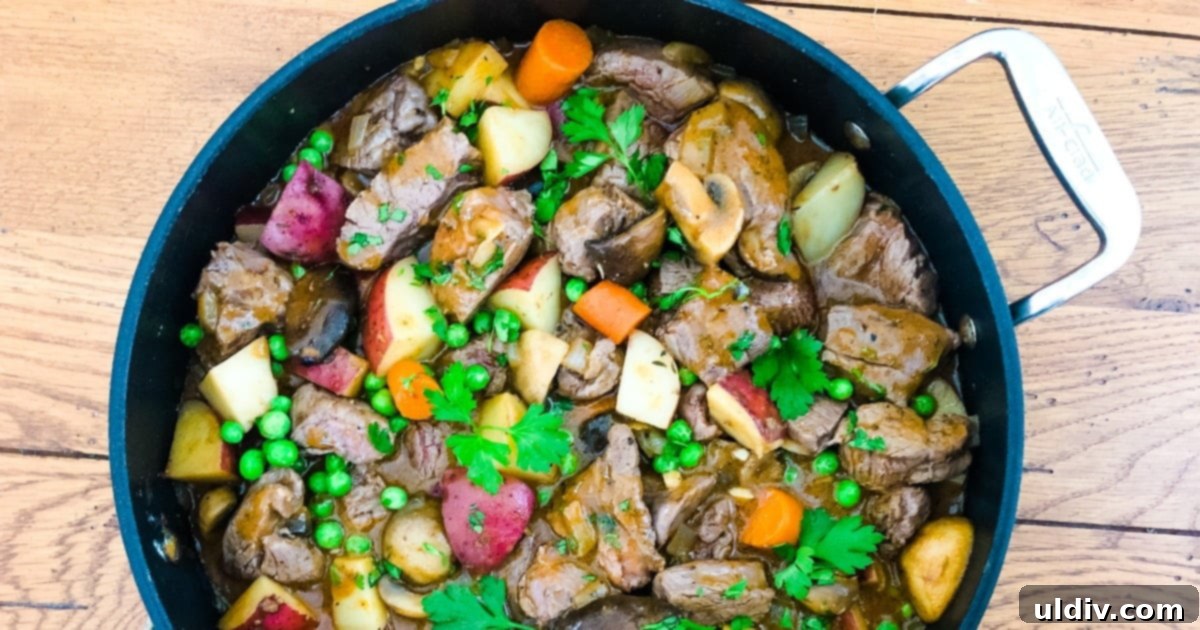
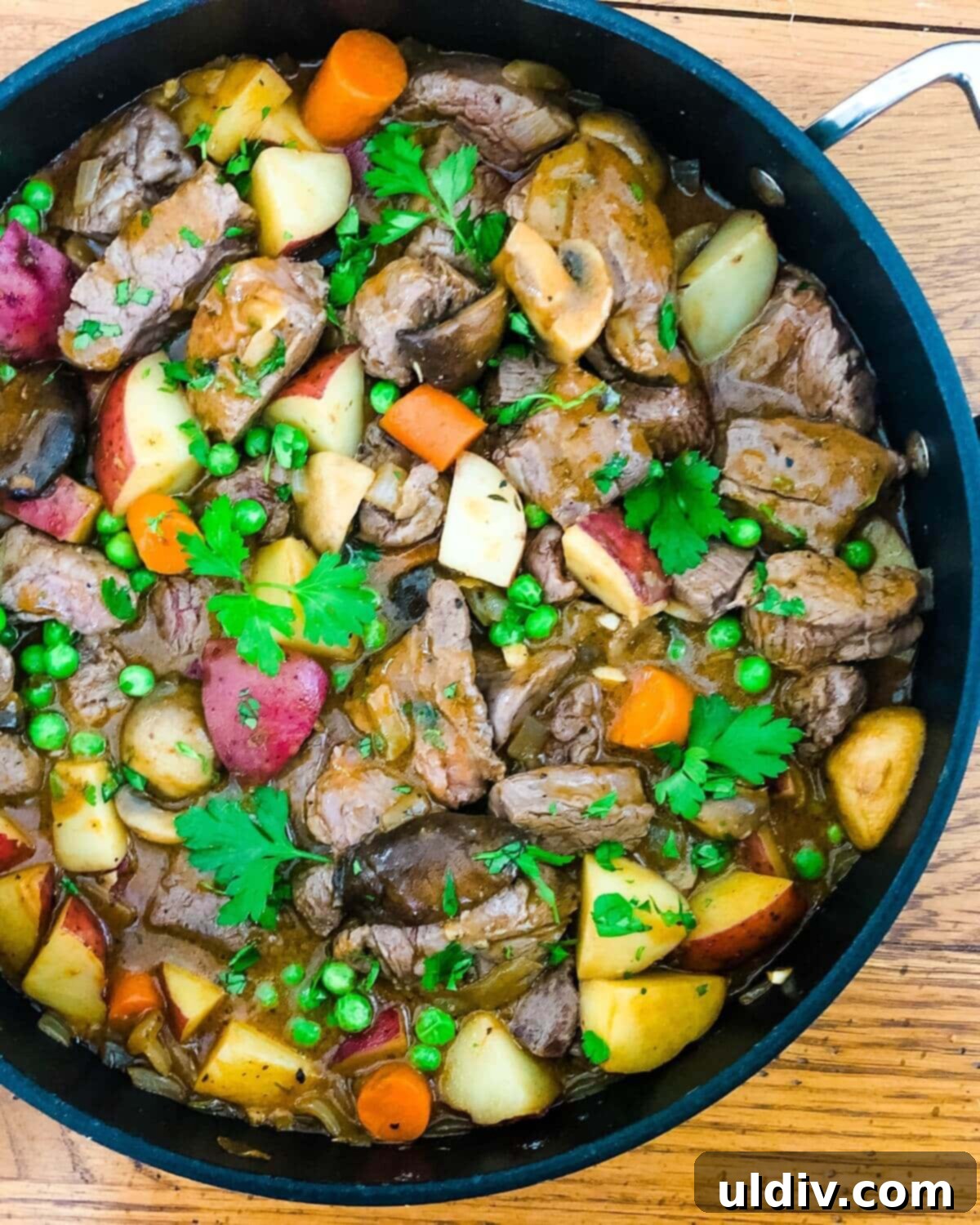
Beef Tenderloin Stew with New Potatoes and Mushrooms offers a truly elegant and remarkably quick one-pot meal, perfect for any occasion. This sophisticated version of a traditional stew brings all the rich, comforting flavors you’d expect from a slow-cooked dish, yet it’s ready in a fraction of the time. Imagine tender, melt-in-your-mouth beef complemented by earthy mushrooms and creamy new potatoes, all bathed in a deeply savory sauce. It’s an ideal choice for a luxurious weeknight dinner or an impressive meal for guests, proving that gourmet dining doesn’t always require hours in the kitchen.
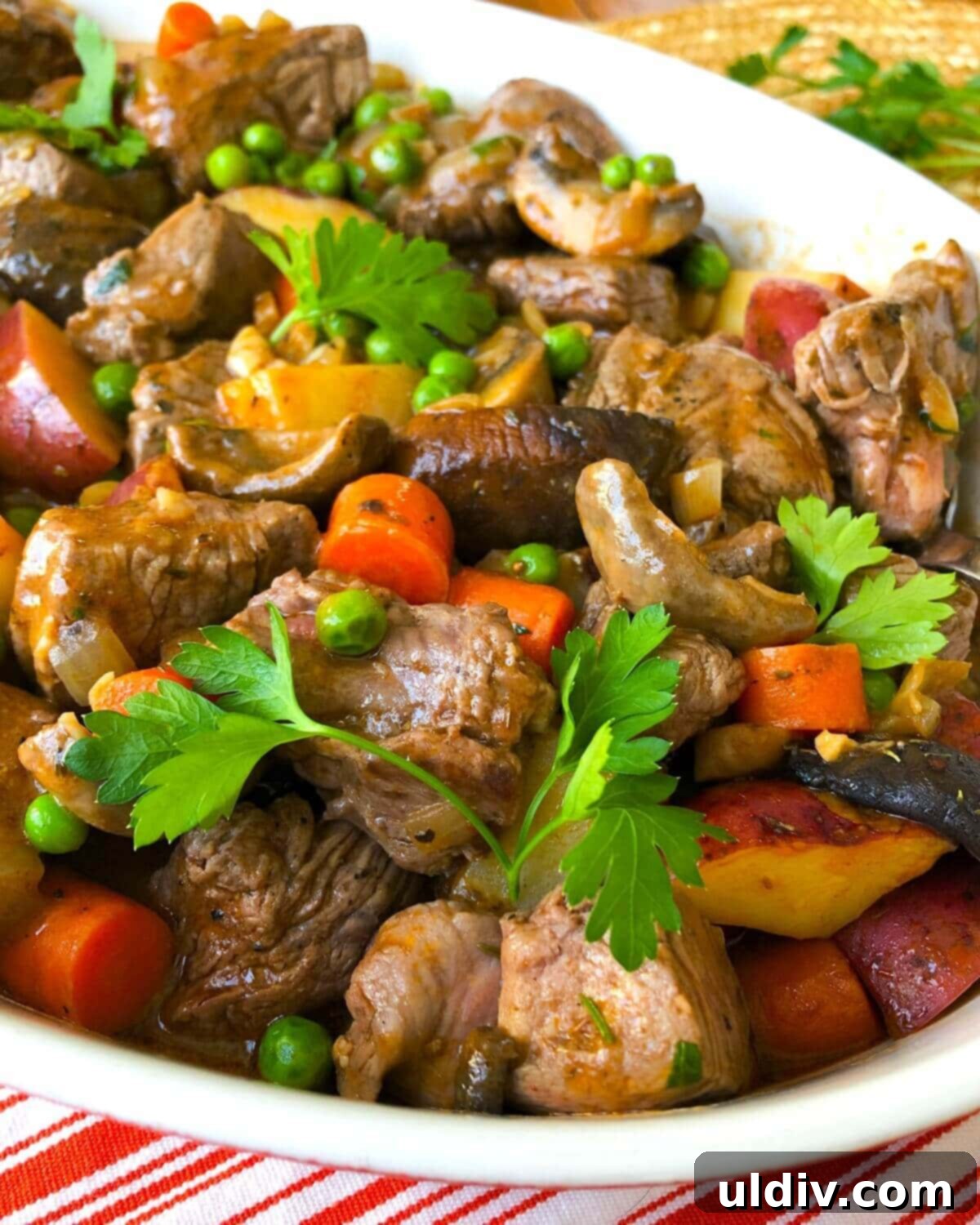
Why You’ll Adore This Speedy Beef Tenderloin Stew
After a bustling week, there’s nothing quite like unwinding at home with a loved one, a good bottle of wine, and an exceptionally comforting meal. While classics like our French Onion Chicken Bake or Smothered Pork Chops with Mushroom Gravy always hit the spot, this Beef Tenderloin Stew with Potatoes and Mushrooms elevates a cozy dinner into something truly special. It’s the perfect culinary embrace for those cherished evenings.
Unlike traditional beef stews, which typically feature tougher cuts like beef chuck roast and simmer for hours on low heat to achieve tenderness, this recipe utilizes the superior quality of beef tenderloin. This choice of meat drastically cuts down cooking time without compromising on flavor or texture. Each cube of tenderloin melts in your mouth, enveloped in a rich, decadent wine sauce that tastes as if it has been slow-cooked all day. The result is an ultimate comfort food experience that’s both quick to prepare and incredibly satisfying, making it arguably the best beef stew recipe for busy gourmands.
Beyond its speed, what makes this stew a standout is the harmonious blend of premium ingredients and thoughtful preparation. The vibrant flavors of fresh vegetables, aromatic herbs, and a savory beef stock come together to create a depth that is often only found in dishes requiring extensive cooking. This stew proves that sophistication and convenience can coexist beautifully on your dinner table, offering a gourmet meal that feels indulgent without the lengthy commitment.
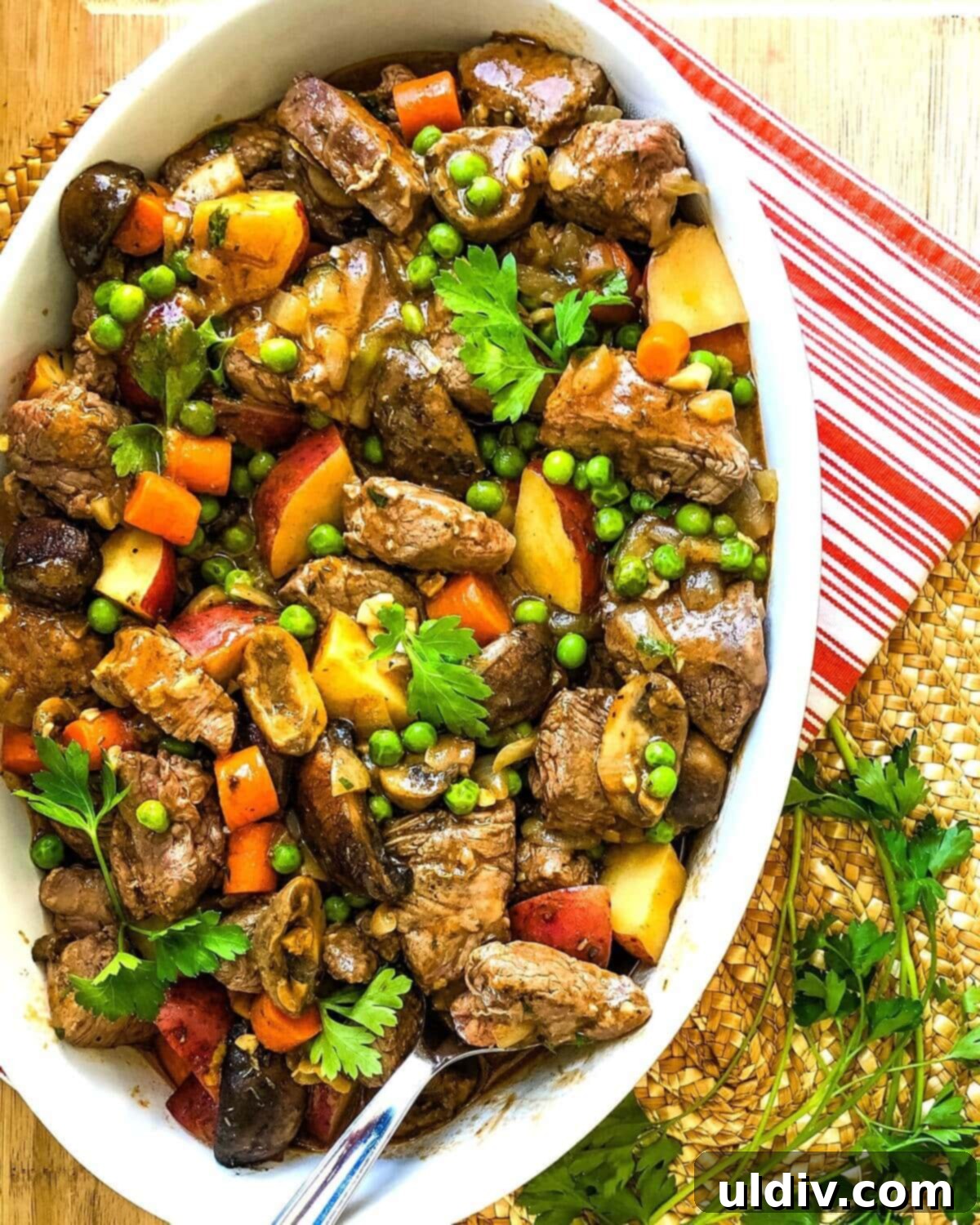
Essential Ingredients and Clever Substitutions for Your Stew
Crafting this rich and flavorful beef tenderloin stew starts with selecting high-quality ingredients. Here’s a detailed look at what you’ll need, along with smart substitutions to ensure your stew is always delicious. For precise quantities, refer to the printable recipe card below.
- Olive Oil: Essential for searing the beef and sautéing vegetables, adding a foundational layer of flavor. Alternatives include avocado oil, grapeseed oil, or sunflower oil, all of which have high smoke points suitable for this recipe. You could also use a combination of olive oil and butter for extra richness.
- Beef Tenderloin: This is the star of our quick stew. Its inherent tenderness allows for rapid cooking without becoming tough, unlike leaner or tougher cuts. For best results and cost-effectiveness, ask your butcher for the “tail” or “end cuts” of the tenderloin, which are often less expensive than center-cut filets but equally tender when cubed. Cut into roughly 1-inch pieces for even cooking.
- Kosher Salt: Its larger grain size enhances the natural flavors of the ingredients without making the dish excessively salty. Always season throughout the cooking process.
- Freshly Ground Black Pepper: Offers a more potent aroma and sharper flavor compared to pre-ground pepper, significantly improving the overall taste of the stew.
- Salted Butter: Used alongside olive oil to develop a richer flavor when sautéing. The salt in the butter helps to draw out moisture and deepen the browning of the vegetables. If you are managing your sodium intake, unsalted butter works perfectly fine; just adjust the added kosher salt accordingly.
- Yellow Onion: Provides a sweet and aromatic base for the stew. Vidalia onions offer a milder sweetness, while white onions or shallots can be used as direct substitutes, each lending a slightly different nuance to the flavor profile.
- Garlic Cloves: Freshly chopped garlic is indispensable for building depth and a pungent aroma. Avoid pre-minced garlic for the best flavor impact, as fresh cloves release far more essential oils.
- Baby Potatoes (New Potatoes): These small, tender potatoes hold their shape beautifully and absorb the flavors of the stew without becoming mushy. Small red or white potatoes, or even quartered Yukon Gold potatoes, are excellent alternatives. Avoid starchy russet potatoes, which tend to break down too much.
- Carrots: Fresh carrots add sweetness, color, and texture. It’s crucial to use fresh varieties, as canned or frozen carrots often become overly soft and lose their distinct texture in a stew.
- Button Mushrooms: Offer an earthy umami flavor and a pleasant chewiness. Cremini mushrooms (baby bellas) are a fantastic substitute, providing a slightly deeper mushroom flavor. You could also experiment with sliced shiitake or oyster mushrooms for a more exotic twist.
- Fresh Thyme: Infuses the stew with a classic, herbaceous aroma. If fresh thyme is unavailable, 1 teaspoon of dried thyme can be used, but fresh sprigs add a brighter, more vibrant flavor.
- All-Purpose Flour: Acts as a thickening agent, creating a luxurious, velvety sauce that coats the beef and vegetables beautifully.
- Tomato Paste: A small but mighty ingredient, tomato paste adds concentrated umami and a subtle tang, enriching the stew’s color and depth of flavor. Look for it in a tube for convenience and freshness.
- Beef Stock: The foundation of the stew’s liquid, providing a savory backbone. Use a high-quality homemade beef stock if possible, or your favorite low-sodium store-bought brand. You can also use beef broth.
- Red Wine Vinegar: A splash of red wine vinegar brightens the sauce, balancing its richness with a touch of acidity. Balsamic vinegar or white wine vinegar can be used as alternatives, each adding a slightly different acidic note.
- Dijon Mustard: Adds a subtle pungent tang and helps to emulsify the sauce, contributing to its depth and complexity without making the stew taste distinctly like mustard. Stone-ground mustard or even a good quality yellow mustard can be used in a pinch.
- Frozen Peas: Stirred in at the very end, frozen peas add a pop of vibrant green color and fresh sweetness, contributing to the stew’s balanced flavor and texture.
- Fresh Parsley: A final flourish of chopped fresh parsley not only adds a beautiful contrasting color but also a burst of fresh, herbaceous flavor that brightens the entire dish. Dried parsley can be used for convenience, but fresh is highly recommended for visual appeal and aromatic impact.
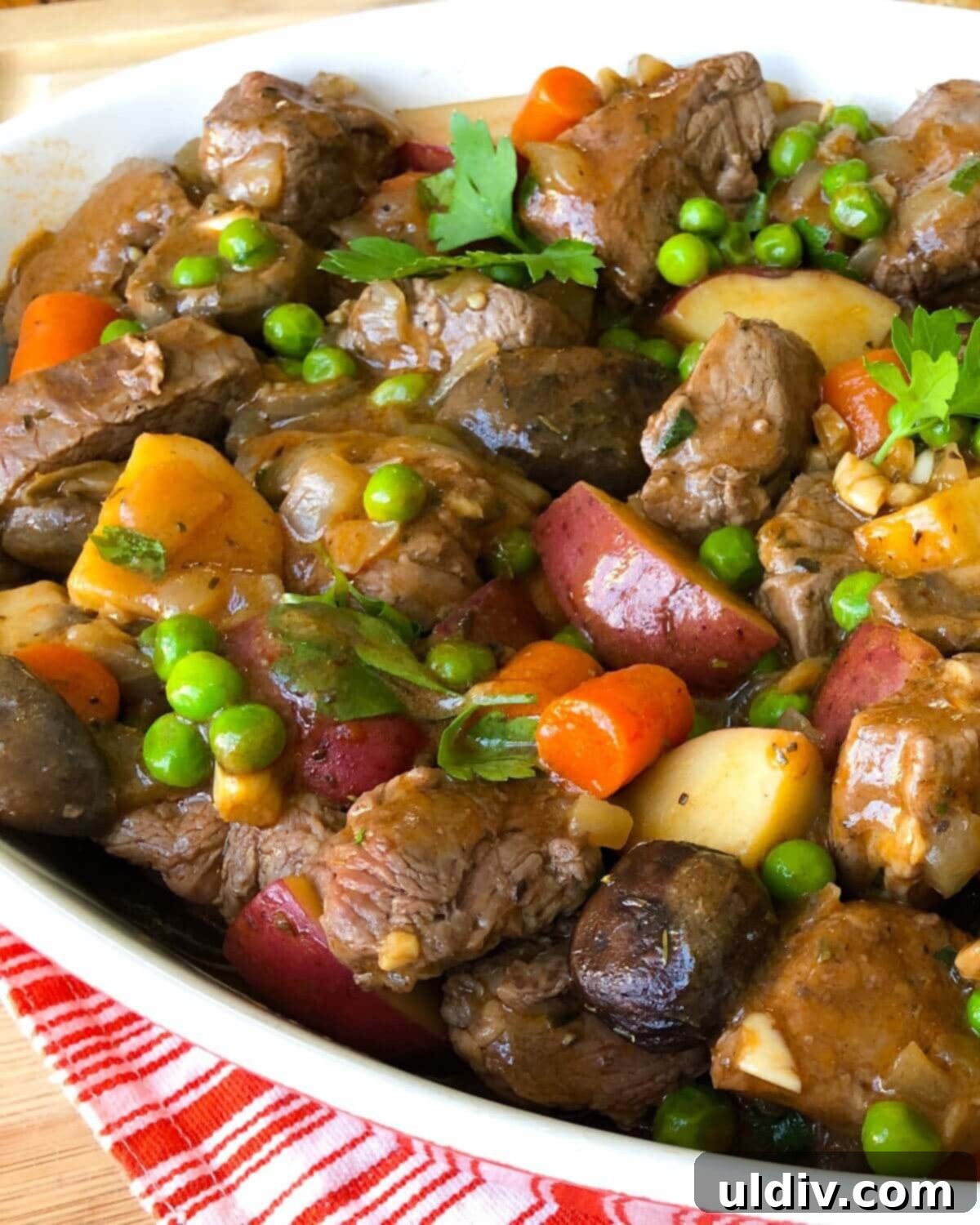
Mastering the Art of This Quick Beef Tenderloin Stew
Creating this elegant and quick beef stew is a straightforward process, relying on foundational cooking techniques to build immense flavor in a short amount of time. Gather all your ingredients and basic kitchen tools before you begin. Here’s a detailed overview of how to bring this exquisite dish to life:
- Searing the Beef to Perfection: The first crucial step involves a quick, high-heat sear of the beef tenderloin cubes. This process is essential for developing a deep, caramelized crust on the meat, locking in its juices and adding incredible depth of flavor to the stew. Sear the beef until it’s lightly browned on all sides, aiming for a medium-rare internal temperature. This ensures the beef remains incredibly tender and melts in your mouth, avoiding any toughness. Once seared, remove the beef from the pan and set it aside; it will be reintroduced later.
- Building the Flavor Base with Sautéed Vegetables: In the same pan, capitalizing on the flavorful fond left by the beef, you’ll sauté the diced onion, minced garlic, quartered baby potatoes, carrots, and mushrooms, along with fresh thyme. This step is where much of the stew’s richness and aromatic complexity develop. Cook the vegetables until the onions become translucent and the mushrooms begin to soften and release their moisture, stirring frequently to ensure even cooking and prevent sticking. Season with a pinch of salt and pepper to enhance their natural sweetness.
- Crafting the Rich Sauce: After the vegetables have softened, sprinkle in the all-purpose flour and add the tomato paste. Stir well, cooking for a minute or two to toast the flour, which eliminates any raw flour taste and helps thicken the sauce. Then, gradually stir in the beef stock, red wine vinegar, and Dijon mustard. The vinegar adds a crucial bright note that cuts through the richness, while the mustard contributes a subtle, savory depth. Bring the mixture to a gentle boil, then reduce the heat to a simmer. Cover the pot and allow the vegetables to cook until the potatoes are tender, typically 20 to 25 minutes. Stir occasionally to prevent scorching and ensure even cooking.
- Finishing with Freshness: Once the vegetables are tender and the sauce has thickened beautifully, return the seared beef tenderloin to the pan, along with any juices that have accumulated. Add the bright green frozen peas at this stage. Stir everything together gently and heat the stew through for just a few minutes, enough to warm the beef and peas without overcooking the tenderloin. Taste and adjust the seasoning with additional salt and pepper as needed. Finally, stir in a generous amount of chopped fresh parsley, which adds a vibrant pop of color and a fresh, herbaceous finish, lifting all the rich flavors of the stew.
Chef’s Insight: The key to achieving irresistibly tender beef tenderloin in this stew is precise searing. Aim for a perfect medium-rare brown on all sides initially. Since the beef will cook further when returned to the stew, this prevents it from becoming tough. The goal is melt-in-your-mouth perfection.
Delightful Variations to Customize Your Stew
This beef tenderloin stew recipe is wonderfully versatile, allowing for creative adaptations to suit your taste preferences. Explore these delicious variations to add new dimensions to your one-pot masterpiece:
- Infuse with a Kick of Spice: For those who enjoy a bit of heat, incorporating red pepper flakes can transform the stew. Add about ½ to 1 teaspoon of red pepper flakes along with the vegetables during the sautéing step. The heat will infuse into the oil and vegetables, providing a pleasant warmth throughout the dish. You can also add a pinch of cayenne pepper with the flour for a more subtle, deep spice.
- Embrace a Touch of Smokiness: To add an alluring layer of smoky depth, stir in 1 teaspoon of smoked paprika along with the tomato paste and flour. Smoked paprika, especially the Pimentón de la Vera variety, imparts a rich, earthy, and subtly smoky flavor that beautifully complements the beef and mushrooms, evoking the essence of slow-cooked stews.
- Experiment with Different Meats: While beef tenderloin is supreme for this quick version, you can easily substitute other proteins. For instance, cubed pork tenderloin works wonderfully, cooking just as quickly and offering a slightly different, equally delicious flavor profile. Ensure the pork pieces are roughly the same size as the beef tenderloin for even cooking. For a vegetarian option, you could use hearty root vegetables like parsnips and celery root, or even plant-based “beef” chunks, adjusting cooking times accordingly.
- Add Root Vegetable Richness: Enhance the stew with additional root vegetables. Diced parsnips, turnip, or celery root can be added along with the carrots and potatoes for more complex flavors and textures. Ensure they are cut into small, uniform pieces to cook thoroughly within the allotted time.
- Herbaceous Twist: While thyme is classic, consider incorporating other fresh herbs. A sprig of fresh rosemary or a bay leaf added during the simmering phase can impart a fragrant, earthy note. Fresh marjoram also pairs beautifully with beef. Remove the bay leaf before serving.
- A Creamy Finish: For an extra-rich and velvety stew, stir in a quarter cup of heavy cream or a dollop of sour cream (creme fraiche works beautifully) just before serving. This adds a luxurious mouthfeel and mellows the flavors, creating an even more indulgent dish.
Recommended Equipment for a Seamless Cooking Experience
Having the right tools can make all the difference in the kitchen, turning cooking from a chore into a joy. For this beef tenderloin stew, a few key pieces of equipment will ensure a smooth and successful preparation:
- Chef’s Knife: A sharp, high-quality chef’s knife is indispensable for efficiently cubing the beef tenderloin and dicing all the vegetables (onions, garlic, potatoes, carrots, mushrooms). A well-maintained knife makes prep work safer and much faster.
- Cutting Boards: Always use separate cutting boards for raw meat and fresh vegetables to prevent cross-contamination. Having at least two sturdy cutting boards is essential for safe and efficient meal prep.
- Metal Measuring Spoons and Cups: Accurate measurements are crucial for a balanced sauce. Metal sets are durable and easy to clean, ensuring precise ingredient ratios for optimal flavor.
- Large Sauté Pan with a Lid: A heavy-bottomed sauté pan (preferably cast iron or stainless steel) with deep sides and a tight-fitting lid is ideal. The heavy bottom ensures even heat distribution for perfect searing of the beef and consistent sautéing of vegetables. The lid is essential for simmering the stew, allowing the vegetables to tenderize and the flavors to meld beautifully. A pan with at least a 10-12 inch diameter is recommended to accommodate all ingredients without overcrowding.
- Rubber Spatulas or Wooden Spoons: These tools are perfect for stirring the stew, ensuring nothing sticks to the bottom of the pan and the ingredients cook evenly. They are also gentle on non-stick surfaces if you are using such a pan.
- Tongs: Useful for turning the beef cubes during searing and for general handling of ingredients in the hot pan.
Top Tip for Achieving Ultimate Beef Tenderness
The secret to an unforgettable beef tenderloin stew lies in perfectly cooked meat. The most crucial tip for this recipe is to **never overcook the beef tenderloin.** Because tenderloin is such a lean and delicate cut, it cooks very quickly and can become tough and dry if subjected to prolonged heat. When searing the beef tenderloin cubes at the beginning, aim for a beautiful golden-brown crust on all sides with an internal doneness of medium-rare to medium. The meat will continue to cook slightly when it’s returned to the simmering stew at the end. By searing it to just the right point initially, you ensure that the beef remains incredibly juicy and literally melts in your mouth with every spoonful. Trust your instincts and prioritize tenderness to truly savor the premium quality of the tenderloin.
Frequently Asked Questions About Beef Tenderloin Stew
Absolutely! Like many hearty stews, the flavors of this beef tenderloin stew often deepen and meld even better overnight, making it an excellent make-ahead meal. To prepare in advance, simply cook the stew according to the instructions, allow it to cool completely, then transfer it to an airtight container. It can be refrigerated for up to 3 days. When ready to serve, gently reheat the stew over low heat on the stove, stirring occasionally. If the sauce has thickened too much during storage, add a splash of extra beef stock or water to reach your desired consistency. Be careful not to boil aggressively during reheating to maintain the tenderness of the beef and vegetables.
Beef tenderloin is chosen for this particular stew recipe because it cooks incredibly quickly, allowing the entire dish to be ready in less than an hour, typically around 45 minutes total. Traditional stews rely on slow cooking to break down tough connective tissues in cuts like chuck roast, which takes several hours. Tenderloin, being a naturally tender cut, doesn’t require this lengthy cooking time. This makes it perfect for a “speedier version” of stew that doesn’t sacrifice gourmet quality. While tenderloin can be more expensive, you can often find more affordable “end cuts” or the “tail” of the tenderloin at your butcher, which are perfect for cubing and can be significantly less per pound than center-cut filet mignon steaks.
Yes, this stew freezes well! Once completely cooled, transfer the stew to freezer-safe containers or heavy-duty freezer bags, leaving a little headspace for expansion. It can be stored in the freezer for up to 3 months. To reheat, thaw overnight in the refrigerator, then gently warm on the stovetop over low heat, adding extra beef stock if needed. Be aware that potatoes can sometimes become a bit softer in texture after freezing and thawing, but the overall flavor will remain excellent.
Achieving a rich, dark sauce starts with proper searing of the beef and browning the vegetables, creating a flavorful fond at the bottom of the pan. Don’t skip these steps! Using good quality beef stock, allowing the flour to lightly toast after adding it, and incorporating tomato paste all contribute to a deeper color and more intense flavor. Deglazing the pan with a bit of red wine (before adding the stock) would also add complexity and color, though red wine vinegar serves a similar purpose in this recipe.
Perfect Pairings: What to Serve with This Exquisite Stew
This Beef Tenderloin Stew is a complete meal in itself, but a few thoughtfully chosen accompaniments can elevate the dining experience even further. A crusty loaf of artisanal bread is almost mandatory for soaking up every last drop of the luscious sauce. Consider a rustic baguette, sourdough, or even a classic Irish Soda Bread. For a refreshing contrast, a simple green salad with crunchy romaine lettuce, halved cherry tomatoes, and diced cucumber, lightly tossed in a bright balsamic vinaigrette, beautifully rounds out the meal. Here are some other delicious side dishes that perfectly complement the rich flavors of this stew:
- Crispy Everything Bagel Puff Pastry Cheese Twists
- Savory Chaffles with Almond Flour
- How to Cook Perfectly Fluffy White Rice {No Fail}
- Rustic Irish Soda Bread with Cranberries and Currants
For a sophisticated touch, consider a wine pairing. A medium-bodied red wine like a Pinot Noir or a Merlot would complement the rich beef and earthy mushrooms beautifully, enhancing the overall dining experience.
Explore More Comforting Stew Recipes
If you’re a fan of the warming, soul-satisfying qualities of a good stew, then you’ll love exploring these other comforting recipes. Each offers a unique flavor profile and a hearty meal perfect for any season:
- Irish Lamb Stew with Guinness
- Pork Tenderloin Stew Recipe with Bacon
- Instant Pot Spicy Asian Beef Stew
- Easy Crock Pot Ratatouille
Connect With Us: Share Your Culinary Creations!
We absolutely love hearing from you and seeing your incredible cooking! If you create this Beef Tenderloin Stew with New Potatoes and Mushrooms, please don’t hesitate to share your experience.
Be sure to leave a comment below and/or give this recipe a rating. Your feedback is invaluable, and we strive to reply to every single comment. We’re also thrilled to see your beautiful food photos! Snap a picture and post it to Instagram, tagging us so we can admire your work. We often feature your creations in our Insta stories!
For more fabulous foodie stories, behind-the-scenes videos, essential cooking tips, and an array of delicious recipes, make sure to check out our Facebook and Pinterest pages. And to ensure you never miss out on our latest culinary inspirations and new recipes, sign up for our newsletter today!
Recipe Card: Beef Tenderloin Stew with Potatoes and Mushrooms
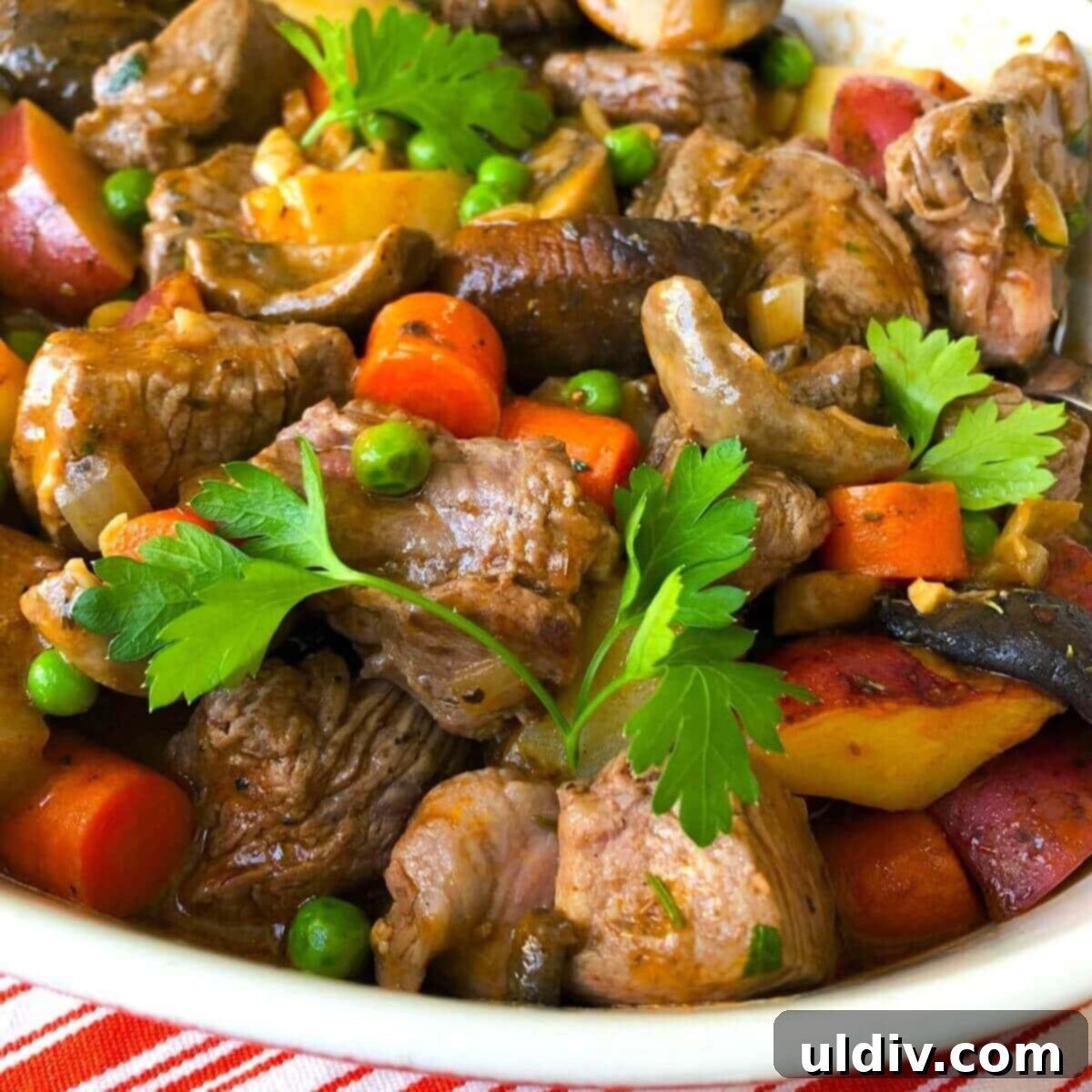
Beef Tenderloin Stew with Potatoes and Mushrooms
Beef Tenderloin Stew with Baby Potatoes and Mushrooms is a chic one-pot meal that adds flair to dinner. This speedier version of a classic recipe features melt-in-your-mouth beef and a rich sauce, delivering all the flavor of its slow-cooked counterpart with a fraction of the time spent in the kitchen. It’s the ultimate comforting meal ready in under 45 minutes.
Ingredients
- 2 tablespoons olive oil, divided
- 1 ½ pounds beef tenderloin cubes, about 1-inch each
- Kosher salt and freshly ground black pepper to taste
- 1 tablespoon salted butter
- 1 medium yellow onion, diced (about 1 cup)
- 3 garlic cloves, chopped
- 12 small or baby potatoes, quartered (about 3 cups)
- 1 medium carrot, diced (about 1 cup)
- 10 ounces button mushrooms, quartered (about 2 cups)
- 2 large sprigs fresh thyme or 1 teaspoon dried thyme
- 1 tablespoon all-purpose flour
- 1 tablespoon tomato paste
- 1 cup beef stock
- 1 tablespoon red wine vinegar
- 2 teaspoons Dijon mustard
- 1 cup frozen peas
- 2 tablespoons chopped fresh parsley
Instructions
- Heat a large sauté pan over medium-high heat and add 1 tablespoon of the olive oil. Season the beef tenderloin cubes generously with salt and pepper. Add them to the hot pan and sear on each side for a total of about 3 to 4 minutes, aiming for a beautiful medium-rare doneness. This quick searing creates a rich crust and locks in juices. Remove the seared beef from the pan and set it aside.
- Add the remaining 1 tablespoon of olive oil and the salted butter to the same pan. Stir in the diced onion, chopped garlic, quartered potatoes, diced carrots, quartered mushrooms, and fresh thyme sprigs. Season the vegetables with a pinch of salt and pepper. Sauté the vegetables for 6 to 8 minutes, stirring frequently, until the onions soften and become translucent, and the mushrooms begin to release their moisture.
- Sprinkle the all-purpose flour over the sautéed vegetables, then add the tomato paste. Stir well to combine, ensuring the flour coats the vegetables evenly and cooks for about 1 minute to remove any raw flour taste.
- Pour in the beef stock, red wine vinegar, and Dijon mustard. Stir until thoroughly combined and bring the mixture to a gentle boil. Once boiling, reduce the heat to a low simmer. Cover the pot and continue cooking for 20 to 25 minutes, or until the potatoes are fork-tender. Stir the stew occasionally to prevent sticking.
- Return the seared beef tenderloin, along with any accumulated juices, to the pan. Add the frozen peas. Heat the stew through for just a few minutes, ensuring the beef is warmed but not overcooked. Taste the stew and adjust seasoning with additional salt and pepper as needed. Garnish generously with fresh chopped parsley before serving hot.
Notes
- For the most tender beef, avoid overcooking the tenderloin during the initial sear and when reheating in the stew.
- Using fresh herbs like thyme and parsley will significantly enhance the aroma and vibrancy of the stew.
- For a deeper flavor, consider using a good quality, concentrated tomato paste (often found in a tube).
- This stew tastes even better the next day as the flavors have more time to meld.
Nutrition
Did you make this recipe?
Tag @amycaseycooks on Instagram so we can all admire your work!