
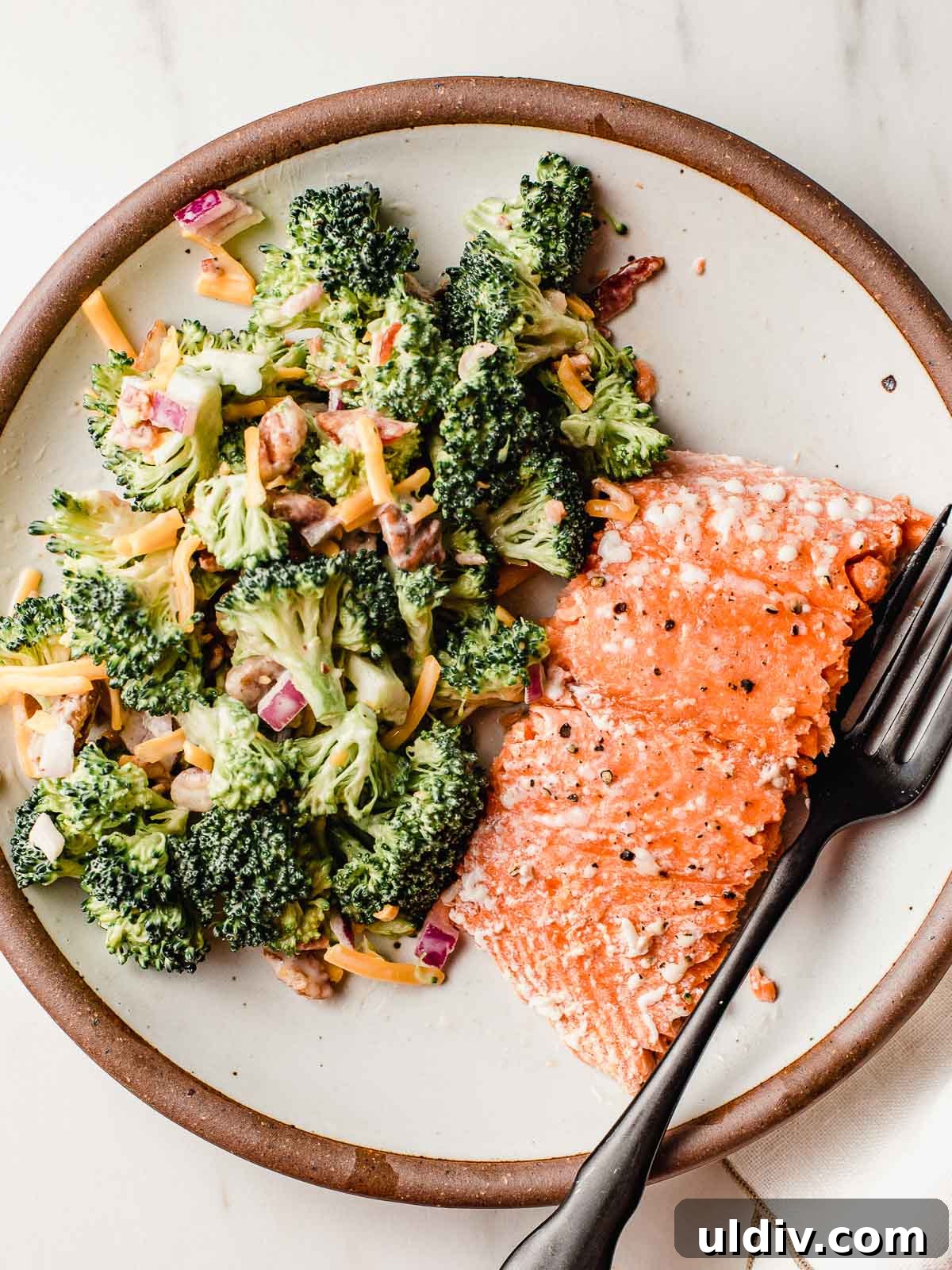
Baked salmon is a nutritious, high-quality protein that you can prepare in under 20 minutes. When baked correctly it comes out moist, tender and flaky every time, making it a reliable go-to for busy weeknights and simple entertaining.
This method is versatile and pairs well with many sides — roasted vegetables, a crisp green salad, or a light coleslaw all work beautifully.
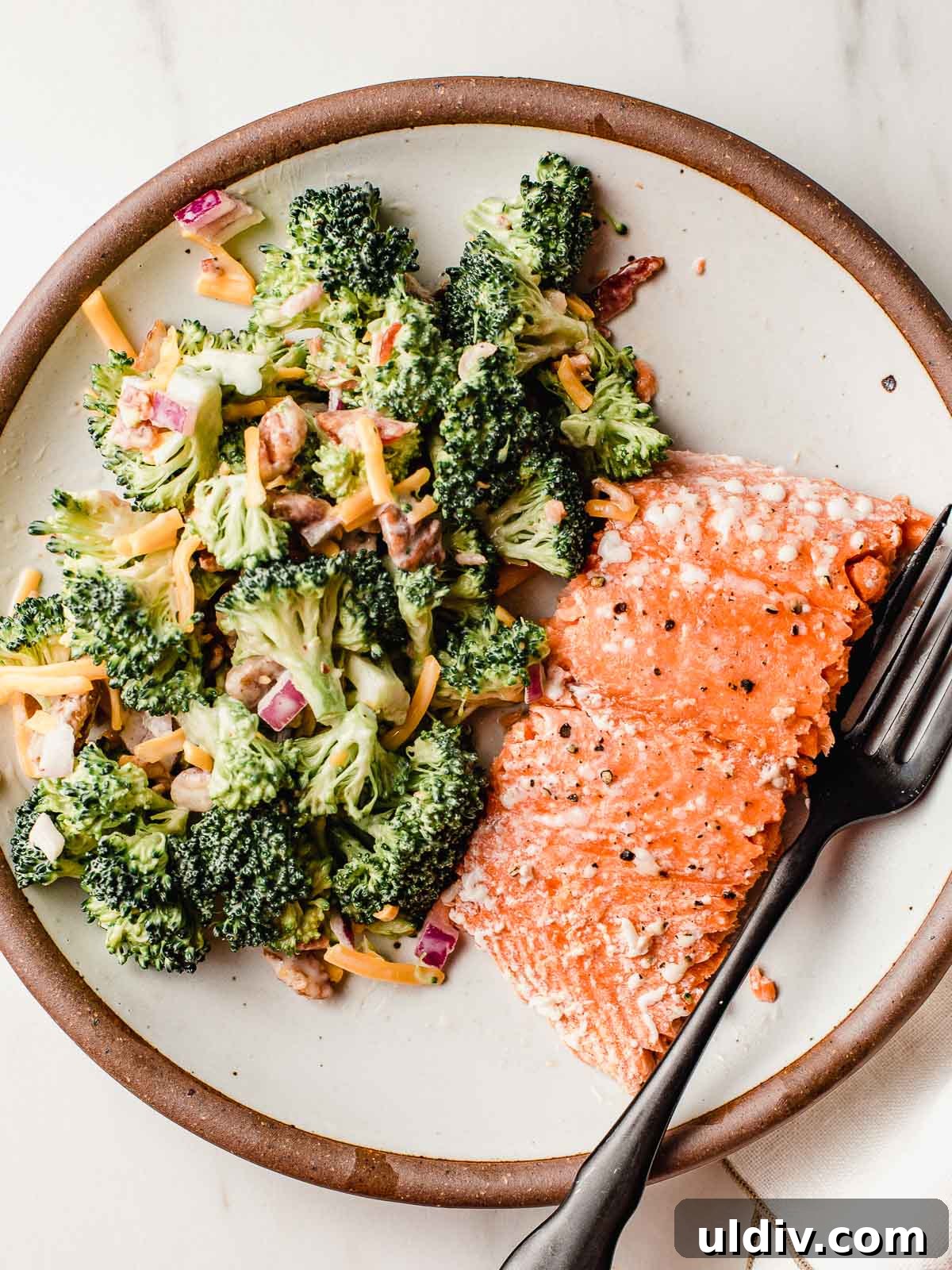
This is one of my favorite ways to bake salmon because it’s fast, straightforward and consistently excellent. The technique keeps the fish juicy and flavorful without fuss.
Leftover baked salmon is also very adaptable: flake it into a salad, form salmon patties, or enjoy it cold as part of a light lunch. The options are endless.
What is the best way to bake salmon?
There are a few ways to bake salmon in the oven. You can place the fillet skin-side down on a baking sheet and bake uncovered, but wrapping the fish in foil is often the best option. Foil traps steam and keeps the fish from drying out while also simplifying cleanup.
If you prefer not to use foil, parchment paper is a good alternative. Fold the edges to create a sealed packet so the salmon steams gently as it cooks.
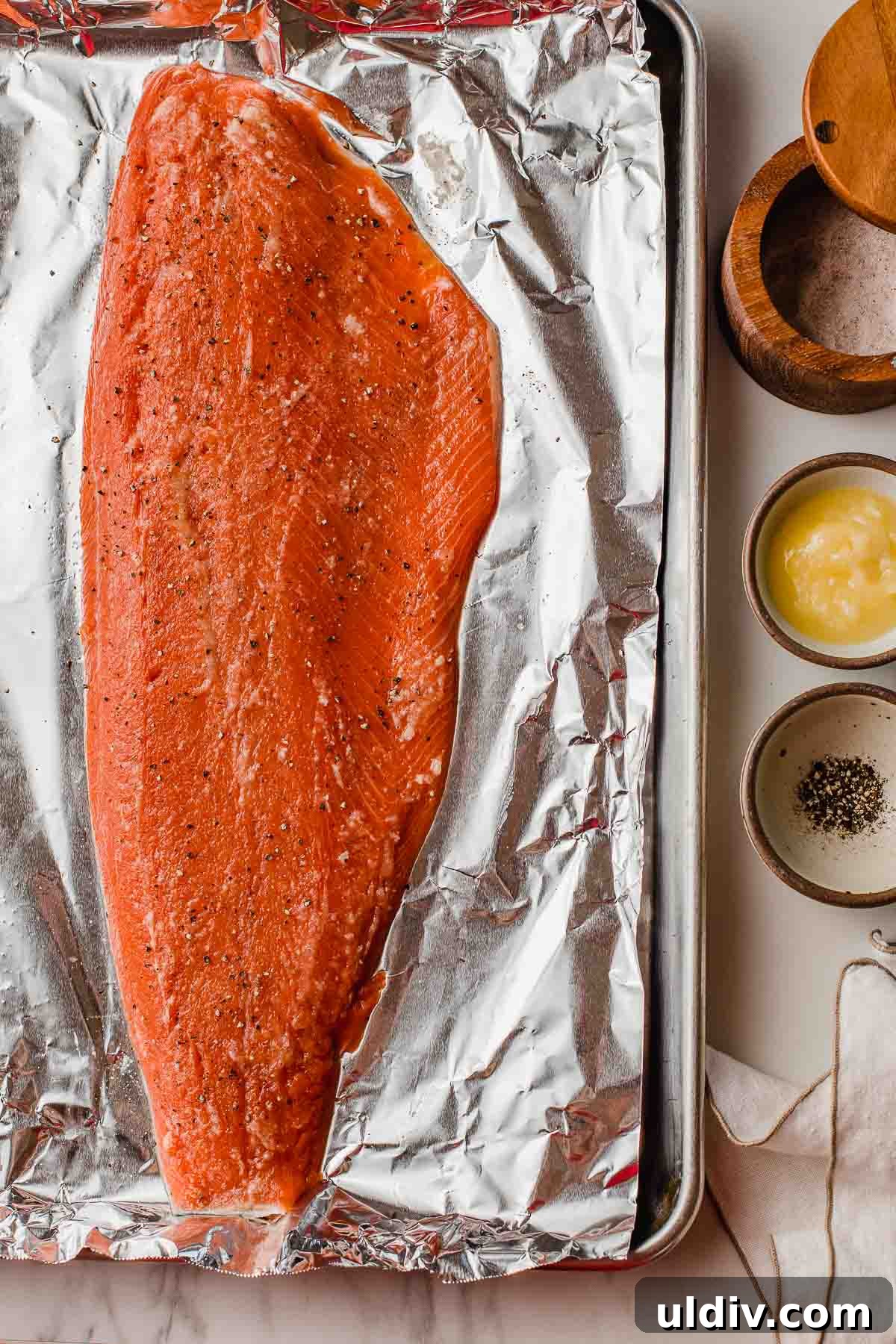
Preheat the oven to 375°F and line a baking sheet with foil. Place the salmon fillet skin-side down on the foil. Brush the flesh with ghee (or your preferred oil) and season evenly with salt and pepper. Fold the foil up around the fish to seal in moisture.
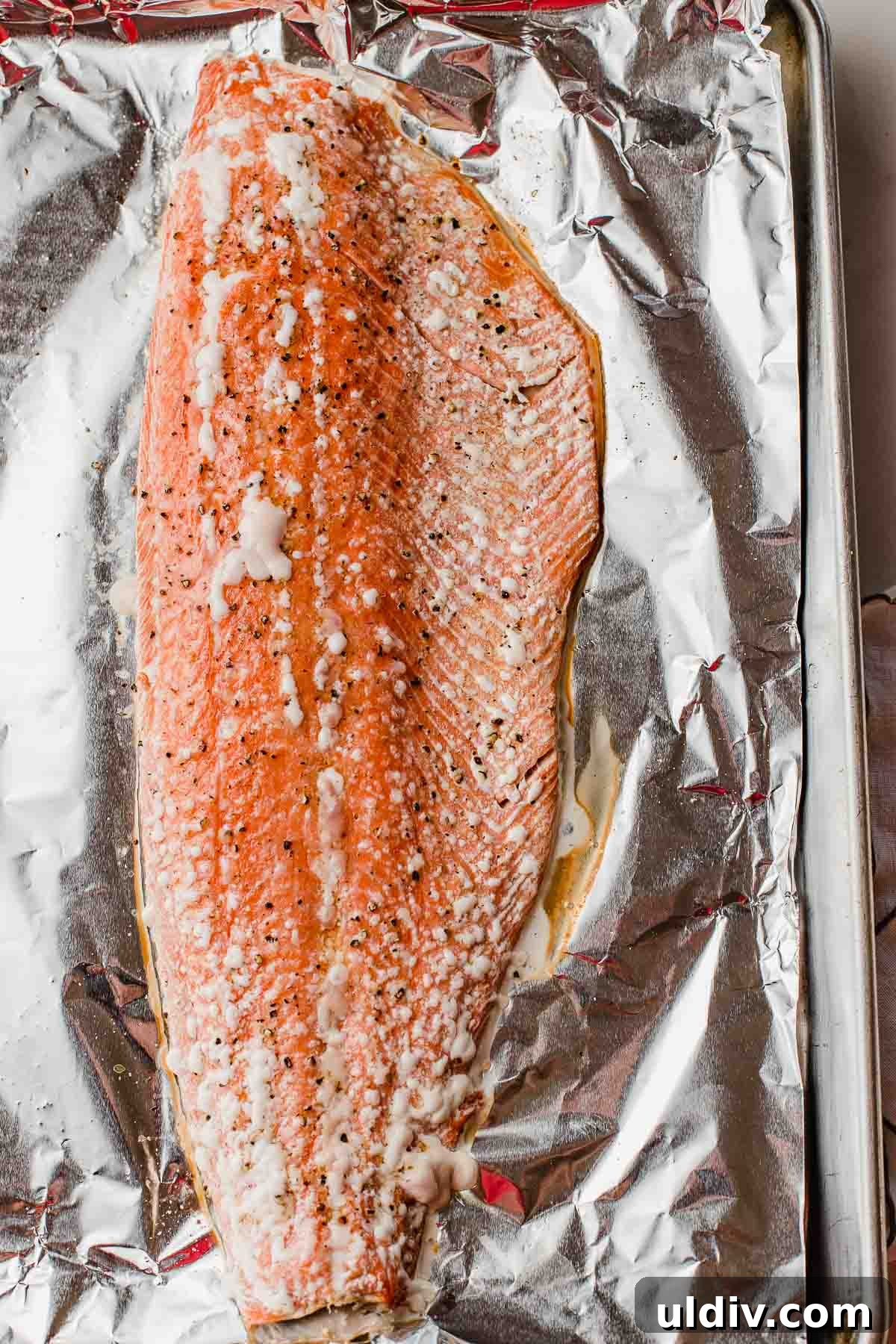
Bake for about 10 minutes total, or roughly 5 minutes per ½” of thickness measured at the thickest part of the fillet. Remove promptly and serve.
Tips for success
Room temperature: Let salmon sit at room temperature for 30–60 minutes before baking. This helps it cook evenly from edge to center.
Don’t overbake: Remove the fish from the oven just before it looks fully cooked in the center — it will continue to carry-over cook. Use the guideline of 4–5 minutes per ½” thickness to avoid drying out the fillet.
Ghee or oil: Ghee adds a rich, buttery note, but olive oil or avocado oil are excellent neutral alternatives that also help keep the fish moist.
Skin on or off: Baking with the skin on protects the flesh and makes cleanup easier. If you prefer to eat the salmon without skin, it’s simple to lift the cooked fillet off the skin with a spatula after baking.
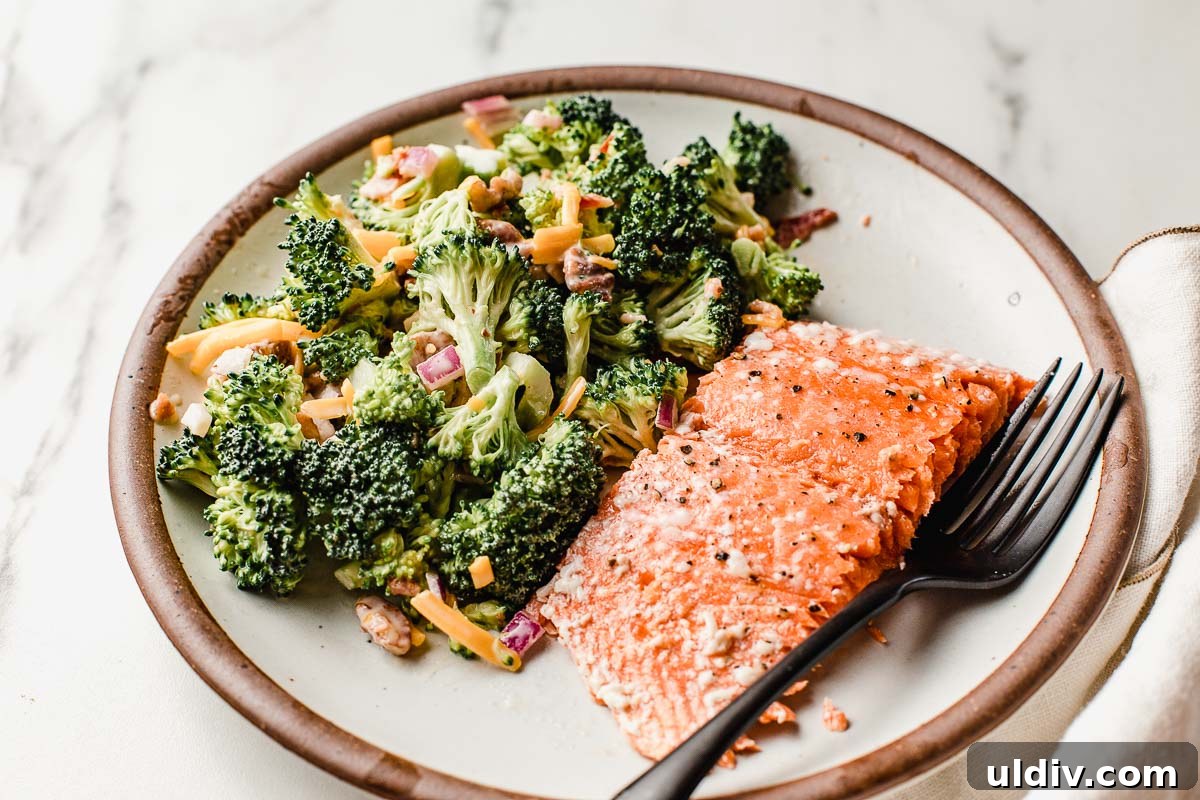
Frequently asked questions
Bake salmon at 375°F for reliable results whether covered or uncovered.
Baking time depends on thickness. Use about 4–5 minutes per ½” of thickness, measured at the thickest point. Thinner wild salmon will need less time than thicker farm-raised fillets.
The fish is done when it flakes easily with a fork. For a precise check, the internal temperature should reach 145°F when measured with a digital thermometer.
Store cooked salmon in the refrigerator for up to 2 days, or freeze portions for up to 2 months.
Leftovers are very versatile: use them cold in salads, mash into salmon patties, or combine with avocado for a quick sandwich or bowl.
Easy Baked Salmon
Amy Duska
Pin Recipe
Ingredients
- 1 lb. wild caught salmon
- 1 tablespoon ghee or olive oil
- ½ teaspoon salt
- ½ teaspoon black pepper
Instructions
-
Preheat the oven to 375°F and line a baking sheet with foil.
-
Place the salmon, skin side down, on the foil. Brush the flesh with ghee and season with salt and pepper. Fold the foil sides up to enclose the fish.
-
Bake 10 minutes, or about 5 minutes per ½” of thickness measured at the thickest point. Serve immediately.