
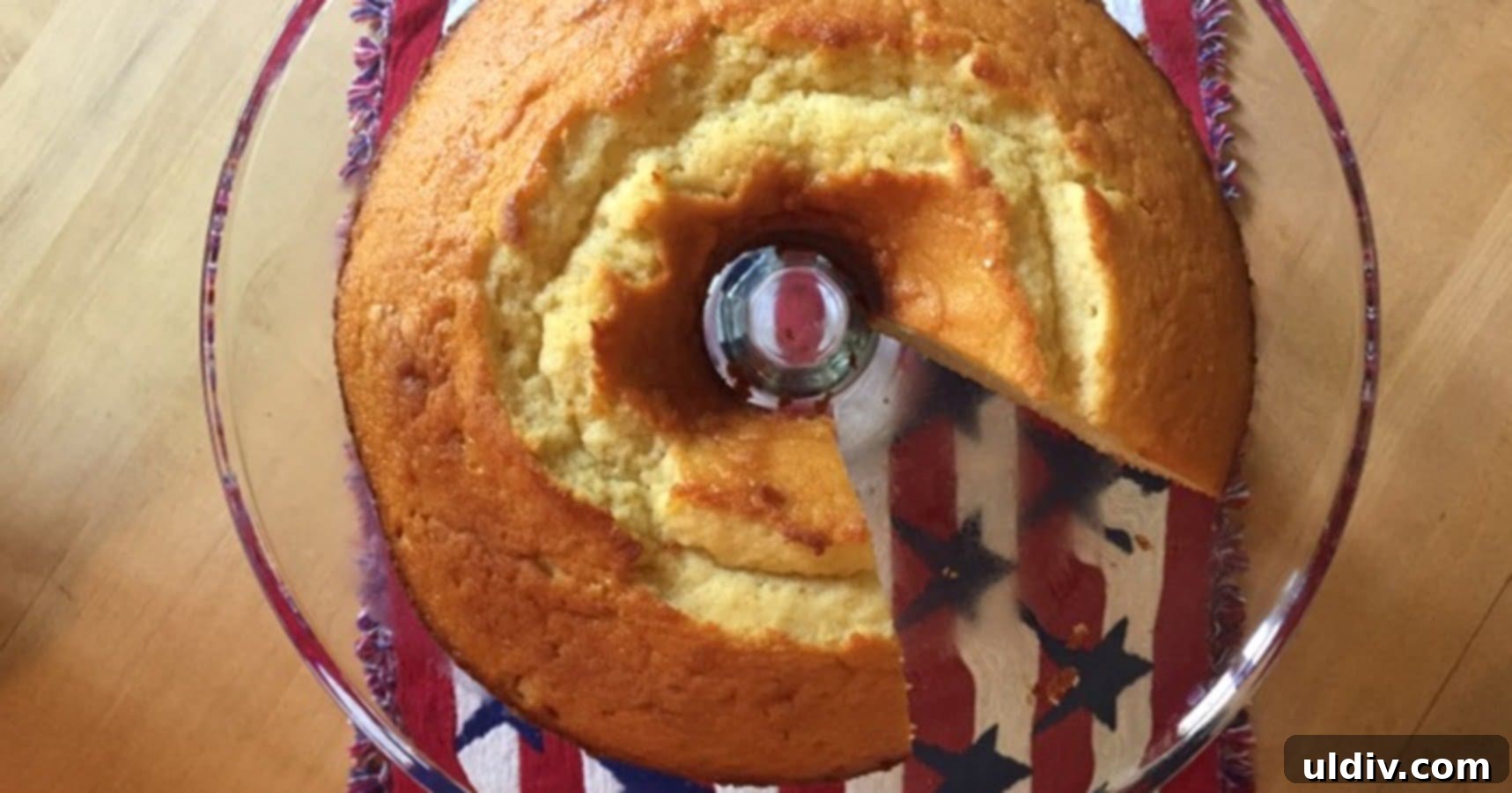
Welcome to a culinary journey back in time, savoring a cherished family tradition: Great Aunt Rose’s Old Fashioned Sour Cream Pound Cake. This isn’t just any dessert; it’s a legacy, a culinary heirloom passed down through generations, promising an unforgettable experience with every slice. This moist vanilla pound cake recipe masterfully blends simple ingredients to create a cake with perfectly crisp, slightly crunchy edges that yield to an incredibly dense, rich, and decadently moist interior. It’s a testament to timeless baking, a confection that embodies comfort and joy.
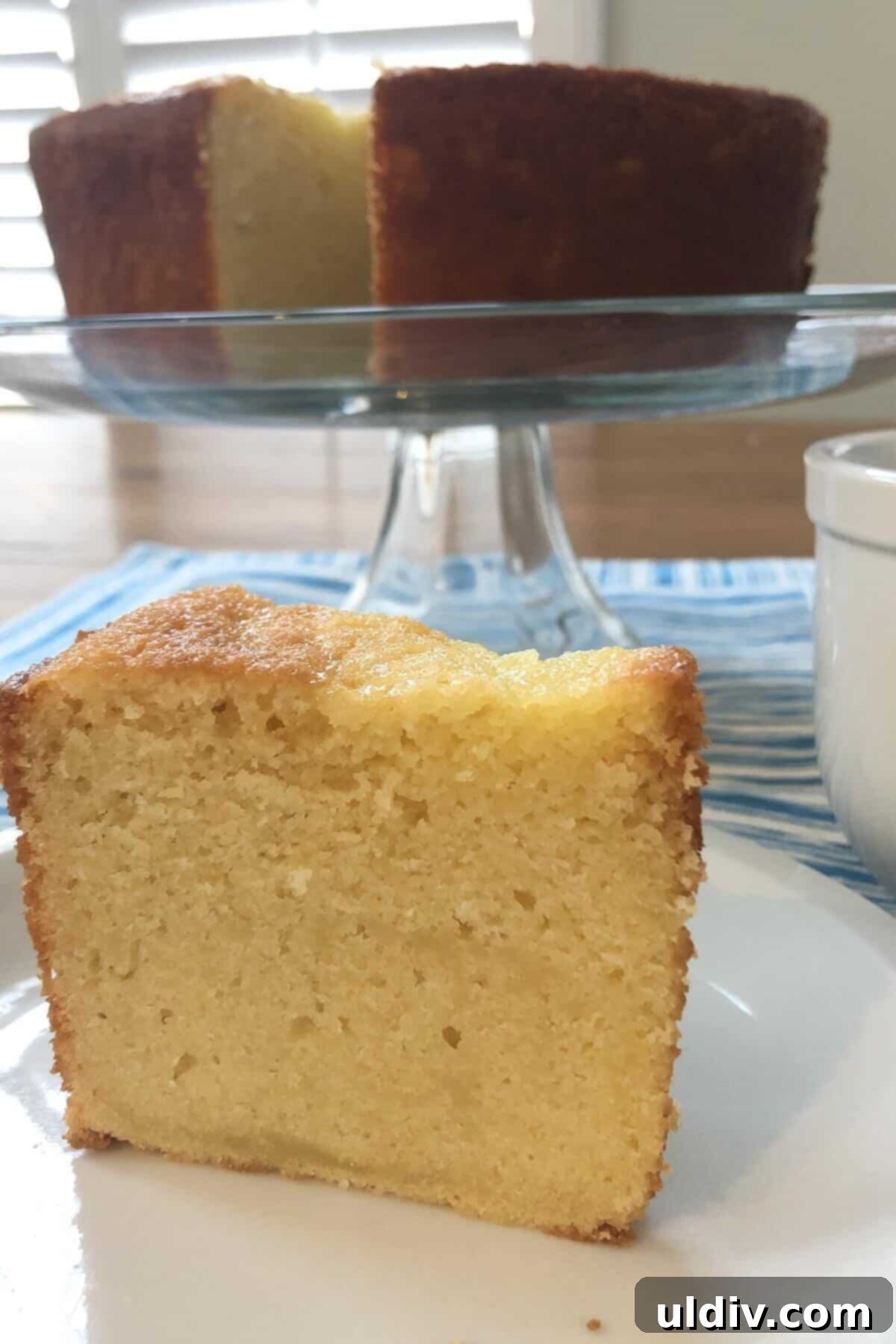
Often hailed as the ultimate pound cake, this recipe delivers a taste and texture sensation unlike any other. It’s a truly exceptional dessert that will earn a permanent spot in your recipe collection and become a new family favorite.
Growing up, our kitchen was the heart of our home, constantly filled with the comforting aromas of my Mom’s baking. Whether it was a freshly baked cake or a plate of her famous soft pumpkin cookies, there was always a sweet treat awaiting us on the counter. Even after my siblings and I had grown and left the nest, Mom’s home remained a haven of unexpected delights. A spontaneous visit almost always guaranteed a slice of homemade goodness and a warm embrace.
Among her repertoire of wonderful desserts, Great Aunt Rose’s pound cake held a special place. This super moist vanilla pound cake recipe was, and still is, a cherished favorite within our family. It’s not merely a cake; it’s a flavorful journey that evokes memories of laughter, love, and togetherness.
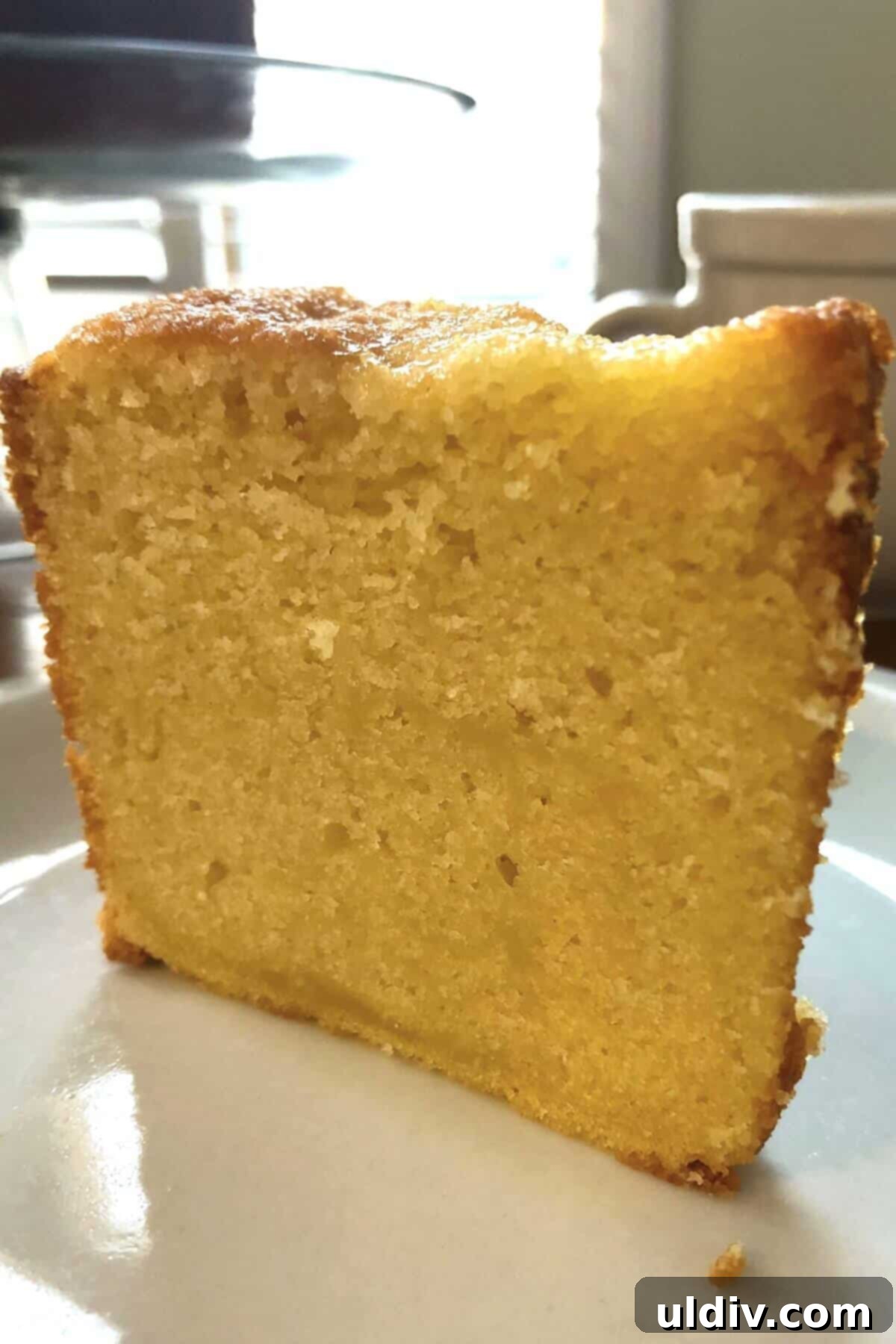
What sets this pound cake apart is its remarkable density, combined with an unparalleled richness and tenderness that keeps it incredibly moist. While some might anticipate a flavor profile similar to a standard yellow cake, this pound cake transcends expectations. Its depth of flavor and luxurious texture are infinitely magnified, creating a truly decadent experience that is both sophisticated and comforting.
My Mom passed away nearly 30 years ago, and I miss her dearly every single day. Fortunately, she left behind a treasure trove of her old cookbooks, each page brimming with her culinary wisdom. In the margins, she’d jotted down recipes, and on the blank pages, she’d scribbled her own suggestions and tips for the dishes she perfected. These cookbooks are more than just recipes; they are a tangible connection to her memory, her passion for baking, and her enduring love for her family.
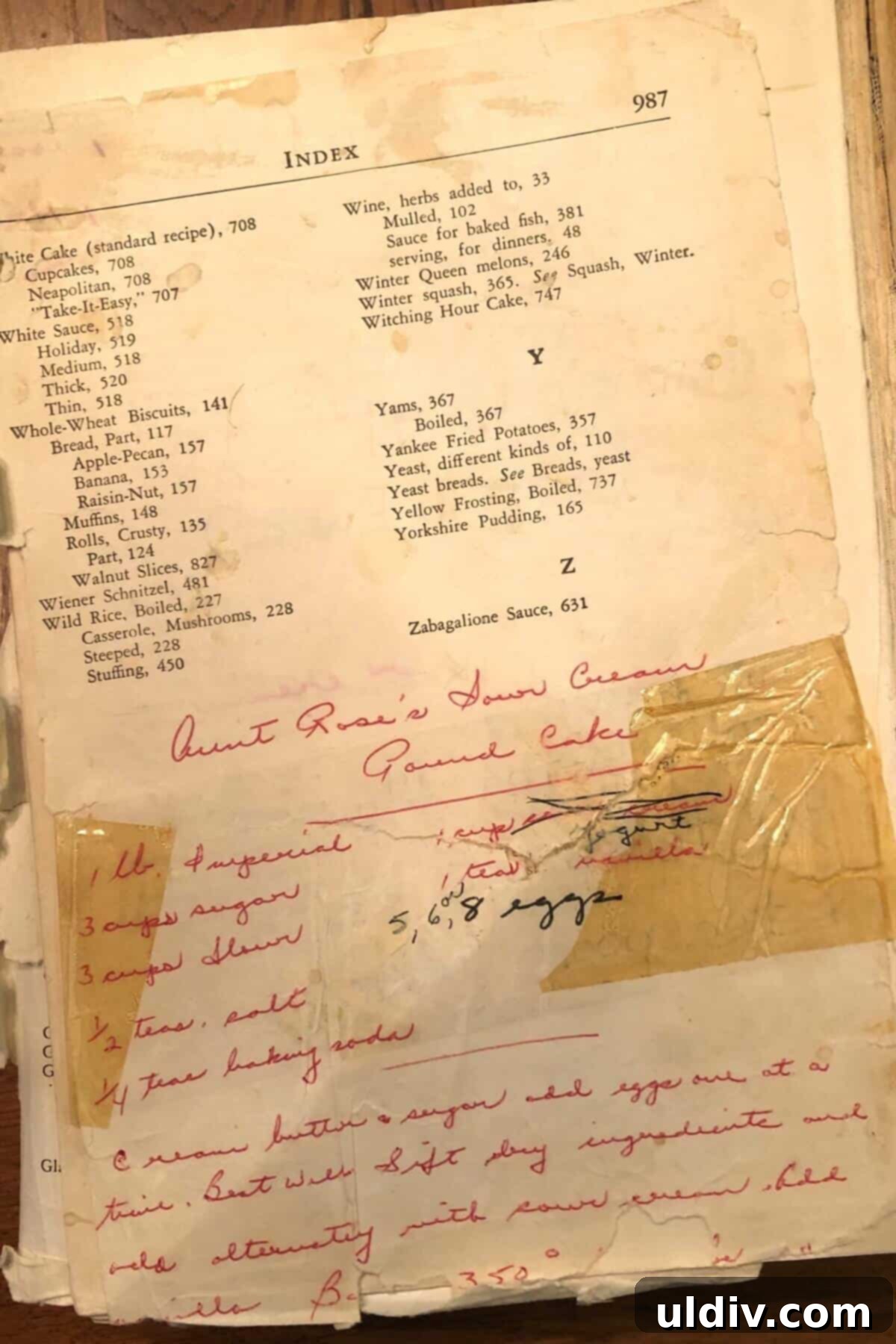
I vividly recall Great Aunt Rose’s Sour Cream Pound Cake recipe, not only for its incredible taste but also for Mom’s distinctive handwriting and intriguing notes. The recipe calls for classic cake ingredients like flour, sugar, and vanilla. However, it also specifies Imperial margarine instead of butter, a detail that initially puzzled me. Even more perplexing was Mom’s note indicating a range of “5, 6 or 8 eggs.” To this day, the exact reasoning behind this varying egg count remains a delightful family mystery, one I never had the chance to ask her about, adding to the charm of this old-fashioned recipe.
Why You’ll Adore This Classic Pound Cake Recipe
This old-fashioned sour cream pound cake recipe is more than just a dessert; it’s a treasured keeper for countless reasons. Once you try it, you’ll understand why it’s been a family favorite for generations.
- Effortless Preparation: Say goodbye to complex baking projects! This easy pound cake recipe requires no specialized equipment or unusual ingredients. With a simple stand mixer or even a hand mixer, combining the ingredients is a straightforward task, making it accessible for bakers of all skill levels. From novice to seasoned pro, anyone can achieve perfect results with minimal fuss.
- Unforgettable Flavor & Texture: Prepare your taste buds for an exquisite experience. This classic pound cake boasts a moist and tender crumb that defies its dense structure. It’s consistently flavorful, never dry, and offers a delicate, inviting vanilla essence that lingers pleasantly. Whether it’s the centerpiece of a special occasion or a delightful treat for an ordinary day, its rich flavor and satisfying texture make it truly delicious.
- Convenience of Make-Ahead Baking: Unlike many cakes, this homemade pound cake, made with margarine instead of butter, has an exceptional shelf life. It remains wonderfully fresh for 4-5 days when stored on a covered cake stand at room temperature. Planning ahead for gatherings or simply want to enjoy it over several days? This cake is your answer. Furthermore, it freezes beautifully, allowing you to enjoy a slice of this heavenly dessert whenever a craving strikes, making it perfect for meal prep or unexpected guests.
I am incredibly excited to share this treasured, hand-me-down recipe with you. Let’s embark on this baking adventure together and create something truly special!
Essential Ingredients & Smart Substitutions for Your Perfect Pound Cake
To ensure your moist vanilla pound cake turns out perfectly, it’s crucial to gather all your ingredients and allow them to come to room temperature. This simple step facilitates easier and more thorough mixing, leading to a smoother batter and a superior final product. While Great Aunt Rose’s recipe is quite specific, we’ll note any viable substitutes where possible. For the precise quantities of each ingredient, please refer to the comprehensive recipe card below.
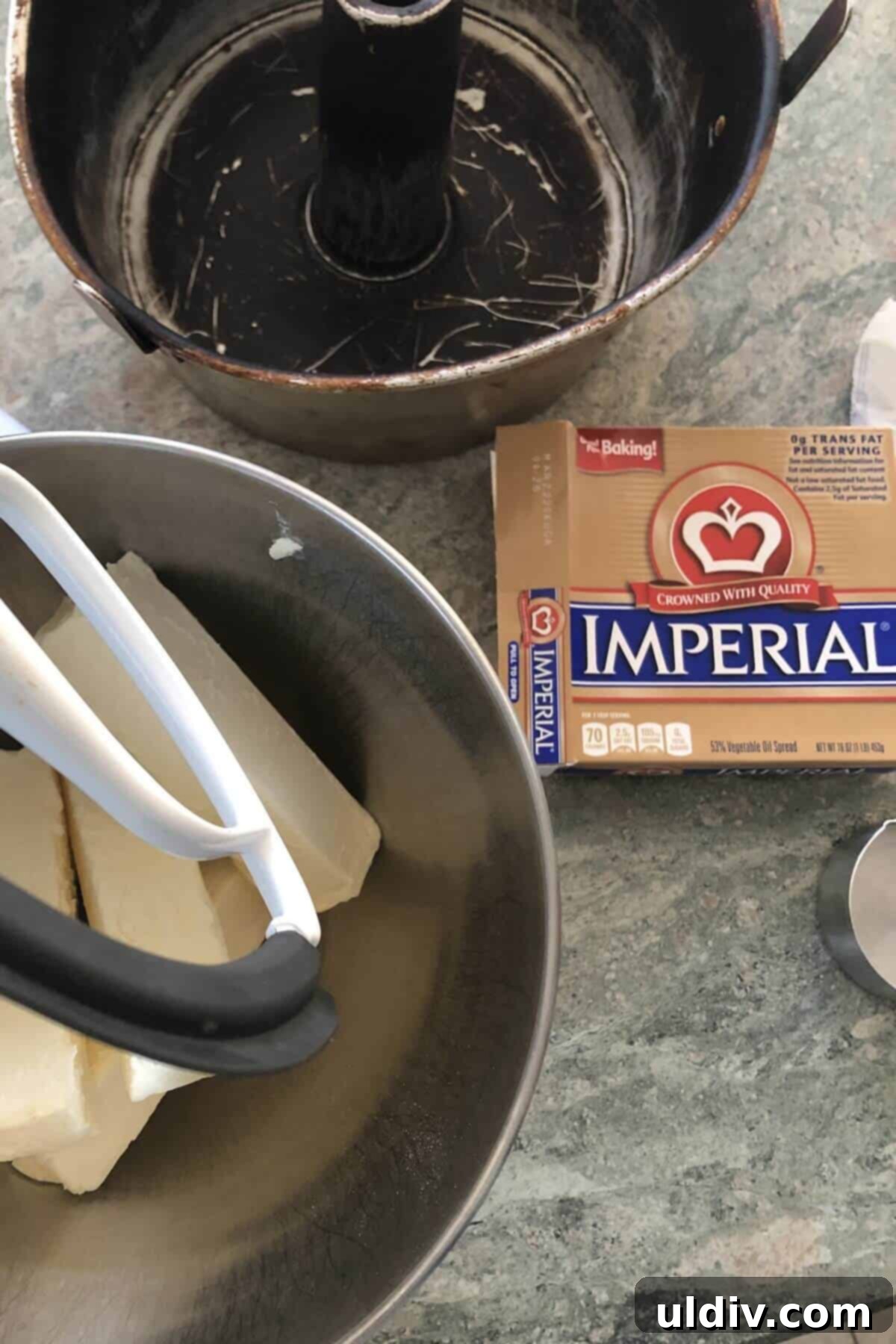
- Imperial Margarine: This is arguably the most unique and non-negotiable ingredient in this old-fashioned pound cake recipe. While many bakers swear by butter for superior flavor and texture, this particular recipe thrives on the distinct properties of Imperial margarine. I’ve experimented with butter, hoping to elevate it further, but the results were consistently disappointing—the cake never achieved the same ultra-dense, moist, and tender crumb that margarine provides. Margarine, particularly Imperial, contributes to a lighter yet richer texture and a longer shelf life, which is essential for this traditional recipe. For a deeper understanding of the differences between margarine and butter in baking, The Pioneer Woman offers an insightful explanation.
- Granulated Sugar: Standard white granulated sugar is key here, providing both sweetness and contributing to the cake’s structure and browning.
- Large Eggs: Eggs add richness, moisture, and act as a crucial binding agent, contributing to the cake’s signature density. Ensure they are at room temperature for optimal emulsification with the other ingredients.
- Vanilla Extract: Pure vanilla extract is indispensable for imparting that classic, comforting vanilla flavor that defines this pound cake.
- All-Purpose Flour: The foundation of the cake’s structure. For a slight variation, white whole wheat flour can be used in a pinch, though all-purpose flour yields the traditional light crumb.
- Baking Soda: A small amount of baking soda helps with a subtle lift and tenderness, ensuring the cake isn’t overly heavy.
- Kosher Salt: A touch of salt is vital for balancing the sweetness and enhancing all the other flavors in the cake.
- Sour Cream: This ingredient is the secret to the cake’s incredible moisture and faint tanginess. Full-fat plain yogurt can serve as a suitable alternative if sour cream is unavailable, providing a similar creamy texture and acidic component.
Step-by-Step Guide: Crafting Great Aunt Rose’s Legendary Pound Cake
Creating this moist vanilla pound cake recipe involves combining simple ingredients with everyday kitchen tools. This section provides a brief overview of the process; however, for comprehensive, detailed instructions, please refer to the complete recipe card found further down the page.
- Prepare Your Pan: Begin by preheating your oven to the specified temperature. Generously grease a 10-inch straight-sided tube pan. A handy trick is to use the margarine wrappers for this task, ensuring every nook and cranny is coated to prevent sticking.
- Cream Together Margarine and Sugar: In the bowl of your stand mixer (or using a hand mixer), combine the softened Imperial margarine and granulated sugar. Beat them together on medium-low speed for a good 3 to 4 minutes until the mixture becomes light, fluffy, and pale in color. This creaming process incorporates air, which is essential for the cake’s texture.
- Incorporate Eggs and Vanilla: Add the large eggs to the creamed mixture, one at a time. After each addition, beat well until fully incorporated before adding the next. This methodical approach ensures a smooth, emulsified batter. Once all eggs are in, stir in the pure vanilla extract and mix until just combined.
- Alternate Dry and Wet Ingredients: In a separate bowl, whisk together your all-purpose flour, baking soda, and kosher salt. With your mixer set to low speed, gradually add the sour cream alternately with the dry flour mixture to the wet ingredients. Begin and end with the flour mixture. Mix until just incorporated and no streaks of flour remain. Be careful not to overmix the batter; excessive mixing can develop the gluten in the flour, resulting in a tough and rubbery cake.
- Bake to Golden Perfection: Pour the impeccably smooth cake batter into your meticulously prepared tube pan. Place it into the preheated oven and bake according to the recipe’s timing. The cake is ready when a long wooden skewer inserted into the thickest part comes out clean. Allow it to cool slightly in the pan before unmolding.
- Cool Completely: After unmolding, transfer the cake to a wire cooling rack. It’s crucial to let the cake cool completely before attempting to cover it with plastic wrap or a cake dome. This prevents condensation from forming, which could make the cake soggy.
Baking Hint 1: When you’re incorporating the dry ingredients and sour cream, mix them just until they are combined. Overmixing is the enemy of a tender pound cake; it can lead to a tough and rubbery texture. A gentle hand and low speed are key!
Baking Hint 2: If you notice the top of your cake is browning too rapidly while the inside is still baking, simply create a loose “tent” with aluminum foil and lightly cover the cake. This will shield the top from further browning, allowing the interior to cook through evenly.
Creative Variations to Personalize Your Pound Cake
While Great Aunt Rose’s original recipe for sour cream pound cake is perfect as is, it also serves as a fantastic canvas for your own culinary creativity. Feel free to experiment with these delicious variations to make this recipe truly your own:
- Infuse with Flavor:
- Lemon Zest: For a bright and zesty twist, add the zest of one lemon and a tablespoon of fresh lemon juice to the batter. This transforms it into a delightful lemon pound cake.
- Nutty Notes: Stir in 1 teaspoon of almond extract for a delicate, sophisticated flavor, or coconut extract for a tropical hint.
- Boozy Bliss: For an adult-friendly treat, incorporate 2 tablespoons of rum, brandy, or even an orange liqueur into the batter. This adds a subtle warmth and complexity that pairs beautifully with the rich cake.
- Spice it Up: A touch of cinnamon, nutmeg, or cardamom can add warmth, especially delightful during cooler months.
- Elevate with Toppings: The possibilities for enhancing this already delicious cake with toppings are virtually endless!
- Fresh Fruit: A vibrant array of fresh fruit, especially fresh berries (strawberries, blueberries, raspberries), complements the cake wonderfully, adding natural sweetness and a slight tang. Sliced peaches or cherries are also fantastic choices.
- Creamy Indulgence: Serve a slice with a generous scoop of vanilla bean ice cream, a dollop of homemade whipped cream, or even a sophisticated crème fraîche.
- Saucy Decadence: Drizzle with warm chocolate ganache, a rich caramel sauce, a tangy raspberry coulis, or a simple lemon glaze for an extra layer of flavor and moisture.
- Simple Elegance: Sometimes, all it needs is a light dusting of powdered sugar or a delicate lemon glaze made from powdered sugar and lemon juice to complete its classic appeal.
- Crunchy Texture: Add toasted nuts like pecans or walnuts, or shredded coconut to the batter or as a garnish for extra texture.
Essential Equipment for Effortless Pound Cake Baking
Having the right tools in your kitchen can transform the baking process from a chore into a joy. For this moist vanilla pound cake recipe, I recommend the following essential kitchen utensils and equipment to ensure a smooth and successful baking experience:
- Stand Mixer or Hand Mixer: While a stand mixer makes creaming butter and sugar a breeze, a reliable hand mixer will also get the job done effectively. These are crucial for achieving the light and fluffy consistency of the batter.
- Measuring Cups: Accurate measuring cups for both dry ingredients (like flour and sugar) and liquid ingredients (like sour cream) are fundamental for precise baking.
- Metal Measuring Spoons: Essential for accurately measuring smaller quantities of ingredients such as vanilla extract, baking soda, and salt.
- Rubber Spatula: A versatile tool for scraping down the sides of the mixing bowl, folding ingredients gently, and ensuring all components are thoroughly incorporated without overmixing.
- 10-inch Tube Pan: This specific pan size and shape (with a removable bottom or central tube) is ideal for pound cakes, promoting even baking and a beautiful presentation. It allows heat to penetrate the center of the dense batter more efficiently.
- Wire Cooling Rack: Absolutely necessary for allowing your pound cake to cool evenly and prevent it from becoming soggy on the bottom. Proper air circulation ensures a perfect texture.
- Mixing Bowls: Several sizes of mixing bowls will be helpful for combining dry ingredients separately and for the main batter.
Mastering Your Pound Cake: Expert Tips for Flawless Results
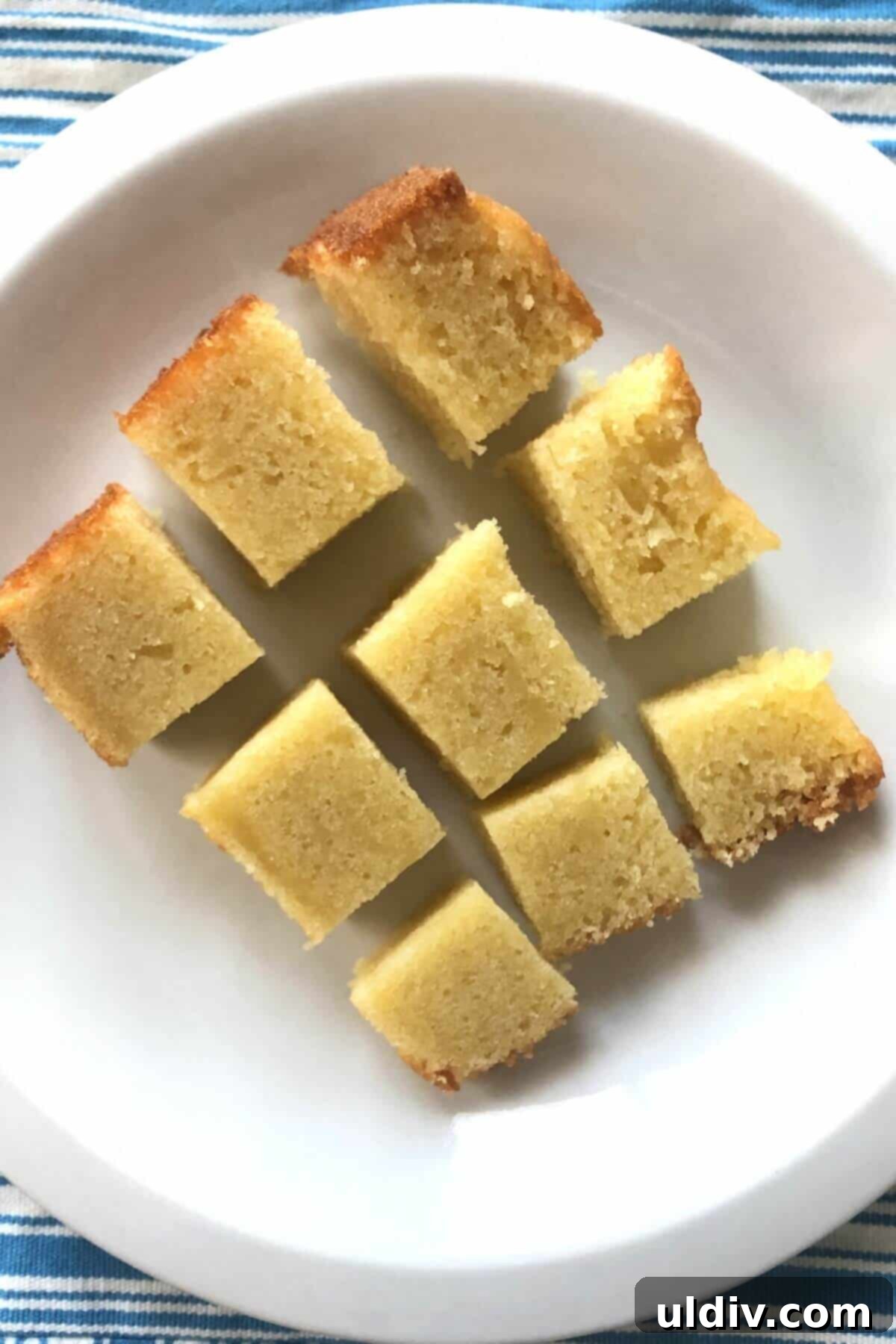
Achieving the perfect texture for this sour cream pound cake starts with proper creaming. Beat the margarine and sugar together until the mixture is light, airy, and creamy – this usually takes about 3 to 4 minutes on medium speed in a stand mixer. A stand mixer makes this crucial step incredibly easy, ensuring consistent results every time.
To avoid the unpleasant surprise of eggshells in your beautiful cake, always crack your eggs into a separate small bowl first. This way, if any small pieces of shell fall in, you can easily scoop them out before adding the egg to the main batter.
Knowing when your cake is perfectly baked is key. Insert a long wooden skewer or a thin knife into the thickest part of the cake. When it comes out completely clean, with no wet batter or moist crumbs attached, your cake is ready. If the top of the cake is browning too quickly before the center is cooked through, gently lay a piece of aluminum foil over the top of the pan to shield it, allowing the inside to finish baking without over-browning the crust.
Patience is a virtue, especially when unmolding a delicate pound cake. Allow the cake to cool in its pan on a cooling rack for approximately 15 minutes after removing it from the oven. This brief cooling period helps the cake to firm up and pull away from the sides of the pan slightly. After 15 minutes, carefully run a thin, sharp knife around all the edges of the pan, including the inner tube. Place the cooling rack directly on top of the cake, then with one hand firmly on the cooling rack and the other supporting the bottom of the pan, quickly flip the pan and rack over. Gently tap the bottom of the pan a few times to help release the cake, then carefully lift the pan away from your perfectly baked pound cake.
Frequently Asked Questions About Pound Cake
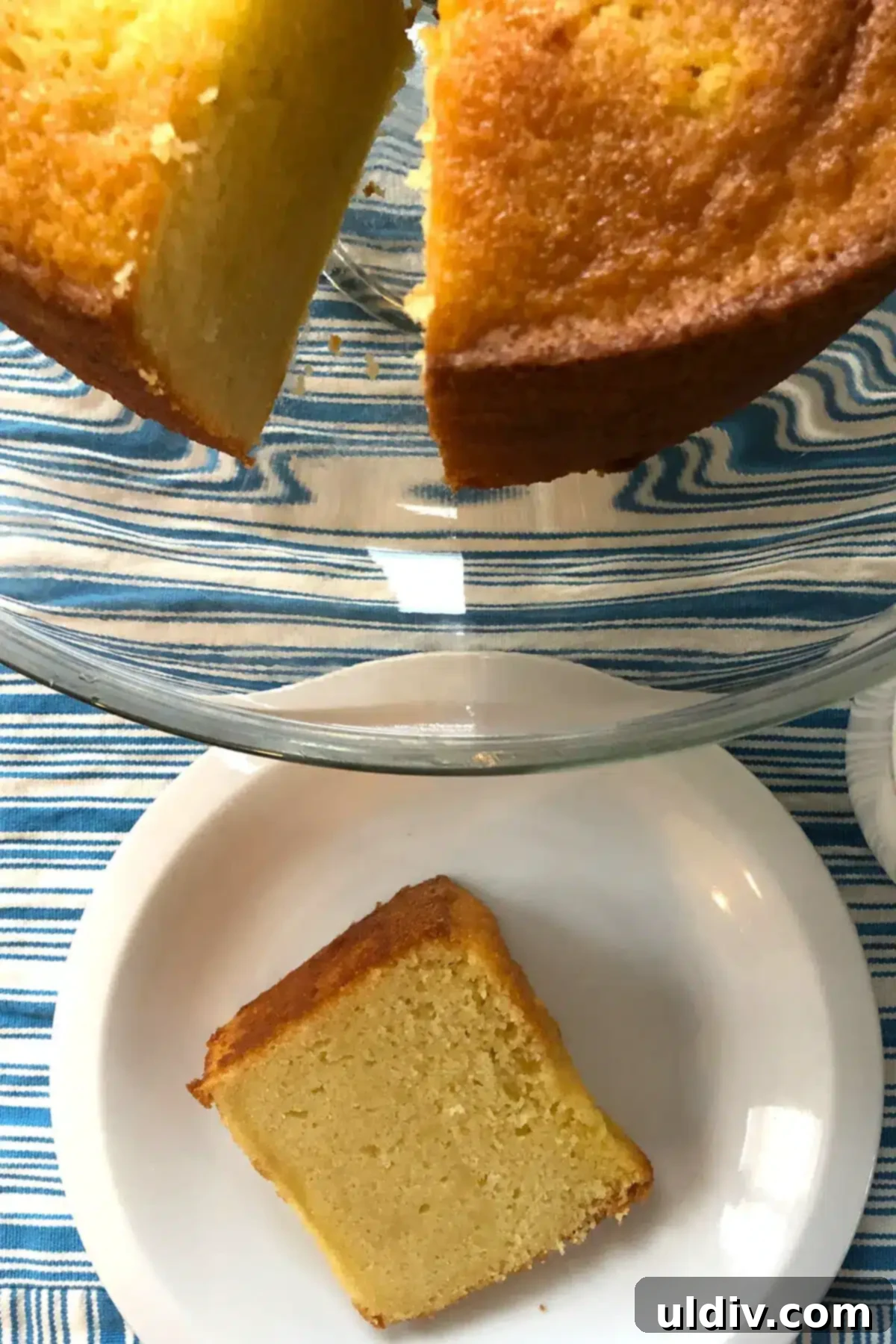
Traditionally, a classic pound cake earned its name because it was made with a pound each of butter, sugar, flour, and eggs. This specific ratio results in a very dense, rich, and moist cake with a fine crumb, distinct from lighter, fluffier layer cakes. Pound cakes are typically served plain, with a simple glaze, or fresh fruit, allowing their inherent flavor to shine.
Sour cream is a magical ingredient in baking! It adds exceptional moisture and richness to a cake without making it oily. The acidity in sour cream also helps to tenderize the cake’s crumb, making it incredibly soft. Additionally, it imparts a very subtle, pleasant tanginess that beautifully balances the sweetness of the cake.
Absolutely! Pound cakes are excellent for making ahead. Thanks to their dense texture and ingredients like margarine and sour cream, they tend to stay moist and fresh for longer. Store your pound cake lightly covered at room temperature, and it will remain delicious for 4-5 days, making it perfect for entertaining or enjoying throughout the week.
Yes, pound cake freezes exceptionally well! To freeze, ensure the cake is completely cooled. Wrap it tightly first in plastic wrap, then in aluminum foil, to prevent freezer burn. Store it in an airtight container or freezer bag in the freezer for up to 3 months. When you’re ready to enjoy, simply thaw it at room temperature, unwrap, and savor its fresh taste!
It’s very common for pound cakes to crack on top during baking! This is often due to the dense batter baking slower on the inside while the outside sets and browns. As the interior continues to rise, the already-set crust can crack. It’s usually a sign of a perfectly good, well-risen pound cake and adds to its rustic, old-fashioned charm, rather than being a flaw.
Explore More Delicious Cake Recipes
- Muffin Cake with Blueberries
- Easy Scone Cake {Sheet Pan Cake Recipe}
- Fresh Strawberry Crumb Cake
- Double Berry Upside Down Cake
If you embark on the delightful journey of baking my family’s cherished old-fashioned sour cream pound cake recipe, I would absolutely love to hear about your experience! Please be sure to give it a rating and/or share your thoughts in a comment below. Don’t forget to snap a photo of your beautiful creation and tag @amycaseycooks on Instagram so we can all admire your baking prowess. Thank you for continuing Great Aunt Rose’s legacy!
Recipe
Great Aunt Rose’s Moist Vanilla Pound Cake Recipe
Print
Pin
Rate
Ingredients
- 1 pound Imperial margarine
- 3 cups granulated sugar
- 6 large eggs
- 1 teaspoon vanilla extract
- 3 cups all purpose flour
- ¼ teaspoon baking soda
- ½ teaspoon kosher salt
- 1 cup sour cream
Instructions
-
Prep pan: Preheat oven to 350 degrees F (175 C). Generously grease a 10-inch straight-sided tube pan with margarine wrappers to ensure every part is coated.
-
Beat margarine and sugar: In the large bowl of a stand mixer fitted with the paddle attachment, or using a hand mixer, add the softened Imperial margarine and granulated sugar. Beat on medium-low speed for 3 to 4 minutes until the mixture is light, fluffy, and pale in color. Scrape down the sides of the bowl as needed.
-
Add eggs and vanilla: Add the large eggs to the margarine and sugar mixture one at a time, beating well after each addition until fully incorporated. Once all eggs are in, add the vanilla extract and mix until just combined, ensuring not to overmix.
-
Combine dry ingredients: In a separate medium-sized bowl, whisk together the all-purpose flour, baking soda, and kosher salt until well combined.
-
Add dry ingredients: With the mixer on low speed, alternately add the sour cream and the dry ingredient mixture to the wet batter. Begin and end with the flour mixture. Mix until just incorporated and no streaks of dry flour are visible. Avoid overmixing the batter, as this can lead to a tough cake.
-
Transfer batter: Pour the prepared cake batter evenly into your greased 10-inch tube pan. Gently tap the pan on the counter a few times to release any air bubbles.
-
Bake cake: Bake in the preheated oven for approximately 60-75 minutes, or until a long wooden skewer inserted into the thickest part of the cake comes out clean. If the top of the cake begins to brown too quickly, lightly cover it with aluminum foil to prevent excessive browning while the inside finishes baking.
-
Unmold cake: Remove the cake from the oven when it’s done. Allow it to cool in the pan on a wire cooling rack for 15 minutes. Then, carefully run a thin, sharp knife around the edges of the pan (both outer and inner tube) to loosen the cake. Place the cooling rack on top of the cake, invert the pan and rack together, and gently tap the bottom of the pan to help release the cake. Carefully remove the pan.
-
Cool cake: Transfer the cake to a cake stand or serving plate and allow it to cool completely at room temperature before covering or slicing.
Notes
- Margarine is Key: For this specific old-fashioned sour cream pound cake recipe, it is crucial to use Imperial margarine and not butter. My personal trials have shown that while butter is often superior, this ultra-dense and moist cake achieves its unique texture and flavor profile specifically with margarine. Attempts with butter resulted in a cake that simply didn’t achieve the same perfect consistency.
- Creaming Perfection: The creaming process of margarine and sugar is vital for the cake’s texture. Beat them until they are genuinely light, pale, and creamy, which typically takes 3 to 4 minutes on medium speed using a stand mixer. This incorporates essential air into the batter.
- Separate Egg Cracking: To prevent any accidental eggshells from making their way into your beautiful cake, always crack each egg into a separate small bowl first. If a piece of shell happens to fall in, it’s easily removed before adding the egg to the main batter.
- Alternate Mixing: When combining the dry ingredients with the sour cream, add them alternately in small increments, starting and ending with the flour mixture. This method ensures that the sour cream is thoroughly and evenly incorporated into the batter, preventing overmixing and contributing to a tender crumb.
- Doneness Test: The most reliable way to check if your cake is done is to insert a long wooden skewer into its thickest part. It should come out completely clean. If the cake’s top is browning too rapidly, a loose tent of aluminum foil can be placed over the pan to prevent over-browning while the interior finishes cooking.
- Patient Unmolding: Do not rush to unmold the cake immediately after baking. Allow it to cool on a cooling rack for about 15 minutes in the pan. This cooling period helps the cake to firm up and slightly contract from the pan sides. After 15 minutes, run a thin, sharp knife around all edges of the pan. Then, place the cooling rack on top of the cake, invert the pan and rack together, and gently tap the bottom of the pan to aid in release before carefully lifting the pan away.
Nutritional information is an estimate and based on the ingredients and cooking methods used in this recipe.