
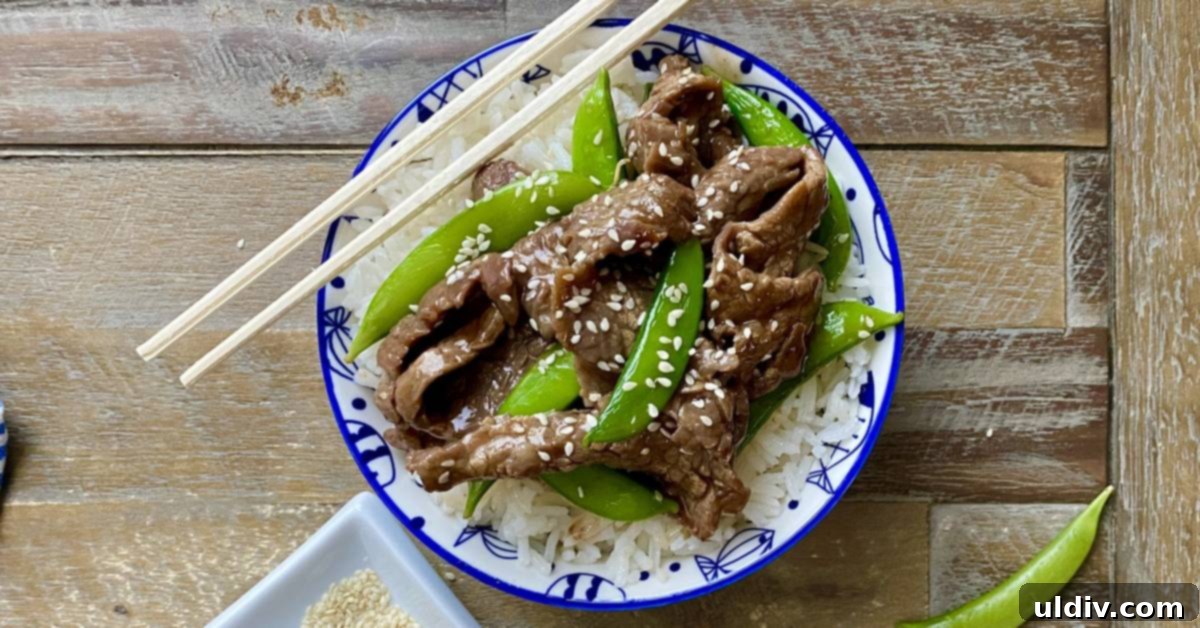
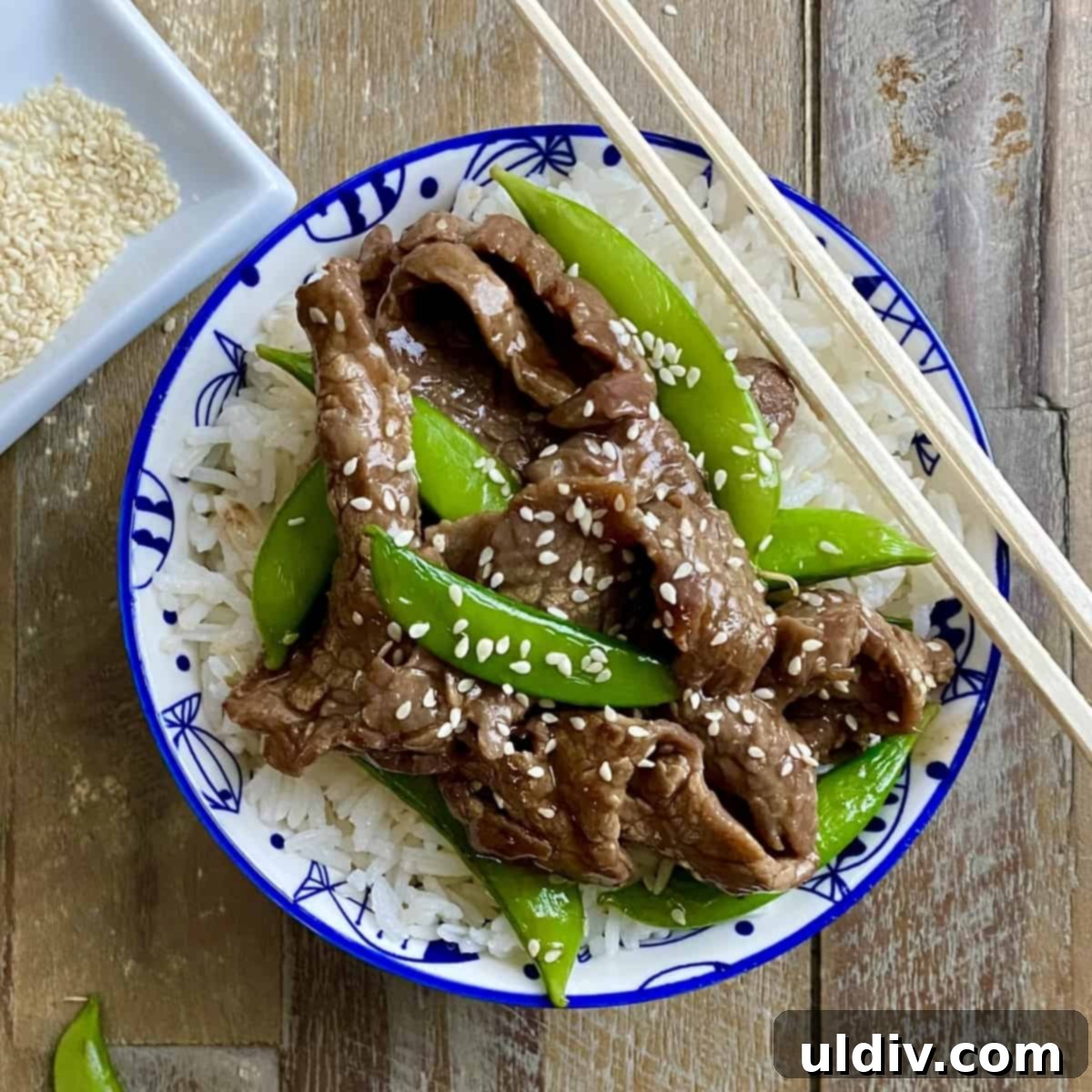
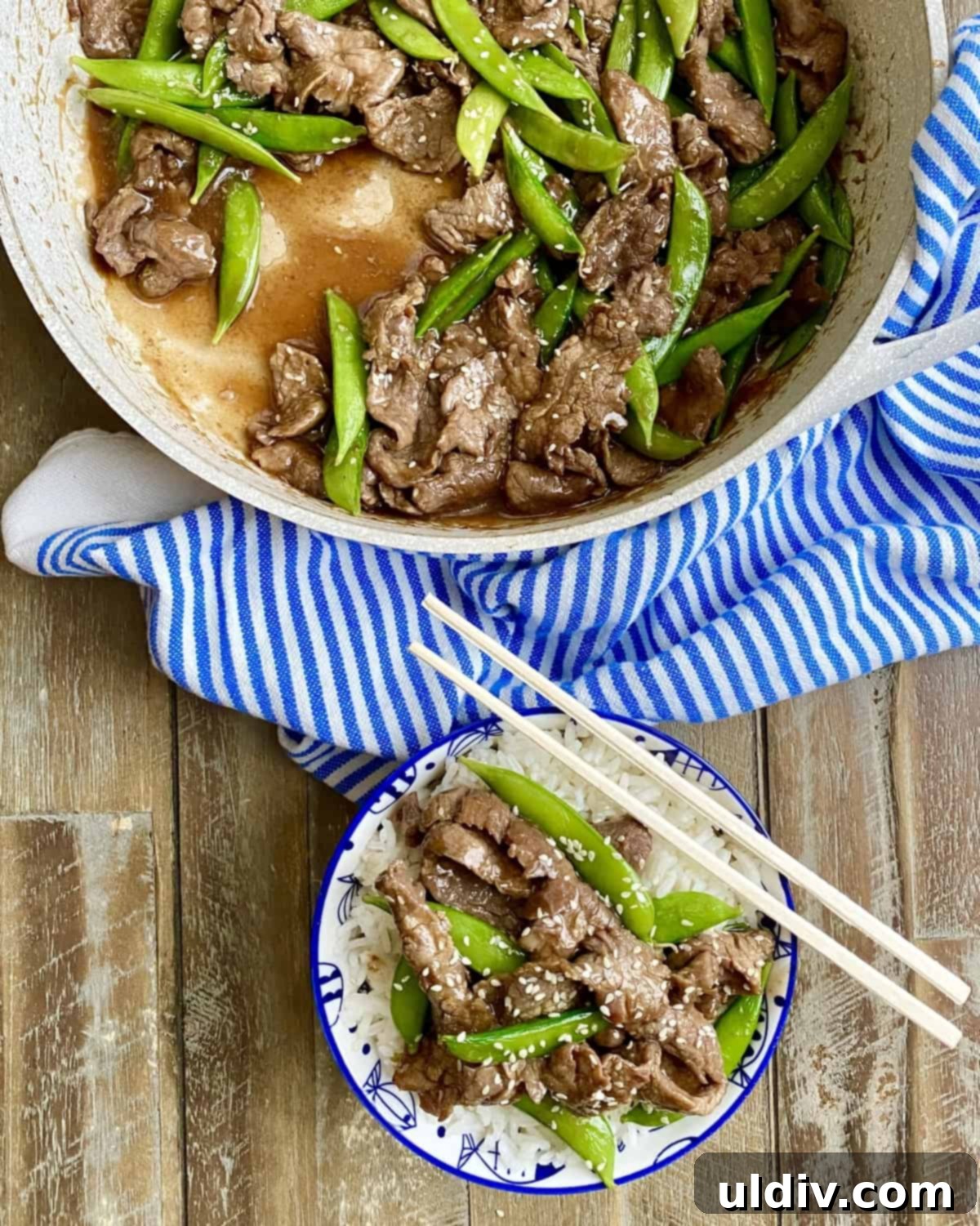
Welcome to what we confidently claim is the ultimate Beef Stir Fry recipe you’ll ever make. Forget bland, forget chewy – this dish is a culinary revelation, delivering restaurant-quality flavor and texture right in your own kitchen. Designed for busy weeknights, it comes together in just about 30 minutes, making it the perfect solution for a delicious and satisfying dinner without the fuss. Our recipe features succulent, tender slices of premium flank steak, perfectly complemented by the crisp, sweet crunch of sugar snap pea pods. The magic truly lies in the rich, authentic Asian-inspired sauce, boasting an incredible depth of umami. Crafted from a harmonious blend of savory beef stock, reduced-sodium soy sauce, the indispensable oyster sauce, a hint of brown sugar for balance, and cornstarch to achieve that desirable glossy consistency, this sauce is the cornerstone of its irresistible appeal. This isn’t just a meal; it’s an experience, an all-time favorite that promises to become a staple in your dinner rotation.
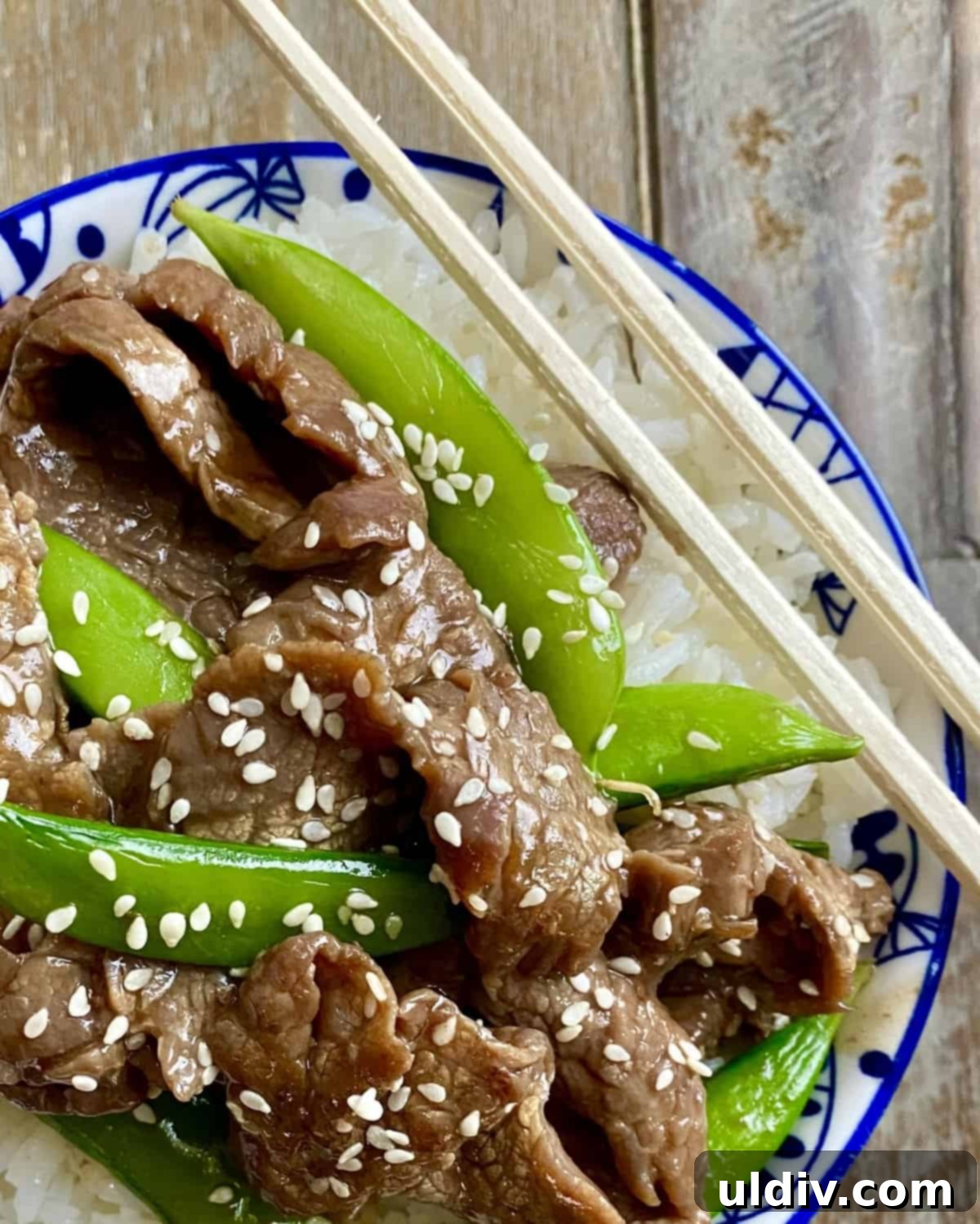
As a personal chef, I’ve had the pleasure of preparing countless meals for clients, and one culinary category consistently tops their list of favorites: stir-fries and vibrant Asian dishes. My roster of client favorites includes classics like Spicy Jalapeno Chicken and Broccoli Stir Fry, hearty Instant Pot Asian Beef Stew, the ever-popular Better Than Takeout Fried Rice, and fresh, light Fresh Vegetable Spring Rolls. These are dishes frequently requested and savored. Among these, my Beef and Sugar Snap Pea Stir Fry stands out, consistently earning rave reviews for being not only more flavorful and satisfying but also significantly healthier than typical Chinese takeout. It’s the perfect balance of convenience, taste, and wholesome ingredients.
Crafting a truly exceptional beef stir fry is an art form, and I’ll be honest, it took extensive trial and error in my own kitchen to perfect this recipe. My early attempts often resulted in disappointments: beef that was tough and disappointingly chewy, sauces that lacked body and flavor, or vegetables that turned soggy instead of retaining their vibrant crispness. Each iteration, though imperfect, brought me closer to understanding the nuances of a truly great stir fry. I was determined to conquer these common pitfalls and develop a recipe that consistently delivered on all fronts.
The journey to perfection involved meticulously testing various techniques and ingredient ratios. The key breakthroughs came down to a few critical elements. Firstly, achieving incredibly tender beef relies on a specific preparation method for flank steak, ensuring it’s sliced against the grain and treated with a special ingredient that locks in moisture. Secondly, mastering the sauce meant finding the perfect balance of savory, sweet, and umami notes, with a thickening agent that provided a luxurious, clingy coating. Finally, the vegetables needed a quick, high-heat treatment to maintain their bright color and satisfying crunch. Through dedicated experimentation, I finally cracked the code, transforming a challenging dish into one that is effortlessly delicious and consistently impressive.
To create the most delicious beef stir fry, the choice and preparation of your beef are paramount. We opt for flank steak, known for its rich flavor and ability to tenderize beautifully when cooked correctly. The secret to its melt-in-your-mouth texture lies in slicing it paper-thin against the grain. This technique shortens the muscle fibers, preventing toughness. Once sliced, it requires only a mere couple of minutes in a screaming hot pan, ensuring a perfect sear on the outside and a tender, juicy interior. High heat and quick cooking are non-negotiable for stir-fry success.
The heart of this dish, and what truly elevates it above the rest, is its remarkable Asian-inspired sauce. This isn’t just any sauce; it’s a carefully balanced symphony of flavors designed to tantalize your taste buds. The secret weapon for achieving that authentic, coveted Chinese takeout flavor profile is the addition of rich oyster sauce. This dark, caramel-colored condiment offers a complex umami depth, a savoriness that is both distinctly salty and subtly sweet, providing an incomparable richness that coats every ingredient beautifully. Combined with other classic components, it forms a glossy, aromatic foundation that binds the entire dish together.
Serving this exquisite beef stir fry is simple, yet the accompaniment makes all the difference. I love to serve this dish generously spooned over a bed of perfectly cooked rice. The fluffy grains absorb every drop of the delectable sauce, ensuring a harmonious and satisfying bite every time. For those seeking the ideal partner for this stir fry, my foolproof recipe for perfectly fluffy rice is the absolute best choice. It creates the ideal canvas for the vibrant flavors of the beef and sugar snap peas.
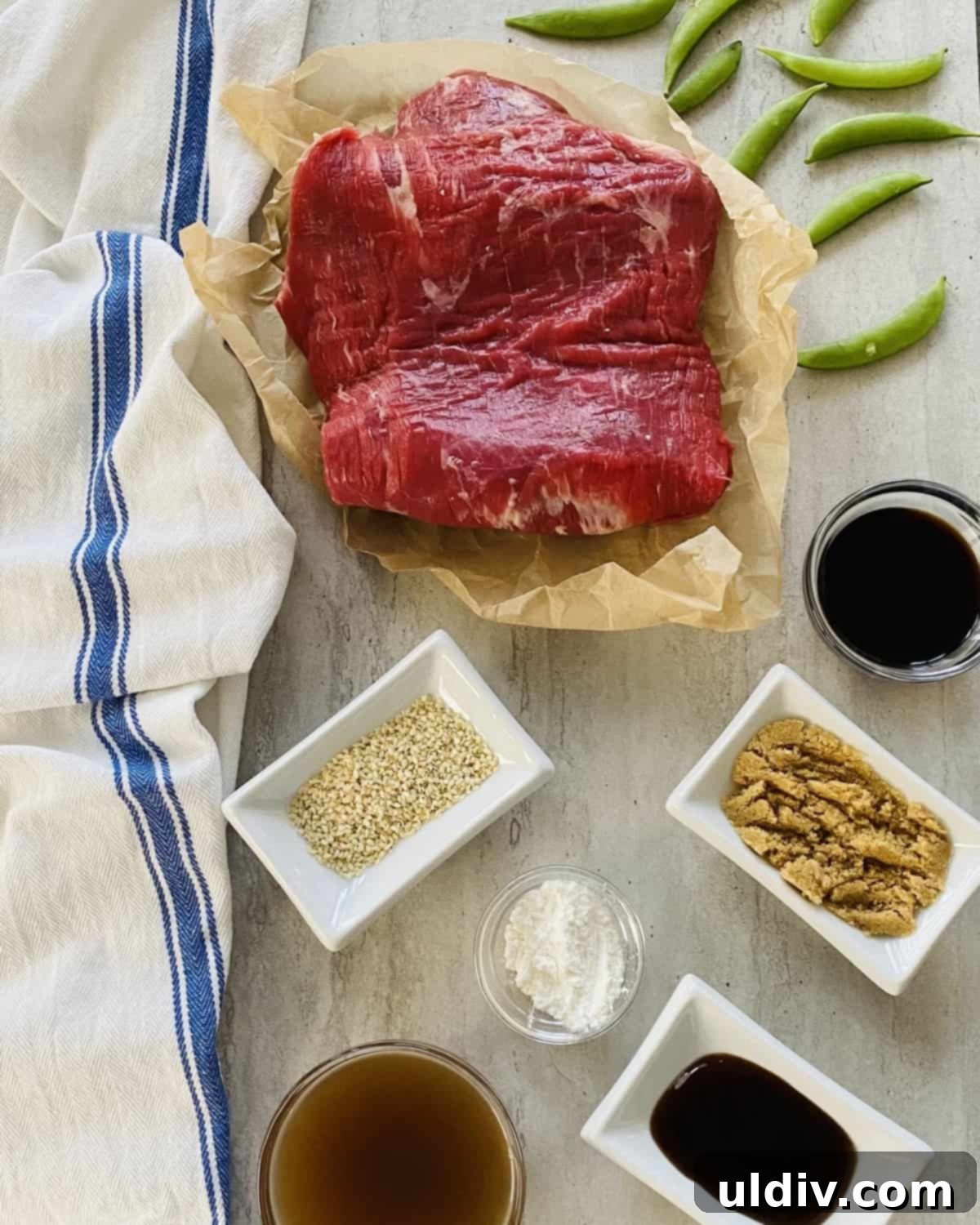
The Essential Ingredients for an Unforgettable Beef Stir Fry
Creating a truly exceptional beef stir fry begins with a selection of high-quality ingredients, each playing a vital role in building layers of flavor and achieving the perfect texture. Here’s a detailed look at what you’ll need and why each component is crucial:
- Flank Steak: This cut is celebrated for its robust beefy flavor and versatility. Its long, distinct muscle fibers make it ideal for stir-frying when sliced thinly against the grain, ensuring maximum tenderness. As flank steak is relatively lean, it cooks quickly and can become tough if overcooked, so precision is key. If flank is unavailable, sirloin or skirt steak can be excellent alternatives.
- Baking Soda: Don’t underestimate this seemingly unusual ingredient! A small amount of baking soda is the secret weapon for tenderizing steak in this recipe. It works by raising the pH of the meat, leading to a process known as “velveting” in Asian cooking, which breaks down muscle fibers and prevents them from tightening during cooking, resulting in incredibly tender beef.
- Reduced Sodium Soy Sauce: We specify reduced-sodium soy sauce to give you greater control over the overall saltiness of the dish. Full-sodium soy sauce can easily overpower the delicate balance of the stir fry sauce, making it too salty. Using a low-salt option ensures a flavorful yet well-balanced sauce.
- Reduced Sodium Beef Stock: This ingredient adds a foundational savory, beefy depth to the sauce without contributing excessive sodium. It enriches the flavor profile, making the sauce more complex and satisfying. You can opt for a high-quality homemade stock or a good store-bought brand.
- Oyster Sauce: This is arguably the most critical ingredient for achieving that unmistakable, authentic Chinese takeout flavor. Oyster sauce is a thick, dark, and glossy condiment with a unique umami-rich savoriness that perfectly balances salty and slightly sweet notes. It provides depth, complexity, and a beautiful sheen to the stir fry.
- Light Brown Sugar: A touch of light brown sugar adds a subtle, caramelly sweetness that balances the savory and salty components of the sauce. It contributes to the depth of flavor and helps achieve that desirable glossy finish.
- Cornstarch: The essential thickening agent, cornstarch ensures your stir fry sauce is beautifully thick and glossy. It coats the beef and sugar snap peas, delivering flavor in every bite and preventing a watery consistency. It’s crucial for the sauce to cling to the ingredients rather than pooling at the bottom of the pan.
- Toasted Sesame Oil: A drizzle of toasted sesame oil adds a wonderful, fragrant nutty aroma and flavor to the cooked beef and vegetables. It’s typically added towards the end of cooking to preserve its delicate flavor.
- Sugar Snap Peas: These vibrant green pods offer a delightful crunch and natural sweetness, providing a beautiful pop of color and freshness to the stir fry. They cook quickly and maintain their crispness when blanched briefly. Other vegetables like broccoli florets, sliced bell peppers, or snow peas also work well.
- Sesame Seeds: A sprinkle of sesame seeds just before serving adds an extra layer of nutty flavor and a visually appealing garnish, enhancing both the taste and presentation of the dish.
- Cooked Hot Rice: The perfect companion for soaking up all the delicious sauce. As mentioned, my foolproof recipe for fluffy rice is highly recommended to complete this meal.
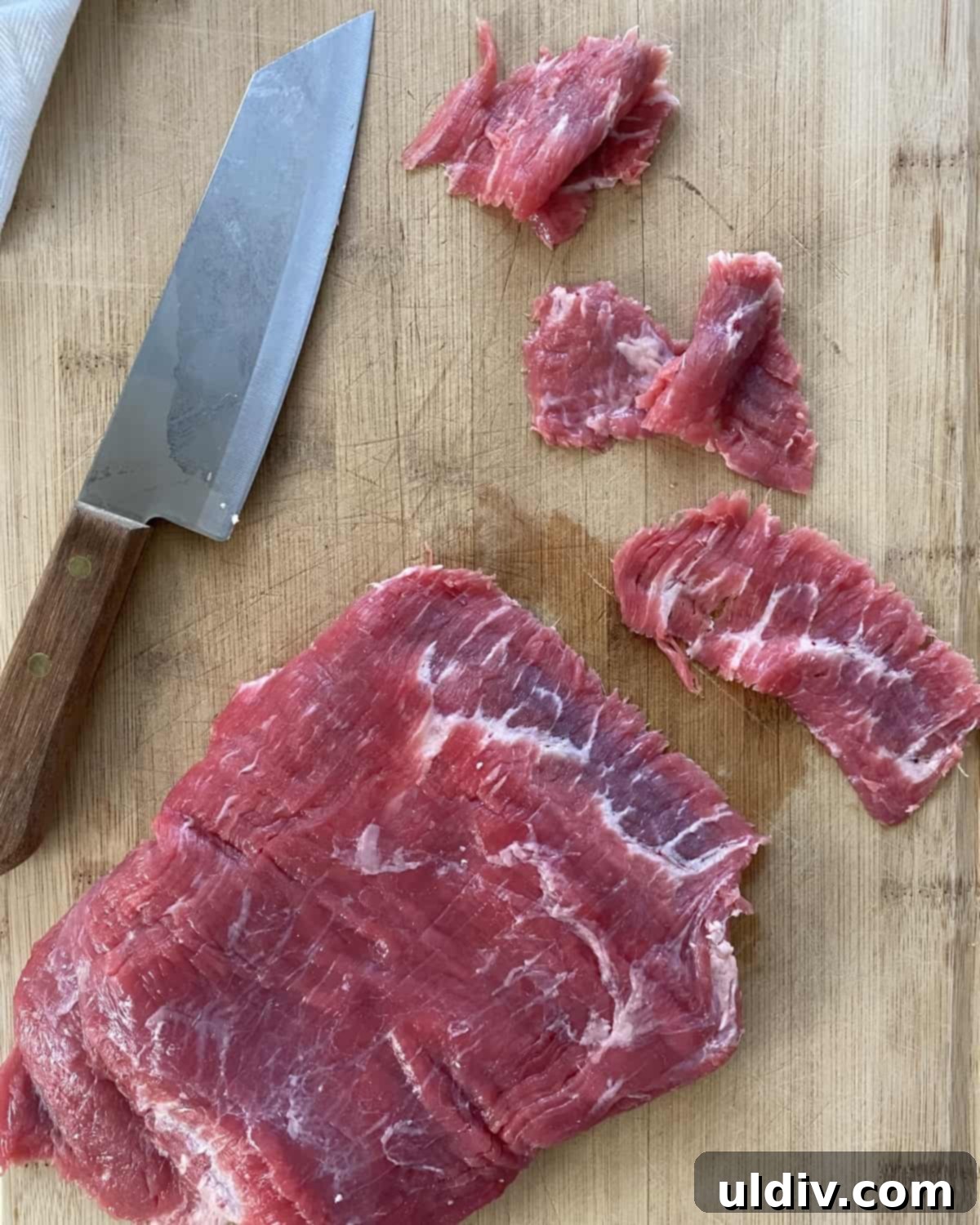
Mastering the Art of Slicing Flank Steak for Tenderness
The tenderness of your beef stir fry largely hinges on one crucial step: how you slice the flank steak. Slicing correctly helps to ensure that the meat remains wonderfully tender and enjoyable, rather than becoming tough and chewy after it is cooked. Flank steak has long, noticeable muscle fibers, and cutting against this grain is absolutely vital.
To begin, always work with a cold steak. Chilling the steak, or even partially freezing it for about 15-20 minutes, will firm up the meat, making it significantly easier to slice thinly and precisely. Place the cold steak on a sturdy cutting board. Identify the grain—the direction in which the muscle fibers run. Using a very sharp chef’s knife, slice thin pieces of steak across, or perpendicular to, the grain. Aim for slices that are about ⅛ to ¼ inch thick. This technique shortens the muscle fibers, which are what make the meat tough when cooked, resulting in a much more tender bite. Always slice in the opposite direction of these long muscle fibers to achieve the best results.
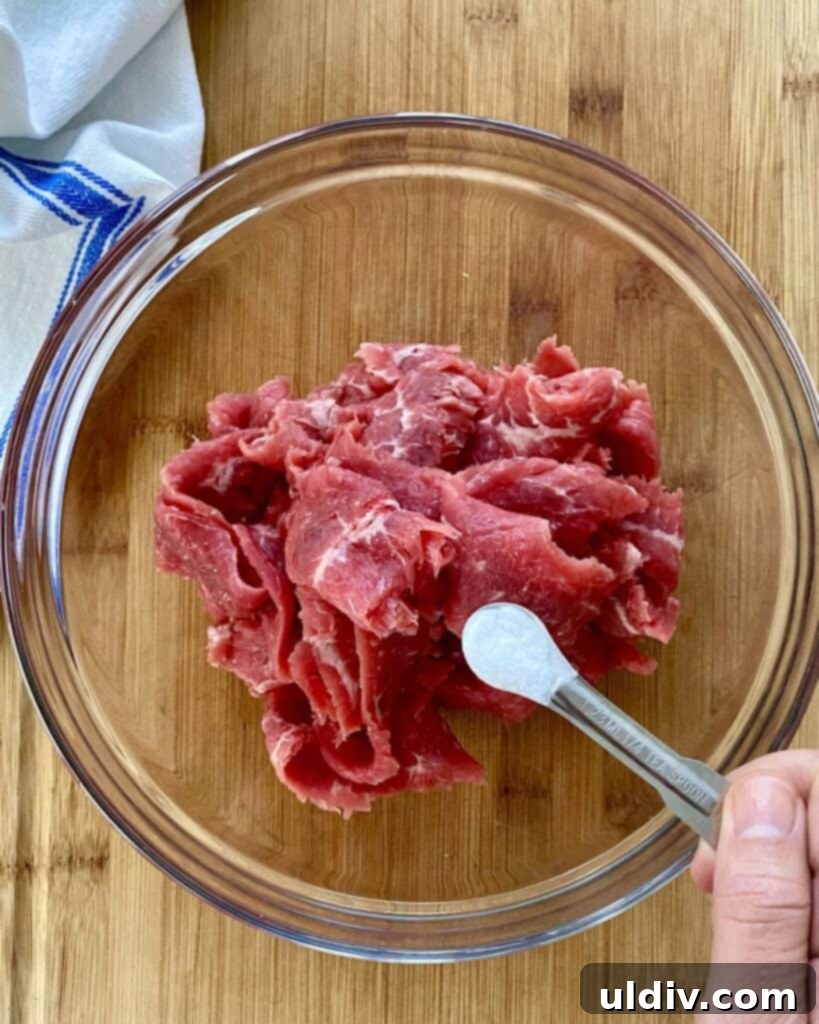
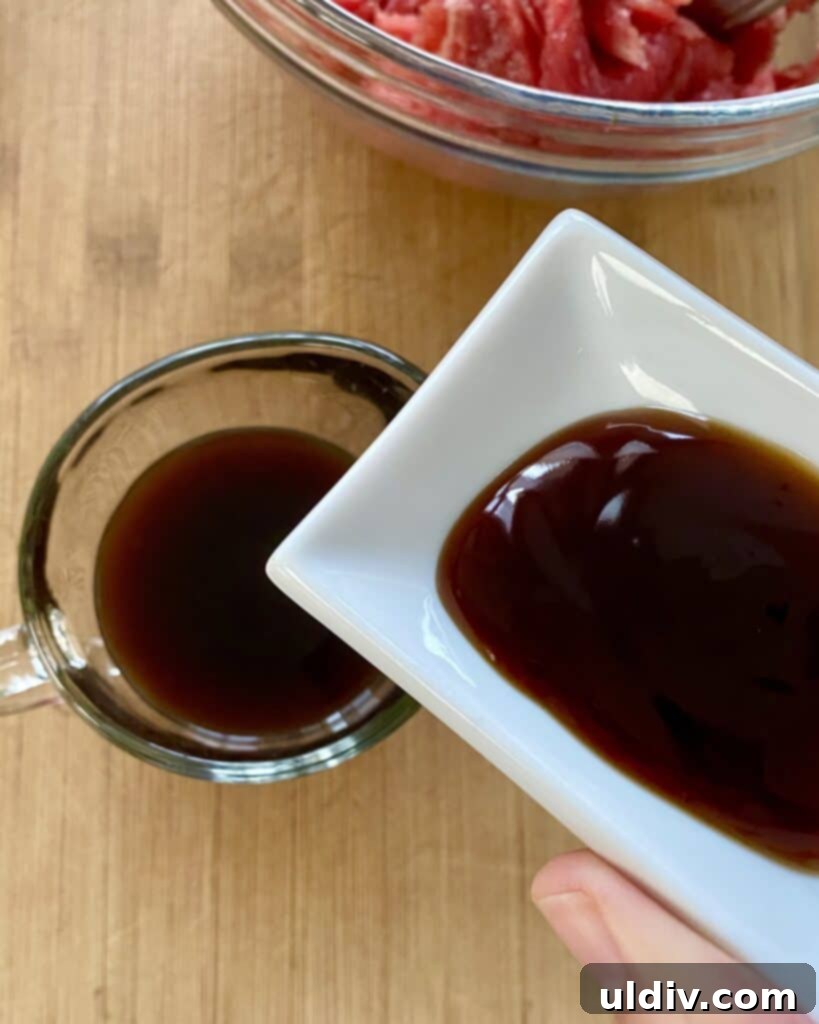
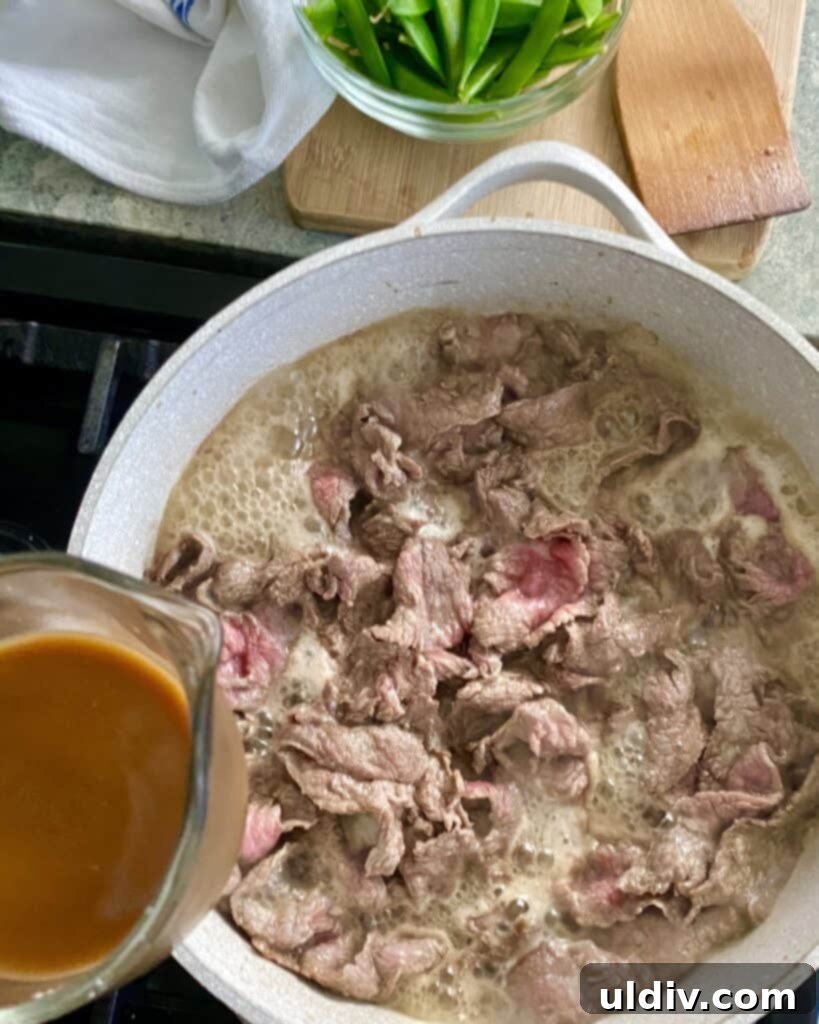
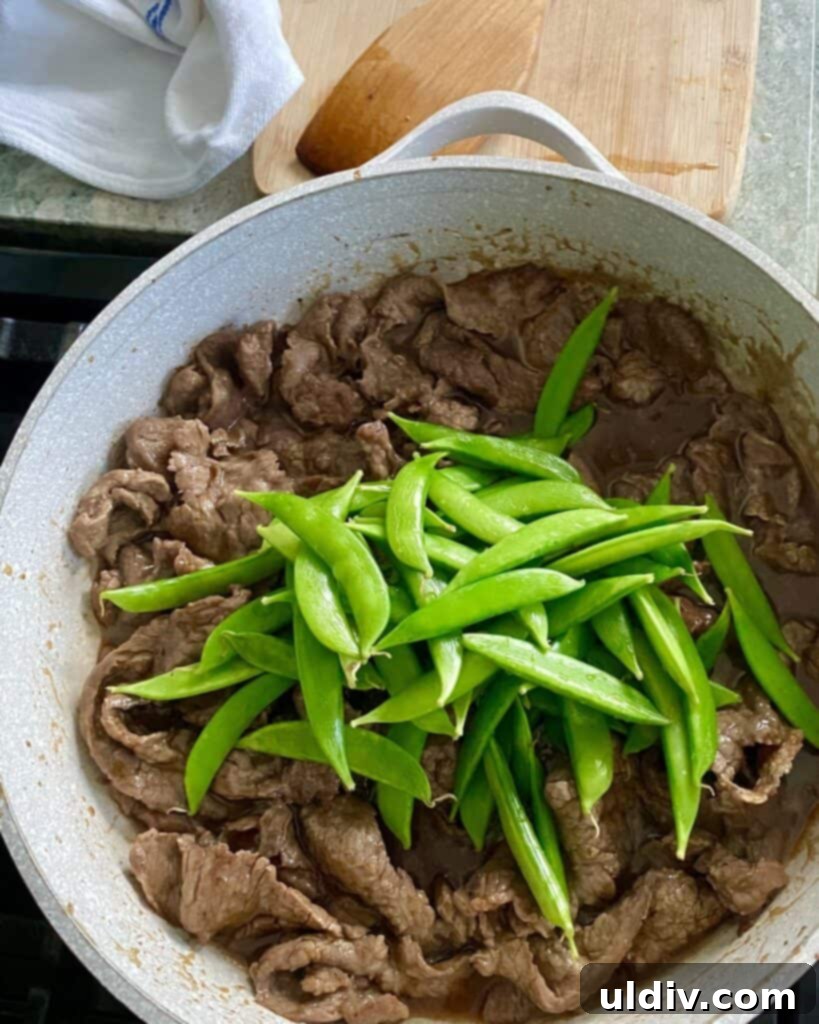
Step-by-Step Guide: How to Make My Beef Stir Fry Recipe
This incredibly flavorful beef stir fry is designed to be a true **30-minute dinner recipe**, from prep to plate (and including minimal clean-up!). Follow these easy steps to achieve perfect results every time:
- Slice the Steak: Begin by placing your flank steak on a cutting board. Crucially, slice it thinly against the grain, aiming for pieces approximately ⅛ to ¼ inch thick. This ensures maximum tenderness. Transfer the sliced steak to a bowl.
- Marinate for Tenderness: To unlock unparalleled tenderness, sprinkle the sliced steak with baking soda, 1 tablespoon of reduced sodium soy sauce, and 1 tablespoon of water. Toss everything together until the steak is evenly coated. Let it marinate for exactly 15 minutes. This brief marination is a game-changer for texture.
- Prepare the Sauce: While the steak marinates, in a small bowl, whisk together the remaining 2 tablespoons of reduced sodium soy sauce, reduced sodium beef stock, oyster sauce, light brown sugar, and cornstarch. Stir diligently until the brown sugar and cornstarch are completely dissolved, ensuring a smooth sauce without lumps. Set this aside.
- Blanch the Sugar Snap Peas: Bring a medium-sized pot of water to a rolling boil over high heat. Add the sugar snap peas and cook them for just 2 minutes. This quick blanching ensures they retain their vibrant green color and satisfying crunch. Immediately drain the snap peas in a colander and set them aside.
- Stir Fry the Steak: After the 15-minute marination, heat a large sauté pan or a wok over medium-high heat. Add the toasted sesame oil. Once the oil is shimmering hot (which typically takes less than a minute at medium-high heat), add the marinated steak in a single layer. Let the steak sauté undisturbed for about a minute to get a good sear, then stir quickly to cook evenly. You want the steak to be just cooked through with a few pink spots remaining, achieving a perfect medium-rare to medium doneness. Remember, overcooking is the enemy of tender steak.
- Add the Sauce: Once the steak is cooked to your liking, give your prepared sauce a quick re-stir, then pour it directly into the pan with the steak. Bring the mixture to a low boil, stirring continuously. As it simmers, the sauce will thicken and become beautifully glossy, coating every piece of steak. This process should take approximately 2 to 3 minutes.
- Toss in the Peas: Gently stir in the blanched sugar snap peas. Toss them quickly to coat them with the rich, thickened sauce. You want them heated through but still crisp, so don’t overcook them in the sauce.
- Sprinkle and Serve: Finish the dish by sprinkling a generous touch of sesame seeds over the top for added flavor and visual appeal. Your incredibly delicious and tender beef stir fry is now ready! Serve it immediately over a bed of hot, fluffy rice and savor every bite.
Chef Cooking Tips for Making the Perfect Beef Stir Fry
Achieving a truly outstanding beef stir fry goes beyond just following the steps; it involves understanding the nuances and applying a few professional tips. These insights will ensure your dish is consistently tender, flavorful, and perfectly cooked:
- Don’t Skip Marinating the Steak with Baking Soda: This isn’t just an optional step; it’s a scientific secret to tender beef. The baking soda subtly neutralizes the natural acids in the steak, making the meat more alkaline. This change in pH inhibits the proteins from binding and tightening up excessively when exposed to heat, a process often referred to as “velveting.” The result is beef that remains incredibly tender and succulent, even when cooked quickly at high temperatures.
- Quickly Blanch the Sugar Snap Peas: Precision in blanching is key for vibrant, crisp vegetables. Only a couple of minutes in boiling water is all that’s needed to cook the peas just enough. You’re aiming for bright green vegetables with a slight crunch—they should be tender-crisp, not soft or mushy. Overcooking them here will lead to soggy stir fry vegetables later.
- Avoid Overcooking the Steak at All Costs: Flank steak is lean and cooks very rapidly. Cooking it for too long, even by a minute or two, will cause it to seize up and become tough. Your goal is to cook the beef to a perfect medium-rare to medium doneness. It should still have a hint of pink in the center. The high heat of stir-frying means quick cooking, so keep a close eye on it and remove it from the direct heat as soon as it’s nearly done.
- Give the Sauce a Stir Before Adding It to the Pan: It’s common for the cornstarch, and sometimes other ingredients, to settle at the bottom of the sauce mixture after sitting for a few minutes. Always give the sauce a thorough stir or whisk right before pouring it into the pan with the cooked steak. This ensures all ingredients are fully recombined, allowing the cornstarch to properly thicken the sauce evenly and prevent a watery or lumpy consistency.
- Don’t Overcrowd the Pan: This is fundamental to stir-frying. If you add too much beef (or vegetables) to the pan at once, the temperature of the pan will drop significantly. Instead of searing, the ingredients will steam, leading to a less desirable texture (e.g., soggy vegetables, boiled beef). Cook the beef in batches if necessary to maintain high heat and achieve that beautiful caramelized crust.
- Heat Your Wok or Pan Properly: A truly hot pan is crucial for stir-frying. Ensure your pan is smoking hot before adding the oil, and then let the oil heat up for a few seconds before adding the meat. This high heat is what gives stir-fried dishes their characteristic smoky flavor and prevents sticking.
More Easy and Delicious Dinner Recipes
If you loved this beef stir fry, you’re in for a treat! Explore some of my other favorite simple yet satisfying dinner recipes that are perfect for any night of the week:
- Everything But the Bagel Chicken Bites: Flavorful chicken bites with a popular seasoning blend.
- Baked Shrimp with Feta and Tomatoes: A vibrant, Mediterranean-inspired dish that’s quick and light.
- Creamy Tomato Pasta: A comforting and rich pasta dish that comes together effortlessly.
- Spicy Chili with Butternut Squash: A hearty and warming chili with a sweet and spicy kick.
Just One More Thing: We’d Love to Hear From You!
Your feedback is invaluable and truly inspires us! If you’ve had the chance to make my sensational Beef Stir Fry recipe, I would absolutely love to hear about your experience. Please take a moment to leave a comment below and consider giving this recipe a star rating. I make it a priority to read and reply to all your comments, as they help me connect with you and understand what you love about these dishes.
Even better, if you snap a photo of your magnificent stir fry creation, please post it to Instagram and tag @amycaseycooks! I genuinely adore seeing all your culinary masterpieces and frequently share them in my Insta stories, celebrating your kitchen successes. Don’t forget to also check out my Facebook and Pinterest pages for a daily dose of fabulous foodie stories, insightful cooking videos, invaluable kitchen tips, and a plethora of other delicious recipes. Happy cooking!
Recipe
Beef and Sugar Snap Pea Stir Fry Recipe
Print
Pin
Rate
Equipment
-
chef knife
-
colander
-
wok set
-
large sauté pan
-
cutting boards
Ingredients
- 1 ¼ pounds flank steak
- ¼ teaspoon baking soda
- 3 tablespoons reduced sodium soy sauce divided
- ½ cup reduced sodium beef stock
- 1 tablespoon oyster sauce
- 1 tablespoon light brown sugar
- 1 tablespoon cornstarch
- 1 tablespoon sesame oil
- 2 cups sugar snap peas
- sesame seeds for serving
- 4 cups cooked hot rice
Instructions
-
Place the flank steak on a cutting board and thinly slice against the grain. You want slices that are ⅛ to ¼ inch thick. Place the sliced steak in a bowl and sprinkle with the baking soda, 1 tablespoon reduced sodium soy sauce and 1 tablespoon water. Toss to combine and let marinate for 15 minutes.
-
In a small bowl, combine the remaining 2 tablespoons of reduced sodium soy sauce, reduced sodium beef stock, oyster sauce, light brown sugar and cornstarch. Stir to dissolve the light brown sugar and cornstarch. Set aside.
-
Fill a medium sized pot with water, place of high heat and bring to a boil. When the water boils, add the sugar snap peas. Cook for 2 minutes. Drain the snap peas in a colander and set aside.
-
After the steak has marinated for 15 minutes, heat a large sauté pan or wok over medium high heat. Add the toasted sesame oil. When the oil is hot (this will take less than a minute over medium high heat) add the steak. Let the steak sauté for a minute or so and then stir to cook evenly. You want the steak to just be cooked with still a few pink spots. It should be medium rare to medium. Overcooking the steak will make it tough.
-
Pour the sauce into the the pan. Let come to a low boil then stir to finish cooking the steak and thicken the sauce. This will take about 2 to 3 minutes.
-
Stir in the sugar snap peas and toss to coat with the sauce.
-
Serve the beef stir fry over the rice and sprinkle with sesame seeds.
Video
Notes
- Don’t skip marinating the steak ~ It’s a scientific reaction. This combination of ingredients neutralizes the acid so the steak is more alkaline. This causes the proteins in the steak not to bind and tighten up when cooked. The result is more tender beef.
- Quickly blanch the sugar snap peas ~ Only a couple minutes is needed to cook the peas. You want bright green veggies with a slight crunch to them.
- Avoid overcooking the steak ~ Cooking the steak too long will make it tough. You want to cook the beef to medium rare to medium.
- Give the sauce a stir before adding it to the cooked steak ~ The sauce can separate after sitting for a few minutes. Give it a stir to recombine all the ingredients.