
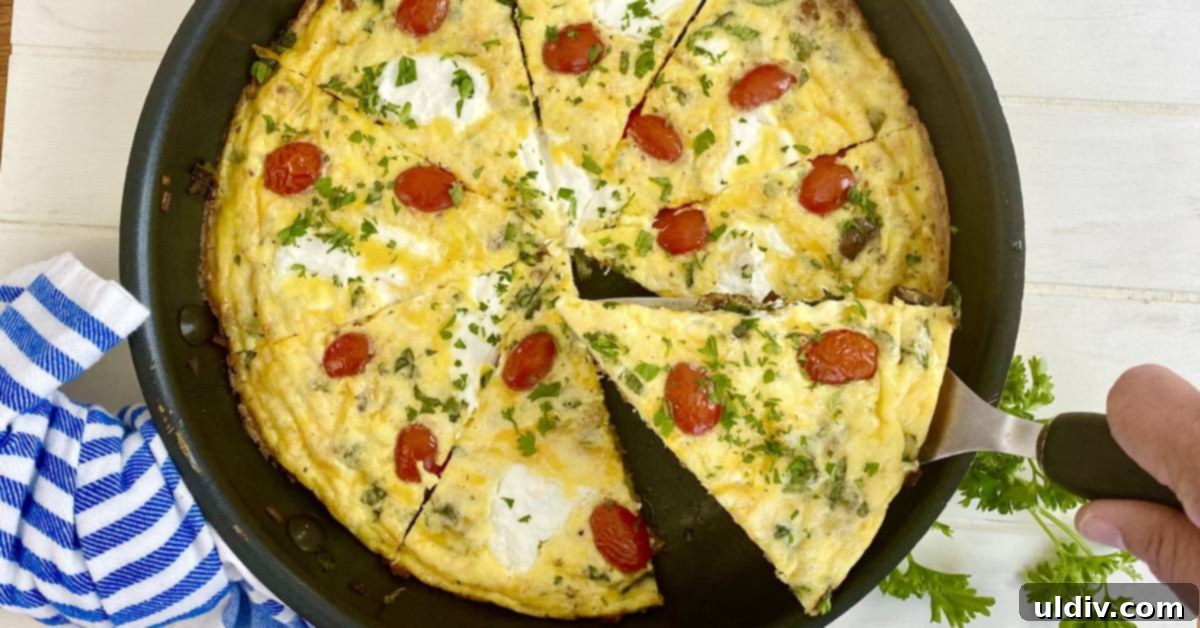
Welcome to the ultimate guide to crafting the perfect **Baked Frittata**, a wonderfully versatile and effortlessly delicious dish that belongs in every home cook’s repertoire. If you’ve been searching for an easy, yet elegant, meal that can transition seamlessly from a hearty breakfast to a delightful brunch, a quick lunch, or even a satisfying dinner, then look no further. This crustless marvel, often described as a lighter, quicker cousin to quiche, bakes beautifully in a single sauté pan, making cleanup a breeze and cooking an absolute joy.
The beauty of a frittata lies in its incredible adaptability. It’s a blank canvas for your culinary creativity, allowing you to experiment with countless combinations of eggs, fresh vegetables, cheeses, and breakfast meats. Whether you’re aiming to clear out your refrigerator’s crisper drawer or simply craving a wholesome, flavorful meal, this baked frittata recipe is your ticket to culinary success. Get ready to discover your new favorite way to enjoy eggs, packed with your preferred flavors and baked to golden perfection.
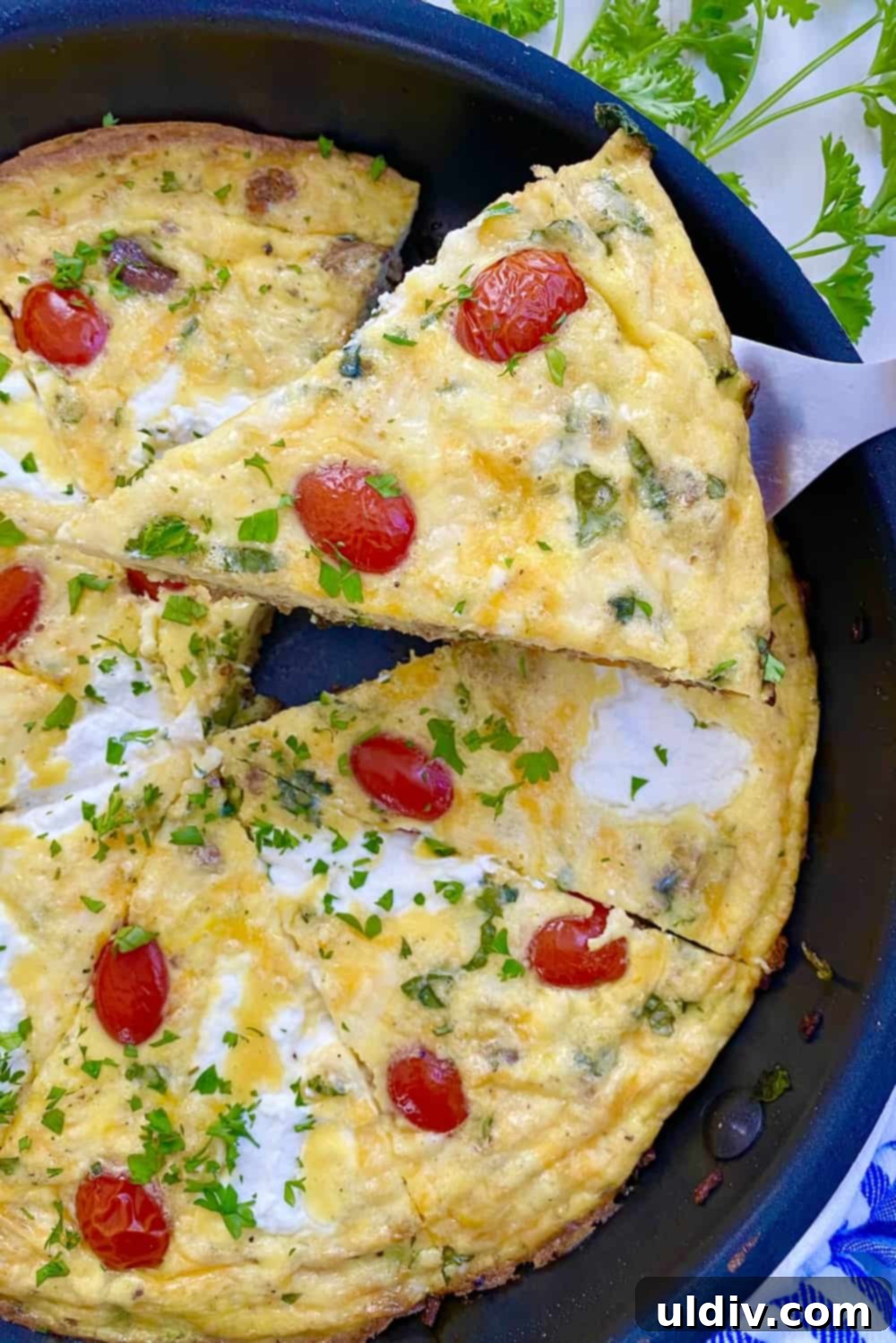
What Exactly is a Baked Frittata?
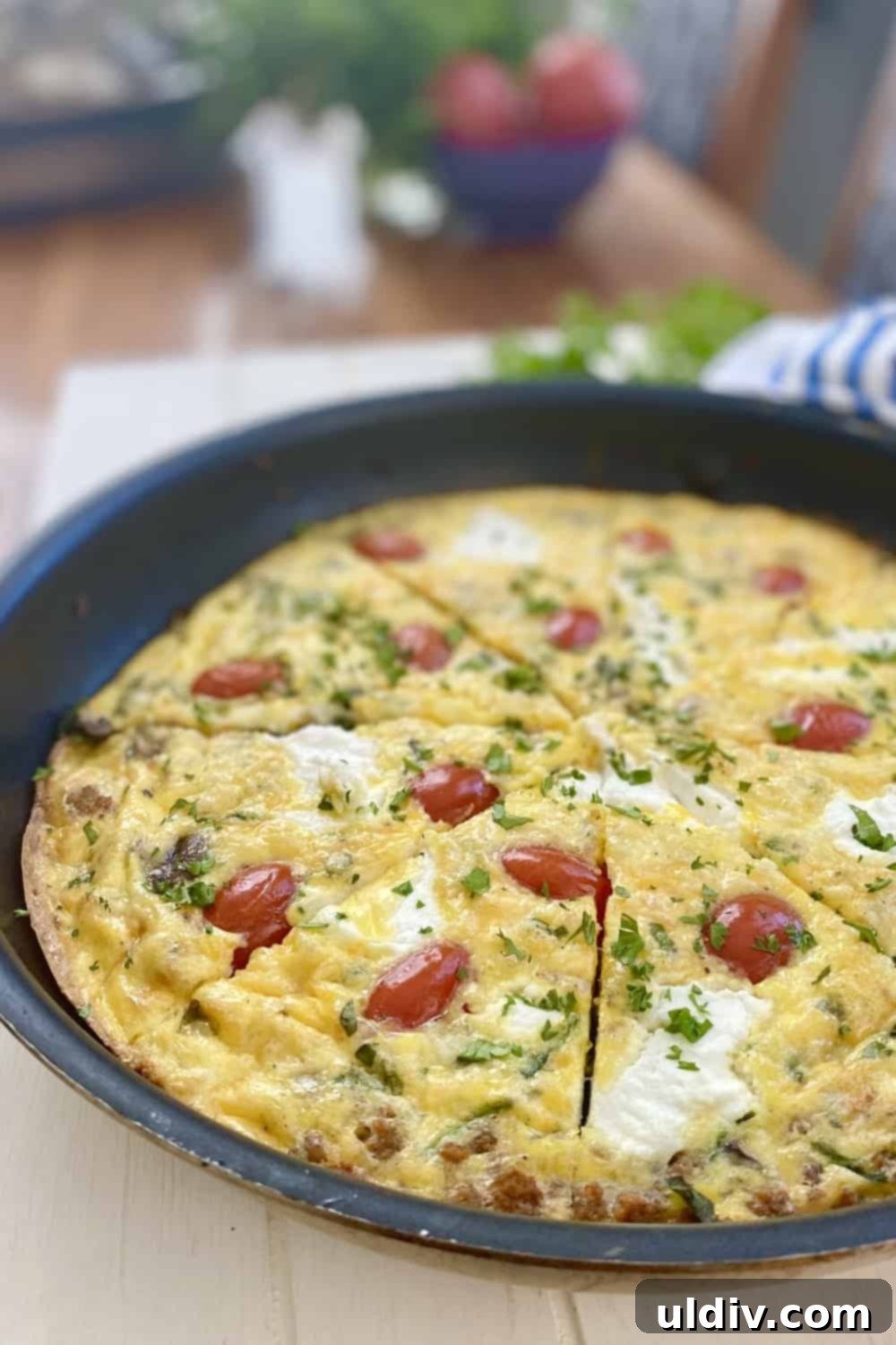
Often confused with an omelet or a quiche, a **baked frittata** holds its own as a distinct and delightful egg dish. Imagine the richness of a quiche but without the fuss of a pastry crust, making it a naturally gluten-free and often lower-carb option. Unlike an omelet, which is typically folded over its fillings and served immediately, a frittata is cooked slowly on the stovetop until the edges set, then finished in the oven, allowing it to puff up beautifully and cook through evenly.
This “crustless quiche” method ensures a creamy, custardy interior with a beautifully golden-brown top, creating a wonderfully satisfying texture. What truly sets an oven-baked frittata apart is its incredible ease of preparation and its “one-pan wonder” status. All the cooking – from browning your breakfast sausage and sautéing fresh vegetables to combining them with beaten eggs, heavy cream, and a blend of cheeses – happens right in an oven-safe sauté pan. In approximately 30-35 minutes, you’ll have a hearty, flavorful dish ready to enjoy. Plus, a frittata is remarkably versatile in how it’s served: warm, at room temperature, or even cold, making it ideal for meal prep and leftovers.
Why You’ll Adore This Easy Frittata Recipe
There are countless reasons why this **easy baked frittata recipe** is destined to become a staple in your kitchen. Beyond its straightforward preparation, it offers a host of benefits that cater to busy lifestyles and varied tastes:
- Unmatched Versatility: As mentioned, frittatas are a chef’s dream for using up leftover ingredients. From nearly any vegetable in your fridge to various cooked meats and cheeses, you can truly make it your own. This adaptability also means you can create a different frittata every time, keeping your meals exciting and preventing food waste.
- Effortless One-Pan Cooking: The entire process, from stovetop sautéing to oven baking, is completed in a single pan. This significantly reduces cleanup time, a major win on any busy day.
- Quick and Convenient: With just 15 minutes of prep time and around 20 minutes in the oven, you can have a gourmet-quality meal on the table in under an hour. It’s perfect for hectic weeknights or leisurely weekend brunches.
- Healthy and Wholesome: Packed with protein from eggs and customizable with an abundance of vegetables, a frittata is a nutritious choice that keeps you feeling full and energized. Being crustless also makes it naturally lighter.
- Perfect for Any Meal: While often associated with breakfast and brunch, a frittata is substantial enough for lunch or dinner. Pair it with a simple salad, and you have a complete, well-balanced meal.
- Fantastic for Meal Prep: Frittatas hold up incredibly well in the refrigerator for several days, making them an excellent option for grab-and-go breakfasts or packed lunches throughout the week.
Essential Ingredients for Your Perfect Frittata
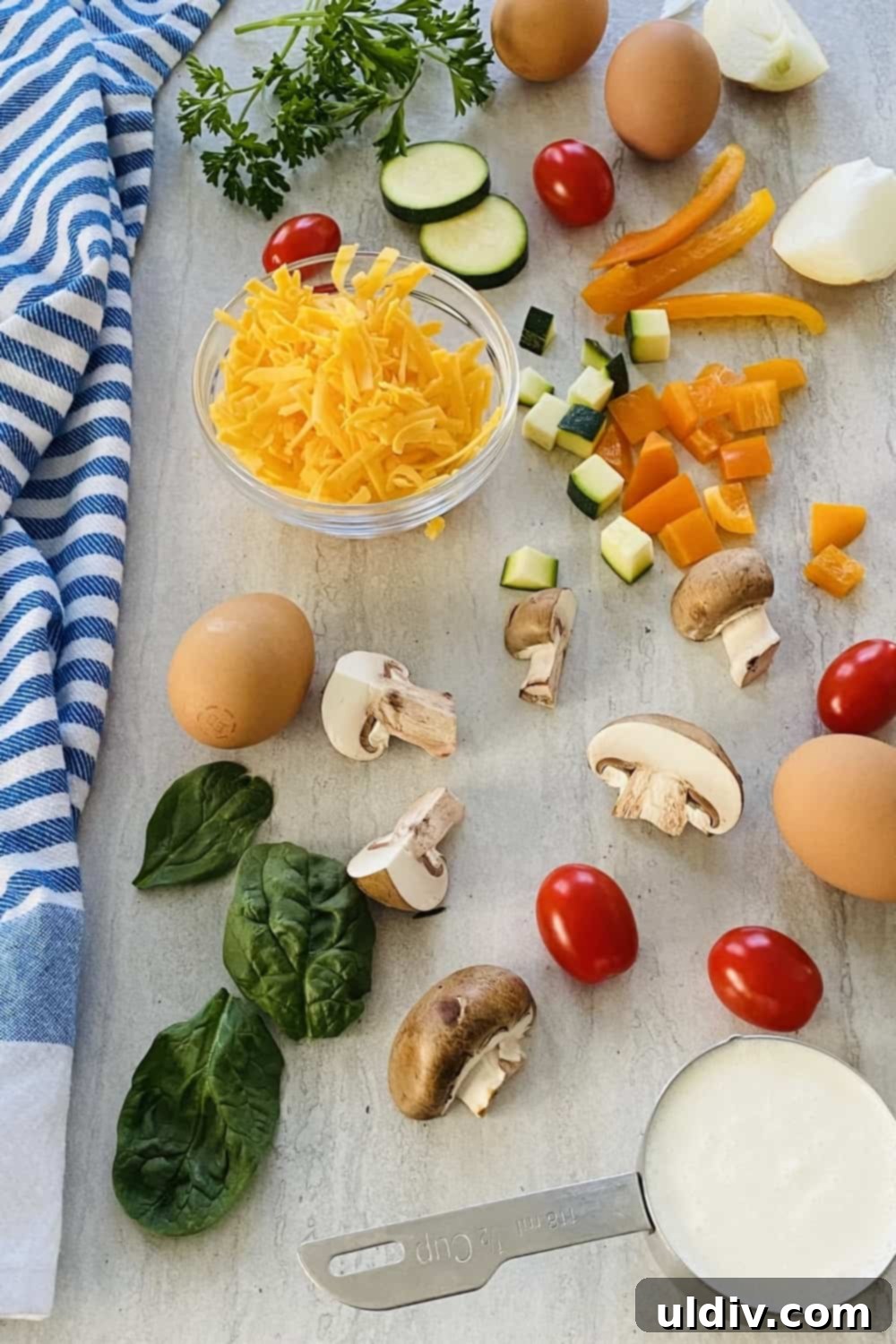
The beauty of a frittata truly shines in its flexible ingredient list. While I’ll provide my tried-and-true combination below, consider this a starting point for your culinary adventure. Don’t hesitate to substitute your favorite vegetables, cheeses, and breakfast meats to create a truly personalized frittata tailored to your tastes and what you have on hand.
- Large Eggs: The foundation of any frittata, providing rich protein and a tender texture.
- Heavy Cream: Adds an essential creamy richness, creating that desirable custardy consistency. Whole milk or half-and-half can be substituted for a slightly lighter version.
- Dijon Mustard: A secret ingredient that adds a subtle tang and depth of flavor without being overpowering.
- Kosher Salt & Freshly Ground Black Pepper: Essential seasonings to elevate all the other flavors.
- Fresh Basil: Brings a vibrant, aromatic freshness. Dried basil works well too, just use a smaller quantity (about 1/3 of the fresh amount).
- Cheddar and Monterey Jack Cheeses: A classic pairing that melts beautifully, offering a mild yet flavorful profile. Feel free to use your favorite melty cheese blend.
- Breakfast Sausage: Provides a savory, satisfying element. Crumbled bacon, diced ham, or even shredded chicken or turkey can be excellent alternatives.
- Zucchini, Mushrooms, Onions, Bell Peppers: A versatile mix of vegetables that sauté well and add fantastic flavor and texture. This is where your fridge clean-out comes in handy!
- Cherry Tomatoes: Halved and added at the end, they provide bursts of sweetness and color.
- Ricotta Cheese: Dolloped on top, it introduces pockets of creamy, mild richness, contrasting beautifully with the baked egg base.
- Fresh Parsley: An excellent optional garnish to add a final touch of fresh herbaceousness and visual appeal.
Embrace the opportunity to experiment! Asparagus, broccoli florets, spinach, kale, sweet potatoes (pre-cooked), and various types of onions (scallions, red onions) all make wonderful additions.
Cooking Video Guide
Watch this helpful video to see each step of making this delicious baked frittata come to life! It’s a great visual aid to ensure your frittata turns out perfectly every time.
Crafting the Perfect Baked Frittata: A Simple Guide
Making a frittata is surprisingly simple, and the bonus is the minimal cleanup since everything is cooked and often served from the same oven-safe pan. Follow these straightforward steps to achieve a truly delicious egg, vegetable, and breakfast sausage frittata.
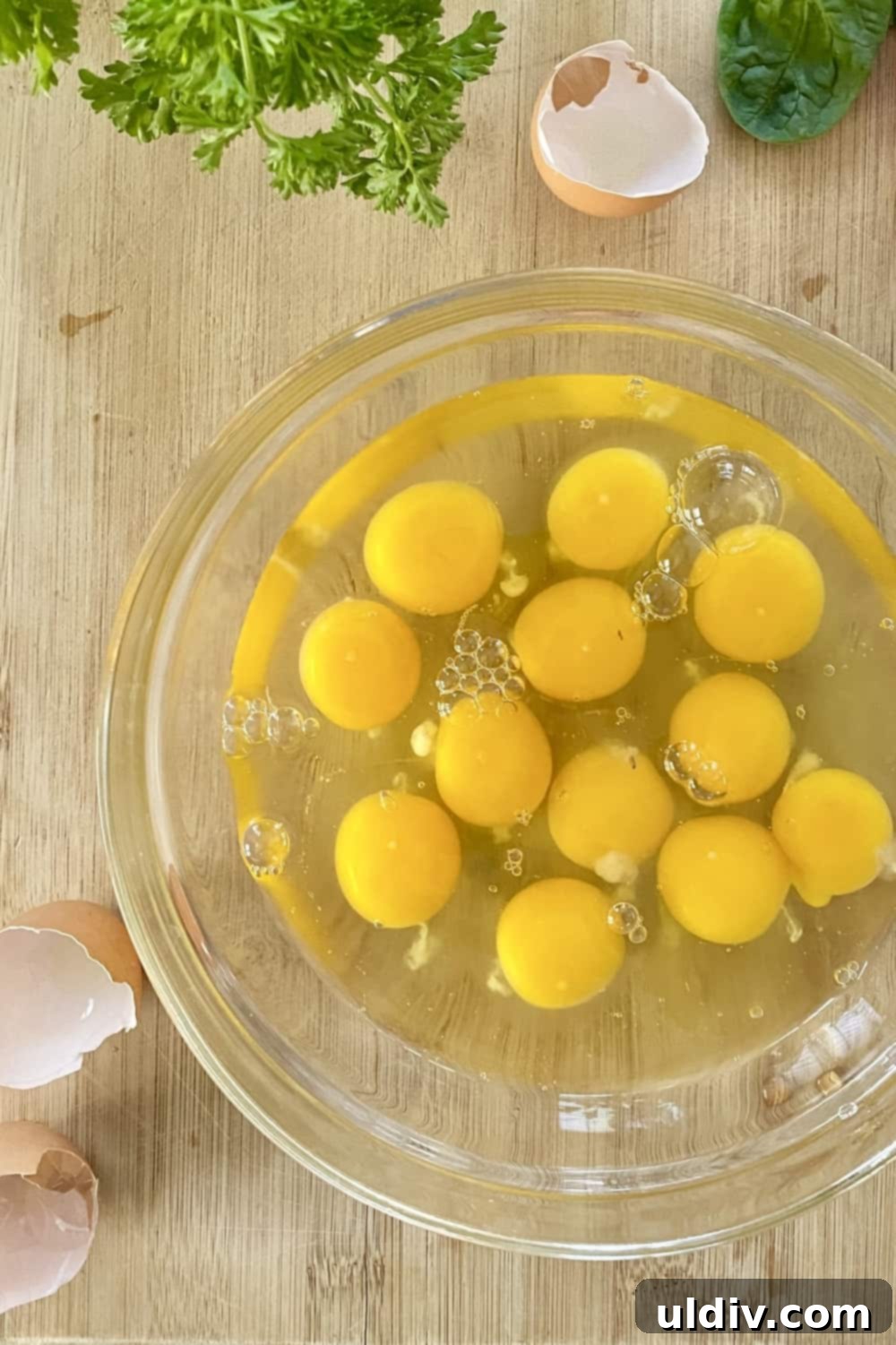
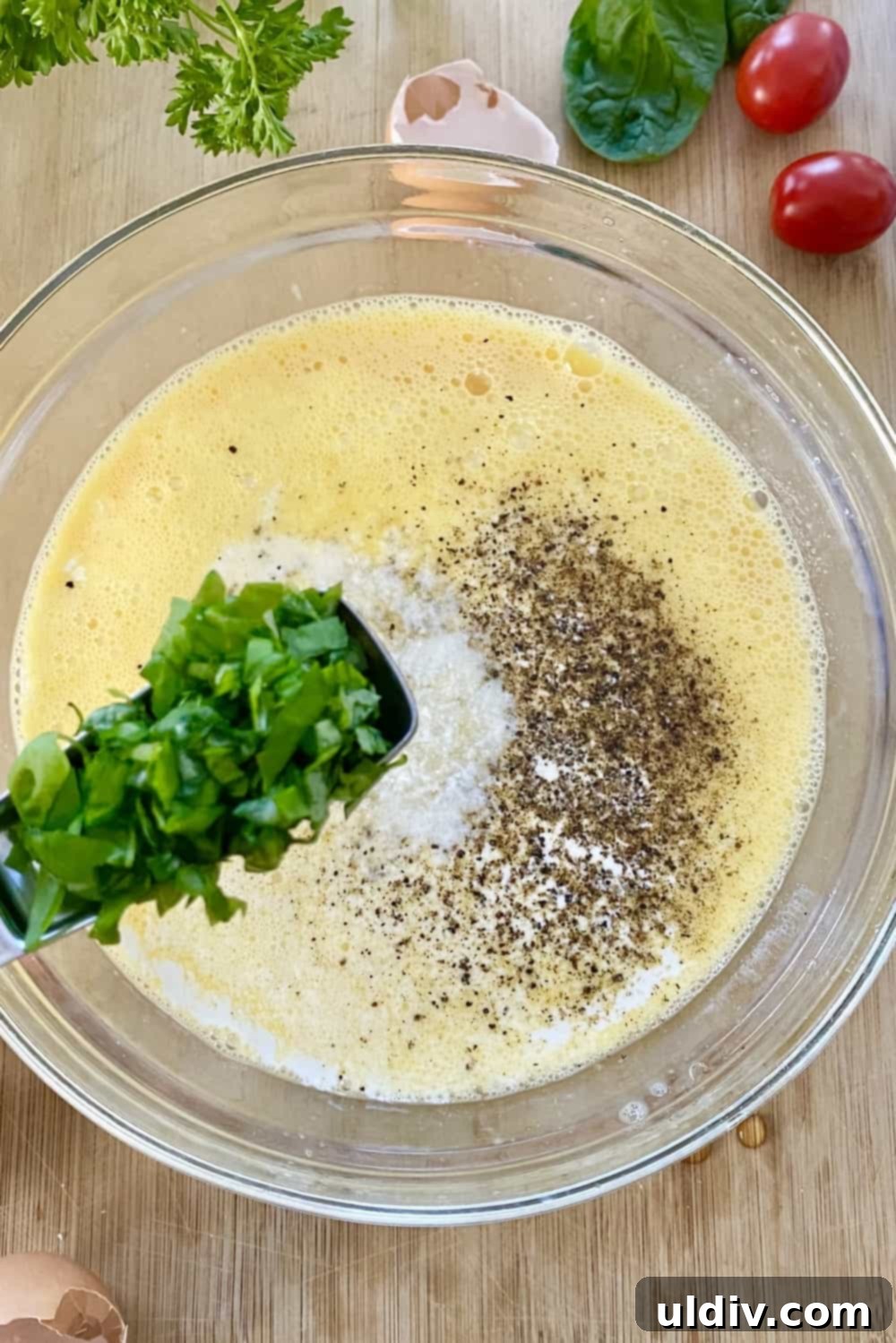
- Prepare the Egg Mixture: In a large bowl, crack and vigorously whisk the large eggs until they are light and frothy. This aeration is key to a fluffy frittata. Stir in the heavy cream, Dijon mustard, kosher salt, pepper, chopped fresh basil, and your shredded cheeses. Set this flavorful mixture aside.
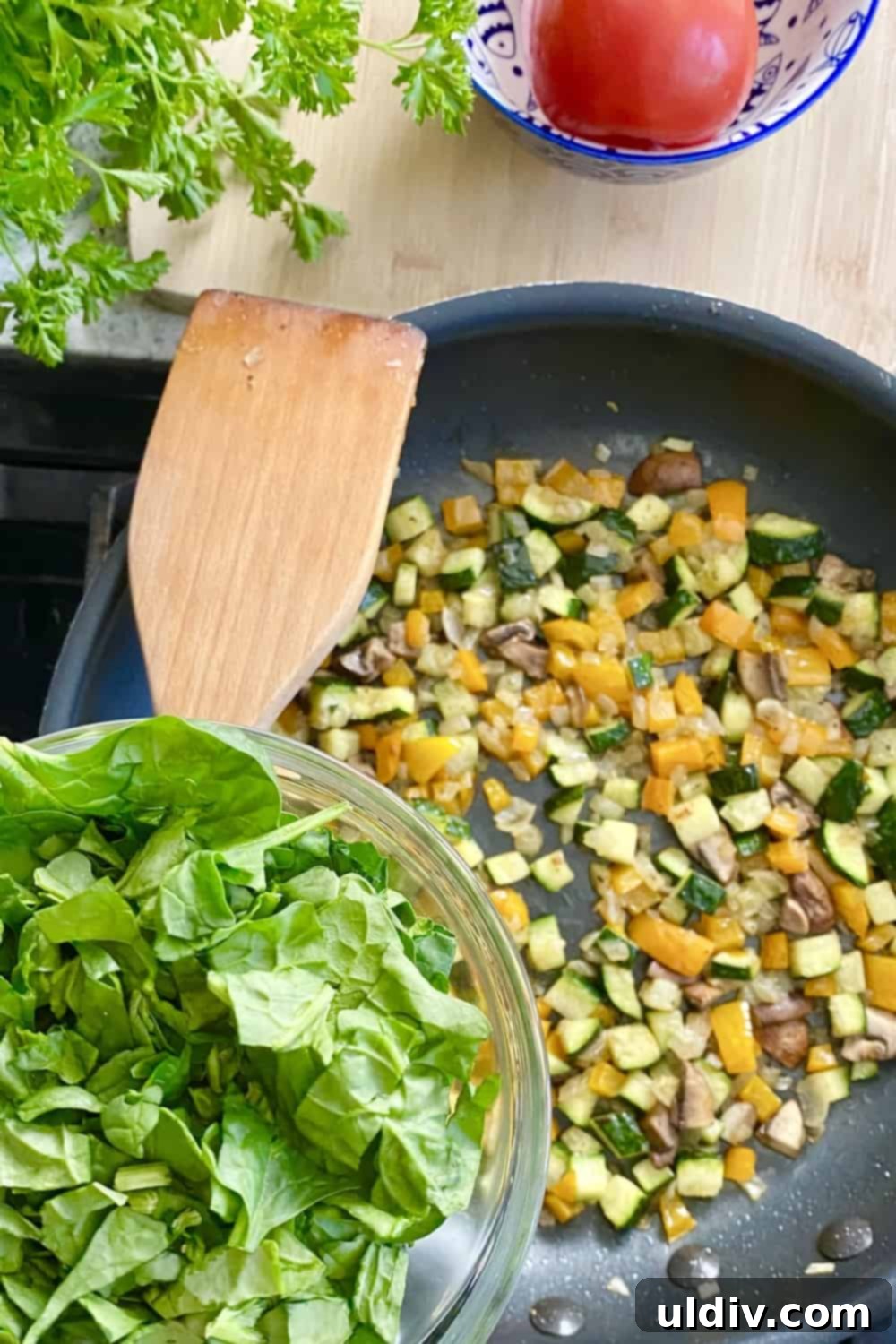
- Sauté Your Proteins and Vegetables: Begin by cooking your breakfast sausage in a 12-inch oven-safe nonstick sauté pan over medium heat. Break up the sausage into small, even pieces as it browns, ensuring it’s cooked through. Once done, remove the sausage, leaving about two tablespoons of rendered grease in the pan. This flavorful fat will be perfect for sautéing your vegetables. Add your chopped vegetables to the same pan and sauté over medium-low heat until they are tender-crisp, cooked halfway through, and retain their shape. Finally, add the spinach, cooking just until it wilts.
- Combine and Distribute: Return the cooked breakfast sausage to the pan with the sautéed vegetables. Stir everything together to ensure the flavors are well integrated, then spread the mixture evenly across the bottom of the pan. This creates a uniform base for your frittata.
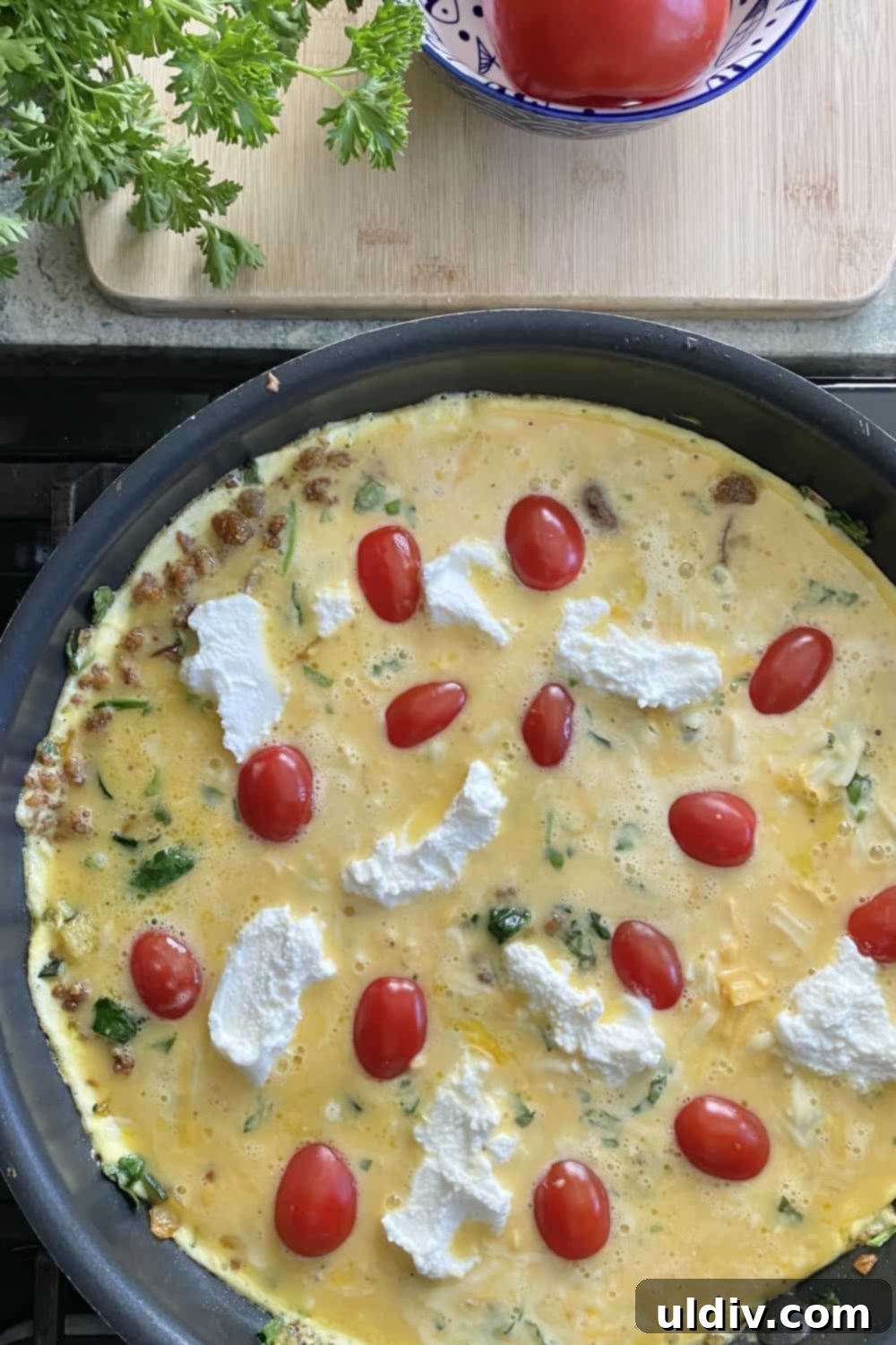
- Add the Eggs and Finishing Touches: Slowly and carefully pour the prepared egg mixture over the sausage and vegetable base in the pan. Gently spread the cherry tomato halves and dollops of creamy ricotta cheese evenly over the top of the frittata. Place the pan back on the stovetop for about 2 minutes over medium heat, allowing the very edges of the frittata to just begin setting.
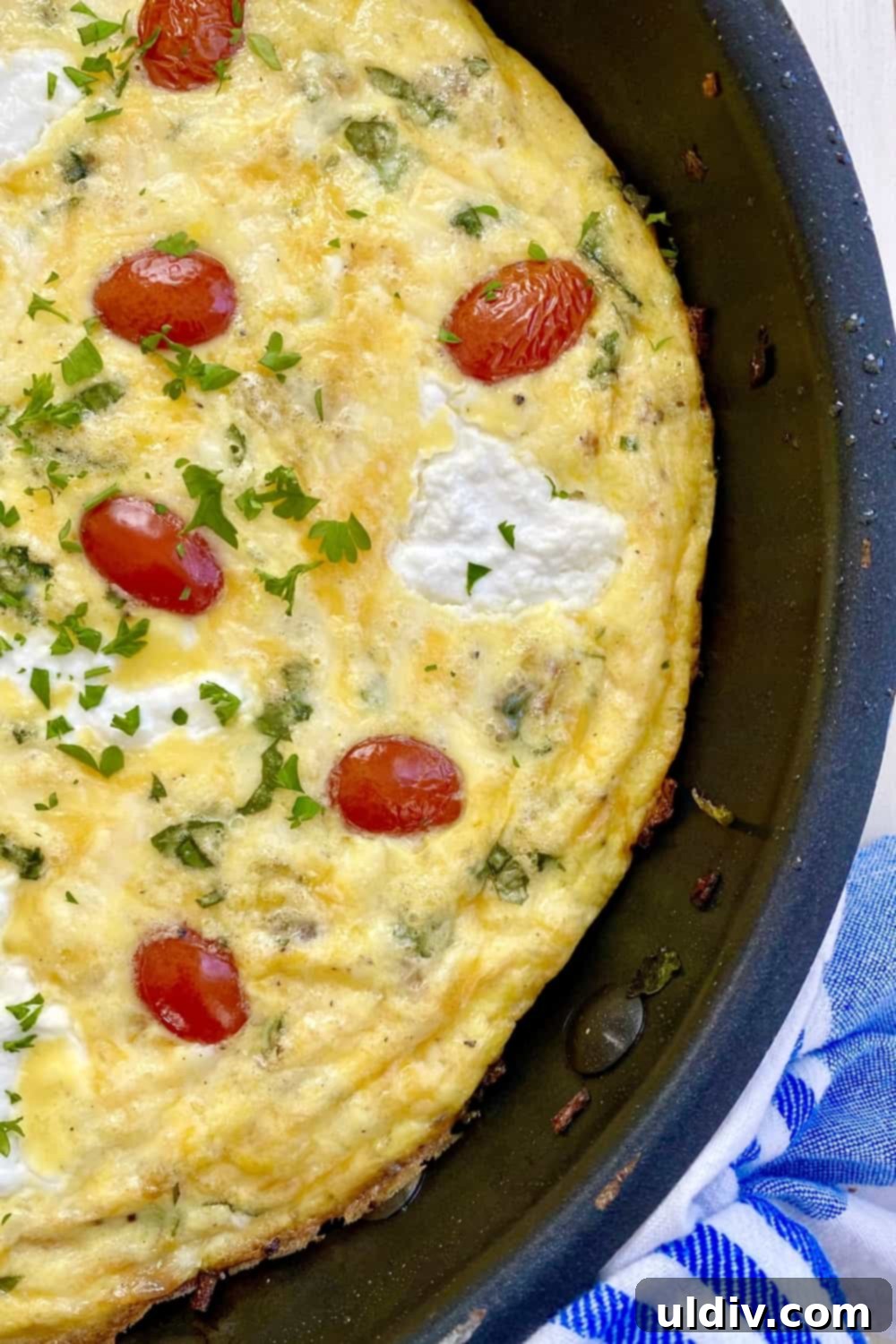
- Bake to Perfection: Transfer the sauté pan carefully into your preheated oven. Bake for approximately 15-20 minutes, or until the internal temperature reaches 160 degrees F when measured with an instant-read thermometer. The frittata should be just set in the center with a slight jiggle, and the edges should be lightly golden, not deeply browned.
By adhering to these easy steps, you are guaranteed to produce a consistently delicious and perfectly baked frittata every single time!
Chef-Approved Tips for the Best Baked Frittata
Elevate your frittata game with these expert tips, designed to ensure a perfectly textured, incredibly flavorful, and visually appealing dish every time.
- Embrace a Medley of Cheeses: While a single cheese can be delicious, combining different types truly enhances the flavor and texture of your frittata. Sharp cheddar and creamy Monterey Jack, as used in this recipe, are fantastic choices for their superb melting properties and balanced flavor. For an extra touch of gourmet flair, incorporating dollops of creamy ricotta cheese on top provides a delightful contrast in texture and a mild, fresh creaminess that brightens the entire dish. Don’t be afraid to explore other combinations like Gruyere, Parmesan, or even a hint of goat cheese for different flavor profiles.
- Utilize Your Vegetable Drawer: A frittata is the ultimate “clean out the fridge” meal, making it an incredibly economical and waste-reducing option. This recipe calls for 4 cups of chopped vegetables, offering ample room for customization. Beyond the suggested mushrooms, zucchini, onions, and bell peppers, consider adding broccoli florets, yellow squash, scallions, shredded Brussels sprouts, fresh spinach, or tender asparagus tips. Remember to chop all vegetables into approximately ½-inch pieces to ensure even cooking and a pleasant bite.
- Choose the Right Pan: An oven-safe 12-inch sauté pan is ideal for this recipe. A quality nonstick pan will make cleanup incredibly easy and help prevent sticking, while a well-seasoned cast iron pan can also yield fantastic results with a beautiful crust. Ensure your chosen pan is indeed oven-safe and can handle the required baking temperature.
- The Golden Rule: Precook Your Vegetables: This step is critical and often overlooked! Vegetables naturally contain a high water content. If added raw to your frittata, this moisture will release during baking, resulting in a watery, less firm egg dish. Sautéing your vegetables beforehand not only concentrates their flavors but also removes excess moisture, guaranteeing a perfectly consistent, firm, and flavorful frittata once baked. Don’t skip this important step!
- Avoid Overcooking for Optimal Texture: An overcooked frittata can become rubbery and dry. If the top of your frittata is deeply golden brown after baking, it’s a strong indicator that it’s likely overdone. For a foolproof method to achieve that desirable “just set with a jiggle” texture, rely on an instant-read digital thermometer. The ideal internal temperature for a perfectly cooked frittata is 160 degrees F. At this point, the edges will be lightly browned, and the center will be firm but still exhibit a slight, delicate jiggle, ensuring a creamy, custardy interior.
Inspiring Frittata Variations
Get creative with your frittata fillings! These combinations are just the beginning – feel free to mix and match based on what you love or what’s seasonal.
- Southwestern Fiesta: Combine vibrant bell peppers, a kick of jalapeños (deseeded for less heat), sweet corn, sautéed onion, and spicy pepper jack cheese for a zesty twist. A sprinkle of cilantro at the end would be perfect.
- Mediterranean Delight: Artichoke hearts, sun-dried tomatoes (packed in oil, drained and chopped), fresh spinach, and tangy feta cheese create a classic, savory flavor profile reminiscent of the Mediterranean coast.
- Hearty Bacon & Cheddar: Crumbled crispy bacon, fresh spinach, diced tomatoes, and sharp cheddar cheese for a comforting and classic breakfast or brunch option.
- Classic Ham & Swiss: Diced cooked ham, sautéed onion, and nutty Swiss cheese offer a timeless combination that’s always a crowd-plepleaser.
- Garden Fresh Broccoli & Bell Pepper: Tender broccoli florets, sweet red bell peppers, and creamy Monterey Jack cheese for a vibrant and healthy option.
- Sausage & Mozzarella: The robust flavors of breakfast sausage, colorful bell peppers, sautéed onions, and gooey mozzarella cheese make for a substantial and satisfying meal.
Perfect Pairings: What to Serve with Your Frittata
One of the most appealing aspects of a **baked frittata** is its remarkable versatility, allowing it to be the star of any meal, from breakfast to dinner. Pairing it with the right accompaniments can elevate your dining experience, balancing flavors and textures beautifully. Here are some delightful suggestions:
- For a Fresh & Light Touch: A simple green salad dressed with a bright balsamic vinaigrette is a classic pairing. The acidity and freshness of the greens cut through the richness of the frittata perfectly. Consider adding thinly sliced cucumbers, cherry tomatoes, and a sprinkle of toasted nuts for extra crunch.
- Sweet & Savory Contrast: For a refreshing side, this delightful melon and fresh mozzarella salad offers a wonderful contrast to the savory frittata. The juicy sweetness of the melon combined with the creamy mozzarella is simply divine.
- Wholesome & Herbaceous: My healthy chickpea salad with a fresh herb vinaigrette provides a robust and protein-packed accompaniment, adding texture and a burst of fresh flavors that complement the eggs and vegetables beautifully.
- Nutrient-Rich & Fruity: For something unique and satisfying, try the fruited quinoa salad with grapes and pine nuts. Its earthy, slightly sweet notes offer an interesting counterpoint to the frittata’s savory profile.
- Low-Carb & Flavorful: If you’re looking for a low-carb alternative to rice, my tasty cauliflower rice pilaf is an excellent choice. It’s light, flavorful, and pairs wonderfully with the richness of the frittata.
- Classic Breakfast Sides: For breakfast or brunch, consider serving your frittata with a side of crispy home fries, fresh fruit, or warm, crusty bread.
- Beverage Pairings: With its versatility, a frittata can be enjoyed with a wide range of beverages. Coffee or tea for breakfast, a mimosa or sparkling wine for brunch, or a light white wine like Sauvignon Blanc or a chilled rosé for lunch or dinner.
Storing and Reheating Your Frittata
One of the greatest advantages of a baked frittata is how well it stores, making it an ideal candidate for meal prep. Properly stored, your frittata will maintain its delicious flavor and texture for several days.
- Storage: Allow the frittata to cool completely to room temperature before storing. Cover the pan tightly with plastic wrap or transfer individual slices to an airtight container. Refrigerate promptly, and it will keep fresh for up to 3-4 days.
- Freezing: For longer storage, you can freeze frittata slices. Wrap individual slices tightly in plastic wrap, then place them in a freezer-safe bag or container. It can be frozen for up to 1-2 months. Thaw overnight in the refrigerator before reheating.
- Reheating:
- Microwave: For a quick reheat, place a slice on a microwave-safe plate and heat for 30-60 seconds, or until warmed through. Be careful not to overheat, as this can make the eggs rubbery.
- Oven: For best results and to maintain a slightly crisp exterior, reheat slices in a preheated oven at 300°F (150°C) for 10-15 minutes, or until warmed through.
- Stovetop: Place a slice in a nonstick pan over medium-low heat and cover. Heat for a few minutes until warm.
Connect With Us!
We absolutely love seeing your culinary creations! If you decide to make my easy recipe for baked frittata, please don’t hesitate to share your experience. Leave a comment below to tell us how it turned out, and consider giving the recipe a rating – your feedback helps other home cooks discover and enjoy this fantastic dish. We read and do our best to reply to all your comments!
Even better, snap a photo of your beautiful frittata and post it to Instagram, tagging @amycaseycooks. We’d be thrilled to feature your photos in our Insta stories, celebrating all your amazing cooking adventures.
For more fabulous foodie stories, inspiring videos, essential cooking tips, and an abundance of delicious recipes, be sure to check out our Facebook and Pinterest pages. Happy cooking!
Recipe
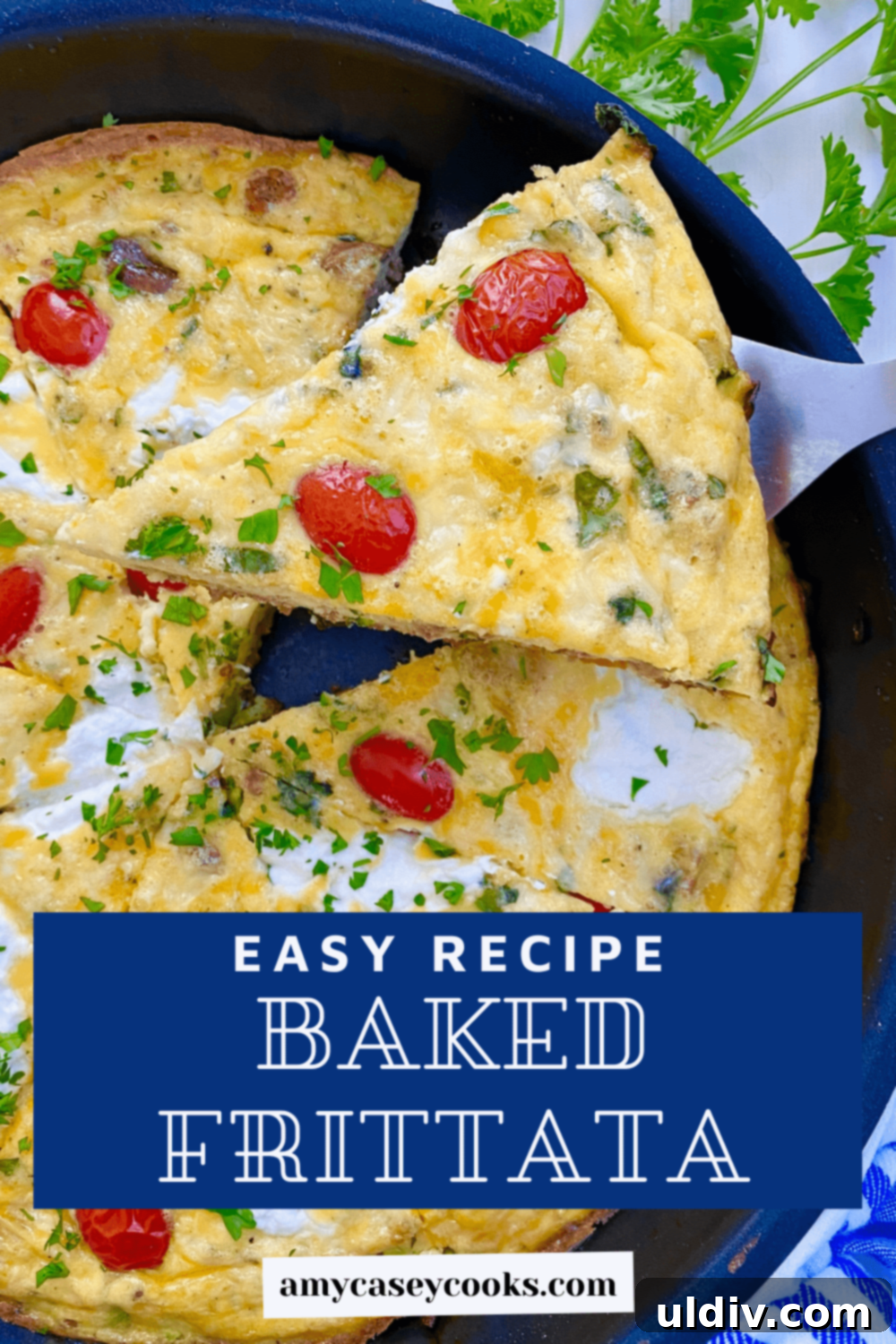
Easy Recipe for Baked Frittata
Print
Pin
Rate
Equipment
-
nonstick sauté pan
Ingredients
- 12 large eggs
- ½ cup heavy cream
- 1 teaspoon Dijon mustard
- 1 teaspoon kosher salt
- ½ teaspoon pepper
- 2 tablespoons chopped fresh basil or 1 teaspoon dried basil
- ½ cup shredded sharp cheddar cheese
- ½ cup shredded Monterey jack cheese
- 1 pound breakfast sausage
- 4 cups chopped vegetables – ½ inch dice ~ mushrooms zucchini, onion, peppers
- 1 cup packed fresh spinach
- 8 to 10 cherry tomatoes cut in half
- ½ cup ricotta cheese
- fresh parsley for garnish
Instructions
-
Preheat oven to 375 degrees F.
-
In a large bowl, crack and whisk the eggs. Stir in the heavy cream, Dijon mustard, kosher salt, pepper, basil, and shredded cheeses. Set the egg mixture aside.
-
In an ovenproof 12-inch nonstick sauté pan over medium heat, add the breakfast sausage. Break up the sausage with a spatula or wooden spoon. While the sausage is cooking, continue to break it into small pieces. Cook the sausage until browned and cooked through ~ about 6-8 minutes. Remove the sausage from the pan. Leave about 2 tablespoons of the grease in the pan. Discard the remaining grease.
-
In the same pan over medium low heat, add the 4 cups of chopped vegetables. Sauté the vegetables for 6-8 minutes. The vegetables should be cooked about half way through and still hold their shape.
-
Add the spinach to the pan and sauté until it is wilted.
-
Add the cooked breakfast sausage to the pan and stir to combine with the vegetables. Spread the mixture evenly over the bottom of the pan.
-
Slowly pour the egg mixture into the pan with the vegetables and sausage.
-
Add the cherry tomato halves and tablespoon dollops of ricotta cheese evenly over the top of the frittata. Cook on the stovetop for about 2 minutes. The edges of the frittata should just begin to cook.
-
Carefully place the pan in the oven. Bake for 15-20 minutes or until the internal temperature is 160 degrees on an instant read thermometer. The eggs should just be set and the center should barely jiggle.
-
Remove the frittata from the oven. Let sit for about 5 minutes before cutting into wedges.
Notes
- Use a variety of cheeses ~ I like to combine different cheeses in a frittata. Cheddar and Monterey Jack melt fabulously into the baked egg dish. A few dollops of creamy ricotta on the top of the frittata is a nice contrast of textures.
- Clean out your veggie drawer ~ Frittatas are a wonderful dish to use up the vegetables hanging out in the refrigerator. The recipe uses 4 cups of chopped veggies. Some tasty produce to add to a frittata are broccoli, mushrooms, zucchini, yellow squash, bell peppers, onions, scallions, shredded Brussels sprouts, spinach, and asparagus. Be sure to chop the veggies in about ½ inch pieces.
- Use a nonstick or cast iron pan ~ A 12 inch pan is perfect for this baked frittata recipe. This nonstick sauté pan is my go to for cooking.
- Precook the vegetables ~ Vegetables are mostly water. Uncooked vegetables in a frittata will result in a watery baked egg dish. Sautéing the vegetables before cooking them in the frittata results in the perfect consistency when baked.
- Don’t overcook the baked frittata ~ If a frittata is golden brown on top after it is baked, it is likely overcooked. My foolproof method for a perfectly cooked frittata is to use an instant read digital thermometer. The internal temperature of a just baked frittata should be 160 degrees F. The edges will be slightly brown and the center will be just set with a jiggle.