
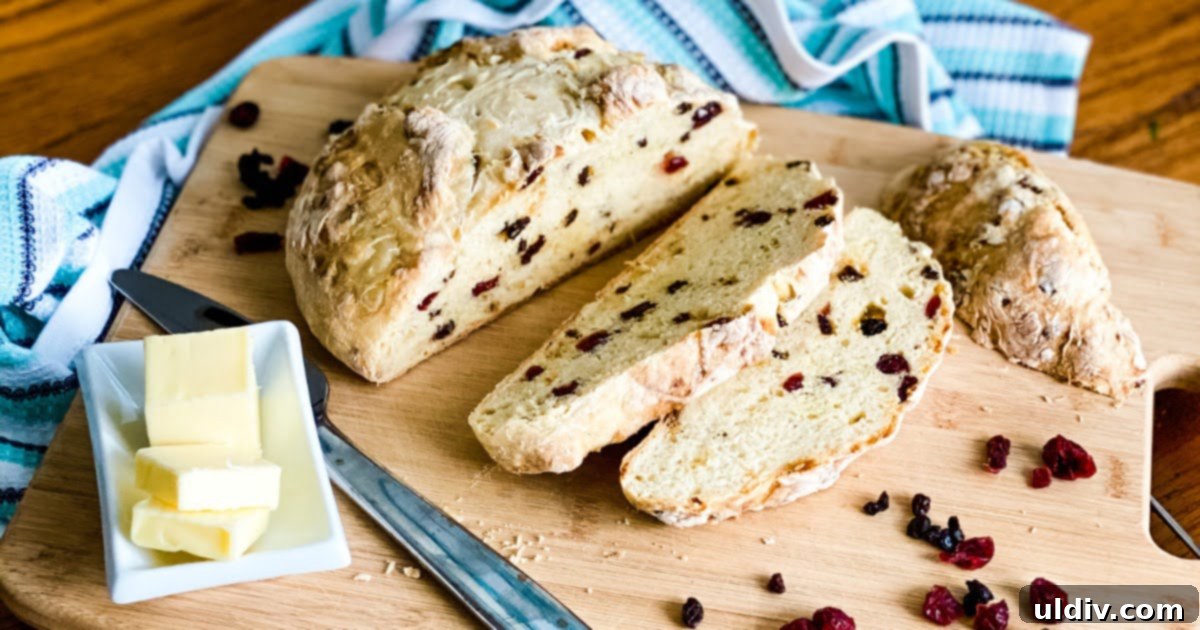
Welcome to a culinary journey celebrating one of Ireland’s most cherished traditions: authentic Irish Soda Bread. This beloved quick bread, a staple in Irish homes for generations, offers a delightful combination of dense yet tender texture, a sturdy crust, and a subtle sweetness from dried fruits. Unlike conventional breads, Irish Soda Bread requires no yeast, relying instead on the simple yet effective power of baking soda and buttermilk for its rise. This means no lengthy proofing times, making it a perfect choice for both experienced bakers and enthusiastic novices alike who crave homemade goodness without the wait.
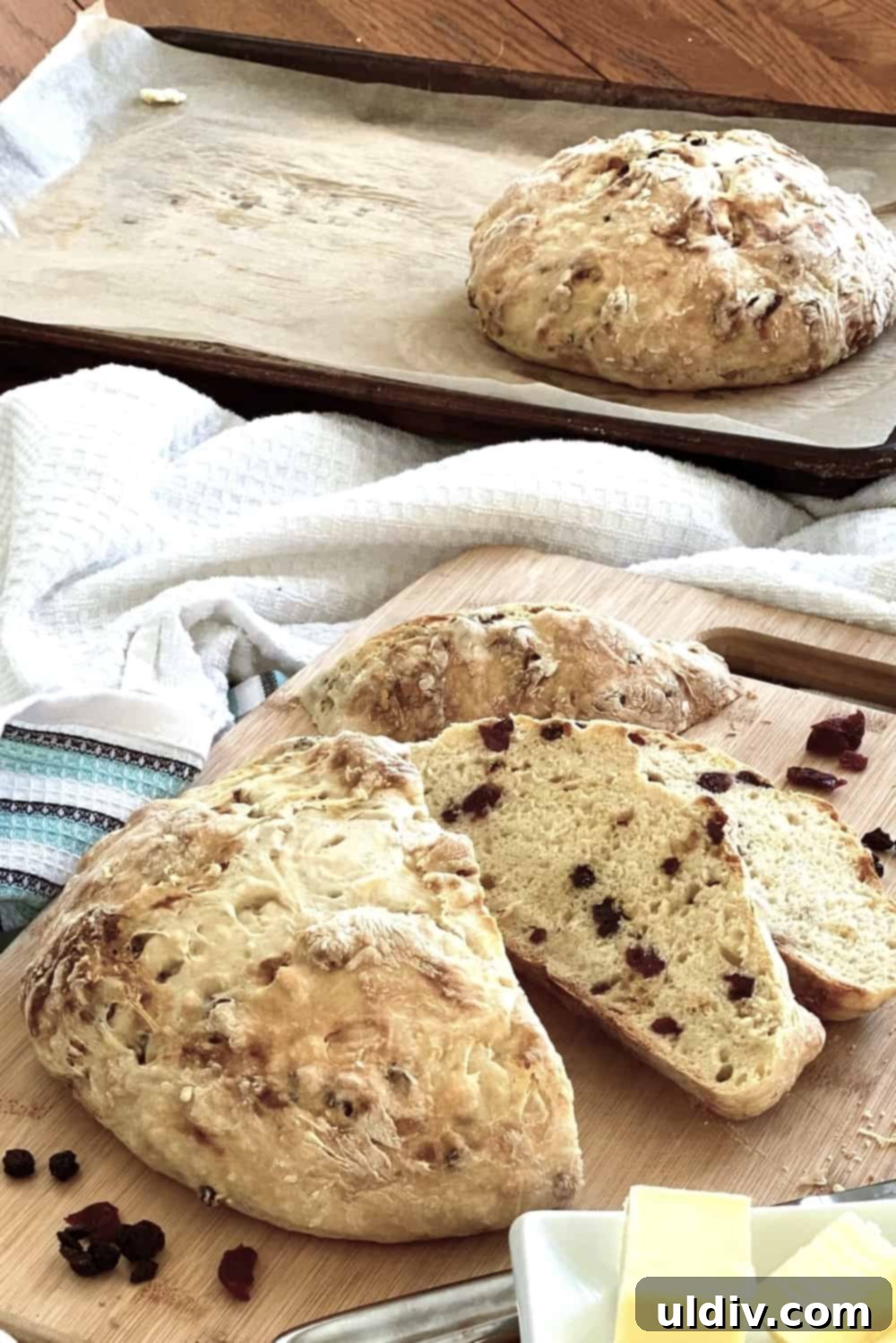
For me, Irish Soda Bread is more than just a recipe; it’s a connection to heritage and a celebration of family. My husband, with his fair Irish complexion and proud roots, holds our Irish traditions dear. Every March, as St. Patrick’s Day approaches, our home transforms into a hub of Irish festivity. It’s a month-long celebration of all things Irish, and no celebration would be complete without at least one – often two – loaves of homemade Irish Soda Bread gracing our kitchen counter. It’s the essential accompaniment to our festive meals and a heartwarming reminder of the Emerald Isle.
This traditional Irish Soda Bread recipe, with its generous flecks of dried cranberries and currants, brings a perfect balance of tartness and sweetness to every bite. It’s incredibly versatile, serving beautifully as a side to hearty stews, a comforting breakfast with butter and jam, or even as a simple snack. Prepare to discover the simple joy of baking a truly rustic and flavorful bread that’s steeped in tradition.
Why You’ll Adore This Authentic Irish Soda Bread Recipe
When our dinner table fills with the aroma of classic Irish dishes like corned beef and cabbage, a rich Irish Lamb Stew with Guinness, or a hearty Reuben casserole during March, there’s one irreplaceable element that completes the feast: a freshly baked loaf of my Irish Soda Bread. This recipe stands out for many reasons, making it a favorite in our home and sure to be in yours too:
- Effortless & Quick Baking: As a quick bread, it requires no yeast, eliminating the lengthy rising times associated with traditional bread making. From mixing to baking, you can have a warm, delicious loaf ready in under an hour, perfect for busy schedules or last-minute cravings.
- Perfect Texture & Flavor: The bread boasts a wonderfully dense yet remarkably soft interior, complemented by a rustic, sturdy crust. The combination of dried cranberries and currants infuses each slice with a delightful tart sweetness that elevates its simple, wholesome flavor.
- A Touch of Tradition: Beyond its taste, baking Irish Soda Bread connects you to a rich cultural heritage. It’s a taste of Ireland, perfect for St. Patrick’s Day celebrations or any day you desire a comforting, rustic bread.
- Simple Ingredients, Incredible Results: This recipe uses common pantry staples, proving that extraordinary flavor doesn’t require complicated components. The magic happens through the interaction of baking soda with the acidity of buttermilk, creating a tender crumb without fuss.
- Versatile Pairing: It’s an ideal accompaniment to both sweet and savory dishes. Enjoy it slathered with butter, alongside your morning coffee, or as a crucial component of a traditional Irish meal.
Essential Ingredients for Your Perfect Irish Soda Bread
Crafting a truly memorable Irish Soda Bread begins with a few simple, high-quality ingredients. Each plays a crucial role in achieving the signature taste and texture of this beloved quick bread. Below, we delve into the key components; for exact quantities, please refer to the complete recipe card at the bottom of this page.
- All-Purpose Flour: The foundation of our bread. Using all-purpose flour provides a tender crumb, but some traditional recipes may incorporate a mix with whole wheat for a nuttier flavor and denser texture.
- Baking Powder: A chemical leavening agent that works alongside baking soda to give the bread its lift. Its presence ensures a well-risen loaf without any yeasty flavors.
- Baking Soda: The star leavening agent in soda bread. When combined with the acidic buttermilk, it produces carbon dioxide bubbles, which are trapped in the dough and help it rise quickly during baking.
- Kosher Salt: Enhances the overall flavor profile of the bread and balances the sweetness from the dried fruits.
- Currants: These small, intensely flavored dried grapes offer a sweet and slightly tangy burst in every bite. They are a traditional addition to many Irish soda bread recipes.
- Dried Cranberries: Adding a vibrant color and a delightful tartness, dried cranberries perfectly complement the sweetness of the currants and the rich flavor of the bread.
- Buttermilk: The critical liquid ingredient. Its acidity reacts with the baking soda, causing the bread to rise. Buttermilk also contributes significantly to the bread’s tender crumb and moist texture, providing a subtle tang that enhances the overall flavor.
Versatile Substitutions for Your Irish Soda Bread
While the traditional recipe offers an unparalleled experience, sometimes you need to adapt. Here are some simple and effective substitutions to ensure your Irish Soda Bread is always a success, even if you’re missing an ingredient or want to explore different flavor profiles:
- Leavening Agents (Baking Powder & Baking Soda): This recipe thoughtfully incorporates both baking powder and baking soda. The duo ensures the bread achieves a beautiful rise without imparting an overly salty or bitter taste that can result from using too much baking soda alone. Stick to this combination for optimal results.
- Currants: Currants are sweet and have a slightly more intense flavor than typical raisins. If you don’t have currants on hand, feel free to substitute with an equal amount of good quality raisins. Golden raisins or sultanas also work wonderfully, adding a lovely chewiness.
- Dried Cranberries: I adore the sweet tanginess that dried cranberries bring to this bread. However, if they’re not to your preference or simply unavailable, you can easily omit them. In their place, you could double the amount of currants or raisins for a fruitier bread, or add a handful of chopped candied citrus peel for a different twist. For an extra hint of citrus, a teaspoon of orange zest can be a wonderful addition.
- Buttermilk: Buttermilk is key to the bread’s tender texture and its reaction with baking soda. If you don’t have buttermilk, don’t worry! You can create an easy homemade substitute: for every cup of milk (whole, low-fat, or even non-dairy milk works), stir in 1 tablespoon of white vinegar or lemon juice. Let it sit for 5-10 minutes until it curdles slightly. This creates the necessary acidity to activate the baking soda. Once curdled, it’s ready to be added to your dry ingredients. Any extra buttermilk can be saved for delicious salad dressings, creamy smoothies, or exceptionally fluffy pancakes.
- Other Add-ins: Consider adding a teaspoon of caraway seeds for a more savory, traditional Irish flavor, or a pinch of cinnamon and nutmeg for a warmer, spicier loaf.
Crafting Your Irish Soda Bread: A Step-by-Step Guide
Creating this rustic Irish Soda Bread is a straightforward and rewarding process. Follow these simple steps to bake a perfectly golden and tender loaf every time:
- Prepare Your Dry Ingredients: In a large mixing bowl, combine the all-purpose flour, baking powder, baking soda, kosher salt, currants, and dried cranberries. Whisk these ingredients thoroughly to ensure the leavening agents and fruits are evenly distributed throughout the flour mixture. This prevents pockets of unmixed ingredients and guarantees a consistent rise and flavor.
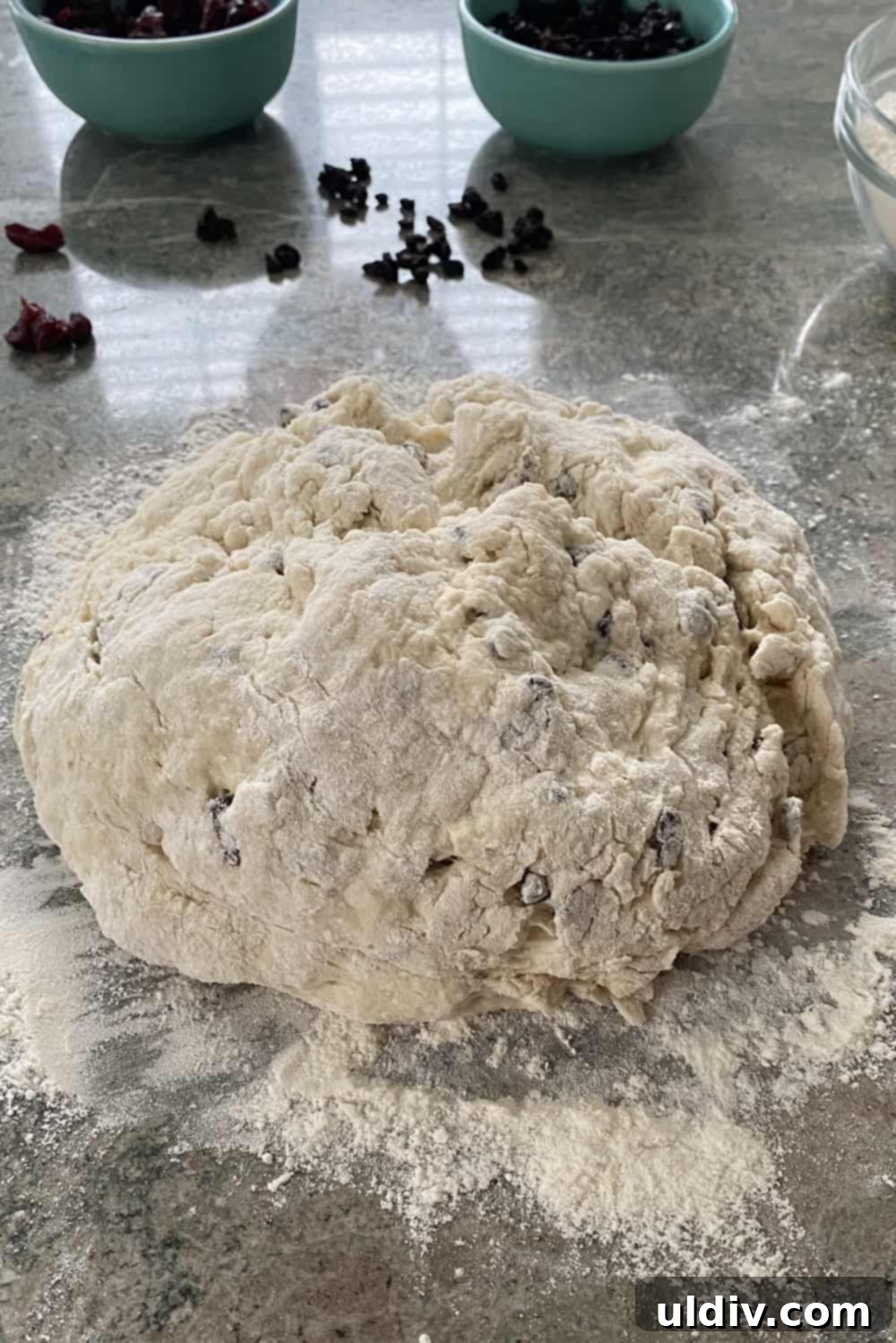
- Incorporate the Buttermilk: Make a well in the center of your dry ingredients and pour in the buttermilk. Using a sturdy spoon or your hands, gently stir until the dough just comes together. It should resemble a coarse, crumbly mixture. Be careful not to overmix at this stage; overworking the dough can lead to a tough bread. The beauty of quick breads is their minimal handling requirement. While a stand mixer with a dough hook can be used, mixing by hand allows you to feel the dough’s consistency and ensures you don’t overmix.
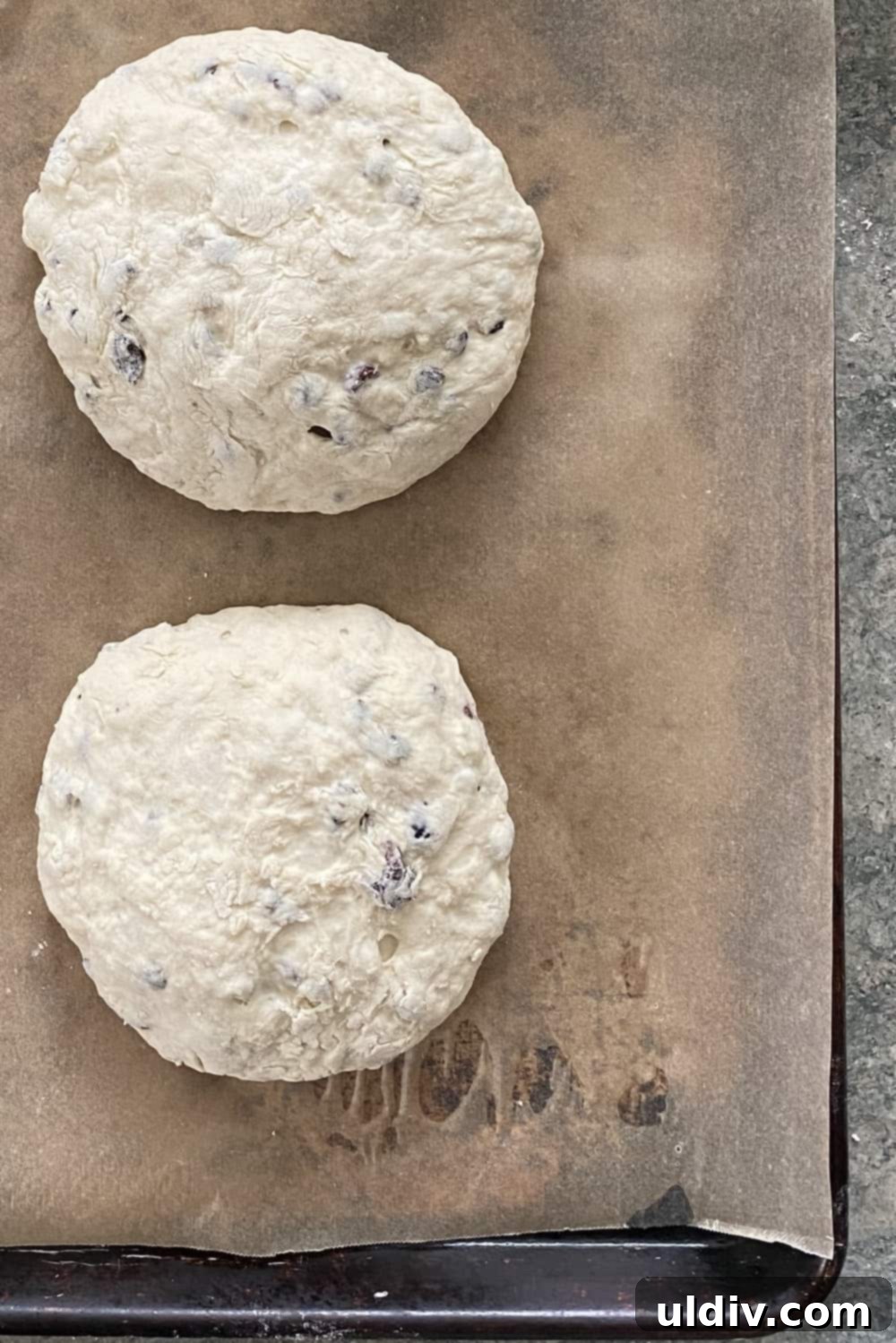
- Light Kneading and Shaping: Lightly flour a clean work surface, then turn the coarse dough out onto it. Gently knead the dough for just 2 to 3 minutes, or until it forms a rough, cohesive ball. The goal is to bring the dough together, not to develop gluten extensively like in yeast breads. Over-kneading will result in a dry, dense loaf. Once shaped, cut the dough in half and form each half into a round loaf, approximately 6-7 inches in diameter.
- The Traditional Cross and Baking: Transfer your two round loaves to a parchment-lined baking sheet. Using a sharp knife, cut a large “X” about ½ inch deep into the top of each loaf. This traditional cross cut is not just for decoration; it helps the center of the bread bake more thoroughly and evenly. Some say it also serves to “let the fairies out” or bless the bread, adding a lovely touch of Irish folklore to your baking.
- Bake to Golden Perfection: Place the baking sheet into a preheated oven and bake until the loaves are beautifully golden brown on the outside. To check for doneness, carefully remove a loaf from the oven and give it a firm thump on the bottom. A perfectly baked Irish Soda Bread will emit a hollow sound. For extra precision, an internal temperature of 195°F (90°C) indicates that your bread is ready.
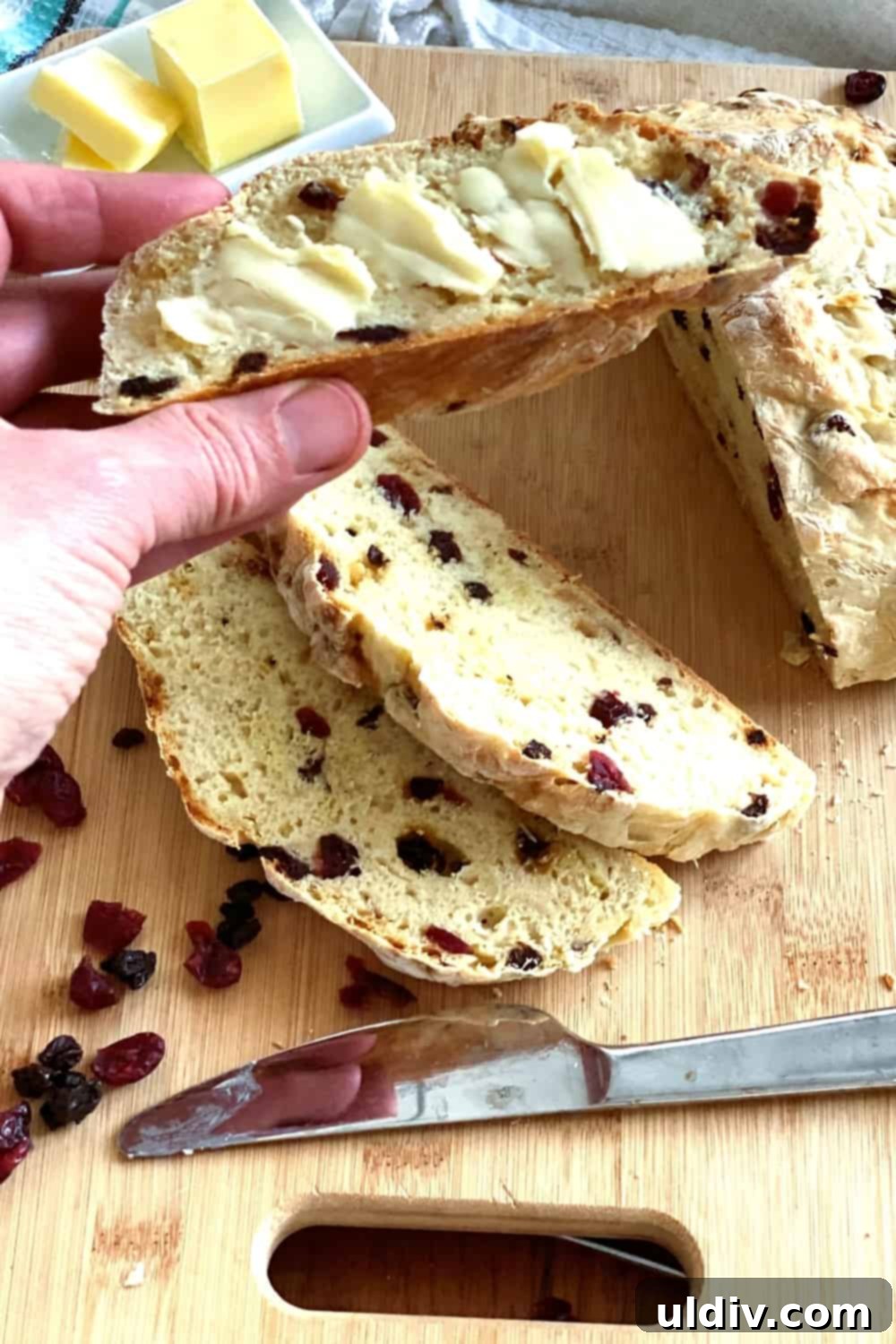
There’s nothing quite like a slice of Irish Soda Bread straight from the oven, generously slathered with softened butter, allowing it to melt into the warm, tender crumb. Should you have any glorious slices left over, they are absolutely divine when toasted the next morning and served with your favorite jam for a truly comforting breakfast.
Expert Tips for Baking Flawless Irish Soda Bread
While Irish Soda Bread is famously forgiving, a few expert insights can elevate your baking from good to truly exceptional. These tips will help you achieve consistent, delicious results every time you bake this traditional Irish delight:
- Embrace Simplicity: Irish Soda Bread is an ideal recipe for the novice baker. With its minimal ingredient list and quick preparation time, it’s designed to be foolproof. Don’t be intimidated; follow the steps, and you’ll be rewarded with a beautiful homemade loaf.
- Don’t Overmix the Dough: This is perhaps the most crucial tip for any quick bread. Overmixing develops the gluten in the flour too much, resulting in a tough, chewy bread instead of the tender crumb you want. Mix just until the dry ingredients are moistened and the dough barely comes together into a shaggy ball.
- The Significance of the “X”: To ensure baking success and honor tradition, always cut the distinctive cross or “X” into the top of your loaves before baking. Not only does it help the bread cook evenly from the center outwards, preventing a raw middle, but Irish folklore also suggests it wards off evil spirits or blesses the bread for the year ahead. A lovely sentiment to accompany your baking!
- The Power of Buttermilk: Use real buttermilk if possible, or a good homemade substitute. The acidity of the buttermilk is essential for reacting with the baking soda to create the bubbles that leaven the bread. Without it, your bread won’t rise properly and will be overly dense.
- Precise Doneness: Knowing exactly when bread is perfectly baked can be a challenge. To take the guesswork out of it, invest in a digital thermometer. The internal temperature of a perfectly baked Irish Soda Bread should be 195°F (90°C). This ensures the inside is fully cooked through while maintaining a tender texture and a beautiful crust.
- Avoid Opening the Oven Door: Resist the urge to peek during the first 30-35 minutes of baking. Opening the oven door can cause a sudden drop in temperature, which might impact the bread’s rise and texture.
- Cooling is Key: While it’s tempting to slice into your warm bread immediately, allowing it to cool on a wire rack for at least 15-20 minutes lets the internal structure set and prevents a gummy texture.
Serving and Storing Your Delicious Irish Soda Bread
Once your aromatic Irish Soda Bread emerges from the oven, the real enjoyment begins! This versatile bread is delicious in many ways, and knowing how to store it ensures you can savor its goodness for days.
Perfect Pairings and Serving Suggestions
Irish Soda Bread is incredibly versatile and pairs well with a variety of dishes, both sweet and savory:
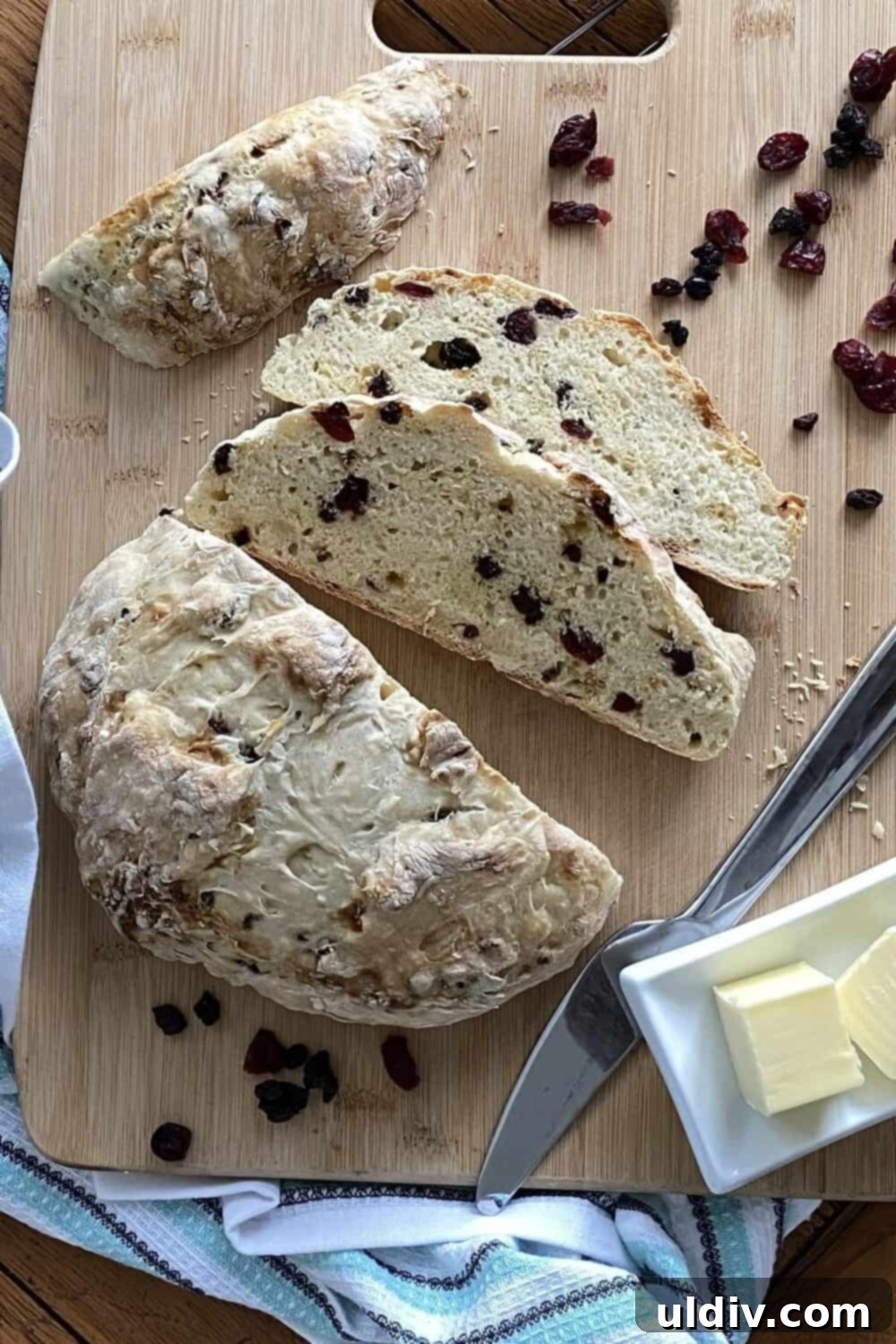
- Classic with Butter: The simplest and often best way to enjoy it is warm, with a generous spread of good quality butter, allowing it to melt into the tender crumb. A sprinkle of flaky sea salt on top can enhance the experience.
- Breakfast Delight: Toast slices lightly and serve with your favorite jams, marmalades, or honey. It’s also fantastic with a spoonful of clotted cream or a smear of cream cheese.
- With Savory Meals: It’s the ideal accompaniment to hearty Irish stews, soups, or alongside a classic corned beef and cabbage dinner. Its dense texture is perfect for soaking up rich broths and sauces.
- Cheese Board Companion: Serve slices with strong cheddar cheese, a soft brie, or goat cheese. The tartness of the cranberries and currants complements a variety of cheeses beautifully.
- Sandwiches: While denser than typical sandwich bread, it makes for a surprisingly delicious base for simple sandwiches, especially with cold cuts or leftover roast meat.
- Tea Time Treat: Enjoy a slice with your afternoon tea or coffee for a comforting snack.
Storing Your Homemade Irish Soda Bread
Proper storage is essential to keep your bread fresh and delicious:
- At Room Temperature: Once completely cooled, store the loaf in an airtight container or a bread bag at room temperature for up to 2-3 days. Its freshness is best within the first day or two, but it remains enjoyable for longer.
- Toasting for Freshness: If the bread starts to feel a bit dry after a couple of days, simply toast slices in a toaster or under the broiler. This revitalizes its texture and makes it wonderfully crisp.
- Freezing for Later: Irish Soda Bread freezes beautifully! Once completely cooled, wrap the entire loaf or individual slices tightly in plastic wrap, then in aluminum foil. Store in the freezer for up to 3 months. When ready to enjoy, thaw at room temperature or toast slices directly from frozen until warmed through.
I genuinely hope you cherish making this Irish soda bread recipe as much as my family and I do. If you bake it, I’d absolutely love to hear about your experience! Please take a moment to leave a comment below and perhaps give this recipe a star rating. Your feedback means the world. For more fabulous foodie stories, cooking tips, and inspiring recipes, make sure to check out my YouTube, Facebook, Pinterest, and Instagram pages.
Recipe
Rustic Irish Soda Bread
Print
Pin
Rate
Ingredients
- 5 cups all-purpose flour
- 1 tablespoon baking powder
- 1 teaspoon baking soda
- 1 teaspoon kosher salt
- ½ cup each currants and dried cranberries soaked in hot water for 10 minutes and drained
- 2 ¼ cups low fat buttermilk
Instructions
-
Preheat oven to 350 degrees and line a large baking sheet with parchment paper.
-
In a large bowl combine the flour, baking powder, baking soda, salt, currants and cranberries.
-
Add the buttermilk and stir until the flour mixture and buttermilk resemble a coarse crumbly dough.
-
Lightly dust hands with flour and turn dough out on to a work surface. Gently knead until a rough ball forms; about 2 to 3 minutes.
-
Cut the dough in half and form into 2 round loaves.
-
Transfer the loaves to the prepared pan. Cut a cross about ½ inch deep in the top of each loaf.
-
Bake for 45 to 50 minutes or until the loaves are golden brown. The loaves are done when there is a hollow sound when they are tapped on the bottom and the bread has an internal temperature of 195 degrees.
Video
Notes
Substitute all currants or all dried cranberries in the recipe. Raisins also make a good substitution for the dried fruits.
The loaves are done when there is a hollow sound when they are tapped on the bottom and the bread has an internal temperature of 195 degrees.