
Finding Comfort in the Kitchen: A Journey Back to Joy with Homemade Raspberry Jam
After a week shadowed by grief following the loss of a dear friend, returning to the simple joys of life, food, and writing has been a gradual process. The healing journey is rarely linear, but I’m grateful to be finding my way back to this space, to share stories and culinary adventures. My work has been a welcome distraction during this period, providing a necessary focus and a channel for my energy. Taking on new responsibilities as a school tutor, though challenging, has given me a sense of purpose, helping me navigate sorrow one day, one step at a time.
Amidst the busy days and quiet moments of reflection, one particular thought brought a spark of excitement: the prospect of making—and writing about—homemade raspberry jam. This topic holds a special place in my heart, deeply rooted in family tradition and cherished memories. The act of transforming fresh berries into a vibrant, delicious preserve became a tangible way to reconnect with comfort and joy.
The Enduring Legacy of Home Canning: My Aunt’s Wisdom
The art of canning and preserving has been a cornerstone of my family for generations. My aunt, a true master of this craft, was a profound influence. Her summers were a symphony of flavors and textures, spent at her countryside home, dedicated to ensuring nothing from her bountiful garden went to waste. I vividly recall her preserving everything imaginable: canning fruits, pickling vegetables, roasting peppers and eggplants, and dehydrating apples and plums. Her dedication wasn’t just about food; it was about love, sustenance, and the sheer joy of creation.
I remember her under the shade of an ancient quince tree, meticulously sorting through apples and pears, slicing them coarsely, and tossing them into large pots with generous amounts of sugar. There was an infectious energy about her, a purposeful drive that transformed simple ingredients into nourishing meals and delightful treats for her loved ones. This noble pursuit, born of hard work and passion, instilled in me a deep appreciation for the hands-on process of food preparation and the enduring value of homemade goodness.
This generational wisdom continues to inspire me. The knowledge passed down—from selecting the freshest produce to understanding the delicate balance of ingredients—is invaluable. It’s more than just a recipe; it’s a connection to history, to family, and to a sustainable way of living that honors the seasons and minimizes waste. Every jar of jam, every pickled vegetable, carries with it a piece of this legacy.
A Taste of England: Raspberry Jam and British Tea Time
Whenever I embark on the journey of jam-making, my mind often wanders to the years I spent in England. The British way of life, with its many charming customs, truly captured my imagination. Among these, the ritual of “tea” stands out—a delightful interlude featuring fresh scones, rich butter, and, of course, delicious jam. It was a simple pleasure that quickly became a cherished habit.
In those early days, before I mastered the art of baking scones myself, I’d eagerly buy them from the local supermarket. Rushing home, I’d prepare a steaming hot “cuppa” of tea. The scones would be gently cut open, briefly toasted to warm them through, and then generously slathered with Irish butter, allowing its creamy goodness to melt into the warm nooks and crannies. Finally, thick layers of raspberry jam were spread on top, creating a symphony of flavors and textures. The combination of the sweet, tangy jam and the salty, melted butter was, quite simply, heaven on a plate. This quintessential British experience solidified my affection for raspberry jam, elevating it beyond a mere preserve to a symbol of comfort and culinary delight.
Crafting Your Own: The Perfect Homemade Raspberry Jam Recipe
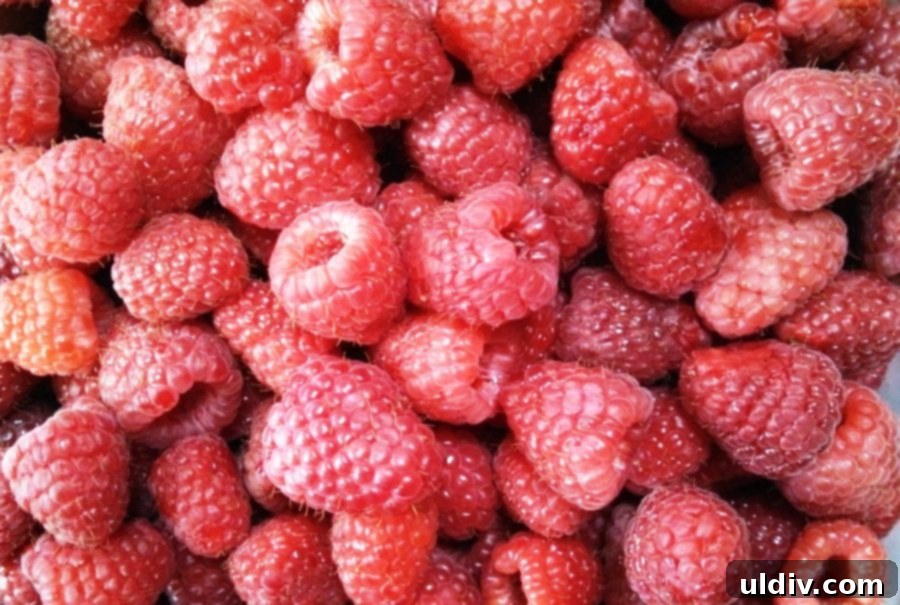
The inspiration to create my own batch of raspberry jam struck a few weeks ago when I discovered beautifully ripe raspberries on sale at my local grocery store. Following one of my aunt’s most treasured “golden rules” for jams and preserves, I knew the secret lay in using equal quantities of fruit and sugar for optimal flavor and setting. I purchased six 6-ounce containers of raspberries, totaling 36 ounces, which conveniently measured out to 4.5 cups. Adhering strictly to tradition, I paired this with an equal measure of 4.5 cups of granulated sugar.
Ingredients:
- 4.5 cups fresh raspberries
- 4.5 cups granulated sugar
I wasn’t able to make the jam immediately, so I combined the raspberries and sugar in a deep bowl and placed them in the refrigerator overnight. This overnight maceration is a crucial step that allows the berries ample time to release their natural juices. While some canning enthusiasts suggest refrigerating the fruit and sugar mixture for a few days to maximize juice extraction, even an overnight soak significantly enhances the process, ensuring a more flavorful and naturally set jam.
The next day, the raspberries, having mingled with the sugar, looked as vibrant and pretty as ever, ready for their transformation:
The Cooking Process: Step-by-Step Jam Making
I transferred the macerated raspberries and sugar into a large, deep pot. The use of a large pot is essential, as the mixture will bubble and foam significantly during cooking. Placing the pot on the stovetop over medium-to-high heat, I began the cooking process. Within just a few minutes, the berries started to soften and release more of their luscious natural juices, creating a fragrant, ruby-red liquid:
Just five minutes later, the texture of the berries began to change rapidly. They were visibly softening, collapsing into the growing pool of syrupy liquid, indicating the sugar was fully dissolving and integrating:
The transformation continued as the mixture thickened into a rich, glistening syrup:
Approximately fifteen minutes into cooking, the burgeoning jam reached a rolling boil. At this critical point, I reduced the heat to a gentle simmer, allowing the mixture to continue cooking slowly and thicken without scorching. This controlled simmering is key to achieving the perfect consistency and depth of flavor.
By twenty-five minutes from the start, the vibrant, ruby-red raspberry “lava” had intensified in color and significantly thickened. The aroma filling the kitchen was absolutely divine, a sweet and tangy fragrance that promised deliciousness.
The deep, rich color of the jam at this stage is truly captivating, and the fragrant steam rising from the pot is an experience in itself. It’s a vivid reminder of the magic of transforming simple fruit into something extraordinary.
Another five minutes passed, and the jam continued to evolve beautifully. A light, frothy foam often appears on the surface during cooking. This foam, primarily composed of air and tiny fruit particles, has a thinner consistency than the jam itself. While harmless, removing it is often recommended for a clearer, more appealing finished product. I carefully skimmed it off with a spoon and set it aside.
The Cold Plate Test: Ensuring Perfect Jam Set
After approximately forty-five minutes of cooking, it was time to determine if the jam had reached its perfect setting point. I relied on the time-honored “cold plate test,” a simple yet effective method that has been passed down through generations of home canners. To perform this test, I chilled a small ceramic plate in the freezer for a few minutes. Then, I carefully placed a spoonful of the hot jam onto the cold plate, allowing it to cool for about a minute.
Once cooled, I gently pushed the jam with the back of a spoon. The goal is to see if the jam wrinkles and if the “river” created by the spoon remains open, indicating it has set. If the jam flows back in to fill the gap, it needs more cooking time. In this case, my jam passed the test beautifully, wrinkling distinctly and holding its shape, a clear sign of a perfect set.
Many recipes for raspberry jam suggest adding pectin, a natural gelling agent, to aid in setting. However, in my family’s tradition, neither my aunt nor my mother ever felt the need to incorporate it, and I concur. Raspberries are naturally rich in pectin, especially when slightly under-ripe, making additional pectin often unnecessary. As evidenced by the results of my cold plate test, the jam achieved a wonderfully thick and luscious consistency without any extra pectin, proving that sometimes, nature provides all the ingredients you need.
Enjoying and Storing Your Homemade Raspberry Jam
After forty-five minutes of patient cooking and the successful cold plate test, the jam was officially done. The vibrant color and irresistible aroma filled the kitchen, a testament to the simple magic of homemade preserves. I’m already planning to make another batch very soon!
This raspberry jam rarely lasts long in our household. We predominantly enjoy it spread generously over warm crepes or slathered on fresh, toasted bread with a dollop of butter. Its versatility also makes it a fantastic quick dessert; a few spoonfuls are perfect when I’m craving something sweet in a hurry. For proper storage, especially for longer periods, it’s essential to sterilize your jars thoroughly before filling them with the hot jam. Once cooled and sealed, the jam can be stored in a cool, dark pantry. However, once opened, it should always be kept refrigerated.
Culinary Reflections and Future Creations
The journey of making this raspberry jam has been more than just a culinary exercise; it has been a profound act of remembrance and a source of quiet joy during a challenging time. Each ingredient, each step, brought forth a cascade of memories – of my aunt, of my time in England, and of the countless simple pleasures that food brings to our lives.
One of these days, I look forward to delving into another cherished family recipe: my aunt’s exquisite quince marmalade. Perhaps I’ll even share my own perfected scone recipe, completing the traditional British tea experience. There is an incredible wealth of history and emotion embedded in everything we cook and share, and I am deeply grateful for these connections. Fall, with its crisp air and changing leaves, naturally lends itself to intense remembrance and nostalgic reflection. These culinary memories perfectly align with the underlying theme of the season, grounding us in the past while inspiring future creations.
A mere hint of jam, a humble crumb, a comforting drop of tea – much like Proust’s famous madeleine, each of these simple elements possesses the extraordinary power to transport us. They can remind us of cherished people, evoke forgotten places, and rekindle long-lost feelings, if only we allow ourselves to savor the moment and embrace the memories they unlock.