
The Ephemeral Beauty of Edible Lilacs: A Spring Culinary Celebration
There’s an undeniable magic that arrives with the month of May, bringing with it the vibrant hues and fragrant breezes of true spring. As nature awakens in a symphony of colors and scents, our kitchens too become a canvas for seasonal creativity. This year, we’re diving deep into the enchanting world of edible lilacs – a fleeting yet utterly glorious sign of spring that offers not just visual delight but also remarkable culinary potential. Imagine infusing your spring baking with the delicate, sweet perfume of lilac blossoms. Yes, please! It’s an invitation to savor the moment, to embrace the abundance of the season, and to transform ordinary treats into extraordinary floral experiences.
The days have truly warmed, and the gentle hum of life outside my window serves as a constant reminder of nature’s precious beauty. From the industrious crawl of a tiny insect on my arm during a photo session to the brilliant burst of blossoms, spring resonates with a sense of renewal and gratitude. After exploring the versatility of dandelions last week, our culinary journey now turns to the magnificent lilac, focusing on its delightful uses in the kitchen. These stunning blossoms, with their captivating aroma and beautiful shades of purple, white, and pink, are more than just a decorative addition to our gardens; their petals are entirely edible and capable of transforming a variety of dishes, predominantly sweet, into true masterpieces.
Unveiling the Culinary Charm of Lilacs
The culinary world is rich with edible flowers, and lilacs stand out with their unique charm. Their flavor profile is subtly floral, slightly citrusy, and wonderfully fragrant – a taste that perfectly encapsulates the essence of spring. While commonly seen as a decorative garnish, the true magic of lilac unfolds when its petals are incorporated directly into recipes, infusing them with an ethereal aroma and a delicate, unforgettable taste. They possess a remarkable affinity for sweets, lending themselves beautifully to a wide array of desserts and beverages. The fleeting nature of their bloom makes every lilac-infused treat feel like a truly special, seasonal indulgence, a celebration of spring’s transient gifts.
As Kathie Lapcevic insightfully shares on her inspiring site homespunseasonalliving.com, “Lilacs seem to have a perfect affinity for sweets.” Indeed, while a few petals can certainly add a unique touch to savory salads for a surprising twist, their true brilliance shines in desserts. Here are some compelling ways to incorporate these fragrant blossoms into your culinary repertoire, transforming simple ingredients into showstopping, delicious creations:
- **Start Your Day with Floral Flair:** Fold delicate lilac blossoms into your morning scones or fluffy pancakes for a delightful breakfast or an elegant afternoon tea experience. The subtle floral notes elevate these classic baked goods.
- **Creamy Comfort with a Twist:** Enhance comforting dishes like rice pudding by stirring in fresh lilac petals. The gentle flavor pairs beautifully with creamy textures, offering a sophisticated upgrade to a beloved dessert.
- **Bake Them into Cakes:** Incorporate chopped lilac petals directly into cake batters. As the cake bakes, the lilacs infuse it with their wonderful aroma and a hint of their unique taste, creating an unexpectedly sophisticated flavor profile.
- **Preserve the Essence with Lilac Sugar:** Create a truly versatile ingredient by making lilac sugar. This delicately infused sugar captures the essence of lilacs, making it perfect for baking, sweetening tea or coffee, rimming cocktail glasses, or sprinkling over fresh fruit.
- **Elegant Single-Serving Desserts:** Craft individual lilac cream tarts, ideal for buffets or special gatherings. The visually appealing tarts combine the creamy filling with the subtle floral notes of lilac, making for an unforgettable treat.
- **Crunchy and Aromatic Cookies:** Discover how their color and delicate flavor beautifully complement crunchy cornmeal cookies. The textural contrast and the floral undertone create a truly unique cookie experience.
- **A Decadent Pavlova Creation:** Combine lilacs with the vibrant sweetness of blackberries to create a fluffy and decadent pavlova. The lilac adds an unexpected layer of complexity, enhancing the fresh fruit and meringue with its ethereal scent.
Inspiring Lilac Creations: From Syrups to Sweets
My own culinary explorations with lilacs have been a delightful annual tradition, evolving each year. Two years ago, I ventured into making lilac syrup, a delicate elixir perfect for mocktails or drizzling over desserts. Last year, the focus shifted to a more potent lilac liqueur, capturing the blossoms’ essence in a different form. This spring, I’m revisiting lilac syrup due to its incredible versatility, and also experimenting with lilac sugar and lilac honey, drawing inspiration from various online recipes. These infused staples are fantastic for adding a touch of floral elegance to everyday items or more elaborate creations.
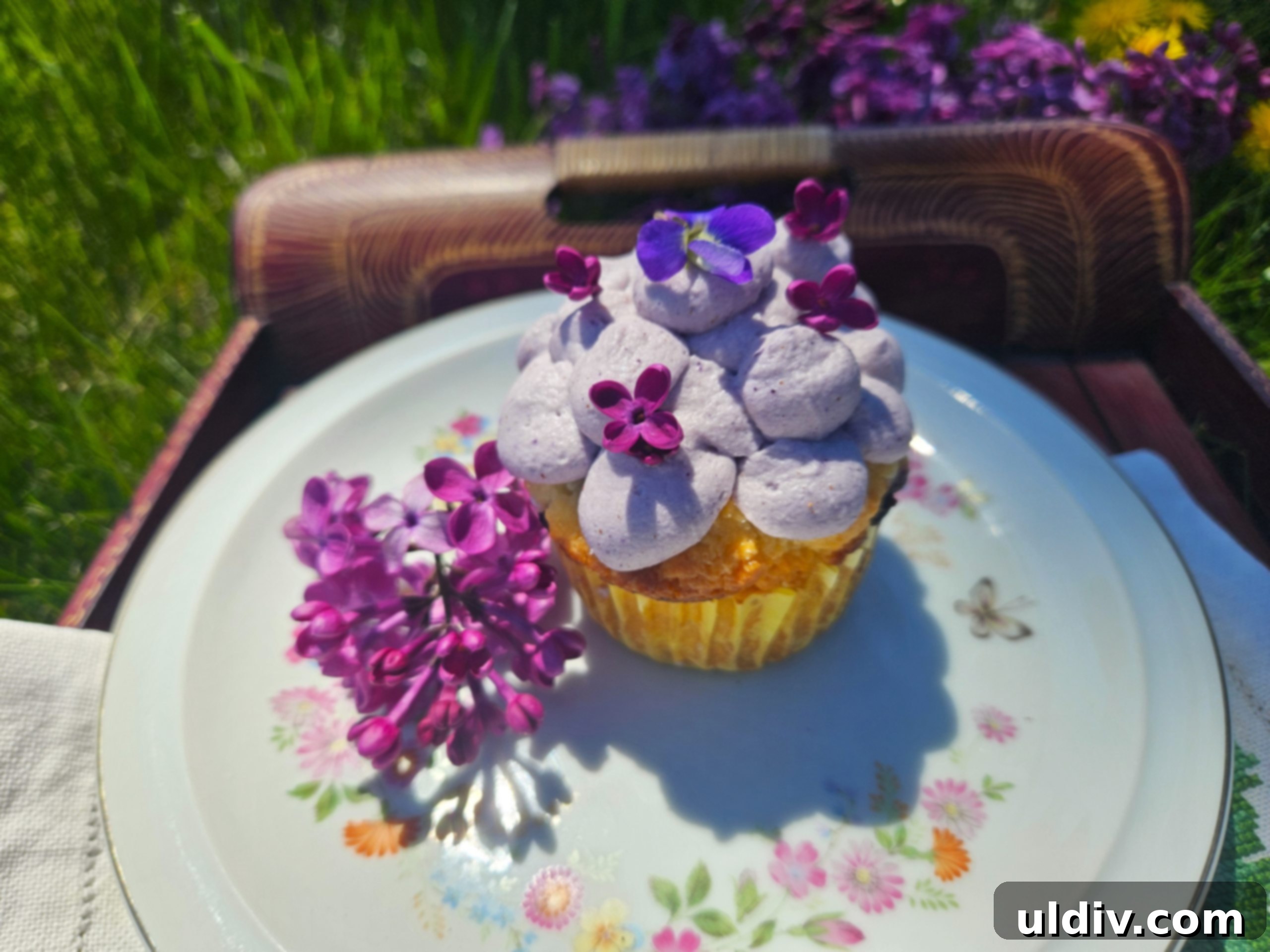
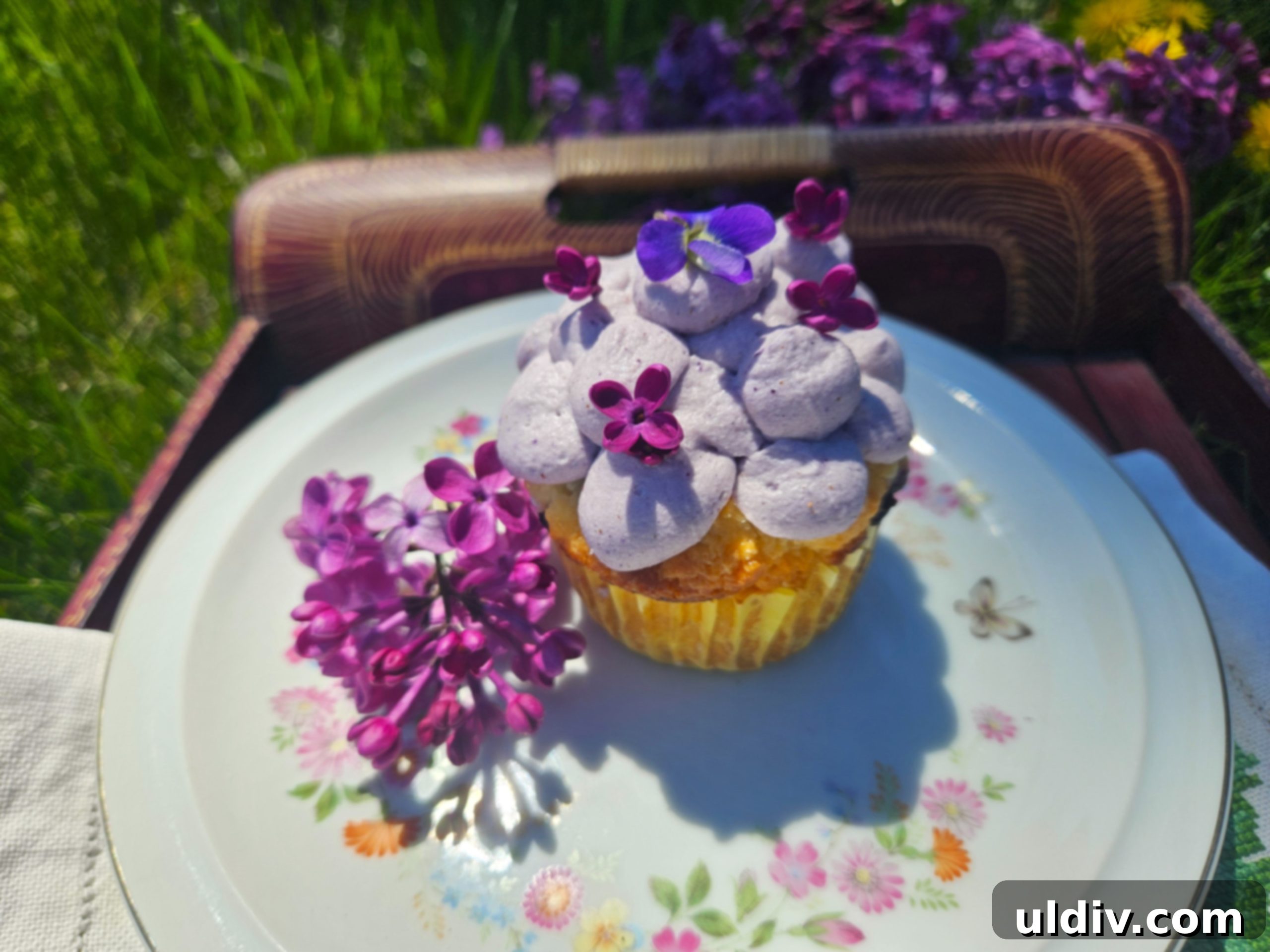
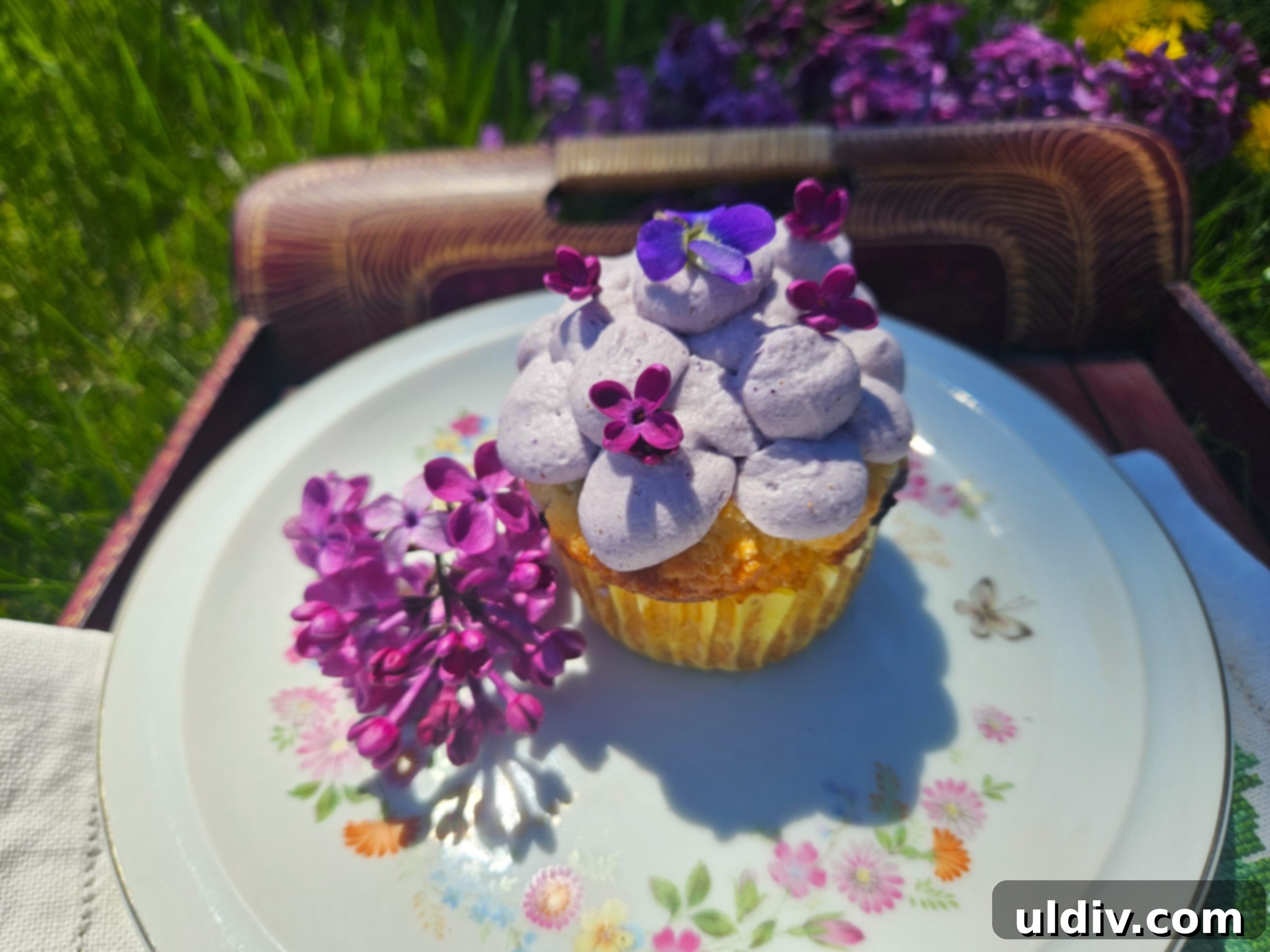
Beyond these foundational infusions, I’ve been incorporating finely chopped lilac petals directly into a range of baked goods, experiencing firsthand how they impart a subtle yet distinct floral character. Imagine delicate lilac cookies, their sweetness gently perfumed, or cupcakes where every bite carries the whisper of spring. The lilac cupcake with blueberry mascarpone frosting, pictured here, is a testament to this beauty. It’s not just a sweet treat; it’s a celebration of lilac season, a culmination of its delicious, scintillating beauty. The delicate flavor and aroma of the lilac petals add an unparalleled layer of floral goodness, perfectly complemented by the airy, silky texture of the blueberry mascarpone frosting. Each bite is a harmonious blend of sweet, fruity, and floral notes that truly melts in your mouth, leaving a memorable taste of spring.
Safe Foraging and Preparation of Edible Lilacs
Enjoying the culinary benefits of lilacs begins with responsible and safe foraging. While these blossoms are beautiful and delicious, it’s crucial to follow a few guidelines to ensure both safety and the best possible flavor for your creations. Adhering to these practices will allow you to fully appreciate the gifts of spring.
- **Responsible Sourcing: Where to Harvest Your Lilacs**
The most critical rule for foraging any edible flower is to know its origin. Always collect lilac blossoms from trees or bushes that you are absolutely certain have *not* been sprayed with pesticides, herbicides, or any other chemicals. This often means avoiding lilacs from commercial nurseries unless you can verify their organic status. Furthermore, steer clear of bushes located in close proximity to busy, polluted roads, as they can absorb exhaust fumes and other contaminants. Ideal foraging spots include your own garden (if you don’t use chemicals), a trusted friend’s garden, or wild areas far from urban development and agricultural runoff. Opt for lilacs in their prime bloom, as the flavor will be at its peak. - **Proper Identification: Knowing Your Blooms**
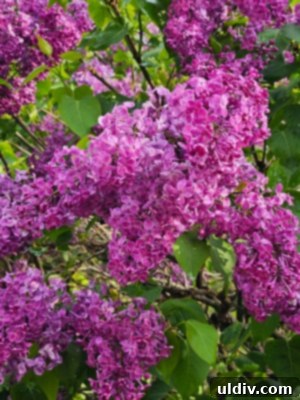
As with any foraging endeavor, never consume a plant unless you are 100% certain of its correct identification. While common lilac (Syringa vulgaris) is widely recognizable and safe to eat, there are many varieties of plants. Familiarize yourself with the distinct characteristics of the common lilac: its heart-shaped leaves, the characteristic four-petaled flowers forming large, conical clusters (panicles), and its unmistakable sweet fragrance. When in doubt, it’s always best to refrain. For beginners, it’s advisable to forage with an experienced guide or to use plants from a known, safe source. - **Preparing Lilacs for Culinary Use**
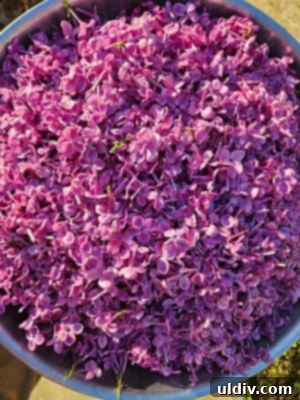
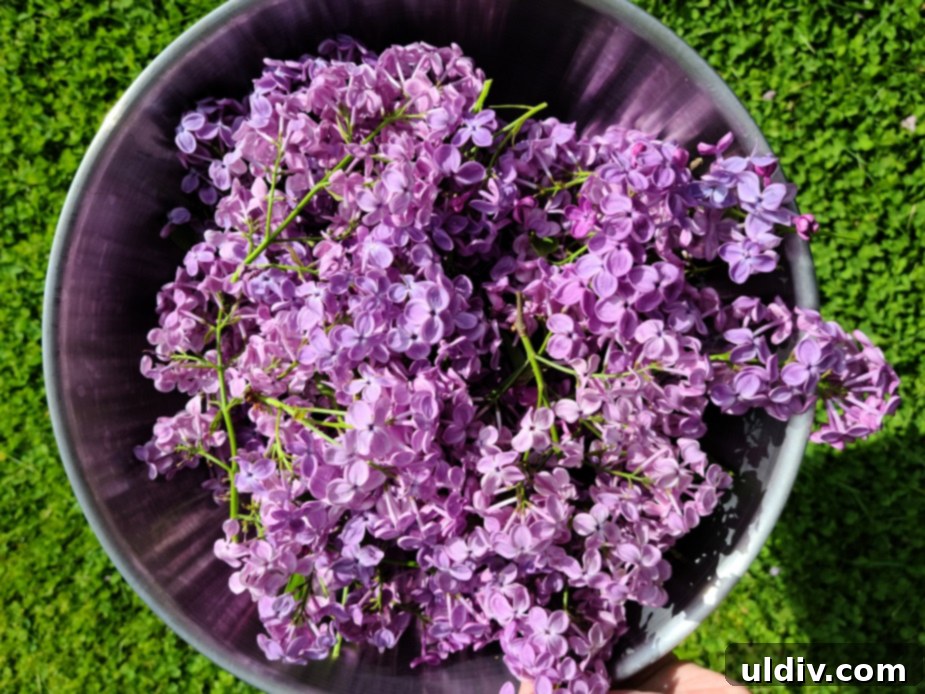
Once you’ve safely harvested your lilacs, proper preparation is key to achieving the best taste. I always use only the petals. The small, green stems and any other green parts (like the tiny sepals at the base of the flower) are rather bitter and can impart an undesirable flavor to your finished dishes. Gently pluck the individual petals from their stems, discarding any brown or wilted blossoms. A quick, gentle rinse under cool water is recommended to remove any dust or small insects, followed by patting them dry thoroughly before use. This careful preparation ensures that your lilac-infused treats are as delicious and pure as possible.
These practices not only ensure the safety and quality of your edible lilacs but also promote responsible foraging, allowing these beautiful plants to flourish for years to come. By taking the time to source and prepare them correctly, you unlock the full potential of this ephemeral spring delight.
Stay tuned for more exciting spring baking recipes and an amazing collaboration on the topic of edible flowers, coming up soon. We’re just beginning to explore the wonderful possibilities of nature’s pantry!
Embrace the Season: Your Spring Culinary Adventure Awaits
Spring is a season of profound sensory experiences – the crisp, distant sound of an airplane against a clear blue sky, the vibrant greens flourishing on your plate, and the abundant, intoxicating fragrance of lilacs filling the air. These small moments are often the most precious, reminding us of the beauty that surrounds us daily. What is your favorite sign of spring? Is it the chorus of birdsong at dawn, the first warm breeze, or perhaps the sight of particular blossoms? Share your thoughts and let me know in the comments below. Embracing these seasonal gifts, especially through culinary exploration, deepens our connection to nature and brings immense joy. I encourage you to embark on your own lilac culinary adventure this spring – you might discover a new favorite flavor and create unforgettable memories along the way.