
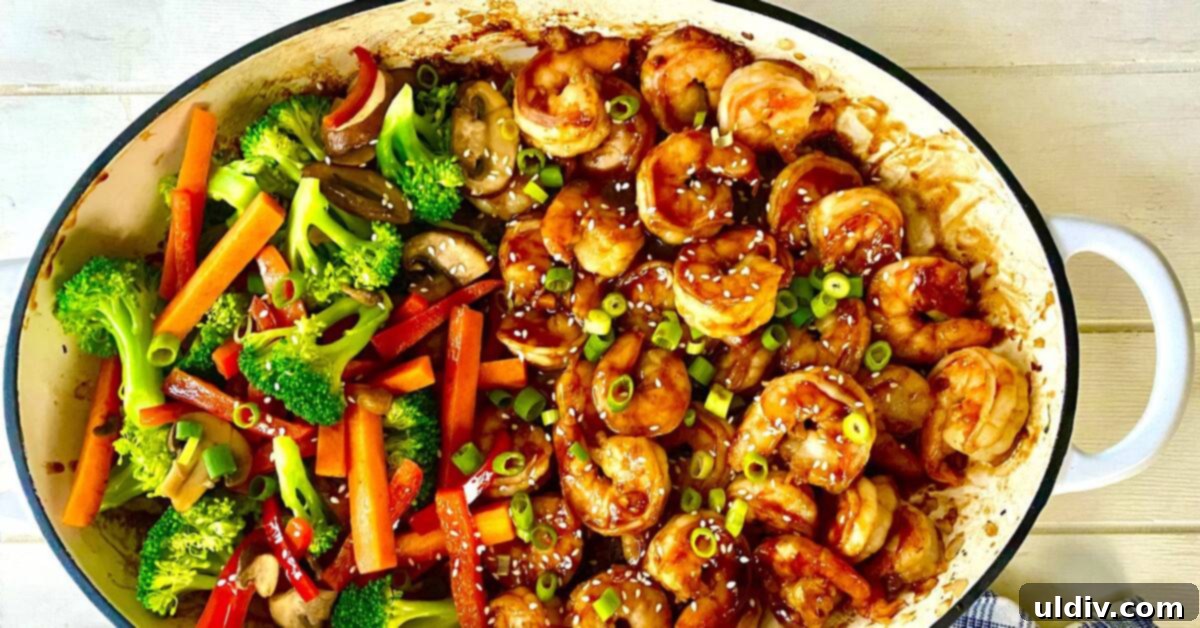
Craving the vibrant flavors and exciting experience of hibachi dining? Imagine tender, succulent shrimp and crisp, colorful vegetables, all coated in a rich, savory, and slightly sweet Asian-inspired sauce – and it’s all made in your own kitchen in about 30 minutes! This recipe for Homemade Hibachi Shrimp and Vegetables brings that restaurant-quality magic directly to your stovetop, saving you time, money, and the effort of going out. Get ready to transform fresh ingredients into an unforgettable meal that’s better than any takeout, without sacrificing flavor or quality.
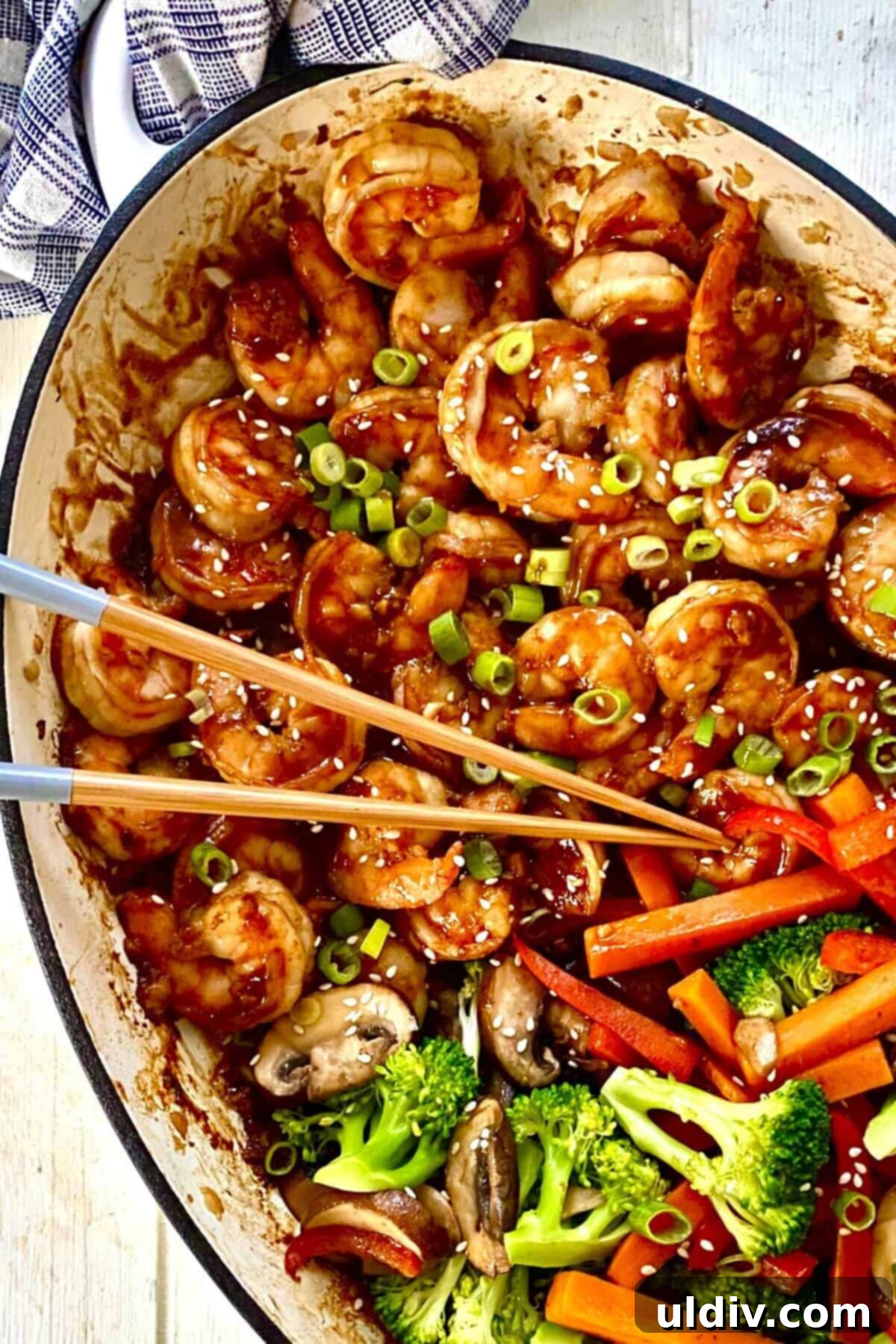
While we might miss the chef’s theatrical broccoli tosses or streams of sake shot through the air that are characteristic of traditional hibachi restaurants, the heart of the experience lies in the incredible flavors. This recipe focuses on delivering those authentic tastes and textures, ensuring every bite is a delightful adventure. You get to control the ingredients, customize to your preference, and enjoy a fresh, healthy meal without the fuss or the cost. Prepare to impress your taste buds and your family with this surprisingly simple yet profoundly flavorful dish!
Why Choose Homemade Hibachi Shrimp and Vegetables?
There are countless reasons to fall in love with making hibachi at home, and this particular recipe for shrimp and vegetables truly shines. First and foremost, it’s incredibly fast. In today’s busy world, finding a meal that comes together in just 30 minutes yet tastes like it took hours is a game-changer. This makes it perfect for a weeknight dinner when you’re short on time but still want something nourishing and delicious for the whole family.
Beyond speed, the quality of ingredients you use is entirely within your control. You can select the freshest shrimp, organic vegetables, and your preferred brands of sauces, ensuring a meal free from unwanted additives often found in restaurant dishes. This customization extends to flavor too – adjust the spice level, make it sweeter, or add more garlic and ginger to suit your palate. The result is a dish that’s not only incredibly flavorful but also tailored precisely to your personal tastes, making it a unique culinary experience every time.
Finally, the cost savings are substantial. Dining out at a hibachi restaurant can be quite expensive, especially for a family or group. Preparing this meal at home allows you to enjoy the same beloved flavors for a fraction of the price, making healthy and delicious eating more accessible and budget-friendly. It’s a win-win: gourmet taste without the gourmet price tag, all from the comfort of your own kitchen.
The Essence of Hibachi Cuisine: A Symphony of Flavors
Hibachi, derived from the Japanese word for “fire bowl,” refers to a style of Japanese cooking where food is prepared on a large, open griddle. While often associated with dazzling chef performances, the culinary core of hibachi lies in its emphasis on fresh ingredients cooked quickly at high heat to retain their natural crunch and vibrant flavors. Typically, hibachi dishes feature proteins like shrimp, chicken, or steak, alongside an array of colorful, garden-fresh vegetables.
The magic truly happens with the sauce. A signature hibachi sauce typically balances savory, salty, and sweet notes, often with a profound umami depth. This recipe perfectly captures that balance, bringing together the deep tang of reduced sodium soy sauce, the sweet and smoky complexity of hoisin, and the rich, savory character of oyster sauce. These foundational elements, combined with aromatic garlic, pungent fresh ginger, and nutty toasted sesame oil, create an irresistible glaze that coats every ingredient. The quick stir-frying method ensures each component absorbs these incredible flavors while maintaining its unique texture, resulting in a harmonious and memorable culinary experience in every single bite.
Essential Ingredients for Authentic Hibachi Shrimp and Vegetables
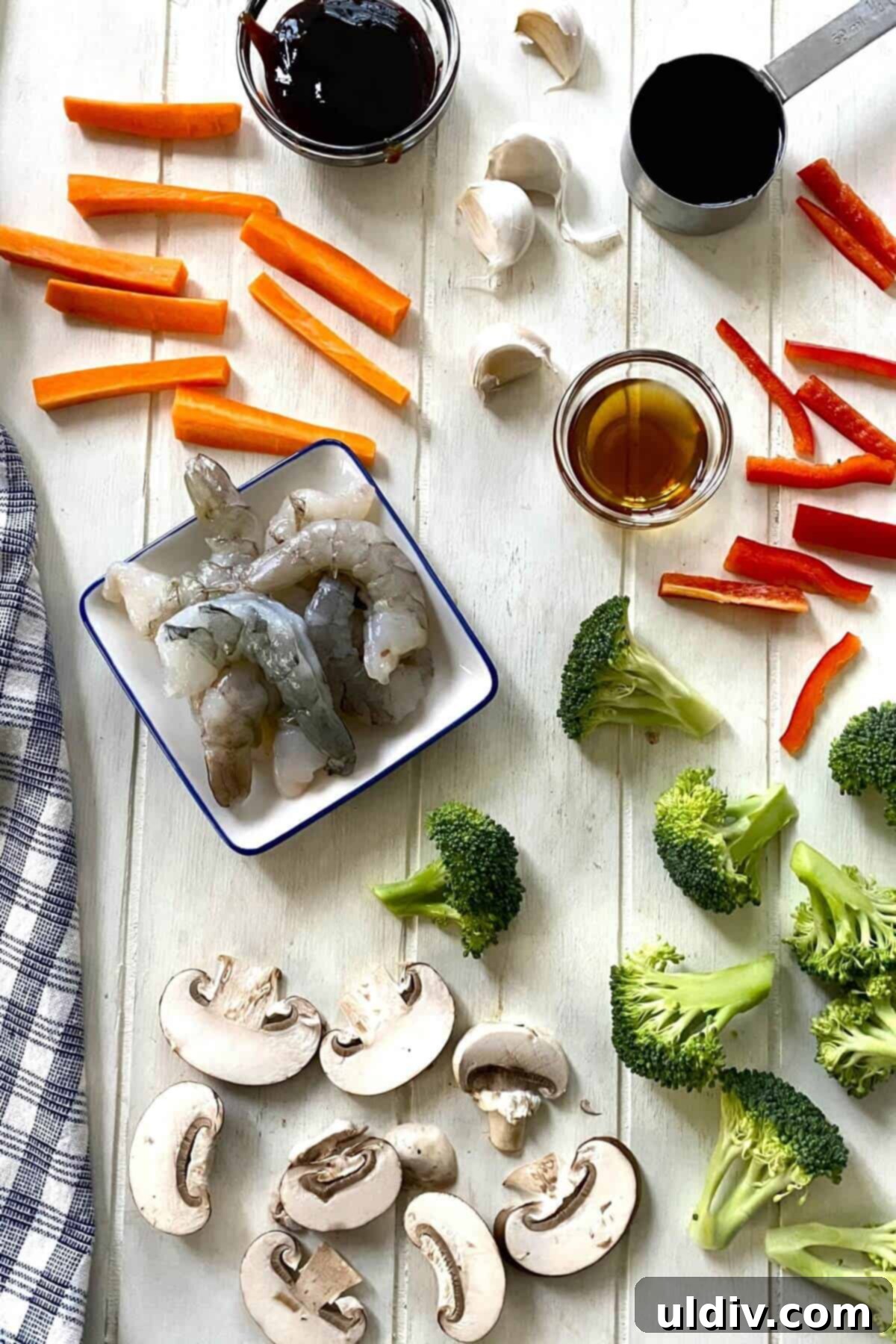
Crafting the perfect hibachi dish starts with selecting the right ingredients. Each component plays a vital role in building the layered flavors and appealing textures that make this dish so special. Here’s a closer look at what you’ll need to create this fantastic, restaurant-quality meal at home:
The Flavorful Sauce Base:
The heart of any great hibachi dish is its sauce. This blend offers a perfect balance of savory, sweet, and umami notes.
- Reduced Sodium Soy Sauce: This forms the salty, umami backbone of our sauce. Using reduced sodium allows for better control over the overall saltiness, letting other delicate flavors shine without being overwhelmed.
- Hoisin Sauce: A thick, fragrant sauce often used in Chinese cuisine, hoisin adds a sweet, tangy, and slightly smoky depth. It contributes a beautiful caramelization and a rich, appealing texture to the finished sauce.
- Toasted Sesame Oil: Essential for that characteristic nutty, aromatic fragrance that defines many Asian dishes. A small amount goes a long way in imparting a distinct and irresistible Asian flavor that rounds out the sauce profile.
- Oyster Sauce: This is truly the secret weapon for achieving an authentic hibachi taste. Despite its name, it has a mild, savory, and subtly sweet flavor with a deep umami profile that enhances all other ingredients without tasting overtly “fishy.” It’s the ingredient that gives many Asian stir-fries their signature richness and depth.
- Cornstarch: Used as a thickening agent, cornstarch creates that desirable glossy, rich coating on your shrimp and vegetables, ensuring the sauce clings beautifully to every morsel, delivering maximum flavor in each bite.
Fresh & Vibrant Vegetables:
The beauty of hibachi lies in its colorful medley of crisp-tender vegetables. Feel free to adjust these based on what’s fresh and available in your region, or simply substitute according to your personal preference.
- Carrots: Peeled and cut into thin matchsticks, carrots add a touch of natural sweetness, vibrant orange color, and a pleasant, satisfying crunch to the dish.
- Red Bell Pepper: Sliced into matchsticks, red bell peppers contribute a sweet, juicy flavor and a beautiful contrasting crimson color. They also add a good dose of essential vitamins and a fresh, crisp texture.
- Mushrooms: Sliced mushrooms, such as cremini or button mushrooms, absorb the sauce wonderfully, offering an earthy, umami depth and a tender, meaty texture that complements the shrimp beautifully.
- Broccoli: Cut into bite-sized florets, broccoli provides a slightly bitter contrast that balances the sweetness of the sauce, a satisfying bite, and a wealth of essential nutrients. Its bright green color also adds considerable visual appeal to the plate.
Premium Protein & Aromatics:
The protein and aromatics are what truly bring this dish to life, providing the main components and foundational flavors.
- Large Peeled and Deveined Shrimp: The star of the show! Using large shrimp ensures a satisfying, meaty bite and prevents them from overcooking too quickly. Pre-peeled and deveined shrimp save valuable prep time, making this meal even quicker to assemble.
- Garlic: Freshly chopped garlic is indispensable for its pungent, aromatic base. It infuses the entire dish with a delicious, warming fragrance that is characteristic of great Asian cuisine.
- Ginger Root: Minced fresh ginger adds a warm, zesty, and slightly spicy kick. Its vibrant flavor perfectly complements the garlic and elevates the overall Asian flavor profile, adding a layer of complexity.
- Scallions (Green Onions): Sliced thinly, scallions serve as a fresh, mild oniony garnish. They add a touch of bright green color and a final burst of refreshing flavor just before serving.
- Sesame Seeds: Toasted sesame seeds offer a delicate crunch and a subtle nutty finish, making the dish look and taste even more authentic and appealing.
You’ll find the exact quantities for these ingredients in the comprehensive recipe card below.
Step-by-Step Guide to Sizzling Hibachi Shrimp and Vegetables
This recipe is designed for maximum flavor with incredible efficiency. The key to its quick preparation is meticulous mise en place – having all your ingredients prepped, chopped, and measured out before you even turn on the stove. Once everything is organized, the cooking process is a true breeze, almost like magic!
1. Prepare Your Signature Hibachi Sauce:
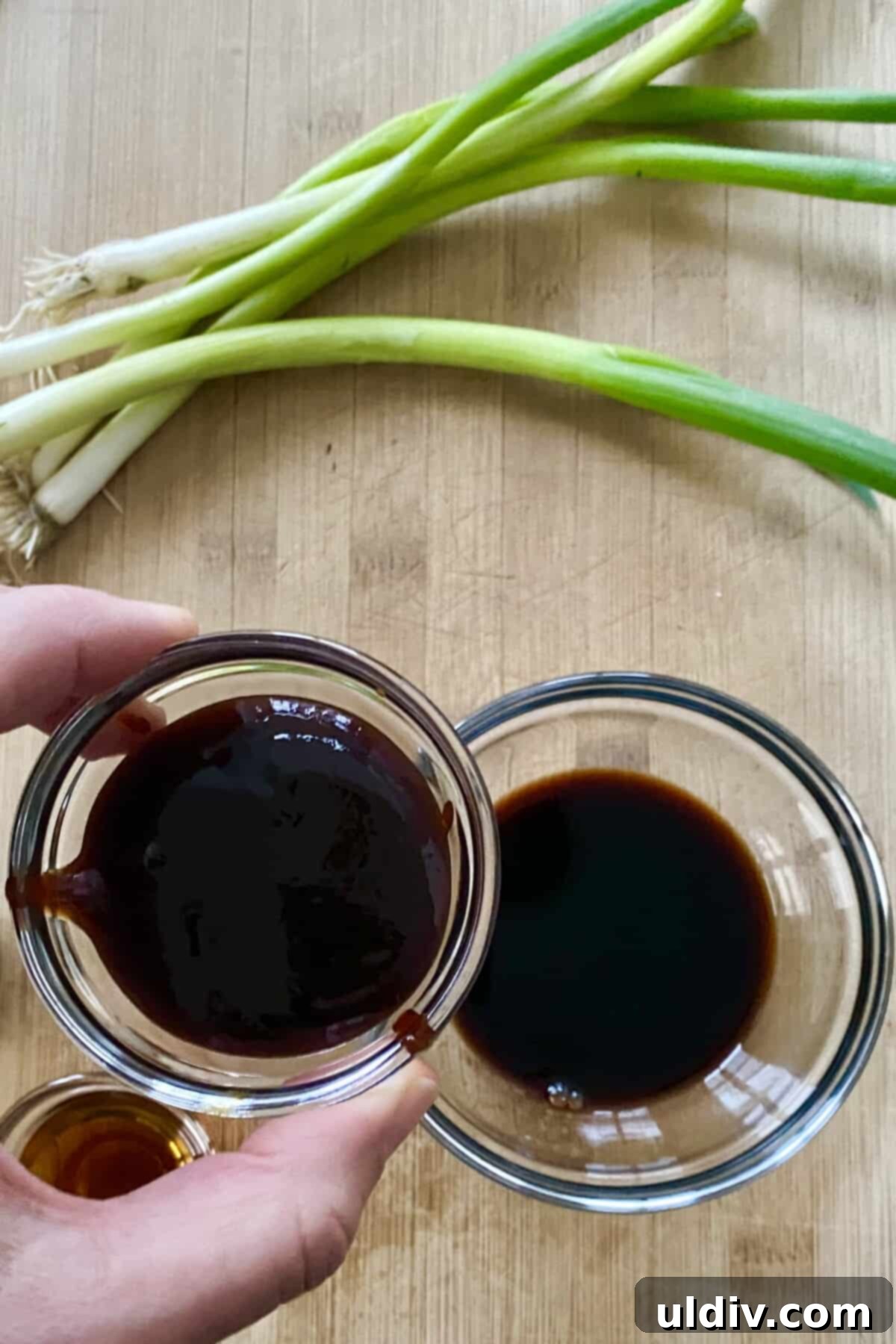
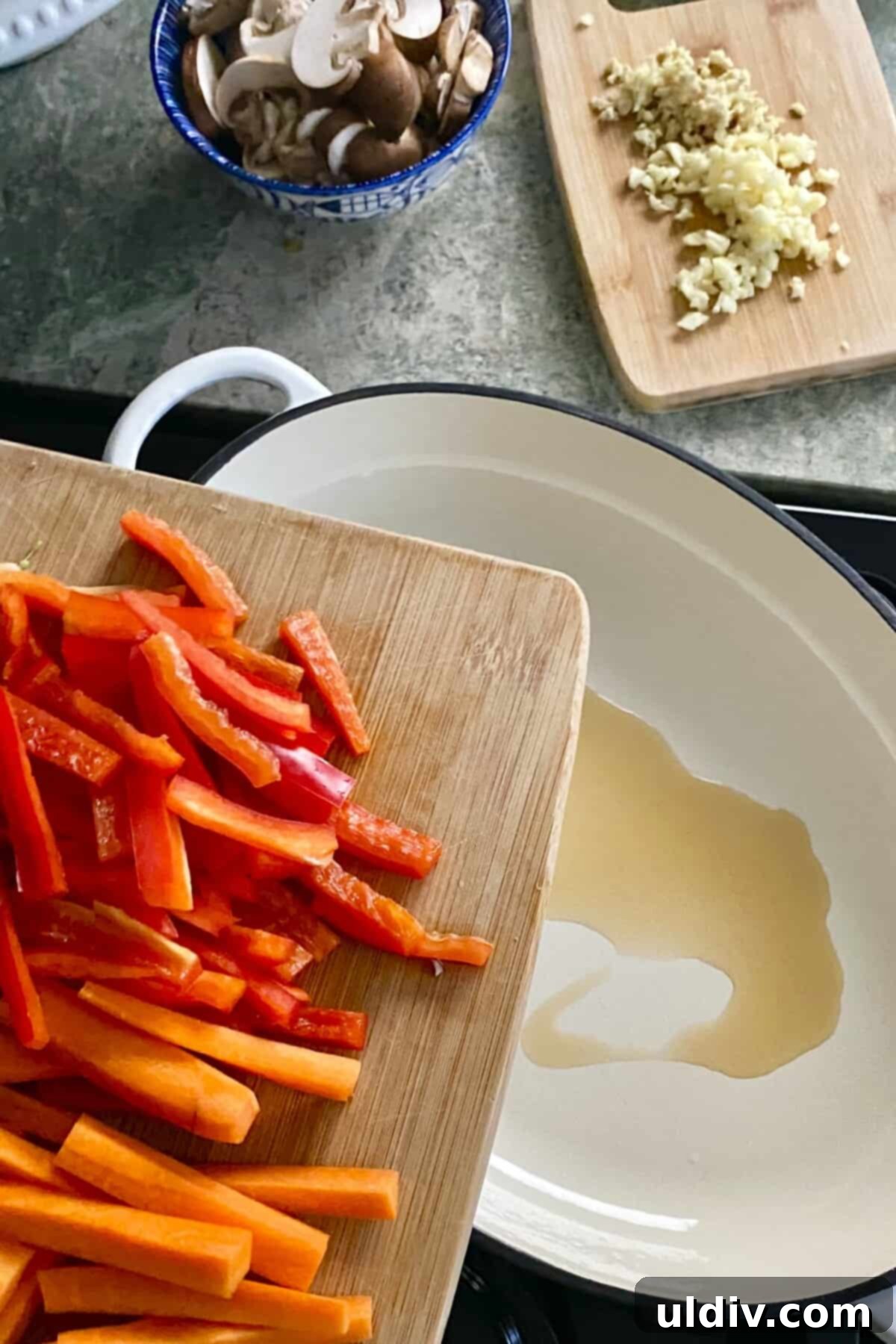
In a small bowl, whisk together the reduced sodium soy sauce, hoisin sauce, oyster sauce, one tablespoon of the toasted sesame oil (remember to reserve the remaining sesame oil for cooking later), and the cornstarch. Stir vigorously and thoroughly until the cornstarch is completely dissolved and no lumps remain. This vital step ensures a smooth, luscious sauce that will beautifully coat all your ingredients. Set this intensely flavored mixture aside, as you’ll add it at the very end of the cooking process.
2. Perfectly Cook Your Vegetables:
Heat a large sauté pan or wok over medium-high heat. Add one tablespoon of your toasted sesame oil to the hot pan. Once the oil is shimmering and fragrant, add the prepared matchstick carrots, sliced red bell peppers, and sliced mushrooms. Stir-fry these vibrant vegetables for just 3 to 4 minutes. The goal here is to cook them until they are tender-crisp, meaning they retain a slight, satisfying bite and their beautiful, vibrant color. Be careful not to overcook them, as soggy vegetables lose their appealing texture and fresh flavor.
While these vegetables are sautéing, bring a separate pot of water to a rolling boil for the broccoli. Once boiling, add the broccoli florets and cook for exactly 2 minutes. This brief blanching method ensures the broccoli is tender but still bright green and firm. Promptly remove the broccoli from the pot and drain thoroughly on a paper towel-lined plate to remove any excess moisture. Once cooked, transfer all the sautéed and blanched vegetables to a serving platter and cover loosely with foil to keep them warm while you prepare the shrimp.
3. Sizzle the Shrimp to Perfection:
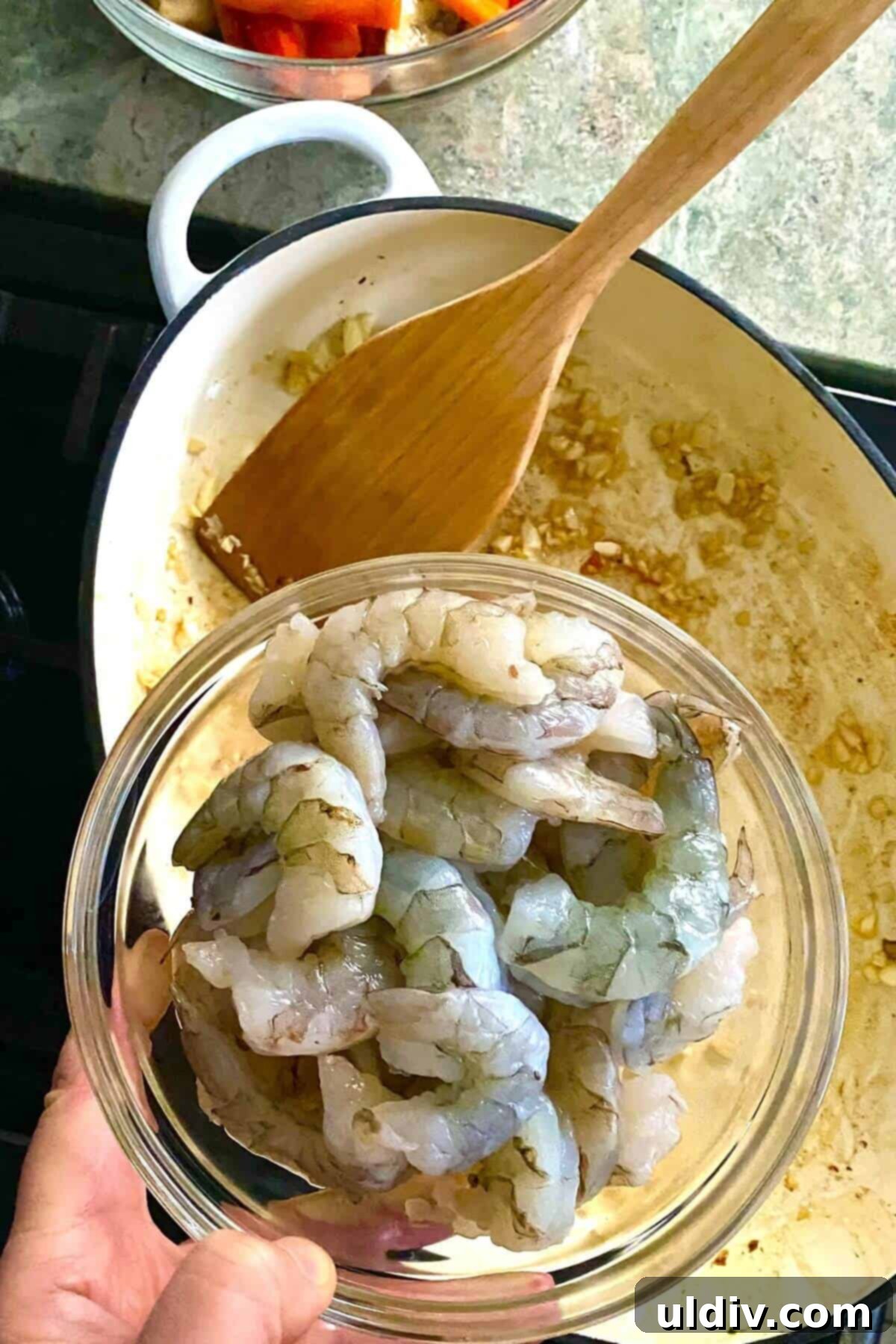
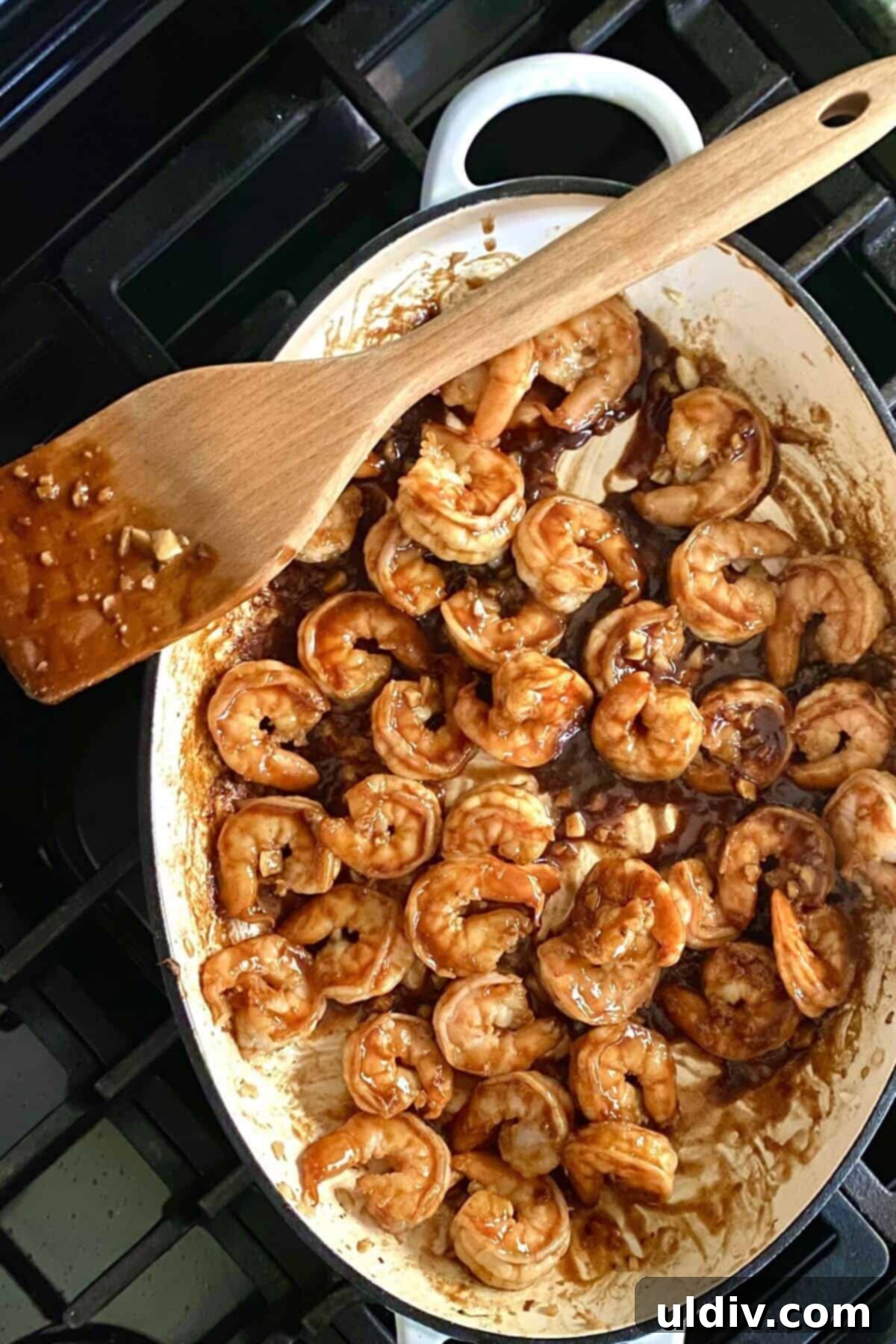
Using the same sauté pan or wok (no need to clean it – the residual flavors only add to the depth of the dish!), add the remaining tablespoon of sesame oil. Once the oil is hot and shimmering, toss in the freshly chopped garlic and minced ginger root. Sauté for a mere 30 seconds until they become wonderfully fragrant; be extremely careful not to burn them, as burnt garlic and ginger can turn bitter. Immediately add the peeled and deveined large shrimp to the pan. Sauté for approximately 2 minutes per side, or until they turn a beautiful pink color and become opaque. Shrimp cook very quickly, so avoid overcooking at all costs, which can unfortunately lead to a tough, rubbery texture.
4. Combine and Serve:
Once the shrimp are perfectly cooked, pour in your previously prepared hibachi sauce. Toss the shrimp gently but thoroughly to ensure each piece is fully coated in the glistening, aromatic sauce. Continue to cook for about another minute, allowing the sauce to simmer and thicken slightly, adhering beautifully to the shrimp. The cornstarch will activate and create that perfect glazed texture we’re aiming for.
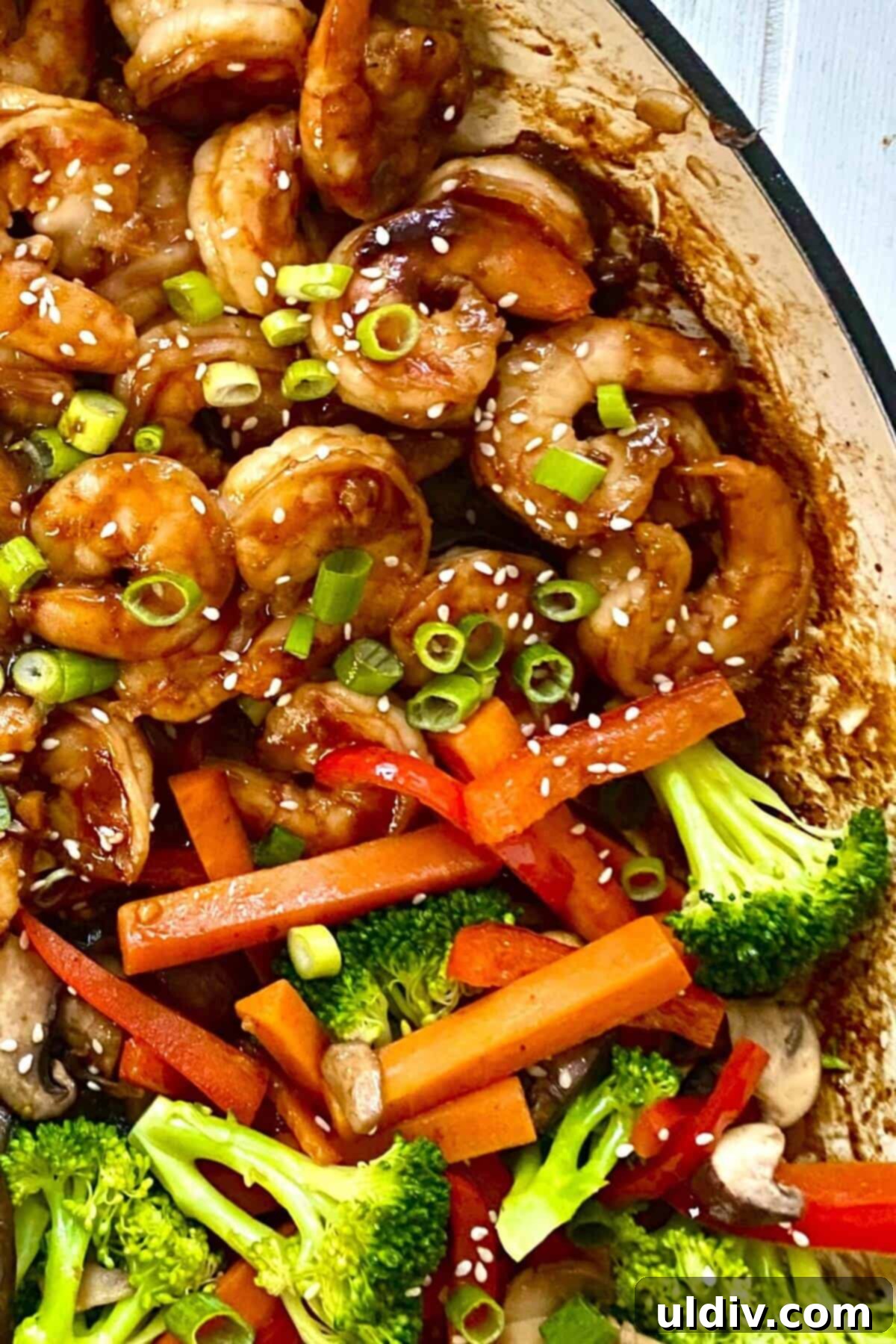
Carefully transfer the saucy shrimp to the platter with the waiting, warm vegetables. If any delicious sauce remains clinging to the pan, be sure to scrape it out and pour it over the entire dish – you don’t want to let any of that incredible flavor go to waste! Finally, sprinkle generously with thinly sliced scallions and toasted sesame seeds for a fresh, vibrant garnish and added nutty texture. Grab your chopsticks and serve this magnificent meal immediately, perhaps alongside a bowl of fluffy white rice to soak up every last drop of the delectable sauce.
Expert Tips for Hibachi Success and Variations
Achieving restaurant-quality hibachi at home is simpler than you think, especially with a few insider tips and tricks to guide you:
- Master the Mise en Place: This cannot be stressed enough, particularly for stir-fries and other quick-cooking dishes. Have all your ingredients chopped, measured, and meticulously organized before you even think about turning on the heat. This prevents frantic scrambling, ensures everything cooks evenly, and guarantees your dish comes together smoothly and to perfection.
- Prevent Rubbery Shrimp: Shrimp cooks incredibly quickly. As soon as they turn pink and opaque, they are done. Overcooking by even a minute can render them tough, chewy, and unappetizing. Watch them closely and remove them from the heat promptly!
- High Heat, Quick Cook: For both the vegetables and the shrimp, utilize medium-high to high heat. This high heat allows the ingredients to sear quickly on the outside, creating a delightful caramelization while remaining crisp-tender inside – the hallmark of perfectly cooked stir-fried vegetables and succulent shrimp.
- Wok vs. Pan: While a large sauté pan works perfectly well for this recipe, if you happen to have a wok, this is an excellent opportunity to use it! A wok’s unique shape allows for superior heat distribution and makes tossing ingredients much easier, contributing to that authentic stir-fry experience.
- Spice it Up: For those who appreciate a touch of heat, consider adding a pinch of red pepper flakes along with the garlic and ginger, or drizzle a little sriracha sauce over the finished dish before serving.
- Add More Protein: While shrimp is undeniably fantastic, feel free to incorporate other proteins or swap them entirely. Thinly sliced chicken breast, lean pork, or tender beef strips can be cooked similarly to the shrimp. Cook them first, remove from the pan, then cook the shrimp, and combine everything back together at the very end.
- Serve with the Best Side: This hibachi shrimp and vegetables dish pairs wonderfully with a side of perfectly cooked fluffy white rice, which brilliantly soaks up all the delicious, savory sauce. You could also serve it with brown rice for added fiber, quinoa for a protein boost, or even a generous bed of noodles for a heartier meal.
- Embrace the Theatrics (Optional!): If you want to add a fun nod to the restaurant experience, consider using an oil dispenser that squirts a fine stream of oil, just like the hibachi chefs do. It adds a playful element to your cooking, though remember that the exquisite flavor is what truly matters!
Health Benefits of Your Homemade Hibachi
Beyond being incredibly delicious, this homemade hibachi shrimp and vegetables recipe offers significant nutritional advantages, making it a smart choice for a balanced diet. Shrimp is an excellent source of lean protein, making it fantastic for muscle repair and growth, and it’s naturally low in calories. It’s also rich in essential nutrients like selenium, vitamin B12, and phosphorus, which play vital roles in overall health. Furthermore, shrimp contains powerful antioxidants that help protect your cells.
The vibrant array of colorful vegetables – including broccoli, carrots, red bell peppers, and mushrooms – provides a wealth of vitamins, minerals, and essential dietary fiber. Fiber is crucial for maintaining healthy digestion, regulating blood sugar levels, and helps keep you feeling full and satisfied, preventing overeating. By preparing this meal at home, you have complete control over the amount of oil and sodium used, allowing you to create a much healthier option compared to many restaurant versions, which can often be high in hidden fats, added sugars, and excessive salt. This homemade version is truly a guilt-free pleasure.
Frequently Asked Questions About Hibachi Shrimp
Here are some common questions about making this delightful and easy hibachi shrimp and vegetable dish at home:
- Can I use frozen shrimp? Yes, absolutely! If you’re using frozen shrimp, just ensure they are fully thawed and patted thoroughly dry with paper towels before you begin cooking. Excess moisture can lower the pan temperature and prevent proper searing, affecting the texture of your shrimp.
- What if I don’t have oyster sauce? While oyster sauce is undoubtedly key for achieving that authentic umami depth and richness, if you absolutely don’t have it, you can substitute it with a mix of soy sauce and a pinch of sugar, or a vegetarian oyster sauce if available in your local grocery store. However, for the most authentic and robust flavor, including oyster sauce is highly recommended.
- Can I make this dish ahead of time for meal prep? This dish is truly best enjoyed fresh off the stove, as the shrimp and vegetables retain their optimal texture and flavor when served immediately. However, you can certainly prep all your vegetables and whisk together the sauce ingredients ahead of time, storing them separately in airtight containers in the refrigerator. This will make the actual cooking process incredibly fast when you’re ready to eat.
- How do I store leftovers? Store any leftover Hibachi Shrimp and Vegetables in an airtight container in the refrigerator for up to 2-3 days. When reheating, do so gently on the stovetop over low heat or in the microwave to prevent the shrimp from becoming tough.
- Can I add other vegetables to this recipe? Definitely! This recipe is incredibly versatile. Snow peas, snap peas, thinly sliced zucchini, sliced onions, or asparagus spears would all be excellent additions or substitutions. Just be sure to adjust their cooking times as needed to ensure they remain perfectly crisp-tender.
Explore More Asian-Inspired Recipes
If you loved creating and savoring this homemade hibachi dish, you’ll undoubtedly enjoy expanding your culinary horizons with these other fantastic Asian-inspired recipes from our kitchen. Each one promises unique flavors and satisfying results:
- Fresh Vegetable Spring Rolls with Peanut Sesame Dipping Sauce – Light, refreshing, and packed with crisp vegetables and vibrant flavors, perfect as an appetizer or light meal.
- Spicy General Tso’s Meatballs – A delicious and innovative twist on a beloved classic, offering savory meatballs coated in a sweet and spicy sauce, perfect for a cozy night in.
- Instant Pot Spicy Asian Beef Stew – Tender, melt-in-your-mouth beef in a rich, spicy, and aromatic broth, made effortlessly easy in your Instant Pot for a hearty meal.
- Cashew Beef and Rice Lettuce Wraps – A healthy and incredibly flavorful meal featuring seasoned beef and rice, all wrapped in crisp lettuce leaves, great for entertaining or a light, refreshing dinner.
Share Your Culinary Creations!
We absolutely love seeing your cooking adventures in your own kitchen! If you recreate this delicious Hibachi Shrimp and Vegetables recipe at home, please don’t hesitate to let us know. Your feedback truly brightens our day and helps other aspiring home cooks discover the joy and ease of homemade cooking. Leave a comment below to tell us about your experience, share any modifications you made, or give the recipe a well-deserved rating.
Don’t forget to snap a fantastic photo of your magnificent meal and share it on Instagram, tagging @amycaseycooks. We eagerly feature your beautiful creations in our Insta stories, and it’s always inspiring to see how you bring these recipes to life with your unique touch. For more delightful foodie stories, engaging cooking videos, and helpful culinary tips, be sure to follow our Facebook and Pinterest pages. And if you want to stay perfectly updated with all our latest recipes and exciting culinary adventures, make sure to sign up for our newsletter – you won’t want to miss a single delicious update!
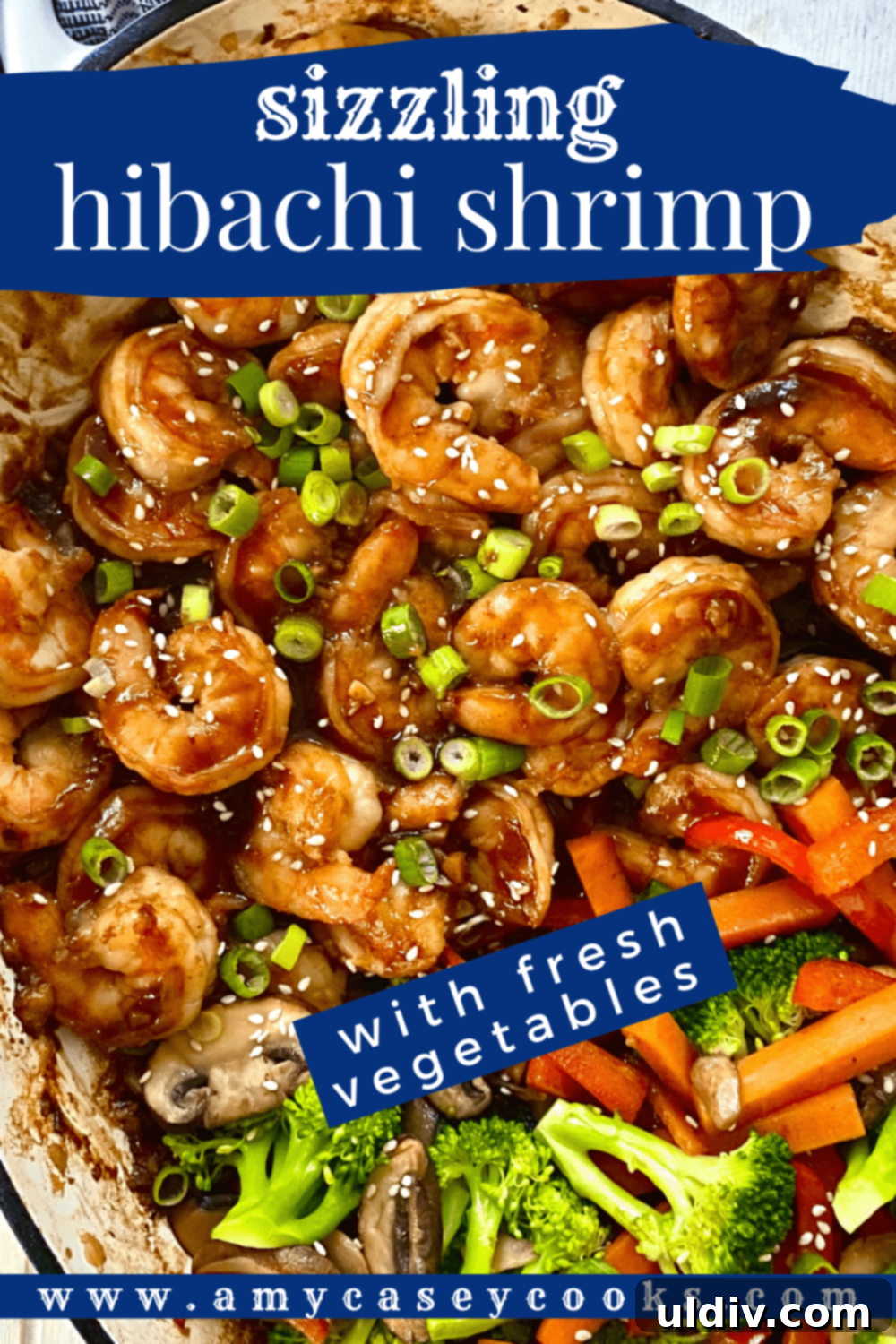
Recipe: Sizzling Hibachi Shrimp and Vegetables
Sizzling Hibachi Shrimp and Vegetables
Skip the restaurant and make Hibachi Shrimp and Vegetables at home. In about 30 minutes you’ll have a delicious dish with tender shrimp, mushrooms, carrots, bell peppers, and broccoli in savory, salty and sweet Asian inspired sauce. It’ll be better than at any restaurant and at a fraction of the price.
15 minutes
15 minutes
30 minutes
4 servings
374 kcal
Amy Casey
Ingredients
- ¼ cup reduced sodium soy sauce
- 3 tablespoons hoisin sauce
- 1 tablespoon oyster sauce
- 3 tablespoons toasted sesame oil divided
- 1 teaspoon cornstarch
- 1 large carrot peeled and cut in matchsticks, about 1 cup
- 1 red bell pepper cut in matchsticks, about 1 cup
- 8 ounces mushrooms sliced
- 1 medium head of broccoli cut in florets, about 3 cups
- 4 garlic cloves chopped
- 1 tablespoon of minced ginger root
- 2 pounds of large shrimp peeled and deveined.
- 2 scallions thinly sliced
- 1 teaspoon sesame seeds
Instructions
-
In a small bowl, combine the soy sauce, hoisin sauce, oyster sauce, 1 tablespoon sesame oil, and cornstarch. Stir until the cornstarch dissolves completely. Set aside.
-
In a large sauté pan or wok over medium-high heat, add 1 tablespoon of the sesame oil. Add the carrots, red bell peppers, and mushrooms. Sauté for 3 to 4 minutes until tender-crisp. Remove the cooked vegetables to a serving platter and cover loosely with foil. Set aside.
-
Bring a pot of water to a boil. Add the broccoli florets and cook for exactly 2 minutes. Remove the broccoli from the pot with a slotted spoon and drain on a paper towel-lined plate. Place on the platter with the other vegetables. Cover lightly with foil to keep warm.
-
In the same sauté pan, add the remaining sesame oil. Add the chopped garlic and minced ginger root and sauté for 30 seconds until fragrant, being careful not to burn them.
-
Add the peeled and deveined shrimp to the pan and sauté for about 2 minutes per side, or until they turn pink and opaque. Pour in the prepared sauce and toss with the shrimp to coat. Cook for about another minute, allowing the sauce to thicken and cling to the shrimp. Add the shrimp to the platter with the vegetables. If any sauce remains in the pan, pour it over the vegetables.
-
Sprinkle the finished hibachi shrimp and vegetables generously with the thinly sliced scallions and toasted sesame seeds. Serve immediately, preferably with a side of fluffy white rice.
Video
Notes
- Prep all the ingredients before starting to cook. This ‘mise en place’ is crucial for fast-cooking stir-fries.
- Don’t overcook the shrimp; they will become rubbery very quickly if left on the heat for too long.
- For a fun, theatrical touch at home, consider using an oil squirter dispenser, similar to those used by professional hibachi chefs.
- This dish is best served immediately with a generous side of fluffy white rice to soak up all the delicious sauce.
Nutrition Information (Approximate Per Serving)
Calories: 374 kcal |
Carbohydrates: 23.5 g |
Protein: 48.4 g |
Fat: 11.5 g |
Saturated Fat: 1.6 g |
Cholesterol: 324 mg |
Sodium: 1075 mg |
Fiber: 4 g |
Sugar: 8.2 g