
As I journey through the culinary world, exploring and sharing new ingredients on this blog has become a delightful annual tradition. Each year, without fail, a particular ingredient captivates my senses and inspires a flurry of creative kitchen experiments. A few years ago, it was the robust, savory depth of gochujang that ignited my passion. Then came the luxurious aroma and unique flavor of truffle mozzarella, transforming simple sandwiches into gourmet delights. More recently, the commitment to sustainability and exceptional taste led me to embrace Sitka salmon, a testament to conscious eating. So, what culinary treasure has earned the spotlight this year? The title of this post reveals it all: the enigmatic and incredibly nutritious black rice, also known as emperor’s rice or, more famously, forbidden rice. This ancient grain has swiftly become my latest obsession, and I’m thrilled to share why.
My first encounter with black rice happened a few months ago while I was browsing for ingredients for my next Country Life Natural Foods order. The striking, deep color of the grains immediately caught my eye. Initially, I was drawn to its aesthetic appeal, a somewhat superficial reason, I admit! However, once the package arrived, a more profound curiosity took hold. I began to ponder: what culinary masterpieces could I create with this visually stunning rice? My initial hesitation quickly transformed into an eager quest for knowledge. Thankfully, the internet is a vast repository of information, and my deep dive into the history and culinary applications of black rice led to fascinating intellectual discoveries, unveiling a rich tapestry of its past and remarkable health benefits.
The Royal History and Remarkable Health Benefits of Forbidden Rice
Historically, black rice holds a revered status, once exclusively reserved for Chinese emperors and forbidden to the common populace. This exclusivity is precisely where it earned its evocative moniker, “forbidden rice.” Beyond its aristocratic past, this extraordinary grain is a true nutritional powerhouse. It’s lauded for its exceptionally high concentration of antioxidants, which are crucial for combating oxidative stress in the body. Research indicates that black rice “also contains dietary fiber, anti-inflammatory properties, and has the ability to help stop the development of diabetes, cancer, heart disease and even weight gain.” These are astounding claims, underscoring its immense value as a staple in a healthy diet.
The distinctive dark color of black rice is not just for show; it’s a direct indicator of its rich nutritional profile. This deep, purplish-black hue is a result of a high concentration of anthocyanin. This powerful antioxidant is the “same antioxidant responsible for the color of eggplant, blueberries, acaí berries, and concord grapes, as well as purple cauliflower, purple corn, and blood oranges.” Anthocyanins are well-known for their potential health benefits, including supporting heart health, cognitive function, and exhibiting anti-carcinogenic properties. This makes black rice not just a visually appealing grain but a potent ally in promoting overall well-being. Its impressive array of health-promoting compounds truly sets it apart from more common rice varieties.
Mastering the Art of Cooking Black Rice: The “Pasta Method”
While many culinary guides suggest cooking black rice much like any other rice variety – typically using a 2-to-1 water-to-rice ratio – I stumbled upon a method that resonated with me for its profound depth of analysis and practical approach. This exceptional guide was provided by Maria from mariaushakova.com. Maria’s article delves comprehensively into the history, diverse culinary attributes, and extensive nutritional aspects of black rice. She masterfully draws insightful comparisons between black rice and its more common counterparts, offering a holistic understanding of this unique grain.
What truly set her advice apart was not just the theoretical insight but her practical guidance, featuring not one, but three distinct methods for cooking black rice. Among these, the “pasta method” captured my attention and proved to be a game-changer. This technique involves cooking the rice much like pasta: in a generous pot of rapidly boiling water. The beauty of this method lies in its simplicity and minimal concern for exact water quantities, as the excess water is drained away at the end of the cooking process. I followed Maria’s instructions meticulously, and the results were nothing short of perfection. The black rice emerged beautifully, boasting a delightful nutty flavor and a pleasantly firm, al dente texture that made it an ideal candidate for salads. I wholeheartedly recommend exploring Maria’s blog for anyone keen to truly master the art of cooking black rice and uncover its full potential in the kitchen.
Crafting the Perfect Black Rice Salad: A Symphony of Flavors
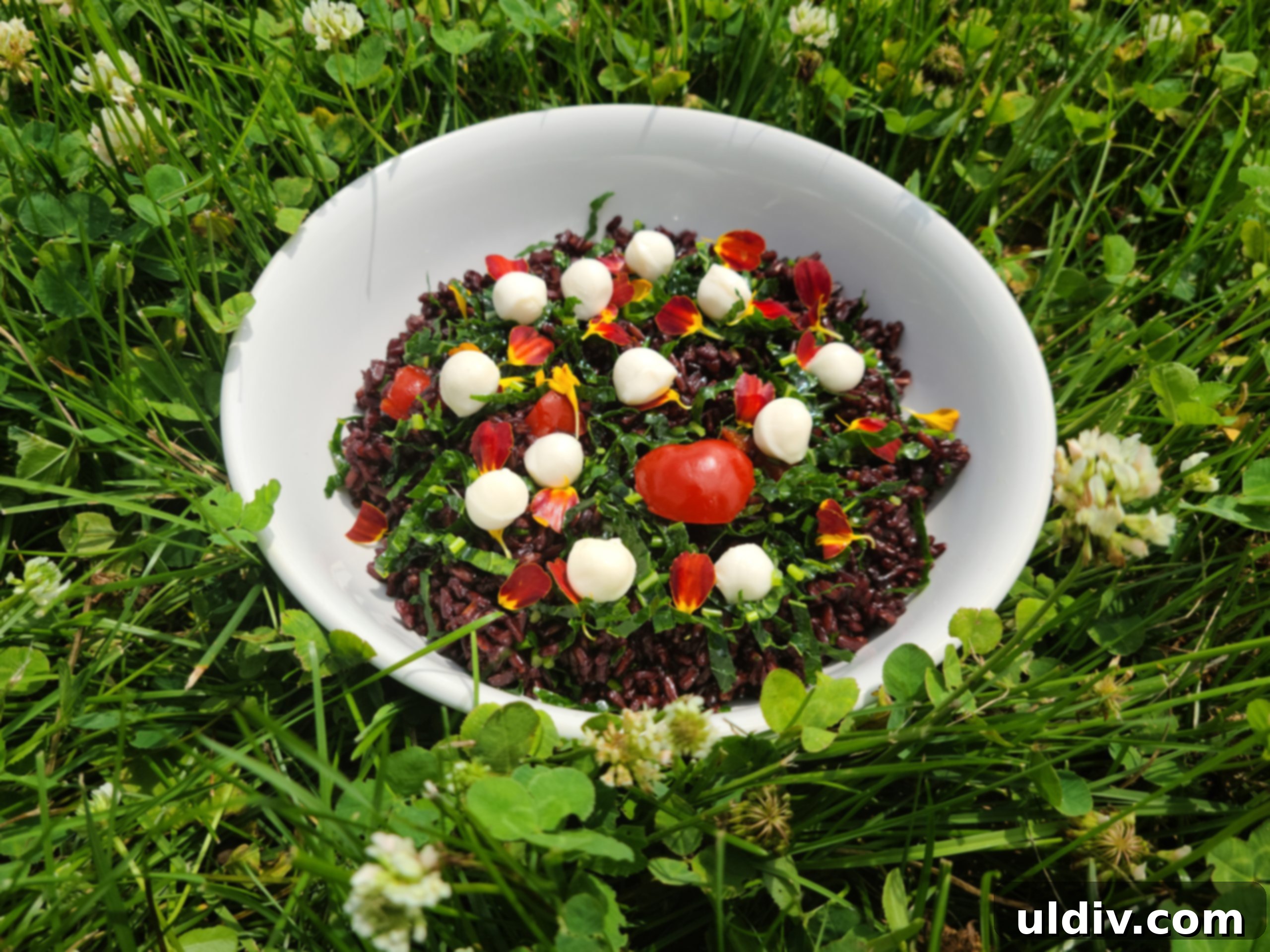
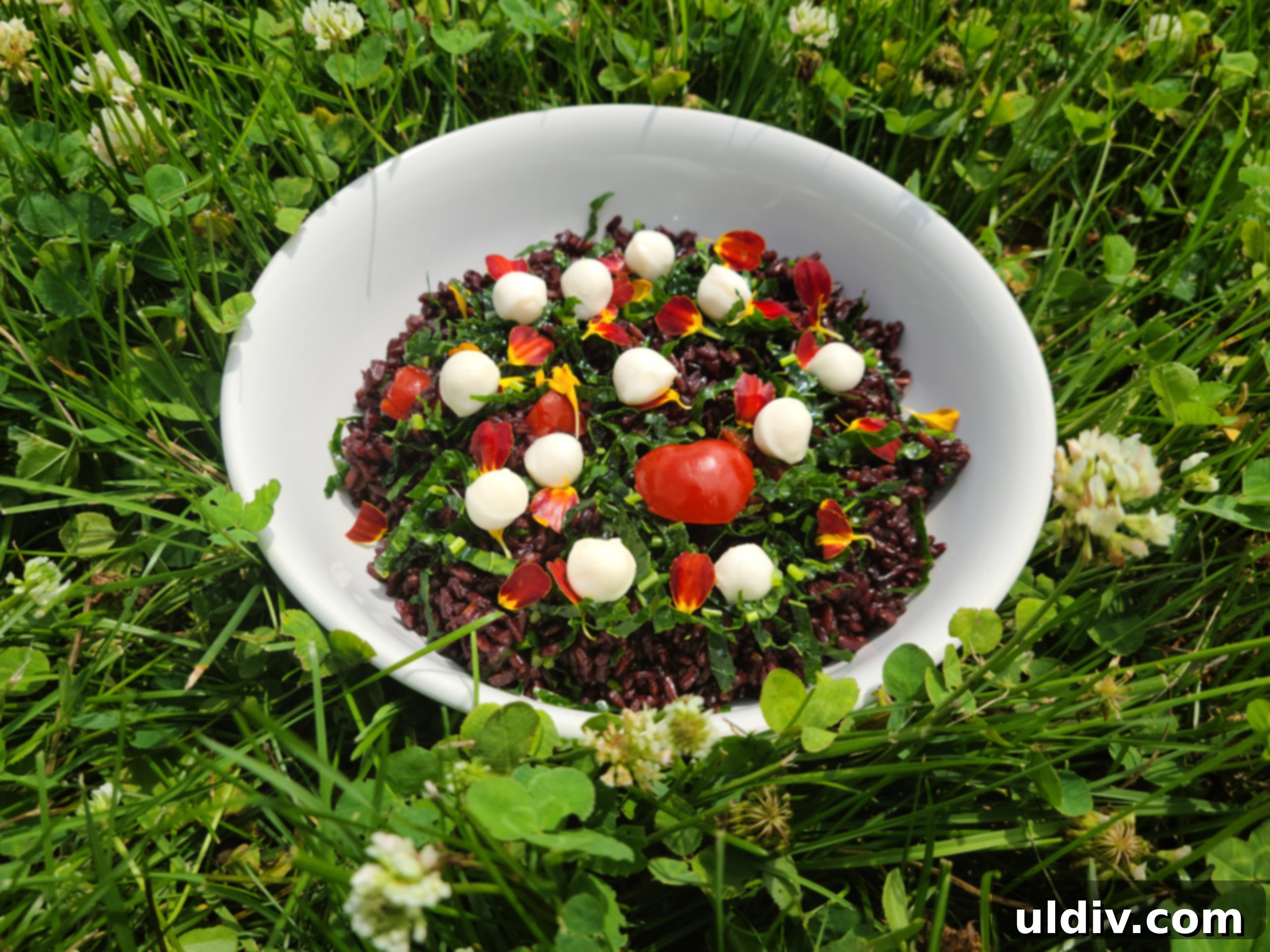
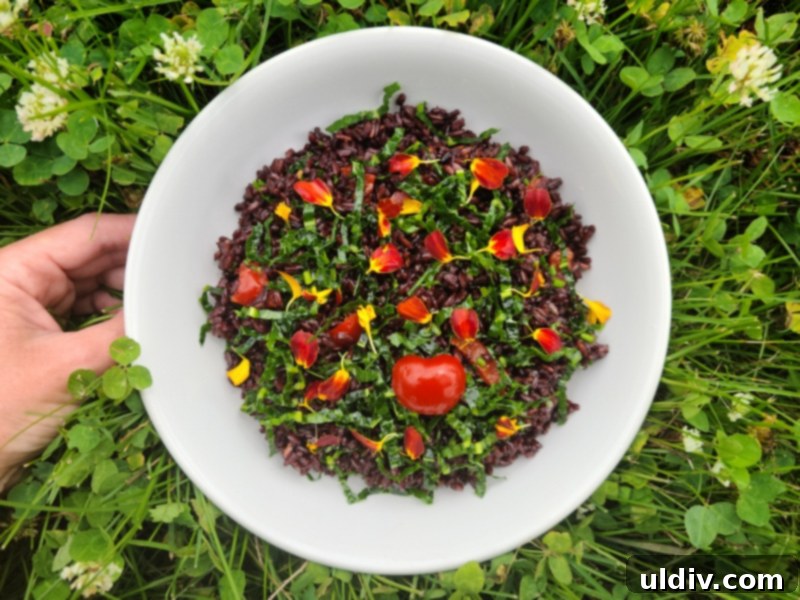
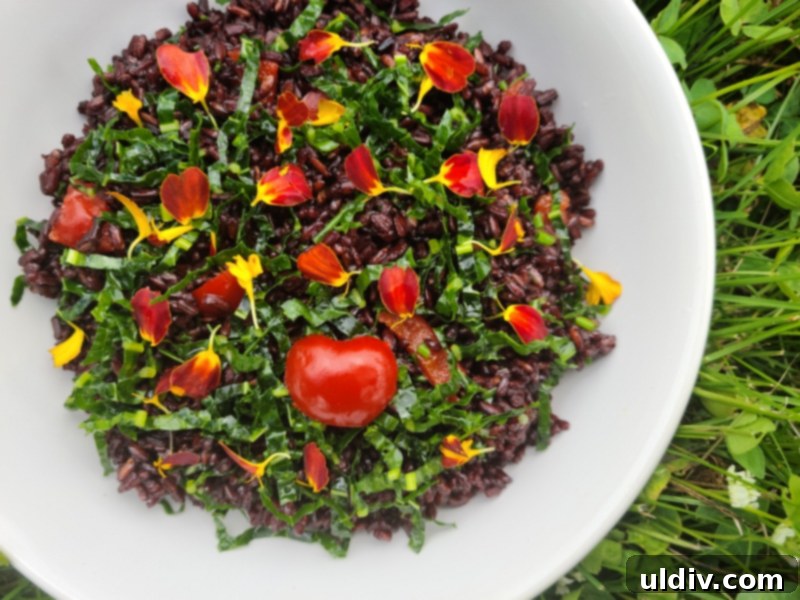
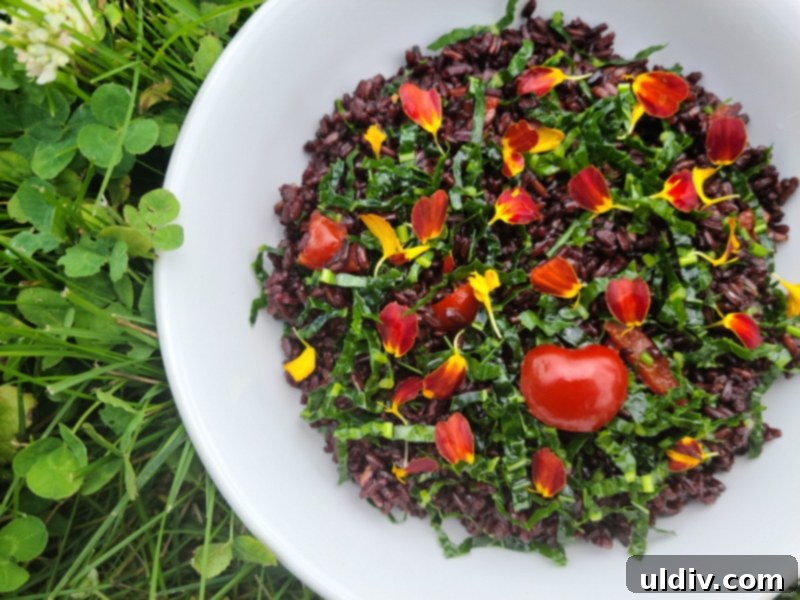
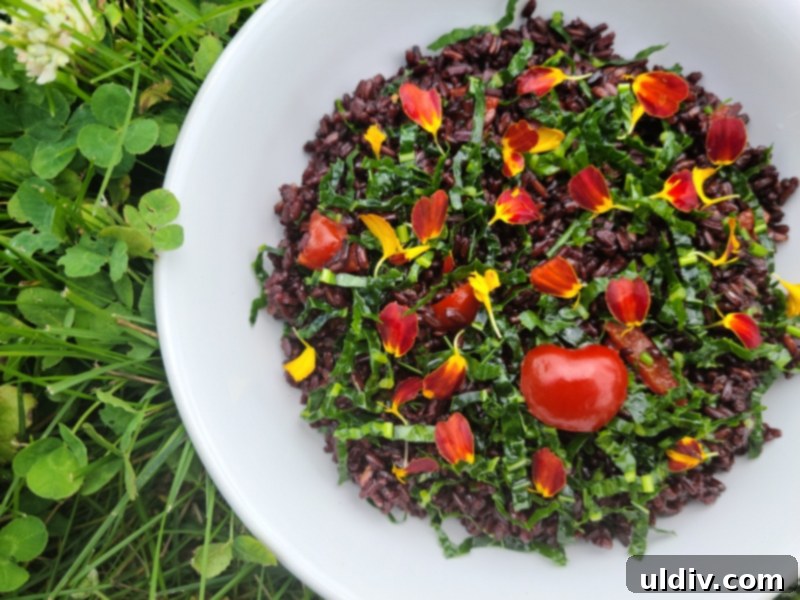
Using the pasta method, my black rice achieved a robust, nutty flavor and a satisfyingly firm texture, making it an exceptional base for vibrant salads. While I have yet to venture into other black rice dishes, its performance in salads has been stellar. For the featured recipe in this post, I meticulously combined the perfectly cooked and cooled black rice with an array of fresh, garden-fresh ingredients. Tender, chopped kale provided a subtle bitterness and a wealth of nutrients. Freshly snipped chives added a delicate oniony zest, while bright marigold petals, plucked directly from the garden, contributed both visual appeal and a gentle, floral note. To introduce an exciting contrast in texture and flavor, I incorporated chopped Peppadew peppers, known for their unique sweet-and-spicy profile (if you’re curious, you can find my detailed Peppadew review here). All these delightful components were then gently tossed in a light, zesty lime vinaigrette, crafted with exquisite Nuvo Olive Oil Early Harvest Extra Virgin Olive Oil, known for its fresh, vibrant notes. Did you notice the charming Peppadew heart adorning the top of the salad? That artistic touch was entirely unintentional – a happy accident that occurred naturally as I was preparing the peppers! This salad is not just a meal; it’s an experience, bursting with freshness and unexpected flavors.
Enhancing the Experience: Vegetarian Delight with Mozzarella Pearls
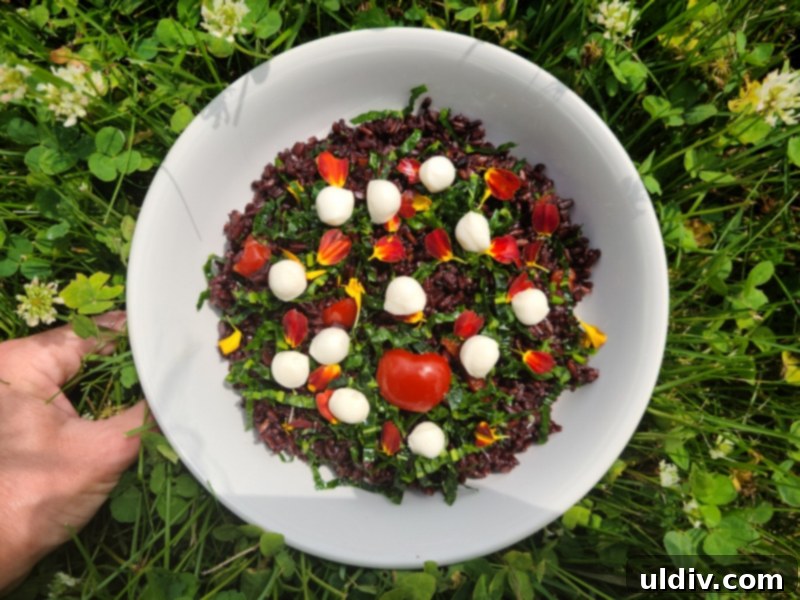
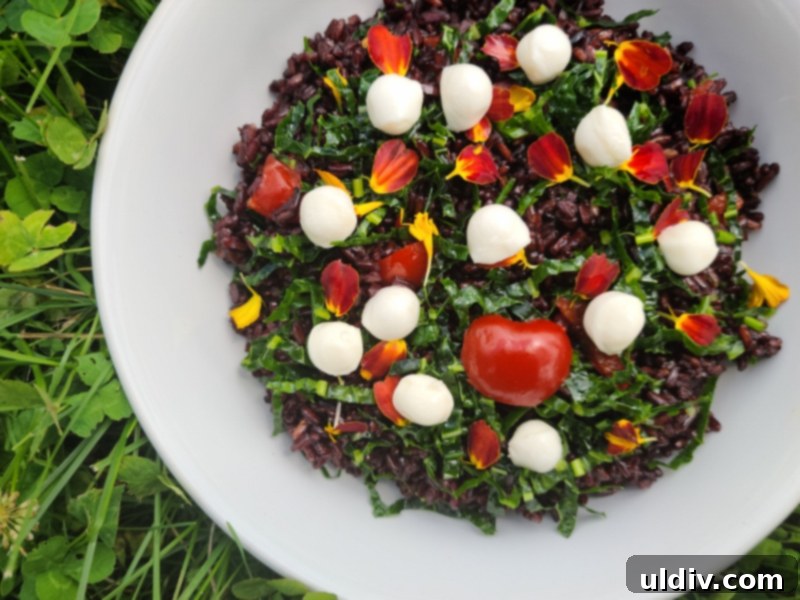
For those who prefer a vegetarian option, or simply wish to add another layer of creamy texture and flavor, I recommend incorporating BelGioioso mozzarella pearls. These delicate, small balls of fresh mozzarella seamlessly blend with the other ingredients, offering a subtle richness without overpowering the salad’s vibrant profile. The delightful nuttiness characteristic of this nutrition-packed black rice, combined with the refreshing tang of the lime vinaigrette and the sophisticated sweet-spicy kick of the Peppadew peppers, creates an incredibly exciting and harmonious flavor combination. Every bite is a journey through diverse textures and tastes – from the chewy rice to the crisp kale and the soft mozzarella. This salad is not only a feast for the palate but also a nourishing meal that celebrates the incredible versatility of forbidden rice.
Join the Conversation: Your Black Rice Creations
I am genuinely curious to hear about your culinary adventures with this magnificent grain. Have you had the pleasure of incorporating black rice into your cooking before? What are your most cherished, go-to rice-based recipes? Perhaps you have unique insights into its preparation or innovative ways to feature it in meals. Please share your experiences and favorite dishes in the comments section below. I love learning from fellow food enthusiasts, and your ideas might just inspire my next kitchen experiment! Let’s celebrate the versatility and health benefits of black rice together.
Print Recipe
Delicious Black/Forbidden Rice Salad (Vegan or Vegetarian)
15 mins
35 mins
50 mins
4 people
Ingredients
- 2 cups cooked black rice (cooked about 35 mins in boiling water and then allowed to cool down)
- 1 cup chopped kale
- 1/2 cup chopped Peppadew peppers
- 1 handful chopped chives
- 1/2 cup marigold petals (or any other edible petals), washed
- 1 cup mozzarella pearls (for the vegetarian version)
- 1/3 cup extra virgin olive oil
- 1 tbsp + 1 1/4 tsp freshly squeezed lime juice
- 1 tsp wildflower honey
- Salt and pepper to taste
Instructions
- In a small Pyrex cup or bowl, prepare the vinaigrette by whisking together the extra virgin olive oil, fresh lime juice, wildflower honey, and season with salt and pepper to taste. Mix until well emulsified.
- In a large mixing bowl, combine all the salad ingredients (except for the mozzarella pearls if you are preparing the vegan version). Pour the prepared vinaigrette over the ingredients and toss gently until everything is thoroughly combined and coated. Taste and adjust seasoning with additional salt and/or pepper if desired. Chill the salad in the refrigerator until ready to serve. This allows the flavors to meld beautifully. Serve at room temperature as a refreshing appetizer, or mildly warm as a fulfilling main course, accompanied by fresh, crusty bread.
- Enjoy your delicious and nutritious Black/Forbidden Rice Salad!