
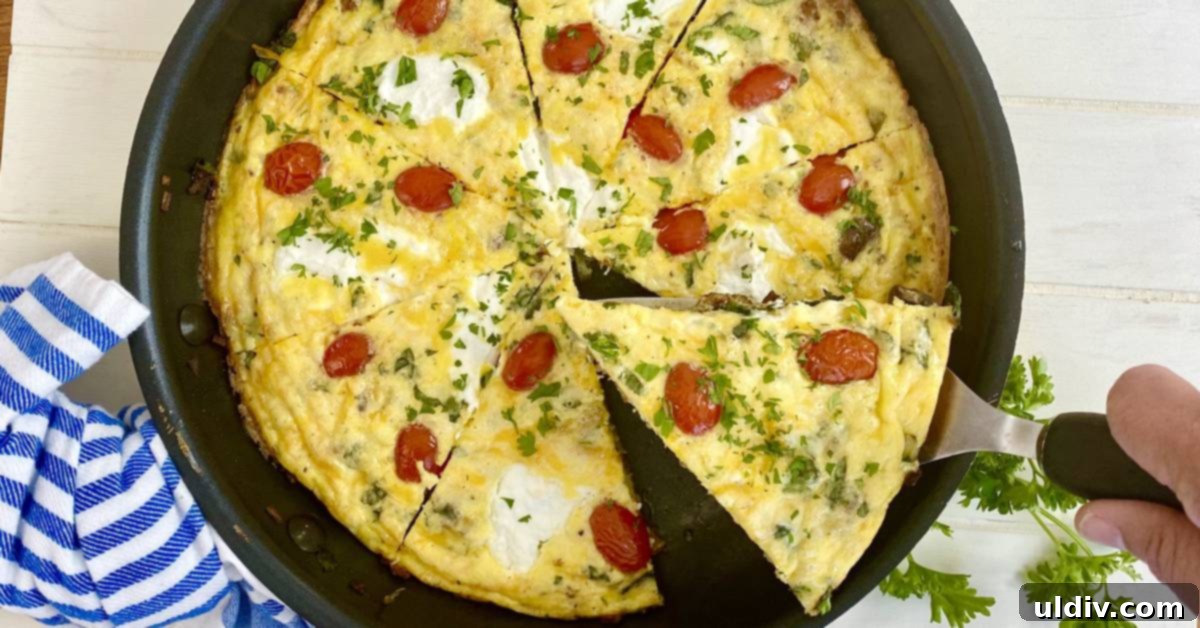
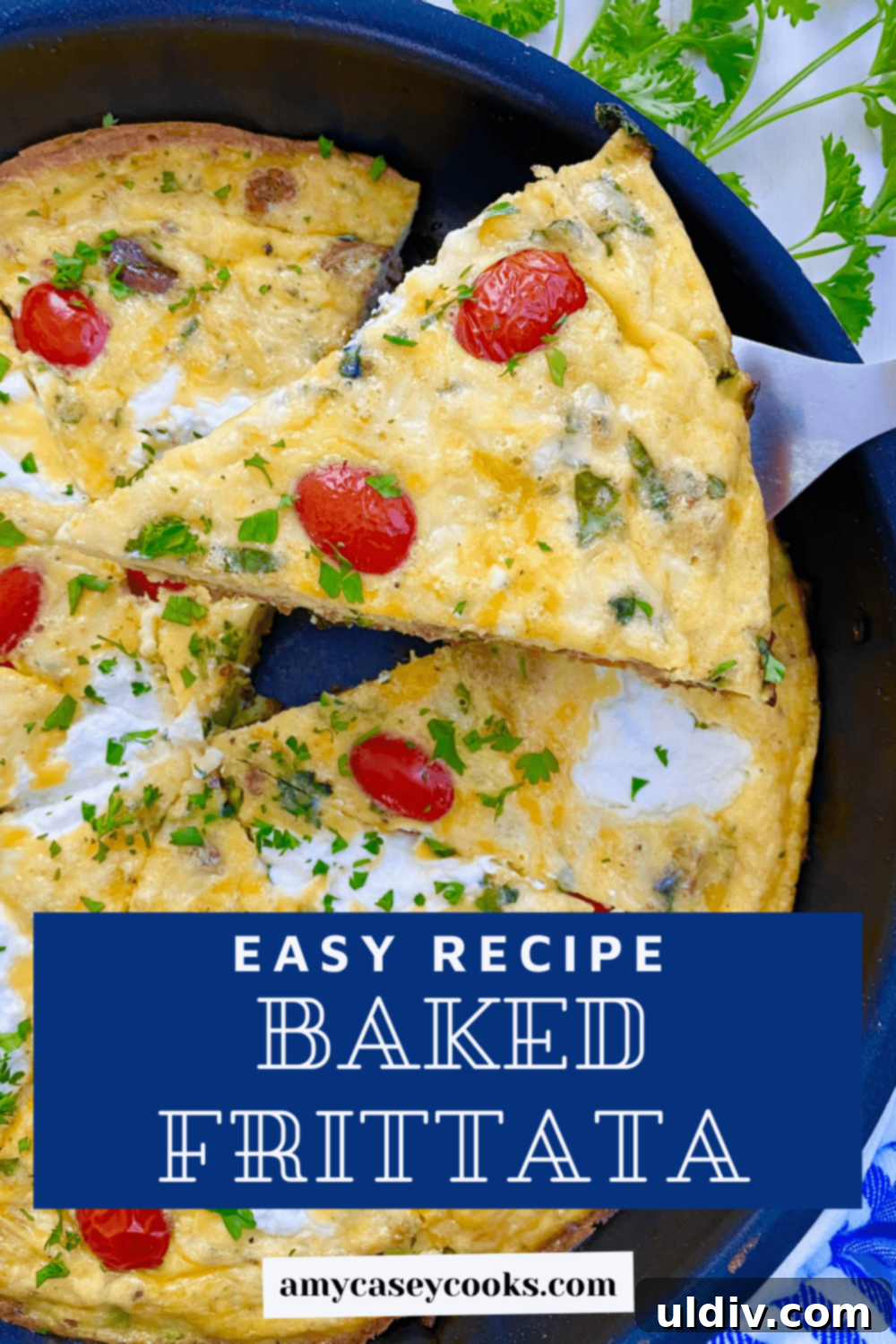
Welcome to the ultimate guide for crafting a delectable Baked Frittata – a truly versatile and endlessly satisfying dish. This eggy masterpiece is incredibly quick to assemble, surprisingly simple to bake, and promises a burst of flavor in every bite. Whether you’re planning a lavish brunch, a hearty breakfast, a light lunch, or a comforting dinner, this crustless quiche is the perfect centerpiece. Baked directly in an oven-safe sauté pan, it offers minimal cleanup and maximum deliciousness. The beauty of the frittata lies in its adaptability: a delightful canvas for eggs, a medley of fresh vegetables, and savory breakfast meats. Feel empowered to explore countless variations and discover your personal favorite flavor combinations.
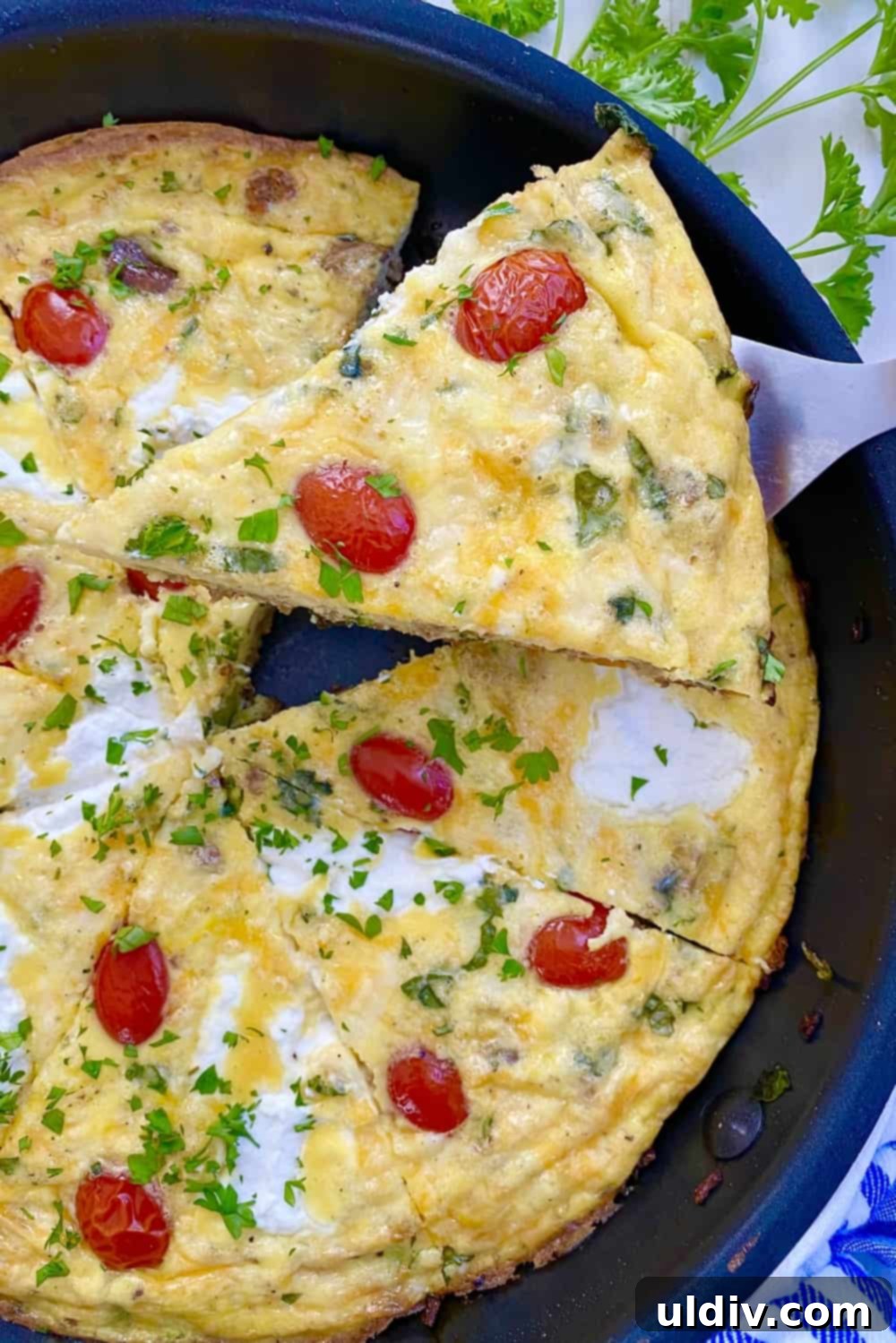
What is a Baked Frittata? The Ultimate Crustless Quiche Explained
If you’re a devoted fan of quiche but prefer a lighter, simpler, and equally flavorful option, then you are going to absolutely adore this easy recipe for a baked frittata. Think of it as a sophisticated, yet fuss-free, crustless quiche that delivers all the creamy, savory goodness without the extra steps of preparing a pastry. An oven-baked frittata is renowned for its quick preparation time and its incredible one-pan convenience. This means less time scrubbing dishes and more time enjoying your culinary creation!
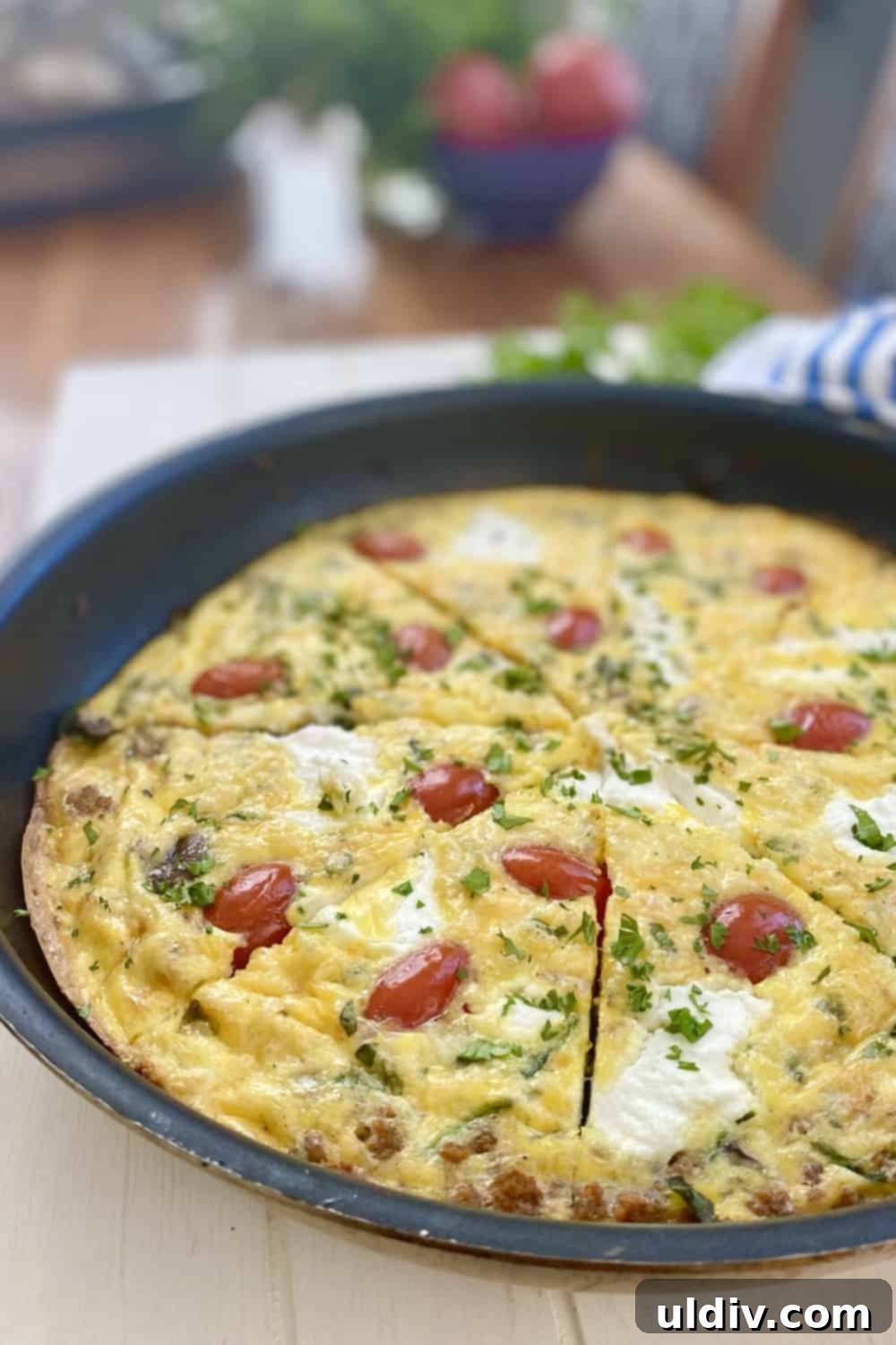
At its core, a frittata is an Italian egg-based dish similar to an omelette or quiche, but with the added ingredients thoroughly mixed into the egg mixture before cooking, rather than folded in at the end. Our baked version takes this convenience a step further by finishing the cooking process in the oven, ensuring an evenly cooked, fluffy texture throughout. It begins with savory cooked breakfast sausage and tender sautéed vegetables, which are then lovingly combined with a rich mixture of beaten eggs, a touch of heavy cream for luxurious texture, and a generous blend of cheeses. This delightful concoction is then baked to perfection in the oven, transforming into a golden-brown, custardy dish in approximately 30 minutes.
One of the most appealing aspects of a frittata is its serving versatility. It’s absolutely delicious served warm straight from the oven, offering a comforting embrace. Yet, it also holds its charm beautifully at room temperature or even chilled, making it an ideal candidate for meal prep, picnics, or easy grab-and-go options. This adaptability makes it perfect for any meal occasion, from a casual weekday breakfast to an elegant weekend brunch spread, or even a light and satisfying dinner paired with a fresh salad.
Furthermore, the frittata is a remarkably versatile dish that encourages culinary creativity. It’s an excellent way to utilize almost any vegetable or cooked breakfast meat you might have on hand. Consider it your secret weapon for clearing out that overflowing vegetable crisper drawer in your refrigerator. From wilted greens to leftover roasted veggies, nearly anything can find a delicious home in a frittata. Below, we’ll delve into some of our favorite frittata variations and ingredient combinations, but remember, the only limit is your imagination!
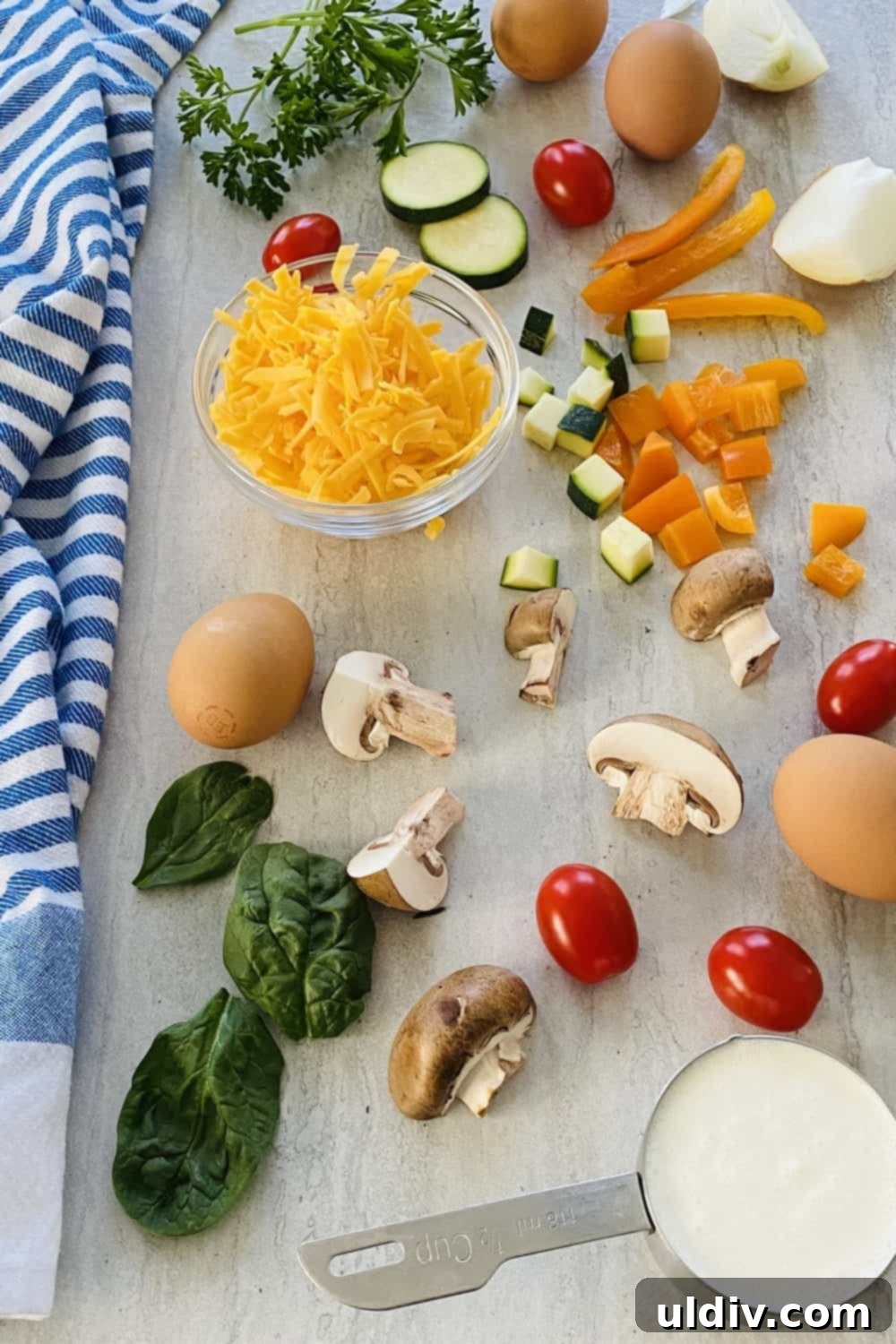
Essential Ingredients for Your Perfect Baked Frittata
My cherished recipe for baked frittata is not just a meal; it’s an opportunity to create something wonderful while simultaneously decluttering your refrigerator’s vegetable drawer. It’s a fantastic solution for using up those lingering odds and ends of produce. While I’ve included my tried-and-true frittata ingredient combinations below, I wholeheartedly encourage you to think of this list as a flexible guideline. Feel free to unleash your inner chef and substitute with your favorite vegetables, an assortment of complementary cheeses, and any breakfast meats to craft a truly personalized frittata that perfectly suits your taste and what you have on hand.
Here are the core ingredients that form the foundation of our delightful frittata:
- Large Eggs: The star of the show! Use fresh, high-quality eggs for the best flavor and texture.
- Heavy Cream: Adds richness and helps create that wonderfully custardy texture. A splash of milk or half-and-half can be substituted for a lighter option.
- Dijon Mustard: A secret weapon! Just a teaspoon adds a subtle tang and depth of flavor that elevates the entire dish without making it taste like mustard.
- Kosher Salt & Freshly Ground Black Pepper: Essential seasonings to bring out the best in all the ingredients. Adjust to your preference.
- Fresh Basil: Offers a bright, aromatic lift. If fresh basil isn’t available, a smaller amount of dried basil works well, too – remember dried herbs are more potent.
- Cheddar and Monterey Jack Cheeses: A fantastic combination! Sharp cheddar provides robust flavor, while Monterey Jack melts beautifully and offers a milder creaminess. Feel free to experiment with other melting cheeses like Gruyere, Swiss, or mozzarella.
- Breakfast Sausage: Adds savory, hearty flavor and texture. You can use mild, hot, or even turkey sausage. Ensure it’s fully cooked and crumbled before adding.
- Zucchini: A tender vegetable that cooks quickly and adds a fresh touch.
- Mushrooms: Earthy and savory, mushrooms are a classic frittata addition.
- Onions: Provides a foundational aromatic flavor when sautéed.
- Bell Peppers: Adds sweetness, color, and a slight crunch. Any color works!
- Cherry Tomatoes: Halved cherry tomatoes burst with juicy flavor when baked, adding a lovely acidity.
- Ricotta Cheese: Dollops of creamy ricotta swirled on top before baking create pockets of rich, smooth texture, offering a delightful contrast to the firmer frittata.
- Fresh Parsley: Perfect for a vibrant garnish, adding a hint of freshness just before serving.
Cooking Video: Visual Guide to Your Frittata Journey
For those who learn best by seeing, this cooking video provides a step-by-step visual demonstration of how to prepare this incredible baked frittata. Watch as the ingredients come together and transform into a culinary delight.
Mastering the Art: How to Make the Best Frittata
Crafting a perfect frittata is surprisingly simple, even for novice cooks, and the cleanup is an absolute breeze. The beauty of this egg, vegetable, and breakfast sausage frittata is that it’s cooked and served right in a single nonstick sauté pan, eliminating the need for multiple dishes and making it an ideal weeknight meal or a convenient brunch option.
Let’s break down the process into easy-to-follow steps:
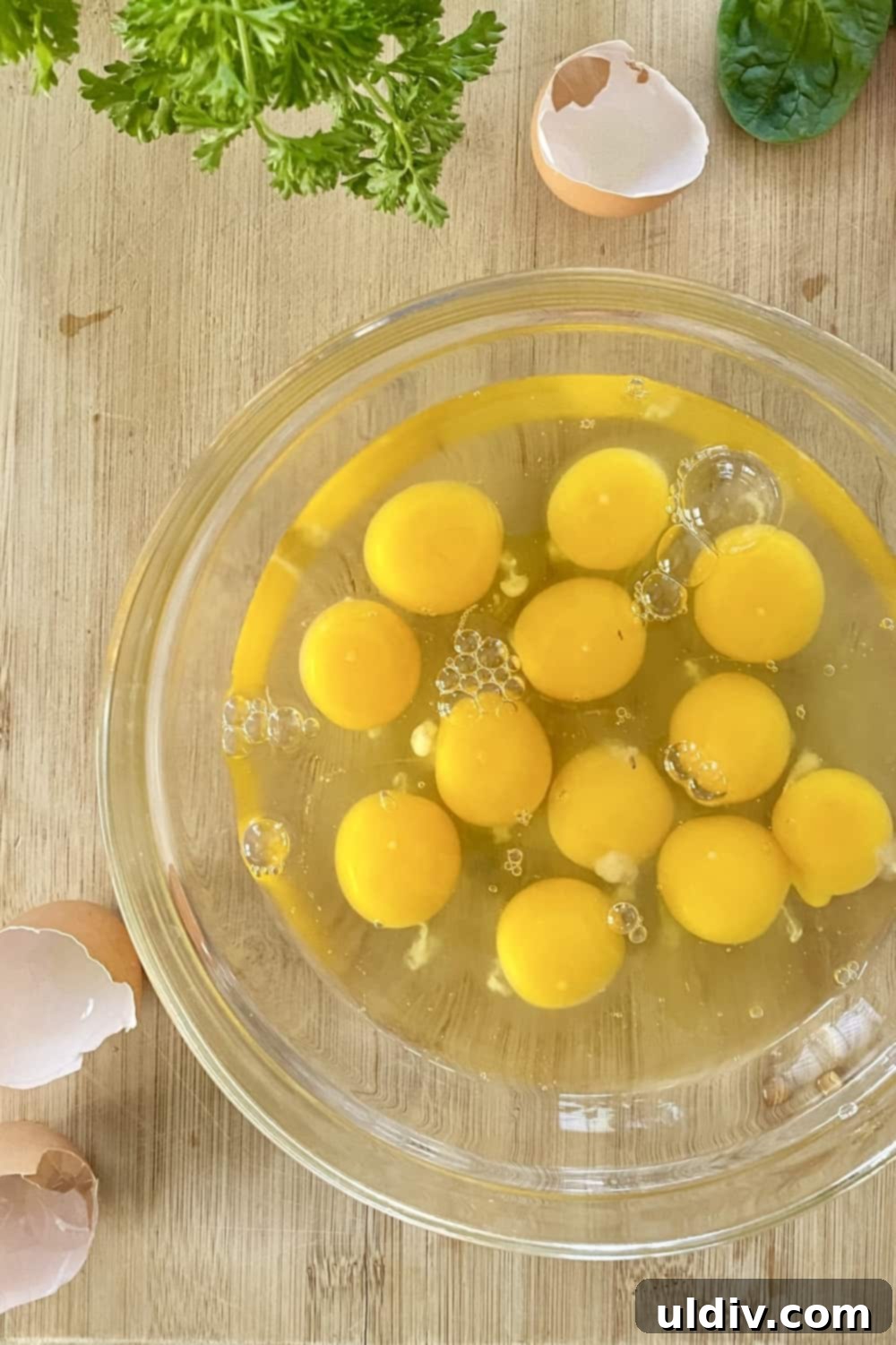
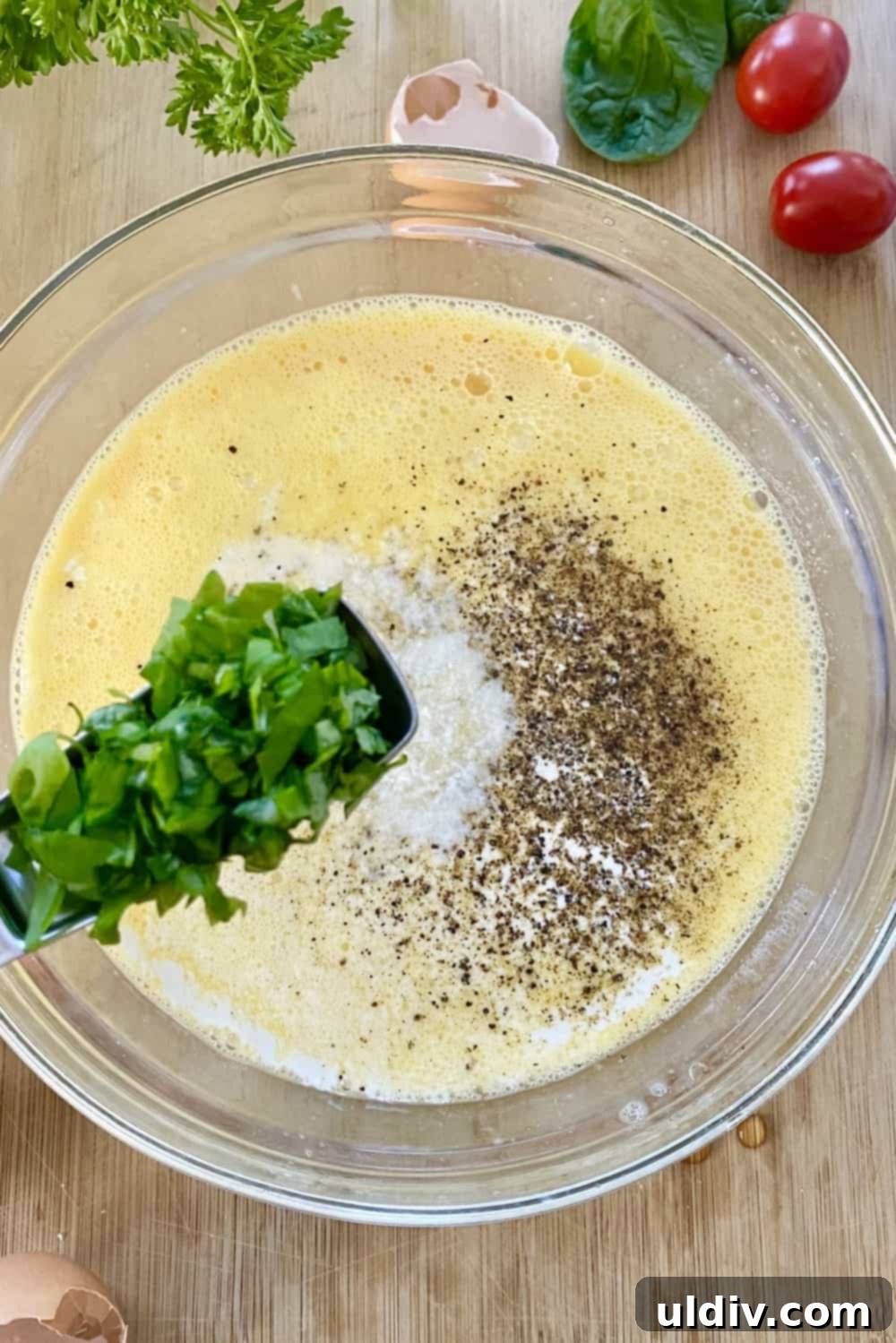
- Prepare the Egg Mixture: Begin by whisking your large eggs until they are light and frothy. This aeration is key to a fluffy frittata. Next, stir in the heavy cream, Dijon mustard, kosher salt, freshly ground black pepper, vibrant fresh basil (or its dried counterpart), and your choice of shredded cheeses. Ensure everything is well combined, then set this flavorful mixture aside.
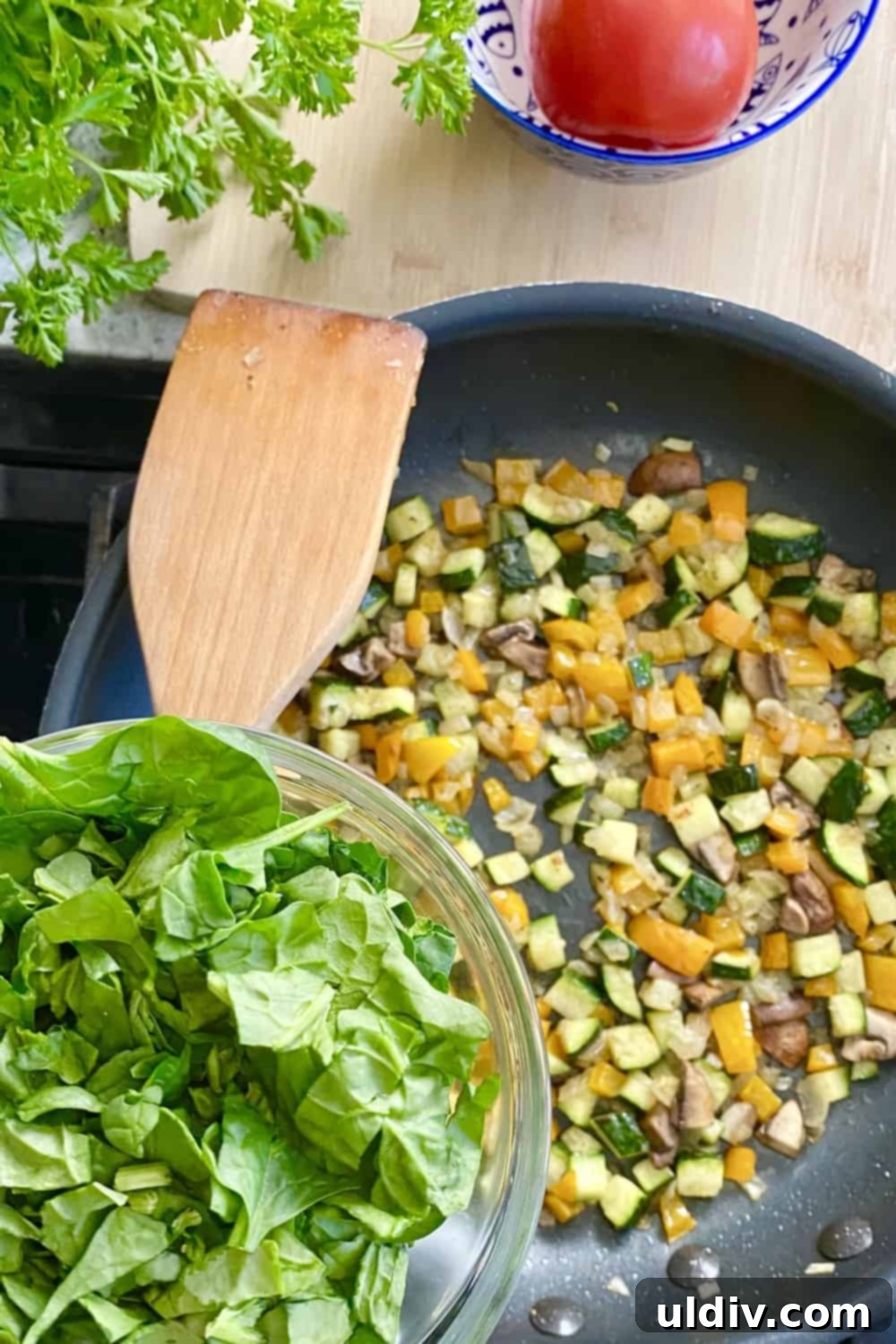
- Sauté the Breakfast Sausage and Vegetables: In a high-quality nonstick sauté pan (or a well-seasoned cast iron skillet), cook your chosen breakfast sausage until it’s browned and fully cooked through. Once done, remove the sausage from the pan, leaving behind a small amount of the flavorful rendered fat. In the same pan, using the residual grease, sauté your chopped vegetables until they are tender-crisp. Pre-cooking the vegetables is crucial to prevent a watery frittata and ensure they are perfectly tender.
- Combine All the Delicious Ingredients: Once your sausage is cooked and your vegetables are softened, return the breakfast sausage to the sauté pan. Evenly spread the combined sausage and cooked veggies across the bottom of the pan. Then, gently pour the prepared egg mixture over this savory base.
- Bake the Frittata to Perfection: Carefully transfer your sauté pan directly into a preheated oven. The frittata will bake until the eggs are set and slightly golden around the edges. This baking step ensures a fluffy, evenly cooked interior.
By diligently following these straightforward steps, you are guaranteed to achieve a consistently delicious baked frittata every single time, perfect for any meal of the day.
Chef Tips for Crafting the Ultimate Baked Frittata Recipe
Achieving frittata perfection is easy with these expert tips. Follow these guidelines to ensure your baked frittata is consistently flavorful, perfectly textured, and a true delight for any meal:
- Embrace a Variety of Cheeses: Don’t limit yourself to a single cheese! I find that combining different cheeses adds layers of flavor and a more complex texture to the frittata. For instance, sharp cheddar and creamy Monterey Jack cheeses melt beautifully and integrate seamlessly into the baked egg mixture, providing both a tangy bite and a smooth finish. For an extra touch of gourmet elegance and a delightful textural contrast, add a few dollops of creamy ricotta cheese on top of the frittata before baking. These pockets of rich, unsalted cheese will create bursts of velvety goodness throughout the dish.
- Strategic Vegetable Drawer Cleaning: Frittatas are truly a culinary hero for minimizing food waste. They offer a fantastic opportunity to use up any vegetables that are “hanging out” in your refrigerator and might otherwise go overlooked. This recipe typically calls for about 4 cups of chopped vegetables, but feel free to adjust based on what you have. Some incredibly tasty produce options that shine in a frittata include nutrient-rich broccoli florets, earthy mushrooms, tender zucchini, vibrant yellow squash, colorful bell peppers (red, yellow, or orange work wonderfully), sweet onions, pungent scallions, finely shredded Brussels sprouts, fresh spinach, and delicate asparagus tips. Remember to chop your vegetables into roughly ½ inch pieces to ensure even cooking and a pleasant texture in the final dish.
- Choose the Right Pan – Nonstick or Cast Iron: The right cookware is crucial for a perfectly baked frittata. A 12-inch oven-safe pan is ideal for this recipe, providing enough surface area for the ingredients without being too shallow or too deep. My go-to is a reliable nonstick sauté pan, which makes for effortless cooking and, most importantly, easy removal of the frittata once baked. Alternatively, a well-seasoned cast iron skillet also works wonderfully, offering excellent heat retention and a beautiful crust. Just ensure your chosen pan is indeed oven-safe!
- Always Precook Your Vegetables: This step is non-negotiable for a superior frittata. Vegetables naturally contain a high percentage of water. If you incorporate uncooked vegetables directly into your frittata, that water will release during baking, leading to a watery, soggy, and unappetizing baked egg dish. Sautéing the vegetables beforehand helps to evaporate much of this excess moisture, concentrate their flavors, and tenderize them slightly. This crucial step ensures your frittata has a firm yet creamy consistency when baked, rather than being thin and watery.
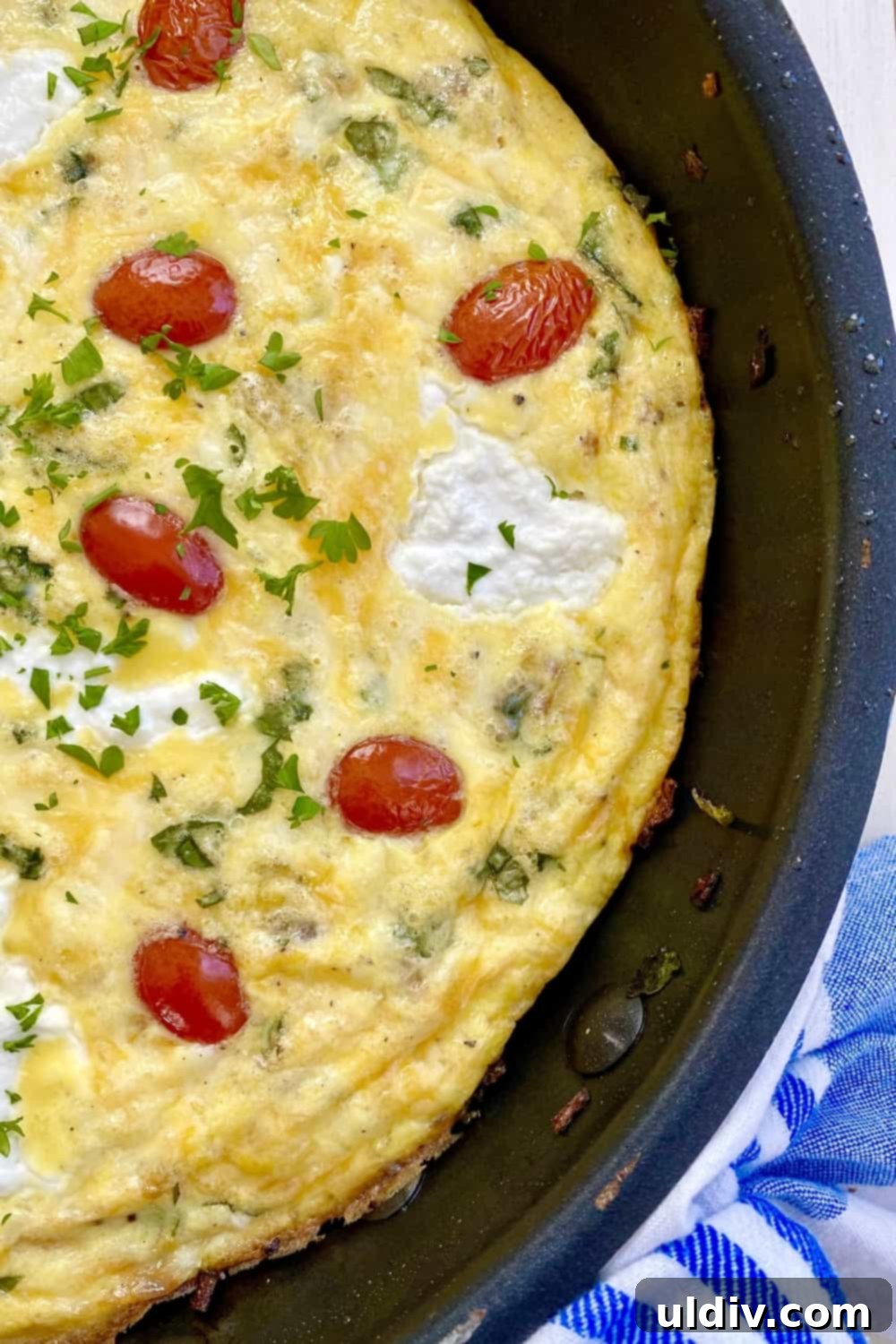
- Avoid Overcooking the Baked Frittata: Overcooked eggs can become rubbery and lose their delicate texture. If your frittata emerges from the oven with a deep golden-brown top, it’s a strong indicator that it has likely been overcooked. My foolproof method for achieving a perfectly cooked frittata is to rely on an instant-read digital thermometer. Insert the thermometer into the center of the frittata; the ideal internal temperature for a just-baked frittata should be precisely 160 degrees F (71 degrees C). At this point, the edges will be beautifully set and slightly browned, while the center will be just barely set, with a slight, gentle jiggle when the pan is moved. This indicates a moist, tender, and perfectly cooked interior.
Exciting Frittata Variations to Ignite Your Culinary Creativity
The beauty of a frittata is its incredible versatility, allowing you to easily switch up ingredients based on your preferences, what’s in season, or what you have leftover. Here are some inspiring variations to spark your imagination, each offering a distinct flavor profile:
- Southwestern Fiesta Frittata: Combine vibrant bell peppers, a kick of spicy jalapeños (deseeded for less heat, or left in for a fiery punch), sweet corn kernels, savory onions, and creamy pepper jack cheese for a frittata with a lively Tex-Mex flair. A sprinkle of cilantro would be a perfect finish.
- Mediterranean Dream Frittata: Transport your taste buds to the Mediterranean with marinated artichoke hearts, intensely flavored sun-dried tomatoes (oil-packed are best), fresh spinach, and salty, tangy feta cheese. Olives or a drizzle of good quality olive oil would enhance this further.
- Classic American Brunch Frittata: A hearty and universally loved combination featuring crispy crumbled bacon, sharp cheddar cheese, tender spinach, and juicy diced tomatoes. The flavors here are comforting and familiar, perfect for a traditional breakfast or brunch.
- Ham and Swiss Elegance Frittata: A sophisticated choice that brings together savory diced ham, thinly sliced onions, and nutty Swiss cheese. This combination evokes the flavors of a classic quiche Lorraine, but in a crustless format.
- Broccoli and Bell Pepper Duo Frittata: A vibrant and healthy option with tender broccoli florets, sweet red bell peppers, and melting Monterey Jack cheese. This pairing is visually appealing and full of fresh flavors.
- Sausage and Mozzarella Delight Frittata: For a robust and Italian-inspired dish, mix breakfast sausage (or Italian sausage, crumbled and cooked), colorful bell peppers, sautéed onions, and gooey mozzarella cheese. This variation is particularly satisfying and rich.
Don’t be afraid to experiment with different herb combinations, spice blends, and even a dash of hot sauce to make these variations truly your own!
Perfect Pairings: What to Serve with Frittata
One of the most remarkable qualities of a baked frittata is its incredible versatility; it truly shines at any meal, effortlessly transitioning from breakfast to dinner. Its rich and savory profile pairs beautifully with a wide array of side dishes, allowing you to tailor your meal to the occasion and your personal cravings. Whether you’re aiming for a light accompaniment or a more substantial spread, the frittata is an ideal partner.
For a refreshing and light contrast, especially for breakfast, brunch, or lunch, consider serving your baked egg dish with a simple green salad dressed with a bright balsamic vinaigrette. The crispness of fresh greens and the tangy dressing cut through the richness of the frittata perfectly. To add more texture and intriguing flavors, this delightful melon and fresh mozzarella salad offers a sweet and savory balance that complements the eggs beautifully. If you’re seeking a heartier, yet still healthy option, my vibrant healthy chickpea salad provides protein and fiber, making for a very satisfying meal. For something a little different, a fruity quinoa salad with grapes and pine nuts adds an unexpected sweetness and a lovely chewiness. And for a low-carb, flavor-packed alternative to rice, my tasty cauliflower rice pilaf is a wonderful choice that won’t leave you feeling heavy. Pair with a fresh fruit platter, toasted artisan bread, or even a mimosa for a complete and memorable meal.
Storage and Reheating Tips for Your Baked Frittata
A baked frittata isn’t just delicious fresh from the oven; it’s also a fantastic make-ahead meal. To store any leftovers, allow the frittata to cool completely to room temperature. Then, cover it tightly with plastic wrap or transfer slices to an airtight container. It will keep beautifully in the refrigerator for up to 3-4 days. This makes it perfect for quick breakfasts or lunches throughout the week!
When it comes to reheating, you have a few excellent options. For individual slices, a quick zap in the microwave for 30-60 seconds (or until heated through) is often the fastest. If you prefer a slightly crisper texture, especially for the edges, reheat slices in a preheated oven at 300°F (150°C) for about 10-15 minutes, or in a toaster oven. Alternatively, a nonstick pan on the stovetop over medium-low heat with a lid for a few minutes can also yield excellent results. Avoid overheating, as this can dry out the eggs.
Just One More Thing: Your Feedback Matters!
I genuinely hope you thoroughly enjoy preparing and tasting my Easy Recipe for Baked Frittata. Your culinary adventures bring me so much joy, and I absolutely love hearing from you all! Please take a moment to leave a comment below and/or give this recipe a star rating. I make a diligent effort to reply to every single one of your thoughtful comments, as your feedback is invaluable.
And if you’re feeling inspired, please snap a photo of your magnificent frittata and post it to Instagram! Don’t forget to tag @amycaseycooks. I love seeing all your beautiful creations and will often add your photos to my Insta stories to share the inspiration with our community. Your culinary prowess deserves to be celebrated!
Also, be sure to check out my Facebook and Pinterest pages. They are brimming with lots of fabulous foodie stories, engaging videos, practical cooking tips, and, of course, many more delicious recipes designed to inspire your kitchen endeavors.
Recipe
Easy Recipe for Baked Frittata
Print
Pin
Rate
Equipment
-
nonstick sauté pan
Ingredients
- 12 large eggs
- ½ cup heavy cream
- 1 teaspoon Dijon mustard
- 1 teaspoon kosher salt
- ½ teaspoon pepper
- 2 tablespoons chopped fresh basil or 1 teaspoon dried basil
- ½ cup shredded sharp cheddar cheese
- ½ cup shredded Monterey jack cheese
- 1 pound breakfast sausage
- 4 cups chopped vegetables – ½ inch dice ~ mushrooms zucchini, onion, peppers
- 1 cup packed fresh spinach
- 8 to 10 cherry tomatoes cut in half
- ½ cup ricotta cheese
- fresh parsley for garnish
Instructions
-
Preheat oven to 375 degrees F.
-
In a large bowl, crack and whisk the eggs thoroughly until light and frothy. Stir in the heavy cream, Dijon mustard, kosher salt, pepper, basil, and shredded cheeses until well combined. Set this flavorful egg mixture aside.
-
In an ovenproof 12-inch nonstick sauté pan (or a well-seasoned cast iron skillet) over medium heat, add the breakfast sausage. Using a spatula or wooden spoon, break up the sausage as it cooks, ensuring it crumbles into small, even pieces. Continue to cook the sausage until it is fully browned and cooked through, which should take approximately 6-8 minutes. Once cooked, remove the sausage from the pan, leaving behind about 2 tablespoons of the flavorful rendered grease. Discard any remaining excess grease.
-
In the same pan, over medium-low heat, add the 4 cups of chopped vegetables. Sauté the vegetables for 6-8 minutes, stirring occasionally. The goal is for the vegetables to be cooked about halfway through, still retaining some of their shape and a tender-crisp texture, not mushy. This step is crucial for preventing a watery frittata.
-
Add the fresh spinach to the pan with the other vegetables and continue to sauté until the spinach has completely wilted down, which should only take a couple of minutes.
-
Return the cooked breakfast sausage to the pan with the sautéed vegetables and spinach. Stir everything together gently to ensure all the ingredients are evenly distributed over the bottom of the pan.
-
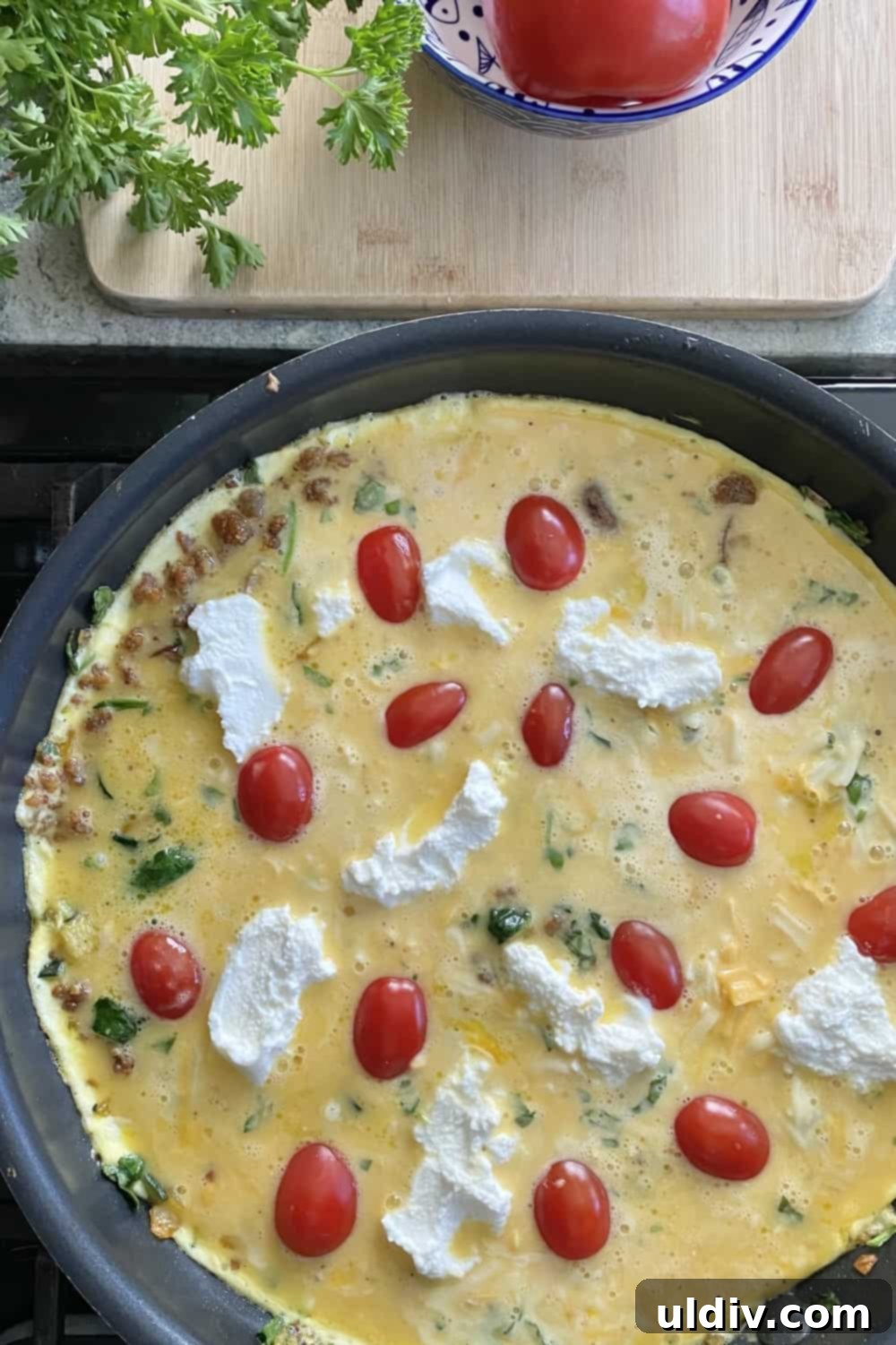
Slowly and carefully pour the prepared egg mixture over the vegetables and sausage in the pan, ensuring it evenly coats all the ingredients.
-
Arrange the cherry tomato halves on top of the frittata, distributing them evenly. Then, add tablespoon-sized dollops of ricotta cheese across the top, creating delightful creamy pockets. Continue to cook the frittata on the stovetop over medium-low heat for about 2 minutes. During this time, you should see the edges of the frittata just begin to set and cook.
-
Carefully transfer the entire pan into the preheated oven. Bake for 15-20 minutes, or until the internal temperature reaches 160 degrees F (71 degrees C) when checked with an instant-read thermometer. The eggs should be just set, and the center should have only a slight, barely perceptible jiggle. Avoid overbaking to maintain a tender, moist texture.
-
Once baked, remove the frittata from the oven. Allow it to rest for about 5 minutes in the pan before carefully slicing it into wedges and serving. This resting period helps the frittata set completely and makes for cleaner cuts.
Notes
- Use a variety of cheeses ~ I like to combine different cheeses in a frittata. Cheddar and Monterey Jack melt fabulously into the baked egg dish. A few dollops of creamy ricotta on the top of the frittata is a nice contrast of textures.
- Clean out your veggie drawer ~ Frittatas are a wonderful dish to use up the vegetables hanging out in the refrigerator. The recipe uses 4 cups of chopped veggies. Some tasty produce to add to a frittata are broccoli, mushrooms, zucchini, yellow squash, bell peppers, onions, scallions, shredded Brussels sprouts, spinach, and asparagus. Be sure to chop the veggies in about ½ inch pieces.
- Use a nonstick or cast iron pan ~ A 12 inch pan is perfect for this baked frittata recipe. This nonstick sauté pan is my go to for cooking.
- Precook the vegetables ~ Vegetables are mostly water. Uncooked vegetables in a frittata will result in a watery baked egg dish. Sautéing the vegetables before cooking them in the frittata results in the perfect consistency when baked.
- Don’t overcook the baked frittata ~ If a frittata is golden brown on top after it is baked, it is likely overcooked. My foolproof method for a perfectly cooked frittata is to use an instant read digital thermometer. The internal temperature of a just baked frittata should be 160 degrees F. The edges will be slightly brown and the center will be just set with a jiggle.