
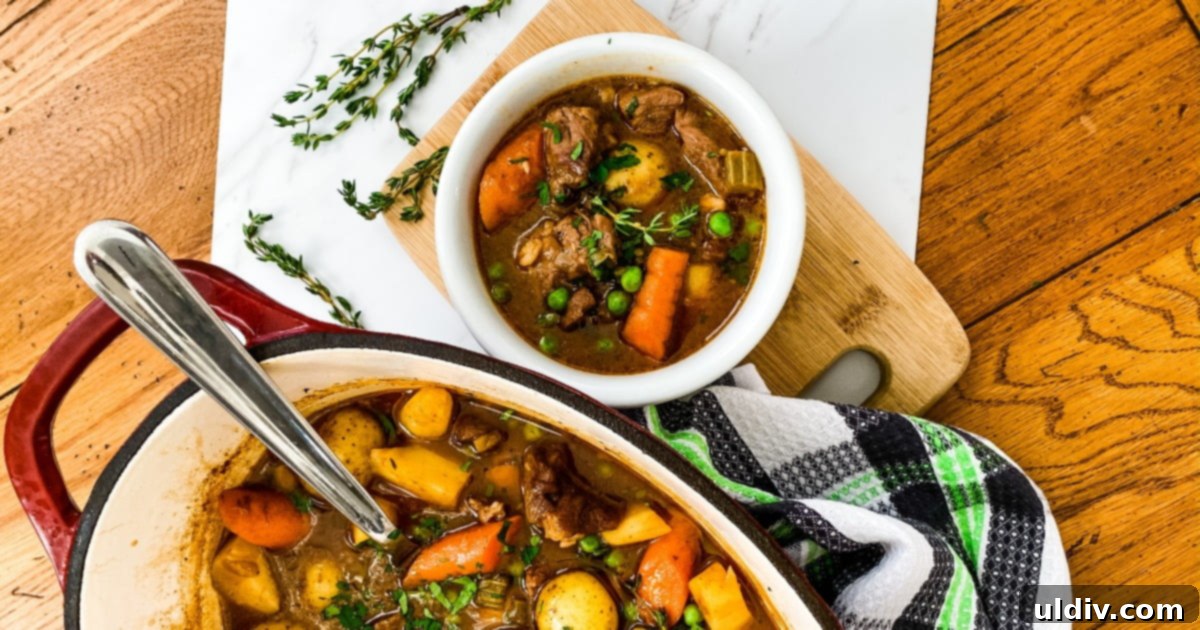
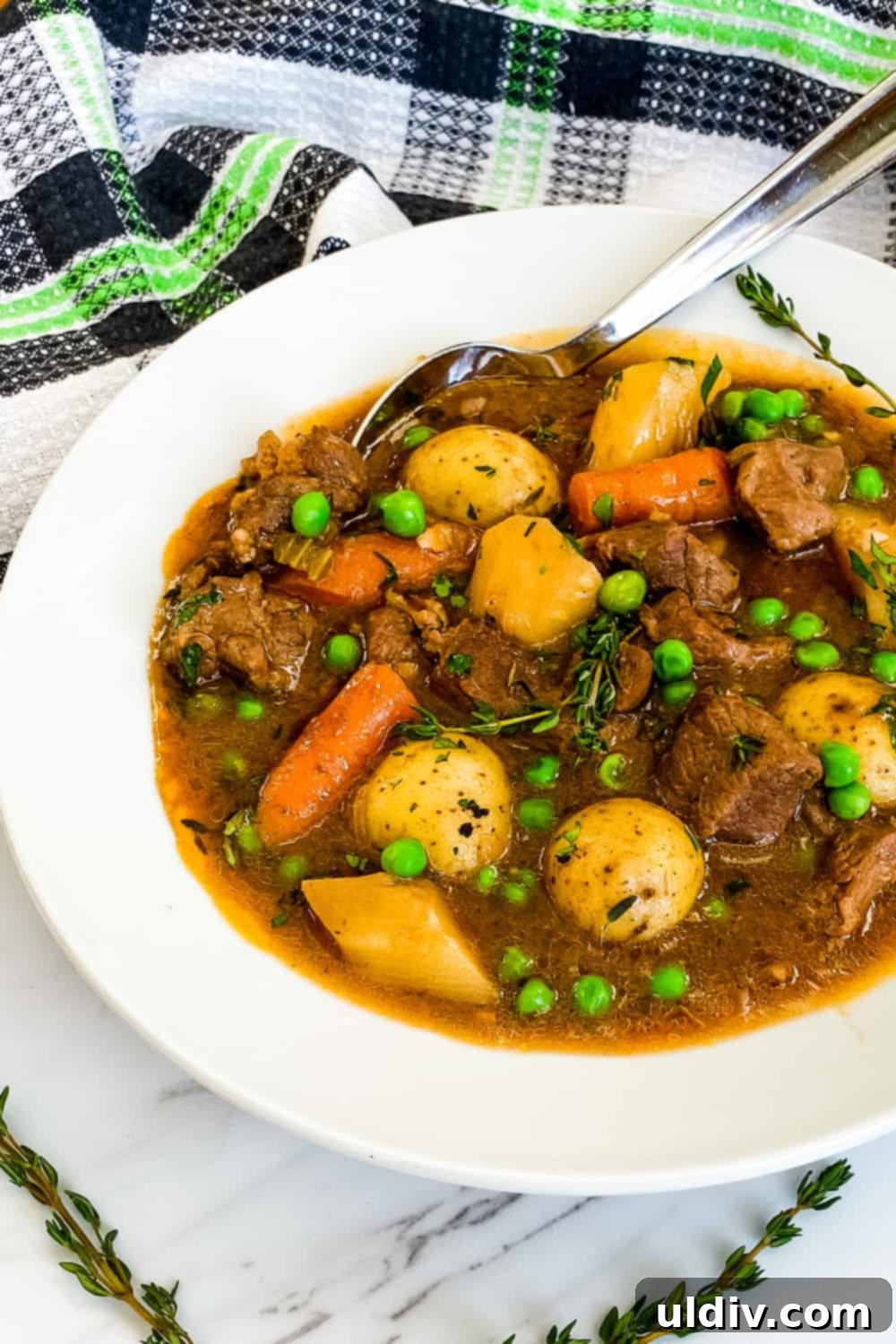
Step into a world of heartwarming flavors with an absolute classic: Irish Lamb Stew with Guinness. This iconic dish isn’t just a meal; it’s an experience, a celebration of comfort food perfect for gathering with loved ones, especially during the festive St. Patrick’s Day season. Imagine tender, succulent lamb, generously diced carrots, earthy parsnips, hearty potatoes, and sweet green peas, all submerged in a rich, dark gravy infused with the distinctive character of Guinness stout. This isn’t merely an Irish stew recipe; it’s widely regarded as the best way to prepare this timeless, deeply satisfying culinary masterpiece.
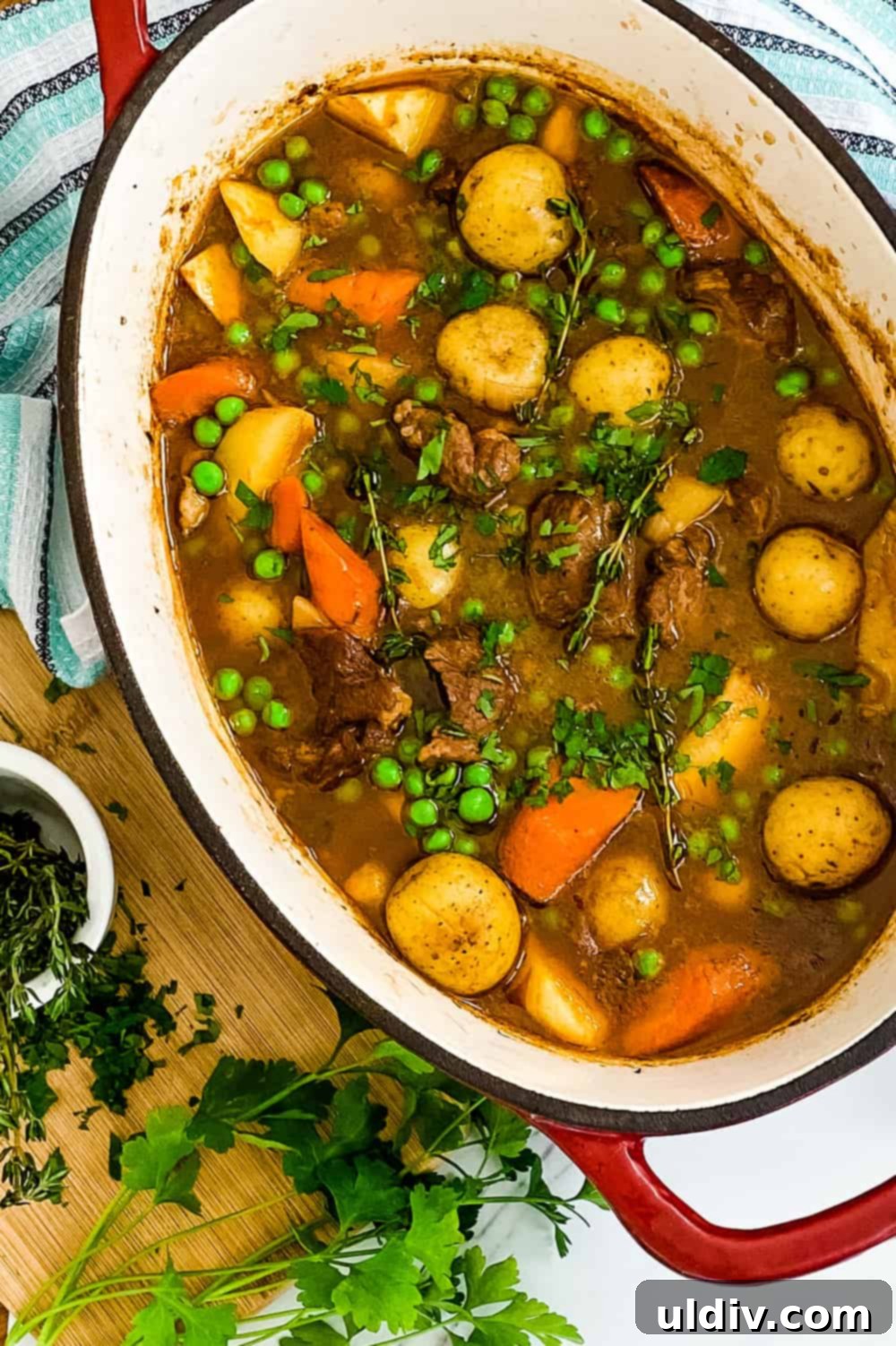
For many, cooking is a true labor of love, a joyous act of preparing delicious food to nourish family and friends. This hearty Irish lamb stew holds a special place in my kitchen, particularly as the vibrant spirit of St. Patrick’s Day approaches. It’s more than just a recipe; it’s the ultimate embodiment of comfort food, promising warmth, flavor, and cherished memories around the dinner table.
While this traditional Irish stew recipe does require a dedicated amount of time, every moment spent in its creation is profoundly rewarding. The secret lies in allowing the lamb shoulder cubes to slow-cook to an exquisite tenderness, transforming them into melt-in-your-mouth morsels. Simultaneously, the sauce simmers down, developing into a rich, savory, and subtly sweet stout-infused gravy that perfectly complements the tender chunks of carrots, parsnips, potatoes, and bright green peas. This patient cooking process ensures a depth of flavor that simply cannot be rushed, creating a truly unforgettable meal.
Hearty stews are always a welcome sight at our dinner table, no matter the season. Beyond family favorites like our Homestyle Pork Tenderloin Stew, the zesty Instant Pot Spicy Asian Beef Stew, and the more luxurious Beef Tenderloin Stew, this Guinness-infused Irish lamb stew stands out as a beloved classic in our home. I am confident that once you experience its rich flavors and comforting embrace, it will quickly become a cherished recipe in your repertoire too.
Why This Irish Lamb Stew Will Become Your New Favorite
There’s nothing quite as satisfying as a perfectly executed stew, and this Irish Lamb Stew with Guinness is designed to captivate your taste buds and become a beloved staple. Here are just a few compelling reasons why this recipe is an absolute keeper:
- Effortlessly Simple Preparation ~ Despite its complex flavor profile, this stew is surprisingly easy to make. With just a few straightforward steps, the most challenging part is simply allowing it enough time to simmer and develop its incredible depth. It’s a rewarding dish that doesn’t demand advanced culinary skills.
- A Distinctive Flavor Experience ~ Unlike its beef-based counterparts, this Irish lamb stew offers a unique and nuanced flavor. The lamb provides a subtly richer, more gamey note, while the Guinness stout introduces a toasted, malty sweetness and a profound savory depth to the sauce, setting it apart from other stews.
- Budget-Friendly Comfort ~ Crafting an authentic Irish lamb stew doesn’t have to break the bank. Lamb shoulder, the ideal cut for this recipe, is significantly more economical than pricier cuts like leg of lamb or rack of lamb, yet it delivers exceptional flavor and incredible tenderness when slow-cooked, making it a smart choice for a hearty family meal.
- Unbeatable Leftovers ~ One of the hallmarks of a truly great stew is how it transforms overnight. After a day or two in the refrigerator, the flavors in this Irish lamb stew meld and deepen even further, creating an even more delicious and cohesive dish. It’s the perfect make-ahead meal for busy weeknights or for enjoying throughout the week.
- The Ultimate Crowd-Pleaser ~ Whether you’re hosting a St. Patrick’s Day celebration, a casual family dinner, or simply craving a comforting meal, this stew is guaranteed to be a hit. Its rich flavors and tender ingredients appeal to a wide range of palates, making it a perfect choice for any occasion.
- Nourishing and Wholesome ~ Packed with lean lamb, an array of root vegetables, and nutrient-rich peas, this stew offers a balanced and wholesome meal. It’s hearty without being heavy, providing sustained energy and warmth.
Essential Ingredients & Smart Substitutions for Irish Lamb Stew
Crafting the perfect Irish Lamb Stew with Guinness begins with selecting the right ingredients. Each component plays a crucial role in building the stew’s signature flavor and texture. Here’s a detailed guide to the ingredients you’ll need, along with helpful substitutions to ensure you can make this delicious dish regardless of what’s in your pantry. For precise quantities, always refer to the full recipe card below.
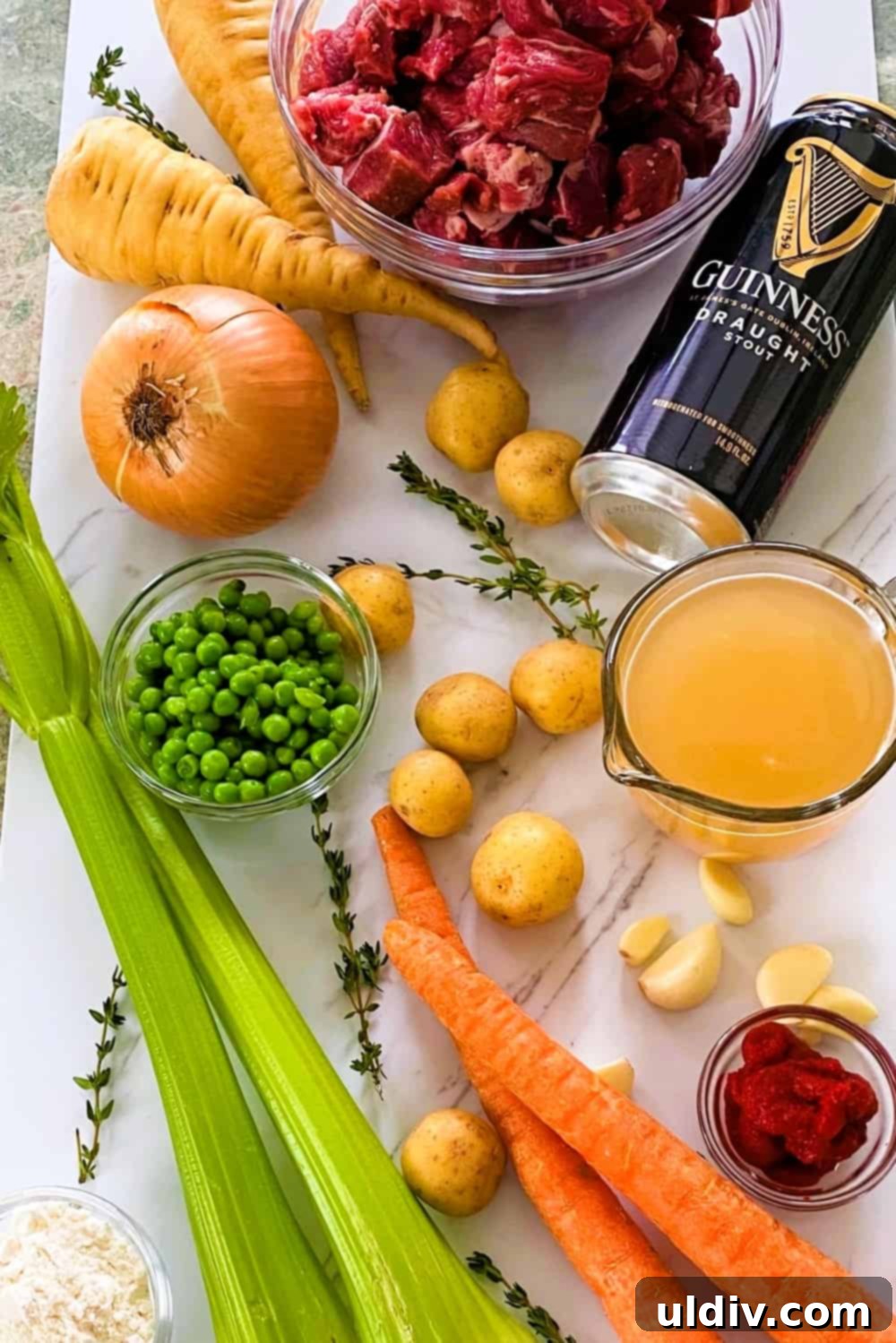
- Olive Oil: Used for searing the lamb and sautéing the aromatics. A good quality olive oil enhances the initial flavors.
- Substitution: Any neutral cooking oil like canola oil, vegetable oil, or grapeseed oil will work if olive oil isn’t available.
- Lamb Shoulder: This is the star of the show. Lamb shoulder is ideal for stewing due to its marbling and connective tissue, which break down during slow cooking to become incredibly tender and flavorful. Cuts like leg of lamb or lamb chops are better suited for grilling or roasting.
- Substitution: If lamb is not preferred or available, beef chuck roast is a common alternative for stews, though it will change the traditional “Irish lamb stew” character.
- Kosher Salt: Essential for seasoning the lamb and vegetables, kosher salt has a larger grain and a less intense saltiness than table salt, allowing for more controlled seasoning to enhance the food’s natural flavors.
- Substitution: Fine sea salt can be used, but you may need to adjust quantities as it is saltier by volume.
- Freshly Ground Black Pepper: Provides a robust, aromatic spice that is far superior to pre-ground pepper.
- Substitution: Pre-ground black pepper can be used in a pinch, but for the best flavor, fresh is highly recommended.
- All-Purpose Flour: Used to coat the seared lamb, it helps to thicken the stew and creates a rich, glossy gravy.
- Substitution: For a gluten-free option, cornstarch (slurried in cold water) or a gluten-free flour blend can be used for thickening at the end of cooking.
- Yellow Onion: A foundational aromatic that provides a sweet and savory base flavor.
- Substitution: Vidalia, white onion, or even red onion (though it might impart a slightly different color) can be used. Shallots could also work for a milder, sweeter flavor.
- Celery: Adds a subtle, savory freshness and essential aromatic depth to the stew.
- Substitution: Fennel can be a creative alternative, offering a slightly anise-like flavor that pairs well with lamb.
- Garlic Cloves: A must-have for almost any savory dish, garlic brings pungent, aromatic notes that round out the flavor profile.
- Substitution: Garlic powder can be used (about ¼ teaspoon per clove), but fresh garlic offers superior flavor.
- Tomato Paste: Concentrated tomato paste adds umami depth, a slight acidity, and helps to create a rich color in the gravy.
- Substitution: A splash of red wine or a tiny bit of sundried tomato paste can offer similar depth.
- Guinness Stout: The quintessential ingredient that defines this “Guinness” stew. It imparts a unique roasted, malty sweetness and a slight bitterness that complements the lamb and vegetables beautifully, creating an incredibly rich gravy.
- Substitution: For an alcohol-free version, substitute with 2 cups of rich beef stock combined with 1 tablespoon of Worcestershire sauce and a splash of dark molasses (optional, for color and depth).
- Reduced Sodium Beef Stock: Provides the primary liquid base for the stew, contributing savory beef flavor without excessive saltiness.
- Substitution: Regular beef stock can be used, but be sure to adjust the amount of added salt to taste. Vegetable stock or even water could work, but beef stock provides the most robust flavor.
- Fresh Thyme: Adds an earthy, aromatic, and slightly peppery note that is classic in Irish stews.
- Substitution: In a pinch, use 1 teaspoon of dried thyme for every tablespoon of fresh thyme specified. Dried herbs are more potent.
- Carrots: Sweet and vibrant, carrots add essential color, sweetness, and nutrition.
- Substitution: Sweet potatoes could be used for a sweeter, more rustic flavor, or baby carrots for convenience.
- Parsnips: These root vegetables offer a unique, sweet, and slightly spicy flavor that is distinctly Irish and pairs wonderfully with lamb.
- Substitution: More carrots, turnips, or even rutabaga could be used, though the flavor profile will shift slightly.
- Small Potatoes: Essential for a hearty stew, potatoes thicken the broth slightly and provide comforting starch. Small new potatoes can be halved or quartered.
- Substitution: Cubed Russet, Yukon Gold, or red potatoes are excellent alternatives. Choose waxy varieties for less breakdown or starchy ones for a thicker stew.
- Frozen Green Peas: Added at the end, peas bring a pop of vibrant green color and a fresh, sweet flavor.
- Substitution: Fresh shelled peas can be used, or even green beans if preferred, though peas are traditional.
Crafting Your Perfect Irish Lamb Stew: A Step-by-Step Guide
Making this Guinness lamb stew is a rewarding culinary journey that combines simple kitchen tools with high-quality ingredients to produce an extraordinary dish. This overview provides the essential steps, ensuring you achieve the best results. For comprehensive, detailed instructions and a helpful video guide, please refer to the recipe card below.
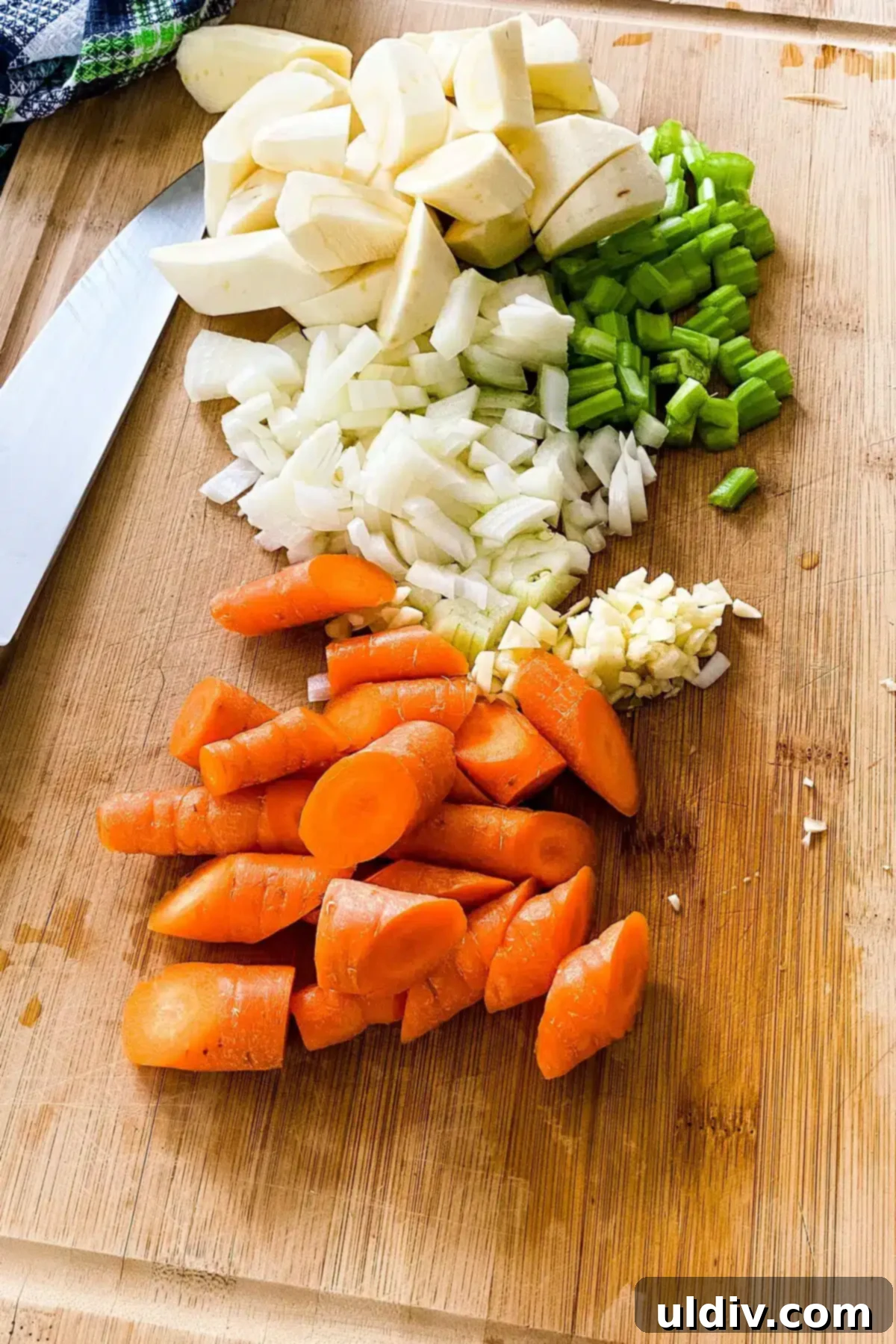
Step 1. Sear the Lamb: Begin by generously seasoning the lamb chunks with kosher salt and freshly ground black pepper. Heat a tablespoon of olive oil in a large Dutch oven or heavy-bottomed pot over medium-high heat. Once the oil shimmers, add the seasoned lamb and sear it on all sides until a beautiful golden-brown crust forms. This step is crucial for developing deep, rich flavors. Remove the browned lamb from the pot and transfer it to a clean bowl.
Step 2. Flour the Lamb: To the bowl of browned lamb, add the all-purpose flour. Toss the meat thoroughly with a spoon until each piece is evenly coated. The flour will help thicken the stew and create a luscious gravy. Set the floured lamb aside.
Step 3. Sauté the Aromatics: Using the same pot, add the remaining tablespoon of olive oil. Introduce the diced yellow onion, chopped celery, and minced garlic. Season these vegetables with another generous pinch of kosher salt and black pepper. Sauté the aromatics over medium heat, stirring occasionally, until they soften and become fragrant, typically about 5 minutes.
Step 4. Incorporate Tomato Paste: Stir in the tomato paste with the softened vegetables. Cook for an additional minute, stirring continuously. This brief cooking time helps to deepen the tomato paste’s flavor and color, adding a rich umami note to the stew.
Step 5. Deglaze and Simmer: Pour in the Guinness stout, beef stock, and add the fresh thyme sprigs. Use a wooden spoon to scrape up any flavorful brown bits that have accumulated at the bottom of the pot – this is called deglazing and adds immense depth to the sauce. Bring the liquid to a gentle boil, then return the floured, browned lamb meat to the pot. Stir to combine all ingredients.
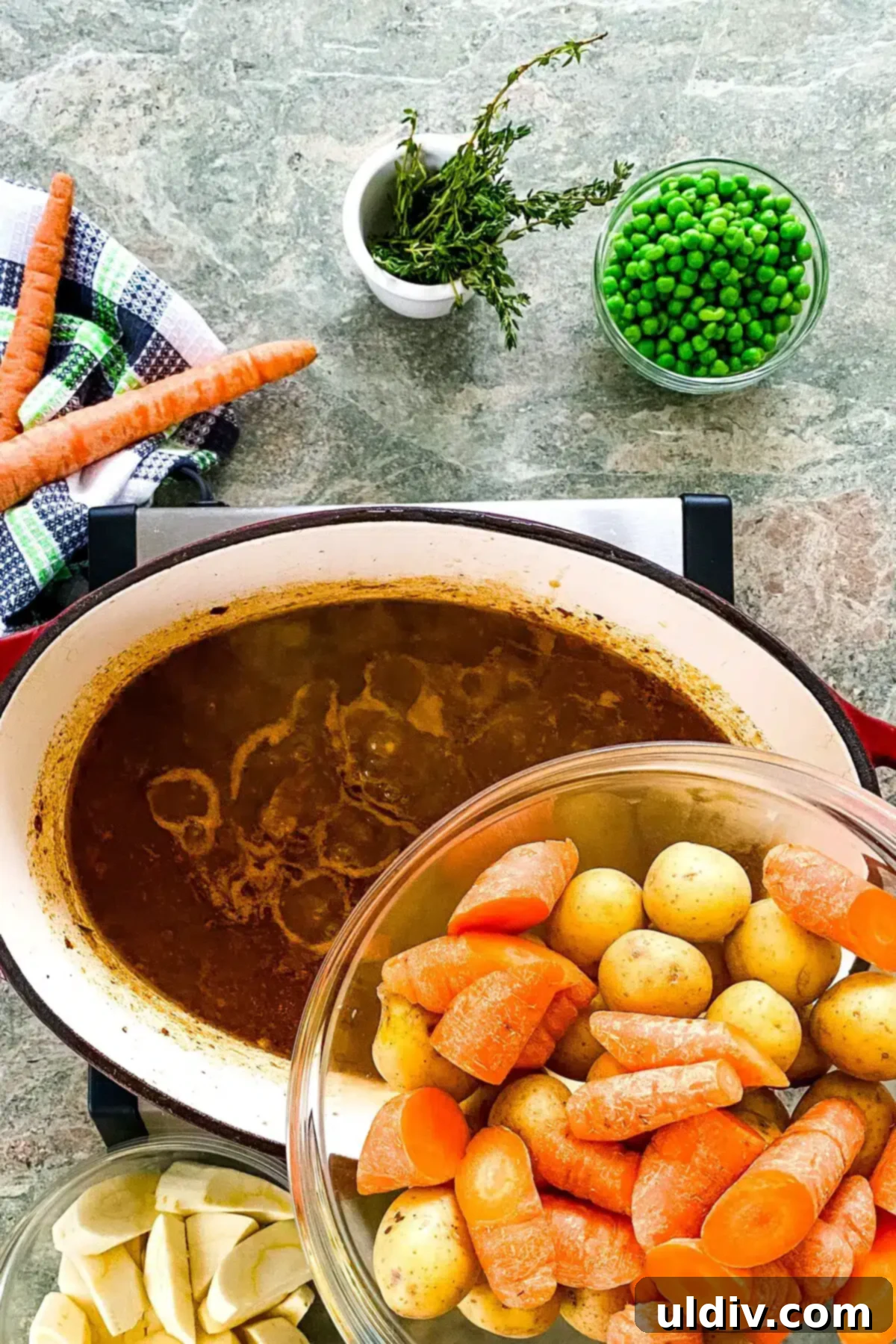
Step 6. Slow Simmer for Tenderness: Cover the pot, reduce the heat to medium-low, and allow the stew to simmer gently for approximately 1 and a half hours, or until the lamb is exquisitely tender and easily pierced with a fork. This slow cooking is key to achieving melt-in-your-mouth lamb.
Step 7. Add Root Vegetables: Once the lamb is tender, stir in the carrots, parsnips, and potatoes. These hardier vegetables require sufficient cooking time to become tender but should not be added too early to prevent them from becoming mushy.
Step 8. Continue Simmering: Replace the cover on the pot and continue to simmer the stew for another 30 to 35 minutes, or until all the vegetables are fork-tender. The flavors will continue to meld beautifully during this stage.
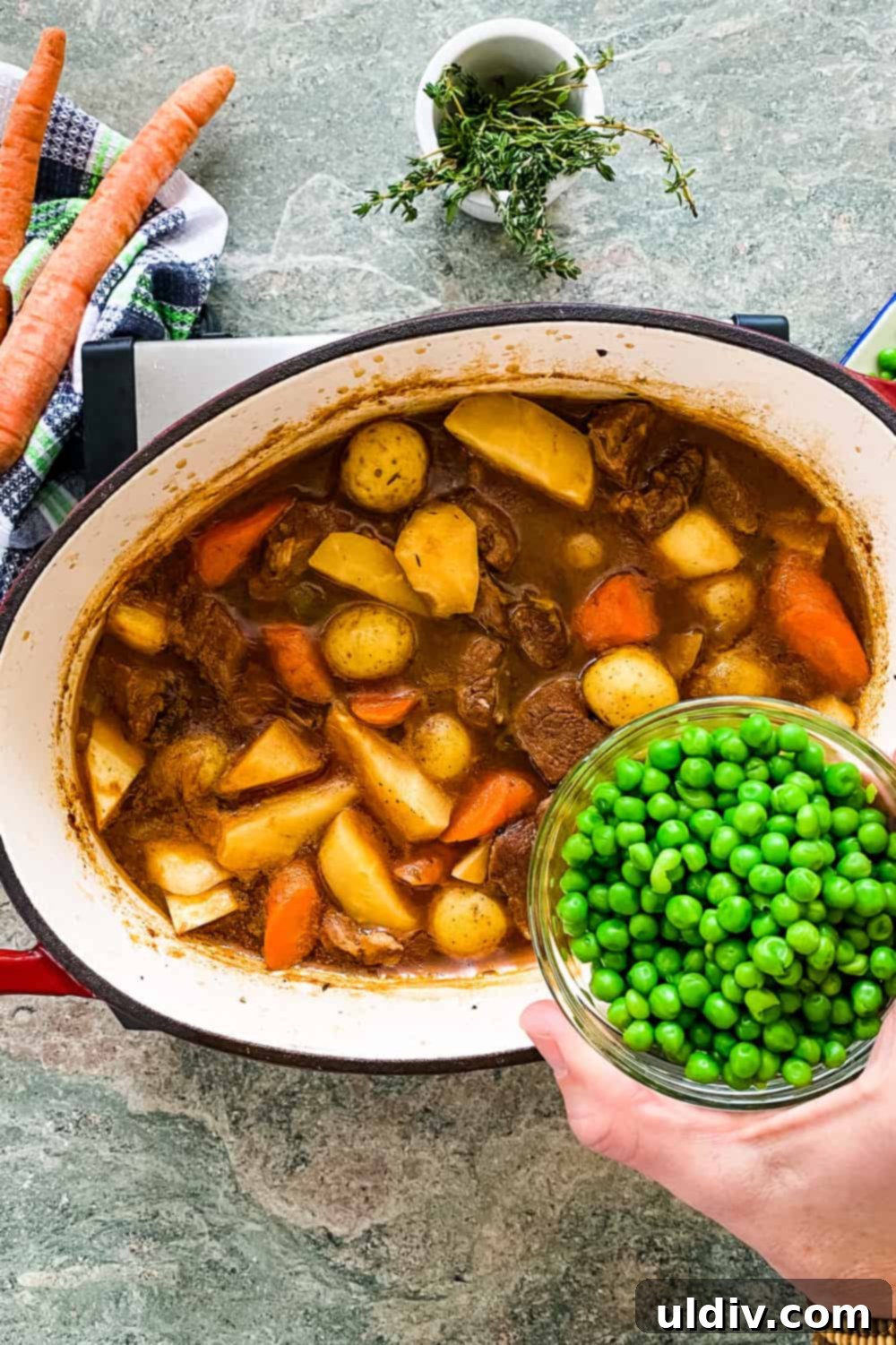
Step 9. Stir in Peas and Serve: Finally, stir in the frozen green peas. Continue to simmer for just a few more minutes until the peas are heated through and retain their vibrant green color and slight sweetness. Serve the Irish Lamb Stew immediately, piping hot, and enjoy the fruits of your labor!
Chef’s Secrets for the Best Irish Lamb Stew
1. **Master the Searing:** Do not skip the crucial step of searing the lamb. This process creates a beautiful brown crust on the meat, locking in juices and, more importantly, developing a profound, caramelized flavor known as the Maillard reaction. These rich flavors form the essential foundation of your stew’s deep and savory taste. Think of it as building the first layer of an exquisite flavor profile.
2. **Strategic Vegetable Timing:** To ensure your vegetables are perfectly cooked—tender but not mushy—it’s vital to add them at the right time. Start by cooking the meat first, allowing it to become tender in the broth. Then, introduce the heartier root vegetables like carrots, parsnips, and potatoes during the last 30-45 minutes of simmering. Delicate vegetables like peas should only be added in the final few minutes of cooking, just enough to heat through and retain their vibrant color and texture.
3. **The Art of Slow Simmering:** A truly great stew, especially one with lamb, demands patience. Let the stew simmer slowly and gently over low heat for the recommended duration. This extended, unhurried cooking time is indispensable for several reasons: it allows the tough connective tissues in the lamb shoulder to break down, rendering the meat incredibly tender; it provides ample opportunity for all the ingredients to meld and infuse the liquid with their distinct flavors; and it ensures the gravy thickens and develops a luxurious, velvety consistency. Resist the urge to rush this process; the rich, harmonious flavors are well worth the wait.
4. **Embrace the Guinness:** While substitutions are possible, using Guinness Stout is highly recommended for an authentic Irish Lamb Stew. Its distinctive roasted malt notes, subtle sweetness, and slight bitterness add unparalleled depth and complexity to the gravy that simply cannot be replicated by other liquids. It creates a truly unique and traditional flavor profile that is central to this recipe’s charm.
5. **Choose the Right Pot:** An enameled cast iron Dutch oven is the ideal vessel for preparing this stew. Its thick, heavy construction ensures even heat distribution and exceptional heat retention, which are crucial for consistent simmering and preventing scorching. If you don’t have a Dutch oven, a heavy-bottomed stock pot is a suitable alternative, but monitor the heat carefully to maintain a gentle simmer.
6. **Layer Your Seasoning:** Don’t just season at the beginning. Taste and adjust your seasoning (salt and pepper) multiple times throughout the cooking process, especially after adding the liquids and again before serving. This layering ensures a perfectly balanced and flavorful stew from the inside out.
Frequently Asked Questions About Irish Lamb Stew
The defining characteristic of authentic Irish stew is its use of lamb or mutton, traditionally made with simpler ingredients like potatoes, onions, and often carrots. While many classic beef stews exist, the specific choice of lamb, often paired with root vegetables, gives Irish stew its unique identity and historical significance. The addition of stout, like Guinness, is a modern, popular twist that adds incredible depth.
An enameled cast iron Dutch oven is truly ideal for making stews. Its thick, heavy construction excels at conducting and retaining heat effectively and evenly, which is crucial for a slow simmer. This prevents hot spots and ensures the stew cooks uniformly, leading to tender meat and perfectly cooked vegetables. A heavy-bottomed stock pot is a good alternative if a Dutch oven isn’t available.
To store Irish stew, first allow it to cool completely to room temperature. Then, transfer it to an airtight container. Glass meal prep containers are excellent for this purpose. The stew can be safely refrigerated for 4-5 days. For longer storage, Irish lamb stew freezes exceptionally well for up to 3 months. Ensure it’s in a freezer-safe container.
For reheating in the microwave, place leftover Irish stew in a microwave-safe bowl, lightly covered, and heat for 1-2 minutes at 60% power. Stir, then continue heating in 30-second intervals until it’s heated through. Alternatively, reheat it in a pot on the stove over medium-low heat, stirring occasionally, until hot. You can also warm it in a 350°F (175°C) oven in a covered ovenproof dish for 15-20 minutes. If reheating from frozen, thaw the stew in the refrigerator overnight before following the reheating instructions above.
Yes, Irish stew adapts beautifully to a slow cooker. After searing the lamb and sautéing the aromatics on the stovetop (highly recommended for flavor development), transfer all ingredients (except the peas and perhaps some of the more delicate vegetables) to your slow cooker. Cook on low for 6-8 hours or on high for 3-4 hours, adding the peas and remaining vegetables during the last hour. This method ensures tender lamb and a deeply flavored stew with minimal effort.
If you find your gravy isn’t as thick as you’d like, you can easily remedy it. In a small bowl, whisk together a tablespoon of all-purpose flour or cornstarch with an equal amount of cold water to create a slurry. Gradually stir this mixture into the simmering stew. Allow it to cook for a few more minutes, stirring, until the gravy reaches your desired consistency. Repeat if necessary, adding small amounts at a time.
Perfect Pairings: What to Serve with Irish Lamb Stew
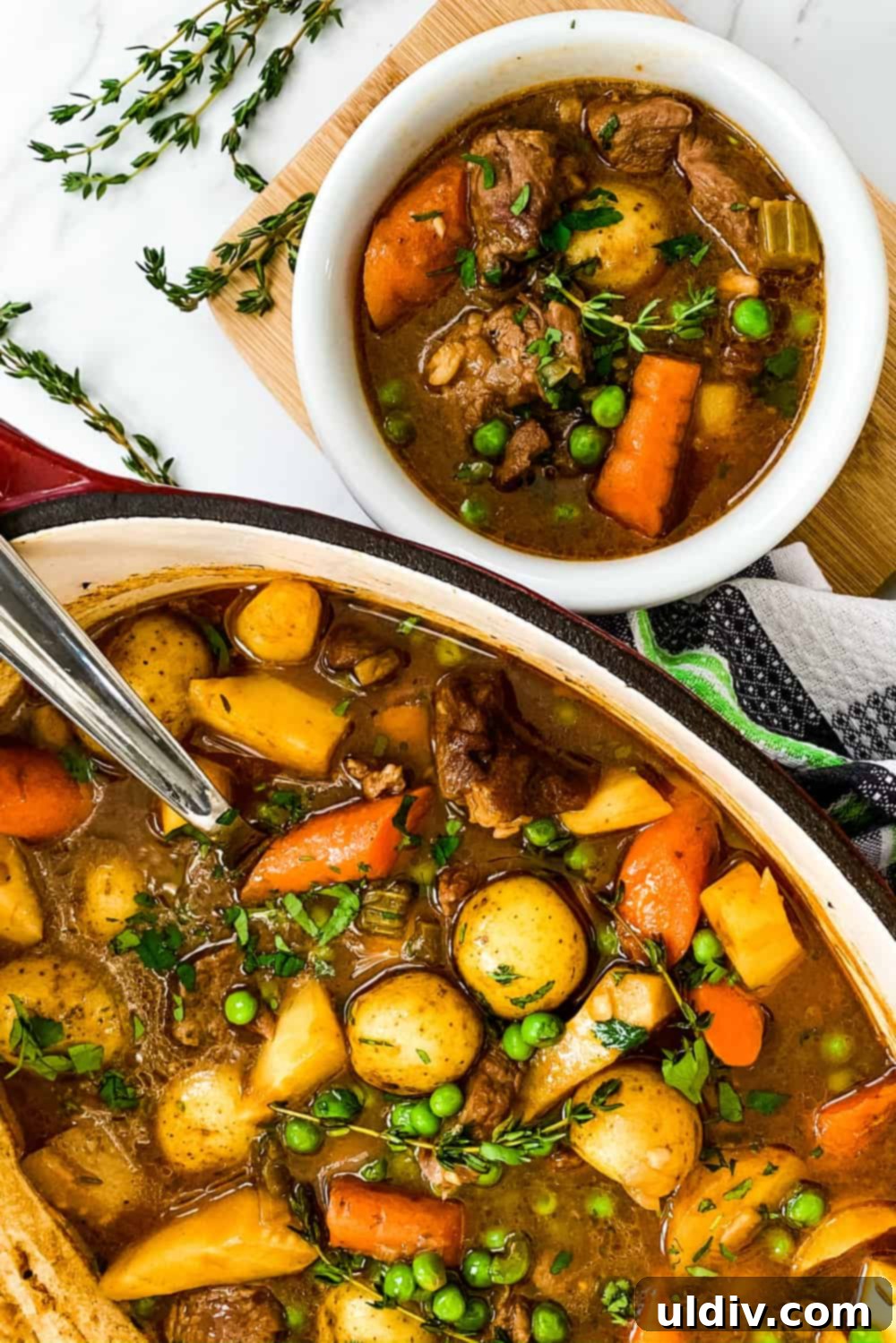
Serving steaming hot bowls of this hearty Irish Lamb Stew with Guinness is a delight, and choosing the right accompaniments elevates the experience. A crusty bread or, even better, a freshly baked loaf of Irish soda bread (my recipe includes cranberries for a delightful twist!) is absolutely essential. Its hearty texture is perfect for soaking up every last drop of the velvety, rich gravy – it would truly be a shame to waste even a single spoonful! Beyond bread, consider these delicious dishes to complete your meal:
- Crispy Everything Bagel Puff Pastry Cheese Twists
- Apple, Fennel, and Radish Slaw with Pecans and Blue Cheese
- Spinach Blueberry Salad with Yogurt Dressing {Healthy and Fresh}
- Sugared Shortbread Cookies {Featured in The New York Times}
More St. Patrick’s Day Inspired Recipes to Savor
Extend your St. Patrick’s Day celebrations (or simply enjoy Irish-inspired flavors any time of year!) with these additional delicious recipes that complement the spirit of the holiday:
- Rustic Irish Soda Bread with Cranberries and Currants
- Reuben Casserole Recipe {Delicious!}
- Corned Beef Soup {Slow Cooker}
- Mint Brownies {Fudgy and Decadent}
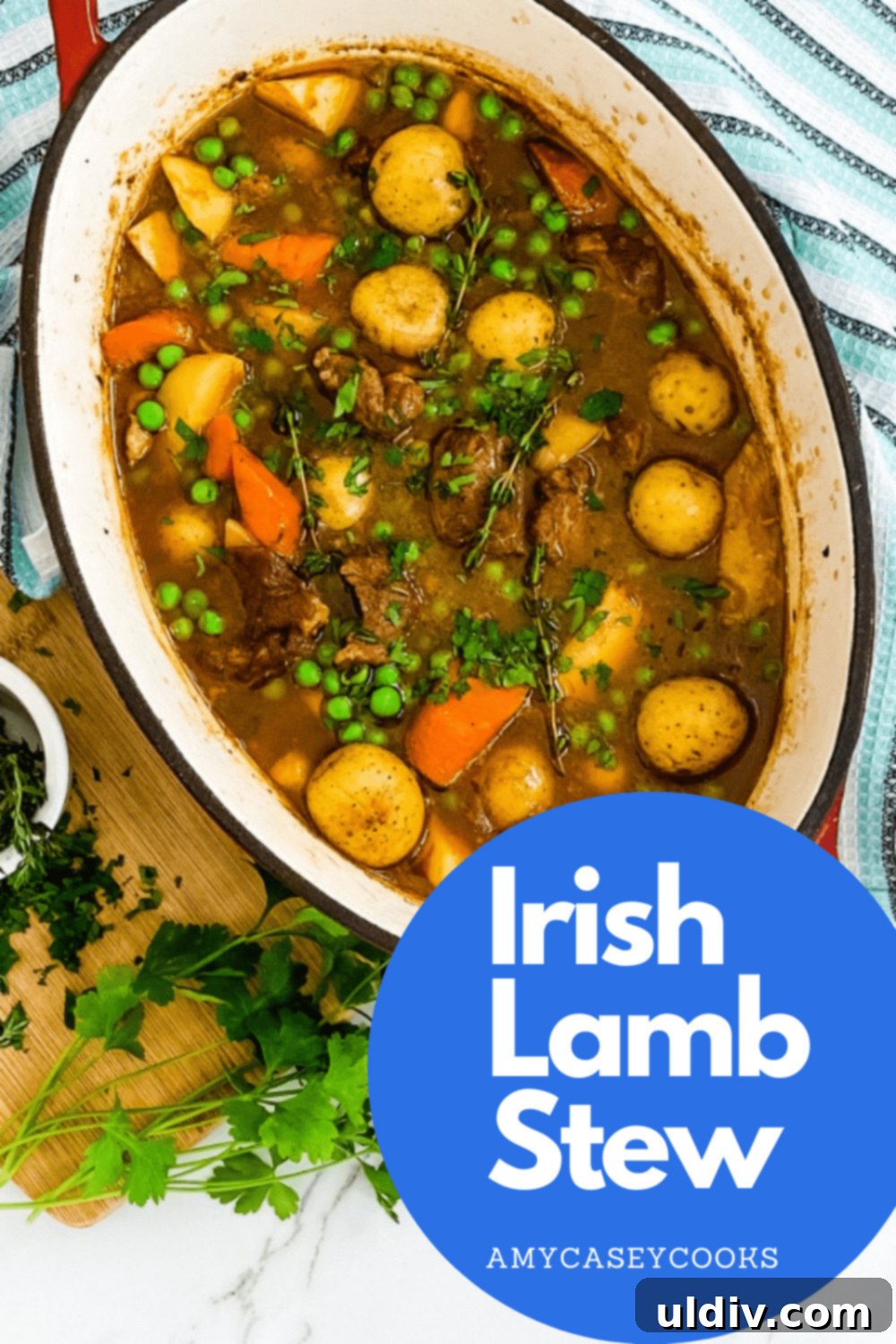
If you create this delicious Irish Lamb Stew recipe, we would absolutely love to hear from you! Please consider leaving a rating and/or a comment below to share your experience. And if you snap a photo of your culinary masterpiece, be sure to tag @amycaseycooks on Instagram so we can all admire your wonderful work. Thank you for cooking with us!
Recipe: Irish Lamb Stew with Guinness
Irish Lamb Stew with Guinness
A warm and cozy meal to share with family and friends for St. Patrick’s Day, this delicious Irish lamb stew with Guinness includes carrots, parsnips, potatoes, and peas.
Rating: 5 out of 5 stars from 6 votes
Print Recipe
Prep Time: 20 minutes
Cook Time: 2 hours 45 minutes
Total Time: 3 hours 5 minutes
Servings: 6
Calories: 507 kcal
Author: Amy Casey
Equipment
- Dutch oven
Ingredients
For 6 Servings:
- 2 tablespoons olive oil, divided
- 2 pounds lamb shoulder, cut into 2-inch pieces
- Salt and pepper, to taste
- 3 tablespoons all-purpose flour
- 1 medium yellow onion, diced
- 1 stalk of celery, diced
- 4 garlic cloves, chopped
- 2 tablespoons tomato paste
- 1 (14.9 ounce) can of Guinness Draught
- 2 cups reduced sodium beef stock
- 3 sprigs of fresh thyme
- 2 large carrots, cut on bias into 1-inch pieces
- 3 medium parsnips, cut on bias into 1-inch pieces
- 1 pound small potatoes, quartered or halved
- 1 cup of frozen green peas
Instructions
- Sear the lamb: Heat a Dutch oven or medium-sized stock pot over medium-high heat and add 1 tablespoon of olive oil. When the oil begins to shimmer, add the lamb and season generously with salt and pepper. Sear the meat on all sides until well browned, about 5 to 8 minutes. Remove the meat from the pot and place it in a bowl. Add the flour to the browned meat and toss with a spoon until each piece is thoroughly coated. Set aside.
- Sauté the aromatics: In the same pot, add the remaining 1 tablespoon of olive oil, along with the diced onion, celery, and chopped garlic. Sprinkle with a generous pinch of salt and a pinch of pepper. Sauté the vegetables until they begin to soften, approximately 5 minutes.
- Add the tomato paste: Stir in the tomato paste and combine it thoroughly with the vegetables. Continue cooking for an additional minute, stirring constantly to deepen its flavor.
- Add the stout and simmer: Pour in the Guinness, beef stock, and add the fresh thyme sprigs. Stir well, scraping up any browned bits from the bottom of the pot to incorporate all the rich flavors. Bring the liquid to a boil, then add the floured, browned lamb meat back into the pot. Cover the pot, reduce the heat to medium-low, and simmer the stew for 1 and ½ hours, or until the lamb meat is fork-tender.
- Add the vegetables: Stir in the carrots, parsnips, and potatoes. Return the cover to the pot and continue simmering for another 30 to 35 minutes, or until all the vegetables are tender.
- Stir in the peas: Add the frozen green peas and stir them into the stew. Continue simmering for just a few minutes until they are heated through and vibrant.
- Serving: The stew can be served immediately, or it can be stored in the refrigerator for 3 to 4 days. Reheat gently over medium heat on the stovetop or in the microwave.
Video
For a visual guide on making this delicious stew, watch the video here: https://dashboard.mediavine.com/videos/anugalbccrud3ysfbc3t
Notes
- **Choose the Right Cut:** Lamb shoulder is the ideal choice for stewing, as it becomes incredibly tender and flavorful during long, slow cooking. Leg of lamb is typically better for grilling or roasting.
- **The Perfect Pot:** An enameled cast iron Dutch oven is highly recommended for stews. Its superior heat conduction and retention ensure even cooking and rich flavor development.
- **Don’t Skip Searing:** Searing the lamb before stewing creates a caramelized crust that adds significant depth and complex flavor to the final dish.
- **Guinness is Key:** While alternatives exist, Guinness beer contributes a unique roasted, malty sweetness to the stew’s gravy that is deeply traditional and flavorful. If omitting alcohol, use additional beef stock or apple cider with a dash of Worcestershire.
- **Timing for Vegetables:** To prevent vegetables from turning mushy, add the heartier root vegetables (carrots, parsnips, potatoes) after the lamb has had a good head start on cooking, typically during the last 30-45 minutes. Peas should be added at the very end.
- **Slow and Steady Wins:** Patience is a virtue for stews. A long, slow simmer allows the flavors to fully develop and the lamb to become wonderfully tender.
- **Serving Suggestion:** Serve this steaming hot stew with a crusty loaf of Irish soda bread. It’s perfect for sopping up every last bit of the rich, velvety gravy.
Nutritional information is an estimate and based on the ingredients and cooking methods used in this recipe.
Nutrition
Serving: 1/6 of recipe | Calories: 507kcal | Carbohydrates: 35.1g | Protein: 47.7g | Fat: 16.4g | Saturated Fat: 4.8g | Cholesterol: 136mg | Sodium: 411mg | Fiber: 6.7g | Sugar: 7.1g