
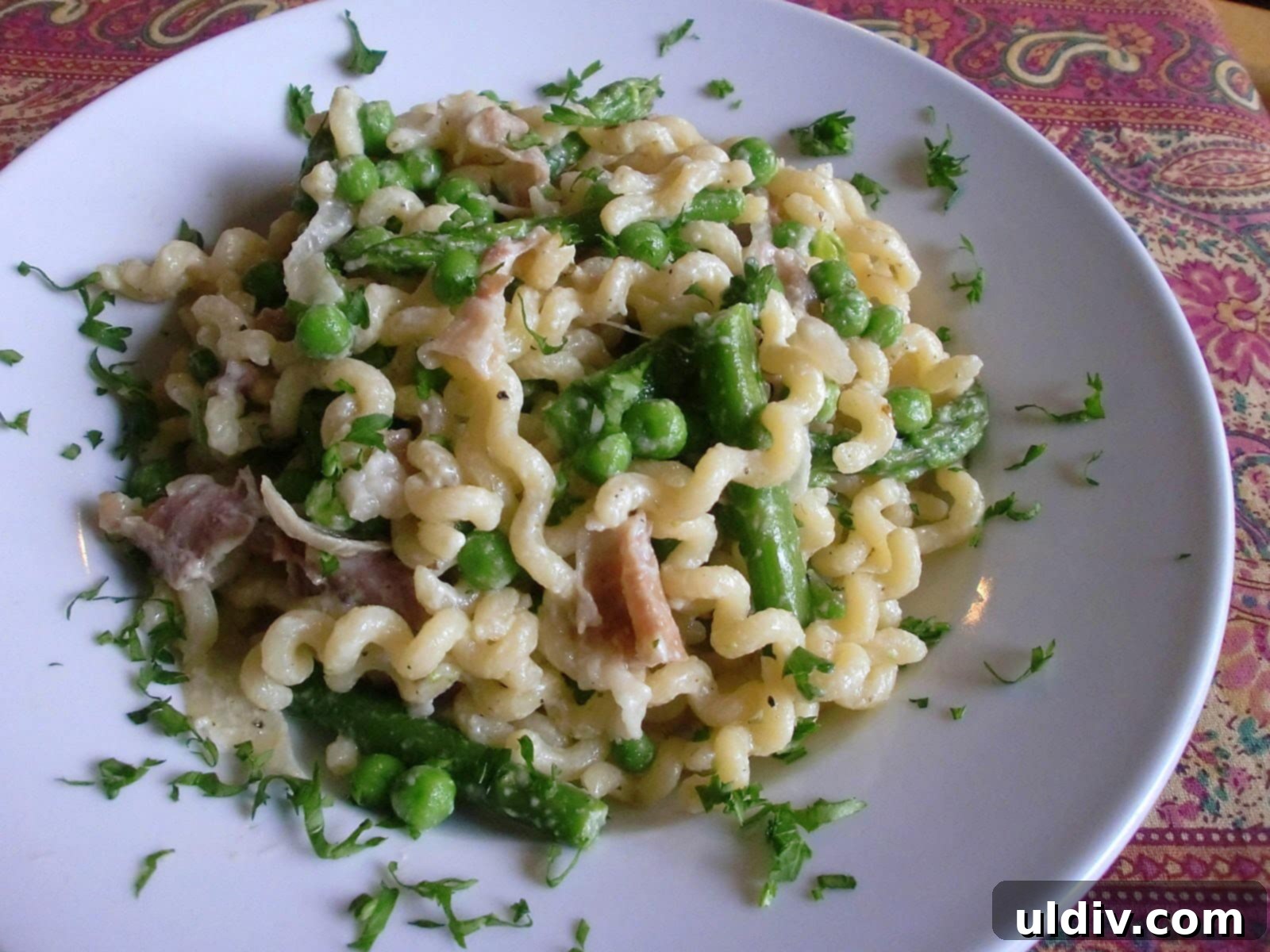
Flavorful Spring Pasta: Goat Cheese, Prosciutto, Asparagus & Peas – A Quick and Easy Dinner
In the quest for a delicious yet incredibly fast dinner solution, pasta often reigns supreme. But why settle for a basic jar of marinara when you can effortlessly create a vibrant, fresh, and gourmet-tasting entrée right in your own kitchen? This recipe for Pasta with Goat Cheese, Prosciutto, Asparagus and Peas brings together the exquisite flavors of early spring produce with a luxurious, light sauce, elevated by the savory crunch of crispy prosciutto. It’s a dish that promises to transform your weeknight meal into a culinary delight, all while being surprisingly simple to prepare.
Why This Spring Pasta Will Become Your New Favorite
This isn’t just another pasta dish; it’s an ode to spring, designed for both convenience and sophisticated taste. Imagine creamy, tangy goat cheese mingling with salty, crisp prosciutto, bright green asparagus spears, and sweet, tender peas, all tossed with perfectly cooked pasta. It’s a symphony of textures and flavors that feels indulgent but comes together in under 30 minutes, making it an ideal choice for busy evenings or when you crave something special without the fuss. The beauty of this recipe lies in its balanced profile – the richness of the cheese and prosciutto is perfectly cut by the freshness of the vegetables and the subtle tang of white wine, creating a truly harmonious dish.
Beyond its incredible taste, this pasta offers several benefits. It’s a fantastic way to incorporate seasonal vegetables into your diet, celebrating the arrival of spring. The use of simple, high-quality ingredients ensures a satisfying and wholesome meal. Plus, the minimal cooking time means less time in the kitchen and more time enjoying your meal with loved ones. It’s a comforting yet elegant dish that’s perfect for any occasion, from a casual family dinner to a small gathering with friends.
Achieving Pasta Perfection: Essential Cooking Tips
While cooking pasta may seem straightforward, a few key techniques can elevate your dish from good to extraordinary. Mastering these simple steps ensures that your pasta is perfectly al dente and ready to absorb every drop of the delectable sauce.
-
Boil Vigorously with Ample Water
The first and arguably most crucial step is to use a truly large pot and fill it generously with water – approximately 4 to 5 quarts for every pound of pasta. This allows the pasta sufficient space to move freely, preventing it from clumping together and ensuring even cooking. A vigorous, rolling boil is essential to quickly cook the pasta, maintaining its shape and texture. Don’t be tempted to overcrowd the pot; giving your pasta room to dance in the boiling water is key to a superior result.
-
Stir During the Initial Minutes
Once you add the pasta to the boiling water, give it a good stir during the first minute or two of cooking. This simple action is vital for preventing the strands or shapes from sticking to each other or the bottom of the pot. Many novice cooks skip this step, only to find a sticky, clumpy mess. Resist the urge to add oil to the water; contrary to popular belief, oil creates a slick surface on the pasta, hindering its ability to absorb the sauce later, which is something we definitely want to avoid for maximum flavor.
-
Salt Generously: Season the Water, Not Just the Sauce
Think of the pasta water as the first layer of seasoning for your dish. Generously season the boiling water with a substantial amount of salt – aim for 1 to 2 tablespoons per pound of pasta. This might seem like a lot, but only a fraction of it is absorbed by the pasta, infusing it with flavor from the inside out. Properly salted pasta water ensures that the pasta itself is seasoned, creating a more cohesive and delicious final dish. Tasteless pasta, even with a fantastic sauce, will fall flat.
-
Drain and Sauce Promptly: Do Not Rinse
After your pasta is perfectly cooked to al dente (meaning “to the tooth” – firm but with a slight bite), do not rinse it under cold water. Rinsing washes away the beneficial starch that clings to the pasta, which is crucial for creating a luscious, well-emulsified sauce. Instead, drain the pasta immediately and quickly toss the hot pasta directly with your prepared sauce. The residual heat from the pasta helps the sauce adhere better, and the starchy cooking water (which you should reserve a cup of) will help bind the sauce to the pasta, allowing it to absorb more flavor and achieve that desirable creamy texture.
Crafting the Flavorful Sauce: A Symphony of Ingredients
The heart of this extraordinary pasta dish lies in its exquisitely balanced and flavorful sauce. Each ingredient plays a crucial role, building layers of savory, tangy, and fresh notes that come together beautifully. From the moment the prosciutto hits the pan, you embark on a journey of flavor development that is both rewarding and remarkably simple.
Building the Aromatic Base: Prosciutto, Shallots, and Garlic
The sauce begins with a sauté that maximizes flavor and efficiency. Thinly sliced shallots, diced prosciutto, and minced garlic are cooked together in olive oil. As the prosciutto sizzles, its delicate fat renders, creating a rich, savory foundation. The shallots soften and caramelize slightly, adding a subtle sweetness and aromatic depth, while the garlic infuses the oil with its pungent, irresistible essence. This step is where the magic begins, releasing incredible aromas and developing what chefs call “fond” – those flavorful browned bits at the bottom of the pan that are essential for a truly complex sauce.
Deglazing with White Wine: Unlocking Hidden Flavors
Once the prosciutto is lightly crispy and the aromatics are softened, a healthy “glug” of dry white wine is added to the pan. This serves a dual purpose: it deglazes the pan, lifting all those delicious browned bits (the “fond”) from the bottom and incorporating them into the sauce, thereby deepening its flavor profile. The wine also adds a bright, acidic note that cuts through the richness of the prosciutto and will complement the tanginess of the goat cheese beautifully. Allow the wine to simmer for a minute or two, letting the alcohol cook off and leaving behind its wonderful essence.
The Velvety Heart: Herb Goat Cheese
The star of the sauce is undoubtedly the creamy and tangy goat cheese. A log of herb-infused goat cheese melts effortlessly into the sautéed mixture, transforming into a velvety smooth sauce. The inherent tanginess of the goat cheese provides a delightful contrast to the salty prosciutto and the sweetness of the other ingredients, creating a multi-dimensional flavor experience. The herbs already present in the cheese (often chives, thyme, or rosemary) add another layer of aromatic complexity, making the sauce feel gourmet with minimal effort.
A Burst of Freshness: Asparagus and Peas
To complete the sauce and introduce the vibrant tastes of spring, sweet peas and freshly chopped parsley are stirred in. The peas cook quickly, retaining their crisp-tender texture and natural sweetness, which provides a lovely contrast to the savory elements. The fresh parsley adds a final bright, herbaceous note, awakening the palate and enhancing the overall freshness of the dish. This combination of ingredients ensures that every forkful is bursting with both richness and vitality.
Don’t forget the secret weapon: a splash of the reserved starchy pasta water. This “liquid gold” is crucial for helping the sauce emulsify and cling beautifully to the pasta, creating a cohesive and luscious texture that ties the entire dish together.
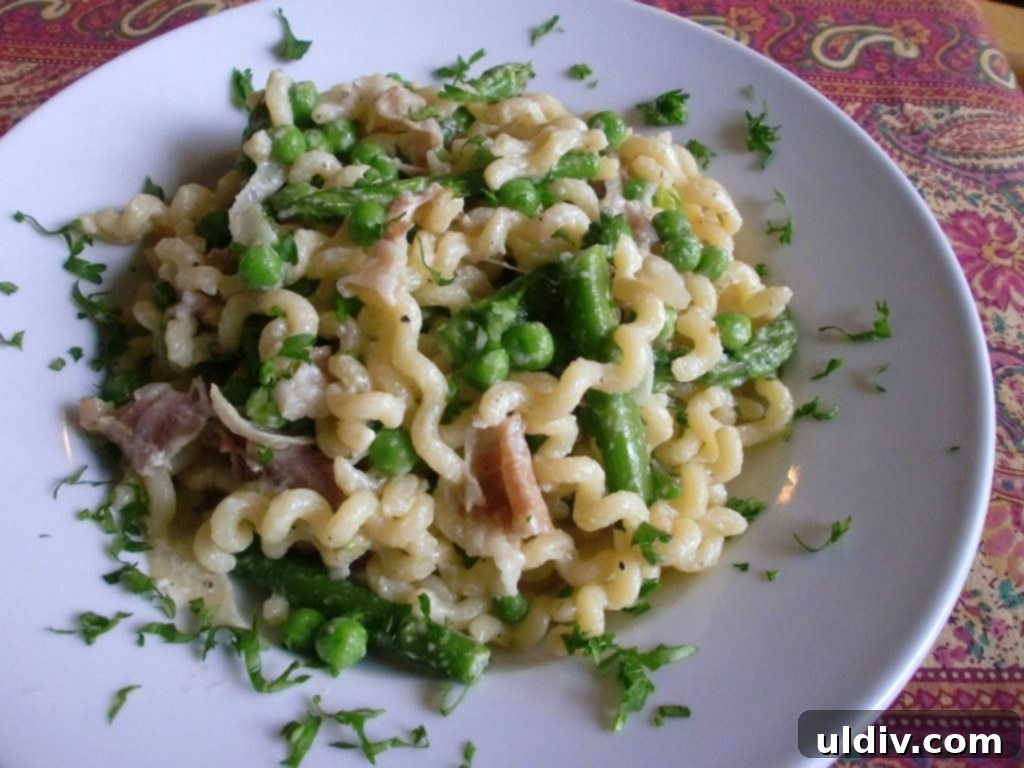
The Full Recipe: Pasta with Goat Cheese, Prosciutto, Asparagus and Peas
Pasta with Goat Cheese, Prosciutto, Asparagus and Peas
No ratings yet
Print
Pin
Prep Time: 5 minutes
Cook Time: 18 minutes
Total Time: 23 minutes
Servings: 6
Author: Amy Casey
Ingredients
- 1 pound pasta such as fettuccine or fusilli
- ½ pound asparagus, cut into 2-inch pieces
- 1 tablespoon olive oil
- 1 large shallot, thinly sliced
- 4 ounces prosciutto, diced
- 4 garlic cloves, minced
- ½ cup white wine (dry white wine recommended)
- 1 (4 to 5-ounce) log herb goat cheese
- 1 ½ cups peas (fresh or frozen)
- ½ cup fresh parsley, finely chopped
- Salt and freshly ground black pepper, to taste
Instructions
-
Bring a large pot of generously salted water to a vigorous boil. Add the pasta and cook for 7 minutes. Then, add the asparagus to the pot and continue cooking for approximately 2 minutes longer, or until the asparagus is tender-crisp and retains its vibrant green color. Before draining, make sure to reserve 1 cup of the starchy pasta water. Drain the cooked pasta and asparagus and set them aside.
-
Meanwhile, while the pasta is cooking, begin preparing the sauce. In a large sauté pan, heat the olive oil over medium-high heat. Add the thinly sliced shallot, diced prosciutto, and minced garlic to the pan. Sauté these ingredients for 6 to 8 minutes, stirring occasionally. You want the shallots to become softened and translucent, and the prosciutto should develop slightly crispy edges, rendering out its delicious fat into the pan.
-
Pour in the ½ cup of white wine to deglaze the pan. Use a wooden spoon to vigorously scrape up any browned bits (known as “fond”) from the bottom of the pan. These bits are packed with flavor and will enrich your sauce. Allow the wine to simmer for a minute or two to reduce slightly, intensifying its taste and allowing the alcohol to evaporate.
-
Reduce the heat to medium-low. Add the entire log of herb goat cheese to the pan and stir continuously until it melts beautifully into a smooth, creamy sauce. If the sauce appears too thick or needs loosening, gradually add some of the reserved pasta water, stirring until it reaches your desired consistency.
-
Stir in the 1 ½ cups of peas and heat them through for just 1-2 minutes until they are warmed through and tender.
-
Transfer the cooked pasta and asparagus directly into the sauté pan with the goat cheese sauce, or place them in a large serving bowl. Pour the creamy sauce over the pasta and asparagus and toss gently to ensure everything is evenly coated and every strand is enveloped in flavor.
-
Finally, stir in the freshly chopped parsley. Taste the dish and season generously with salt and freshly ground black pepper as needed. Serve immediately and savor this delightful spring pasta!
Did you make this recipe?
Tag @amycaseycooks on Instagram so we can all admire your work!
Serving Suggestions and Perfect Pairings
This exquisite pasta dish, with its rich and fresh flavors, pairs wonderfully with simple accompaniments that allow its main components to shine. A bakery-fresh loaf of crusty bread is almost mandatory, perfect for soaking up every last bit of the delicious goat cheese sauce. A drizzle of high-quality olive oil over the bread, or a sprinkle of flaky sea salt, can further enhance the experience.
For a complete meal, consider adding a light and crisp side salad. A simple green salad dressed with a bright vinaigrette, perhaps featuring some mixed greens, cherry tomatoes, and cucumber, would offer a refreshing contrast to the creamy pasta. If you enjoy a touch of heat, a sprinkle of red pepper flakes over the finished dish can add a delightful kick.
When it comes to beverages, a glass of white wine is the classic choice. A crisp and refreshing white, such as a Sauvignon Blanc or a Pinot Grigio, would beautifully complement the tangy goat cheese and spring vegetables. Its acidity will cut through the richness of the sauce, cleansing the palate with each sip. For those who prefer non-alcoholic options, a sparkling lemon water or a light, herbal iced tea would be equally refreshing.
Customizing Your Spring Pasta: Variations to Try
While this recipe is perfect as written, it also lends itself beautifully to customization. Feel free to experiment with ingredients to suit your taste or what you have on hand.
- **Add More Protein:** For a heartier meal, consider adding cooked chicken breast (shredded or diced), shrimp, or even crumbled Italian sausage (cooked and drained) to the sauce. Add them in step 4 or 5 of the instructions, ensuring they are heated through.
- **Vegetable Substitutions:** If asparagus isn’t in season or you prefer other greens, baby spinach or arugula can be wilted into the sauce at the very end. Cherry tomatoes, halved, would also add a lovely burst of color and sweetness.
- **Herb Variations:** While the herb goat cheese offers a great base, you can always add more fresh herbs. Dill, chives, or even a touch of fresh mint could provide interesting flavor twists.
- **Pasta Shapes:** While fettuccine or fusilli are excellent choices for clinging to the sauce, feel free to use other shapes like penne, rigatoni, or even orecchiette.
- **Gluten-Free Option:** This dish is easily adaptable for gluten-free diets by simply using your favorite gluten-free pasta.
Don’t be afraid to make this recipe your own. It’s a versatile foundation for a delicious and memorable meal.