
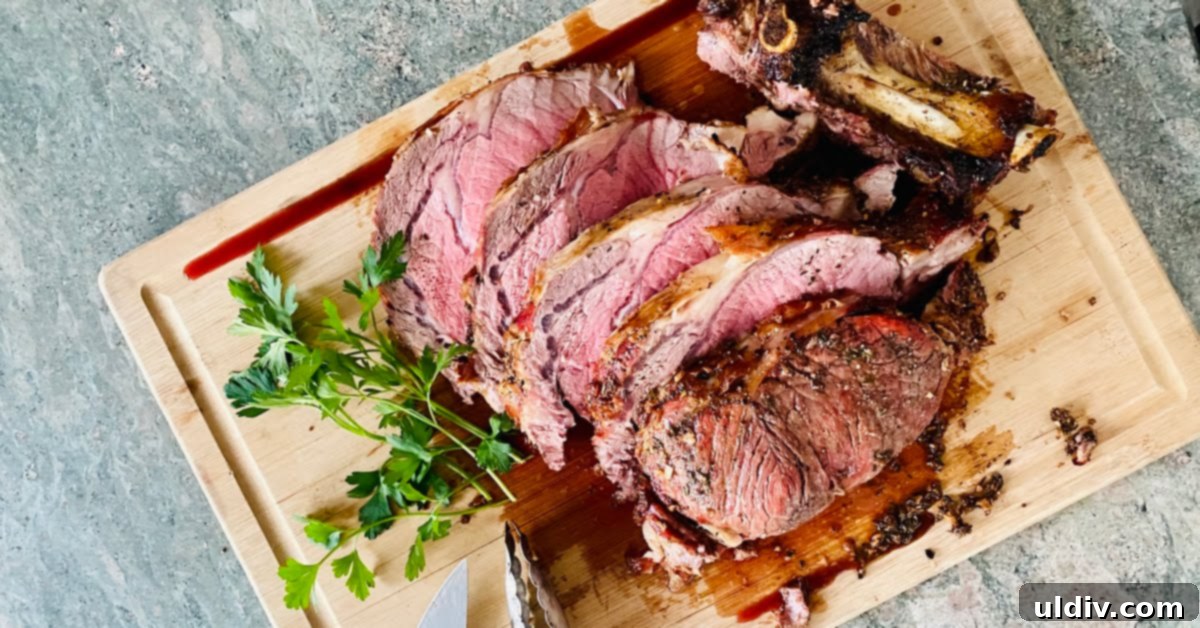
Unlock the secret to crafting the most exquisite and succulent **Slow Roasted Prime Rib** you’ve ever tasted. This recipe isn’t just a meal; it’s a culinary experience designed to impress with surprising ease. For years, I considered prime rib an intimidating dish, reserved only for professional chefs or upscale restaurants. However, after preparing this show-stopping roast for a special holiday gathering, I discovered that achieving a perfectly juicy, incredibly tender, and intensely flavorful prime rib is remarkably straightforward. The magic lies in a meticulously crafted butter, garlic, and herb rub that infuses every bite with aromatic richness, elevating this entrée to an unforgettable highlight of any celebration.
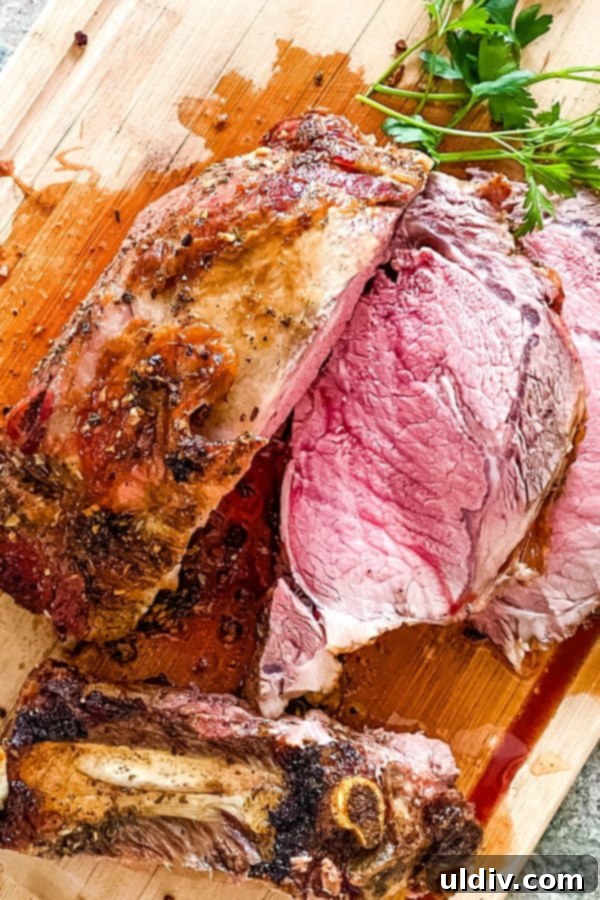
Imagine serving a grand, beautifully roasted prime rib, enveloped in a fragrant garlic herb butter crust, paired with a creamy, zesty horseradish sauce. This dish is destined to be the centerpiece of your holiday dinner, a lavish main course for special occasions, or simply a magnificent treat whenever you desire an extraordinary meal. A typical prime rib roast, weighing between 5 to 7 pounds, is ideal for feeding a generous crowd, making it a perfect choice for large family gatherings or entertaining a group of cherished friends. The elegance it brings to the table belies the relatively simple process required to achieve such spectacular results.
To complement this magnificent **Slow Roasted Prime Rib**, I highly recommend a selection of side dishes that enhance its rich flavor profile without overshadowing it. My personal favorites include cheddar stuffed potatoes, which offer a delightful creamy and savory contrast; garlic butter mushrooms with blue cheese, whose earthy notes and pungent tang surprisingly elevate the beef; and honey mustard roasted Brussels sprouts, providing a vibrant, slightly sweet and tangy counterpoint. Together, these elements create a meal that is truly unforgettable, promising a symphony of flavors and textures.
Why You’ll Absolutely Adore This Slow Roasted Prime Rib Recipe
The idea of preparing a substantial prime rib roast, often weighing 5 pounds or more, can initially seem daunting. However, I’m here to assure you that the process is far simpler than you might imagine. With just a few straightforward steps, your oven takes on the majority of the work, allowing you to relax while a masterpiece is created. Here are the compelling reasons why this **slow roasted prime rib recipe** will become a treasured favorite in your culinary repertoire:
- A True Showstopper for Any Table ~ There’s an undeniable grandeur in presenting an entire roast as the main course. The sheer visual impact of a perfectly browned, succulent prime rib, glistening on a carving board, is guaranteed to elicit gasps of admiration and appreciation from your guests. Prepare for a chorus of “oohs” and “ahhs” as you bring this magnificent dish to the table.
- Unbelievable Flavor and Tenderness ~ Prime rib comes from a muscle group that is not heavily used by the animal, resulting in meat that is inherently extremely tender and exquisitely juicy. The substantial fat cap surrounding the roast, combined with the beautiful marbling throughout the meat, melts slowly during the roasting process. This natural marbling bastes the meat from within, imbuing it with an intensely rich, buttery flavor and a melt-in-your-mouth texture that is simply unparalleled. Every slice offers a luxurious experience.
- Surprisingly Easy to Prepare ~ Despite its gourmet appearance and exceptional flavor, making a **slow roasted prime rib** is far less complicated than many believe. The hands-on preparation time is minimal, primarily involving seasoning the roast. Once it’s in the oven, a reliable wireless meat thermometer becomes your best friend, diligently monitoring the internal temperature and signaling when your roast has reached perfection. This allows the oven to handle the slow cooking, freeing you to enjoy your guests or prepare other elements of your meal.
- Perfect for Special Occasions ~ Whether it’s a festive holiday dinner like Christmas or Easter, a milestone birthday, an anniversary, or any moment deserving of a truly special meal, prime rib elevates the occasion. Its impressive presentation and delectable taste make it a fitting centerpiece for celebrations, creating lasting memories around the dining table.
Essential Ingredients & Thoughtful Substitutions for Your Perfect Roast
Crafting an exceptional **slow roasted prime rib** begins with high-quality ingredients. While the core components are simple, each plays a vital role in developing the incredible flavor. Below is a comprehensive list of what you’ll need, along with notes on why specific ingredients are recommended and potential substitutions where appropriate. For precise quantities, always refer to the full recipe card at the end of this article.
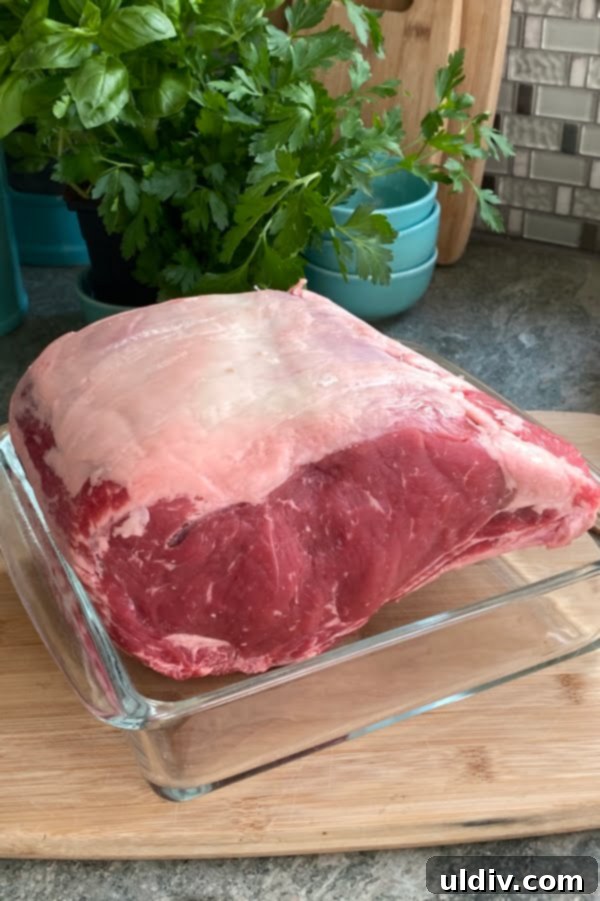
- Prime Rib Roast ~ This magnificent cut of beef is also commonly known as a standing rib roast or simply a rib roast. You’ll find it available as either a bone-in or boneless roast. For maximum flavor and juiciness, I highly recommend a bone-in roast, as the bones contribute significantly to the meat’s succulence during cooking.
- Salted Butter ~ Butter is key to our aromatic rub, helping to create a golden, flavorful crust. Using salted butter adds a foundational layer of seasoning. If you only have unsalted butter, simply increase the amount of kosher salt in the rub by about ½ teaspoon to compensate. Ensure the butter is softened to room temperature for easy mixing and application.
- Fresh Garlic Cloves ~ For a premium cut of meat like prime rib, fresh garlic is non-negotiable. Its pungent, sweet aroma and robust flavor far surpass that of garlic powder. Finely chopping or mincing fresh cloves ensures their essence permeates the entire rub.
- Fresh Rosemary ~ This woody, fragrant herb is a classic pairing with beef. Its piney, slightly peppery notes are essential for the signature flavor of this rub. As with garlic, fresh is always best; dried herbs simply won’t deliver the same vibrant aromatic impact.
- Fresh Thyme and Parsley ~ Thyme offers a subtle, earthy, and slightly floral complement to the rosemary and garlic, while fresh parsley adds a touch of brightness and herbaceousness. These fresh herbs together create a well-rounded flavor profile for the rub.
- Kosher Salt & Freshly Ground Black Pepper ~ These are the fundamental seasonings. Kosher salt has larger crystals that adhere well to the meat and provide excellent flavor distribution without making the roast overly salty. Freshly ground black pepper offers a much more vibrant and complex peppery heat than pre-ground varieties. Season generously, as prime rib can handle a good amount of salt.
- Prepared Horseradish ~ This is for the accompanying creamy horseradish sauce, which perfectly cuts through the richness of the prime rib. Ensure you’re using prepared horseradish, not horseradish cream, as the prepared version provides the necessary zest and heat.
- Sour Cream ~ Forms the creamy base of the horseradish sauce, balancing the horseradish’s sharpness with its cool, tangy profile. Full-fat sour cream will yield the richest sauce.
- Mayonnaise ~ Adds an extra layer of creaminess and a subtle richness to the horseradish sauce, contributing to a smooth texture and balanced flavor.
Expert Tips for Achieving Prime Rib Perfection
Cooking a prime rib roast, especially for a special occasion, can feel like a significant undertaking. However, with a few expert insights, you can navigate the process with confidence and consistently achieve spectacular results. These tips will help you make the most of your investment and ensure your **slow roasted prime rib** is nothing short of perfect.
Firstly, prime rib is undeniably a premium, and often expensive, cut of meat. Savvy shoppers know that these roasts frequently go on sale a few times a year, particularly around major holidays such as Easter, Christmas, and sometimes even New Year’s. Keep a keen eye out for these seasonal sales, as they present a fantastic opportunity to purchase a high-quality roast without breaking the bank. Planning your holiday meals around these sales can save you considerable money while still allowing you to enjoy this luxurious entrée.
Secondly, and perhaps most crucially for consistent success, investing in a good quality **wireless meat thermometer** is highly recommended. This is, without a doubt, the easiest and most foolproof tool for cooking a perfect **slow roasted prime rib**. Traditional thermometers require you to open the oven door repeatedly, letting out heat and extending cooking time. A wireless thermometer allows you to monitor the internal temperature of your roast remotely, ensuring accuracy and preventing overcooking or undercooking. It takes all the guesswork out of the process, guaranteeing that your prime rib reaches your desired level of doneness every single time.
Understanding & Choosing the Right Size Prime Rib Roast
Navigating the options for prime rib can sometimes be confusing, especially when deciding on the ideal size. Roasts vary significantly, ranging from smaller cuts to massive ones, so understanding how to choose the right amount for your guests is essential to avoid waste or shortage.
The largest prime rib roasts can have up to 6 or 7 rib bones, weighing anywhere from 12 to 16 pounds. While impressive, a roast of this size is typically far too large for most home gatherings. Fortunately, smaller roasts are readily available and equally delicious.
A reliable **rule of thumb for prime rib servings** is to estimate 2 generous servings per bone. This means if you opt for a 4-bone prime rib roast, which typically weighs around 7 to 8 pounds, it will comfortably serve approximately 8 people. For a slightly smaller gathering, a 2-3 bone roast (around 4-6 pounds) would serve 4-6 guests. Always consider your guests’ appetites and whether you desire leftovers when making your selection.
You’ll encounter both bone-in and boneless prime rib roasts at the butcher or grocery store. While boneless versions are easier to carve, my strong preference, and what I recommend for the most succulent results, is to choose a **bone-in prime rib roast**. The bones act as a natural rack in the roasting pan, lifting the meat slightly to allow for even heat circulation. More importantly, the bones and the marrow within them slowly render during the roasting process, contributing an unparalleled depth of flavor and moisture to the meat. This yields an exceptionally juicy and flavorful **slow roasted prime rib** that truly stands apart.
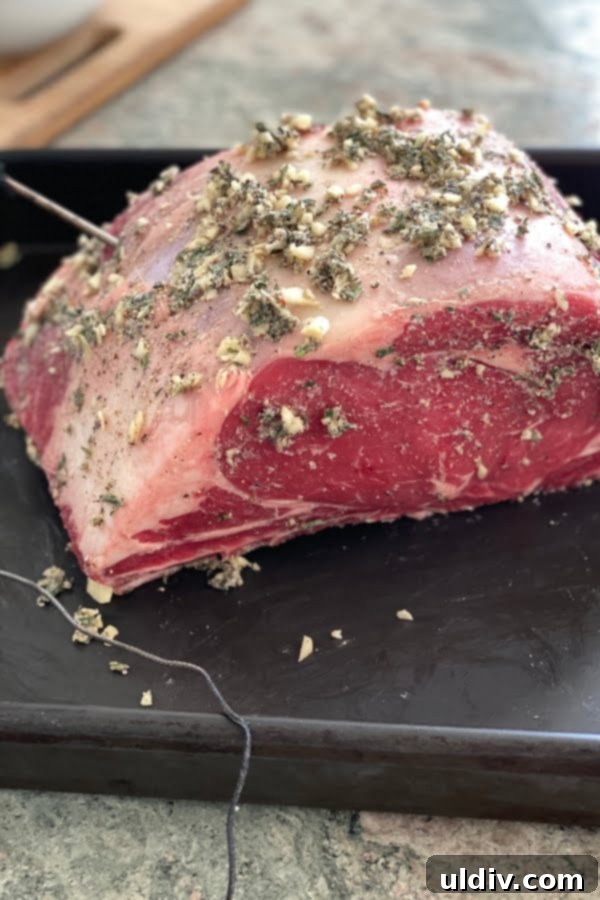
Mastering the Art of Slow Roasting Prime Rib: A Step-by-Step Guide
Achieving a perfectly cooked, tender, and juicy **slow roasted prime rib** is simpler than you might expect, especially with the right technique and tools. This overview outlines the key steps to success; for complete, detailed instructions and quantities, please refer to the recipe card below.
- Bring the Roast to Room Temperature: This crucial first step is often overlooked. Remove your prime rib from the refrigerator at least 1.5 to 2 hours before you plan to roast it. Allowing the roast to come to room temperature ensures it cooks more evenly from edge to center and reduces overall cooking time. A cold roast will cook unevenly, potentially leading to overcooked edges and a raw interior.
- Prepare Your Roasting Setup: Place the prime rib, bone side down, directly into a sturdy roasting pan. The bones naturally create a perfect roasting rack, lifting the meat slightly off the pan’s bottom and allowing hot air to circulate all around it for a more consistent cook. If using a boneless roast, consider placing it on a V-rack or a bed of chopped vegetables to achieve similar air circulation.
- Apply the Flavorful Rub: In a small bowl, combine your softened salted butter with the finely chopped fresh garlic, rosemary, thyme, parsley, kosher salt, and fresh ground black pepper. Mix these ingredients thoroughly until a fragrant, uniform paste forms. Generously rub this aromatic mixture over all sides of the prime rib roast, ensuring every surface is coated. This rub not only flavors the meat but also helps to form a delicious, savory crust.
- Insert the Meat Thermometer: For foolproof results, insert the probe of your wireless meat thermometer into the thickest part of the roast, avoiding contact with any bones. Set your thermometer to your desired final internal temperature (refer to the temperature guide below). This tool will be your best friend, signaling when your roast has reached perfection.
- The Two-Stage Roasting Method: Begin by roasting the prime rib in a very hot oven, preheated to 500°F (260°C), for an initial period of 30 minutes. This high-heat blast creates a beautiful, caramelized crust (the Maillard reaction) on the exterior of the roast, locking in juices and developing incredible flavor. After 30 minutes, significantly lower the oven temperature to 325°F (160°C). This lower temperature allows the roast to slow cook gently, ensuring the interior cooks evenly without overcooking the outer layers. Continue roasting for an additional 11 to 15 minutes per pound, or until your wireless thermometer indicates the desired internal temperature has been reached.
- Crucial Resting Period: Once the prime rib reaches its target internal temperature, immediately remove it from the oven. Carefully transfer the roast to a clean cutting board. Tent it loosely with aluminum foil and allow it to rest undisturbed for at least 30 minutes. This resting period is absolutely critical: it allows the muscle fibers to relax and reabsorb the flavorful juices that have moved to the center during cooking. Skipping this step will result in a drier roast as the juices will simply run out when you carve it. The internal temperature will also continue to rise by 5-10 degrees during this time (known as carry-over cooking), so factor this into your initial pull temperature.
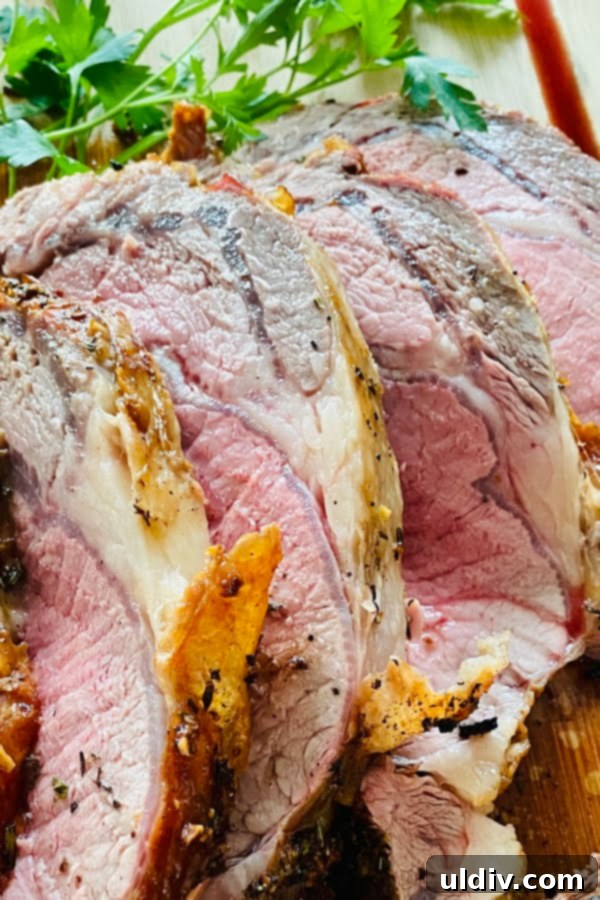
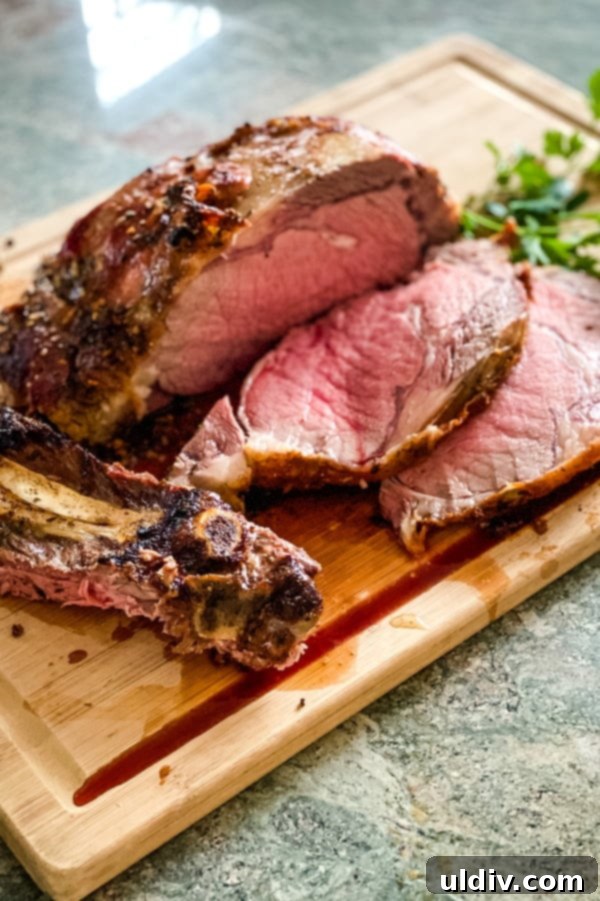
- Carving and Serving: After the essential resting period, it’s time to carve. If you have a bone-in roast, first carefully cut along the bone line to remove the entire section of bones. Then, slice the roast against the grain into thick, approximately 1-inch slices. Pour any accumulated juices from the cutting board over the sliced meat to enhance its flavor and moisture. Serve immediately with your prepared creamy horseradish sauce and desired side dishes.
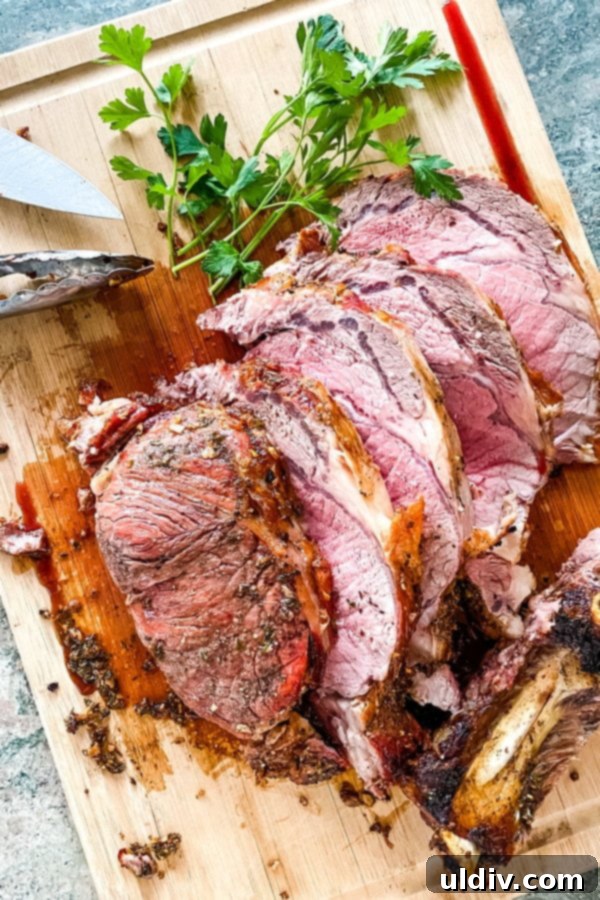
Achieving Perfection: Best Internal Temperature for Prime Rib
The key to a truly remarkable prime rib is cooking it to your preferred level of doneness. This is where a reliable wireless meat thermometer becomes invaluable, transforming the art of roasting into a precise science. Remember that prime rib, like all large cuts of meat, continues to cook even after it’s removed from the oven. This phenomenon, known as “carry-over cooking,” means the internal temperature will rise by another 5 to 10 degrees during the resting period. Always pull your roast from the oven *before* it reaches the final desired temperature to account for this rise.
Follow this detailed guide for a perfectly cooked prime rib roast, tailored to your taste:
| Doneness Level | Color of Meat | Pull Temp (from oven) | Rest Temp (final) |
|---|---|---|---|
| Rare | Bright red center, slightly pink towards the exterior. Very tender and juicy. | 115°F (46°C) | 120°F (49°C) |
| Medium Rare | Warm red center, gradually becoming pink towards the exterior. The most common and highly desired doneness for prime rib, offering optimal juiciness and flavor. | 125°F (52°C) | 130°F (54°C) |
| Medium | Pink center, with more browning towards the exterior. Still juicy but with a firmer texture than medium-rare. | 130°F (54°C) | 135°F (57°C) |
| Medium Well | Slightly pink center, with a mostly brown exterior. The juiciness begins to diminish at this stage. | 140°F (60°C) | 145°F (63°C) |
| Well Done | Uniformly brown center and exterior. While fully cooked, this level of doneness can result in a drier, tougher texture. Generally not recommended for prime rib. | 155°F (68°C) | 160°F (71°C) |
Always trust your meat thermometer more than cooking time estimates, as oven calibrations can vary, and every roast is unique in size and shape. Aiming for the “Pull Temp” ensures that after resting, your prime rib will settle at the perfect “Rest Temp” for your enjoyment.
Preserving Perfection: Storage and Reheating Tips
Having leftover **slow roasted prime rib** is a delightful bonus, but proper storage and reheating are crucial to maintain its exceptional flavor and tender texture. Follow these tips to ensure your leftovers are just as delicious as the freshly carved roast.
Storing in the Refrigerator:
- Cool Completely: Before storing, allow the prime rib to cool down to room temperature. This is essential to prevent bacterial growth and ensure even cooling.
- Wrap Tightly: Once cool, tightly wrap individual slices or larger sections of the prime rib in plastic wrap, then an additional layer of aluminum foil. This dual wrapping helps to prevent air exposure, which can dry out the meat and lead to freezer burn.
- Shelf Life: Stored correctly, prime rib can be kept in the refrigerator for up to 5 days.
- Reheating Method: To reheat, arrange the desired slices of prime rib in a shallow oven-safe pan. Add about ¼ cup of beef stock or broth to the bottom of the pan; this moisture will help keep the meat from drying out. Cover the pan tightly with aluminum foil. Heat in a preheated 300°F (150°C) oven for 10-15 minutes, or until the meat is heated through to your desired warmth. Avoid high heat, as it can quickly toughen and dry out the prime rib.
Freezing for Longer Preservation:
- Cool and Wrap: As with refrigeration, ensure the prime rib is completely cool. Wrap it very tightly first in plastic wrap, then in a layer of heavy-duty aluminum foil, and finally place it in a resealable freezer bag, pressing out as much air as possible. Proper wrapping is key to preventing freezer burn.
- Freezer Life: Prime rib can be stored in the freezer for up to 2 months. Beyond this, its quality may start to degrade, though it will still be safe to eat.
- Reheating Method: When ready to enjoy, thaw the frozen prime rib slices overnight in the refrigerator. Once thawed, place the slices in a shallow oven-safe pan, add about ¼ cup of beef stock, and cover tightly with foil. Reheat in a 300°F (150°C) oven for 10-15 minutes, or until warmed through. Again, gentle heat is crucial for maintaining tenderness.
By following these guidelines, you can savor your delicious prime rib long after your initial feast.
Inspired Pairings: What to Serve with Slow Roasted Prime Rib
A magnificent **slow roasted prime rib** deserves equally spectacular accompaniments to complete the dining experience. While the prime rib itself is the star, the right side dishes enhance its rich flavor and provide a harmonious balance to the meal. Beyond the classic pairings, consider options that add contrasting textures, vibrant colors, and complementary flavors.
- Super Easy and Cheesy Mac and Cheese
Rich and creamy, a classic mac and cheese provides a comforting, indulgent contrast to the savory prime rib.
- Mashed Potato Stuffed Portobello Mushrooms
Earthy portobello mushrooms filled with creamy mashed potatoes offer a sophisticated, savory, and satisfying side.
- Roasted Carrots and Cauliflower with Honey and Goat Cheese
Sweet roasted carrots and tender cauliflower, brightened with honey and tangy goat cheese, provide a wonderful balance to the richness of the beef.
- Butternut Squash Risotto Recipe
A creamy, flavorful butternut squash risotto adds a luxurious texture and subtle sweetness that pairs beautifully with prime rib.
Beyond these specific suggestions, consider these categories for building your ideal menu:
- Potato Creations: Beyond stuffed potatoes, consider classic creamy mashed potatoes, crispy roasted potatoes with herbs, or a rich potato gratin. Potatoes are a natural partner, soaking up the delicious pan juices.
- Green Vegetables: Offer a refreshing contrast. Green bean almondine, asparagus with hollandaise, or a simple mixed green salad with a light vinaigrette all work wonderfully.
- Hearty Grains: While potatoes are often favored, a wild rice pilaf or a farro dish can add an interesting textural component.
- Additional Sauces: While horseradish cream is traditional and superb, a red wine reduction or a classic béarnaise sauce can also elevate the experience, offering different flavor profiles.
The goal is to create a well-rounded meal where each component plays a role in enhancing the overall enjoyment of your magnificent prime rib.
More Inspiring Dinner Recipe Ideas
While **slow roasted prime rib** is perfect for special occasions, there are many other delightful dinner recipes for everyday meals or smaller gatherings. Here are some more ideas to keep your meal rotation fresh and exciting:
- Cod Oreganata
- Chicken with Prosciutto, Fresh Sage and Marsala Mushroom Sauce
- Shrimp with Roasted Tomato Sauce and Goat Cheese
- Spinach and Sausage Lasagna
Connect & Share Your Culinary Creations!

Did you create this recipe?
I would absolutely love to hear about your experience! Please let me know how your **Slow Roasted Prime Rib** turned out by leaving a comment and a star rating below. Your feedback is invaluable and helps other home cooks discover this amazing recipe. Don’t forget to share your culinary triumph on social media! Tag me on Pinterest, Instagram, and Facebook – I can’t wait to admire your beautiful work!
Happy Cooking! ~ Amy