
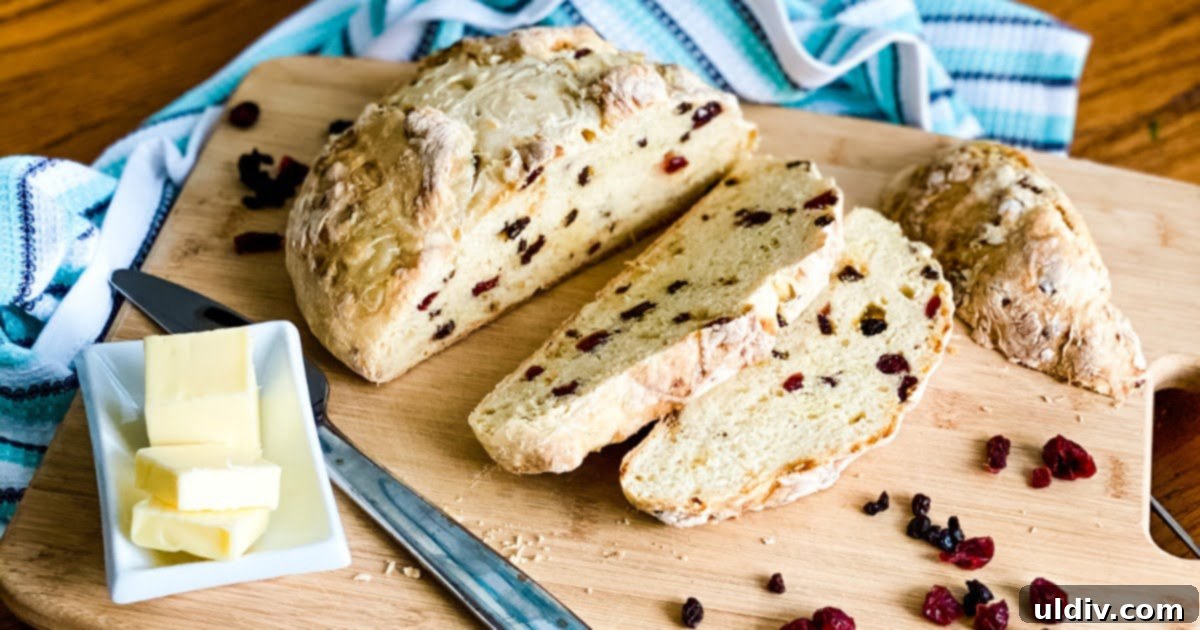
Welcome to a culinary journey celebrating one of Ireland’s most cherished and enduring traditions: Irish Soda Bread. This rustic, hearty loaf stands apart from conventional breads, primarily because it’s a “quick bread.” Unlike yeast-leavened varieties that demand hours of rising time, Irish Soda Bread relies on the simple yet effective combination of baking soda and baking powder as its leavening agents. The result is a wonderfully dense yet tender crumb, often adorned with the sweet and tart burst of dried cranberries and currants, making it an irresistible treat any time of year, particularly around St. Patrick’s Day.
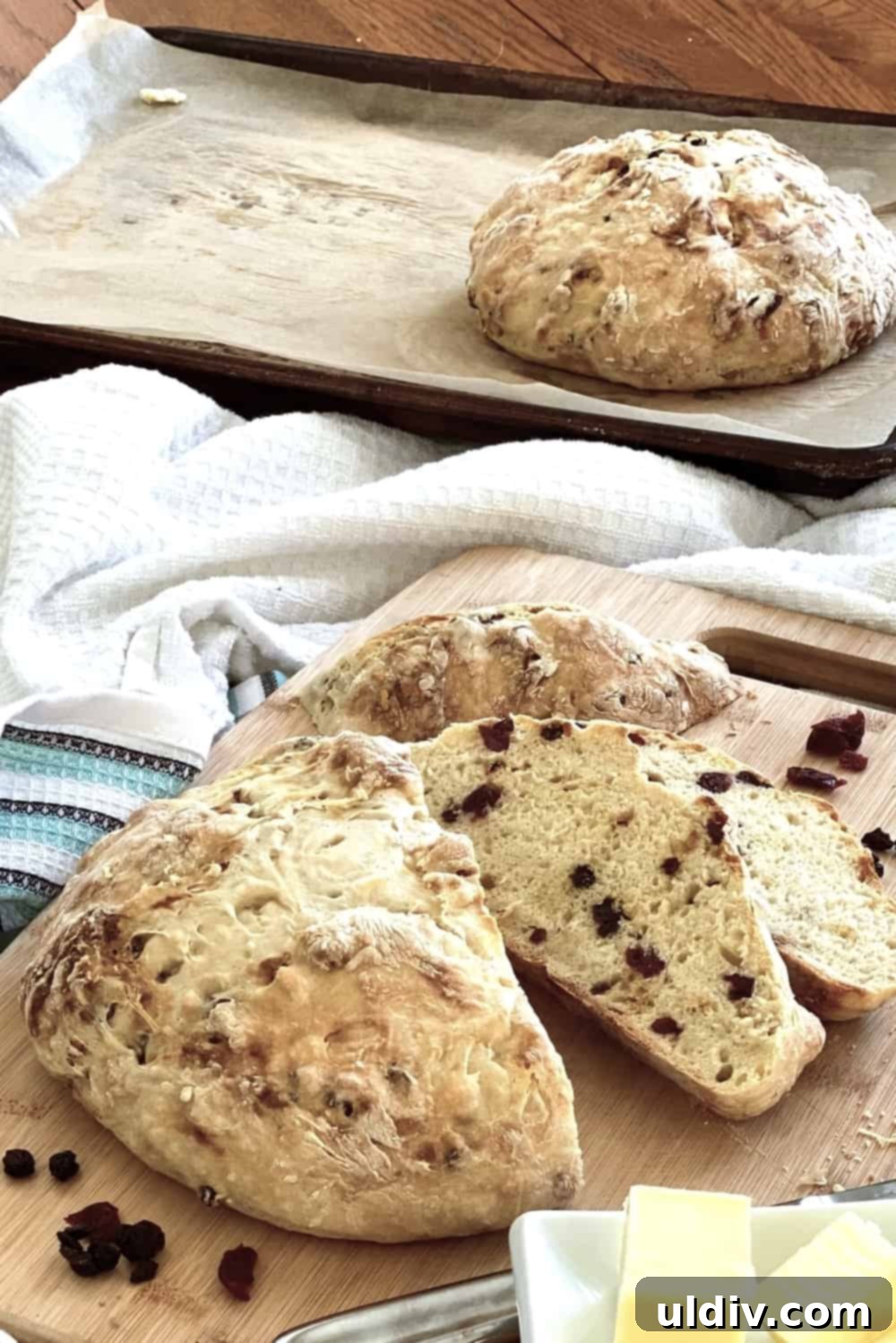
For many, Irish Soda Bread is more than just food; it’s a connection to heritage, a staple that evokes comfort and celebration. In our home, with a husband proudly of Irish descent – one of those fair-skinned Irishmen who affectionately refers to his sunburn as “an Irish tan” – March transforms into a month-long tribute to St. Patrick’s Day. And what better way to honor Irish traditions than with the aroma of freshly baked Irish Soda Bread filling the kitchen? A loaf or two becomes an essential part of our festive dining, a culinary centerpiece around which family memories are made.
Why You’ll Love This Traditional Irish Soda Bread Recipe
This homemade soda bread is more than just a side dish; it’s a soul-satisfying addition to any meal, especially when paired with classic Irish fare. Whether gracing our table alongside savory corned beef and cabbage, a rich Irish Lamb Stew with Guinness, or a hearty Reuben casserole, a slice of this rustic Irish bread truly completes the experience. Its unique qualities make it a standout:
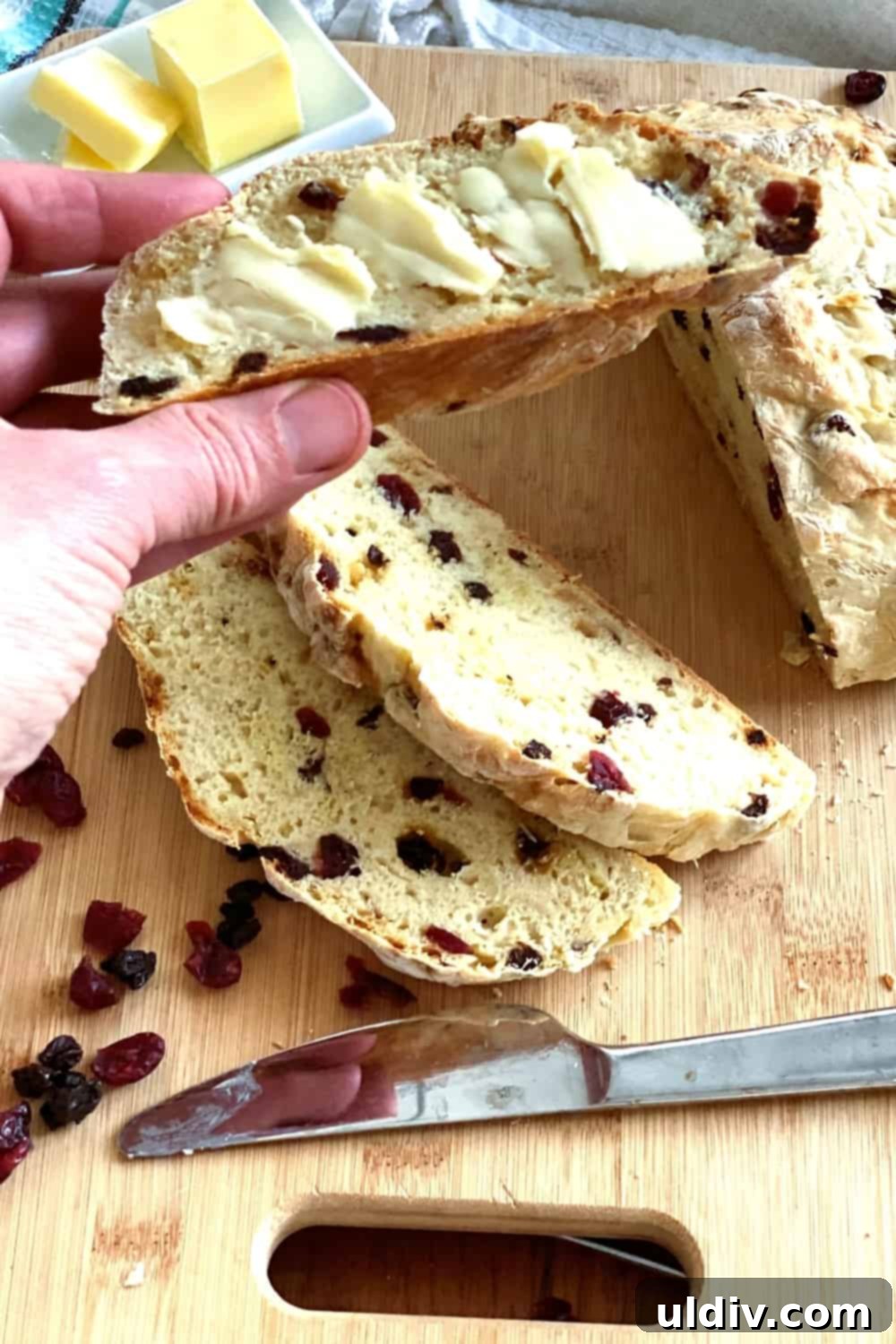
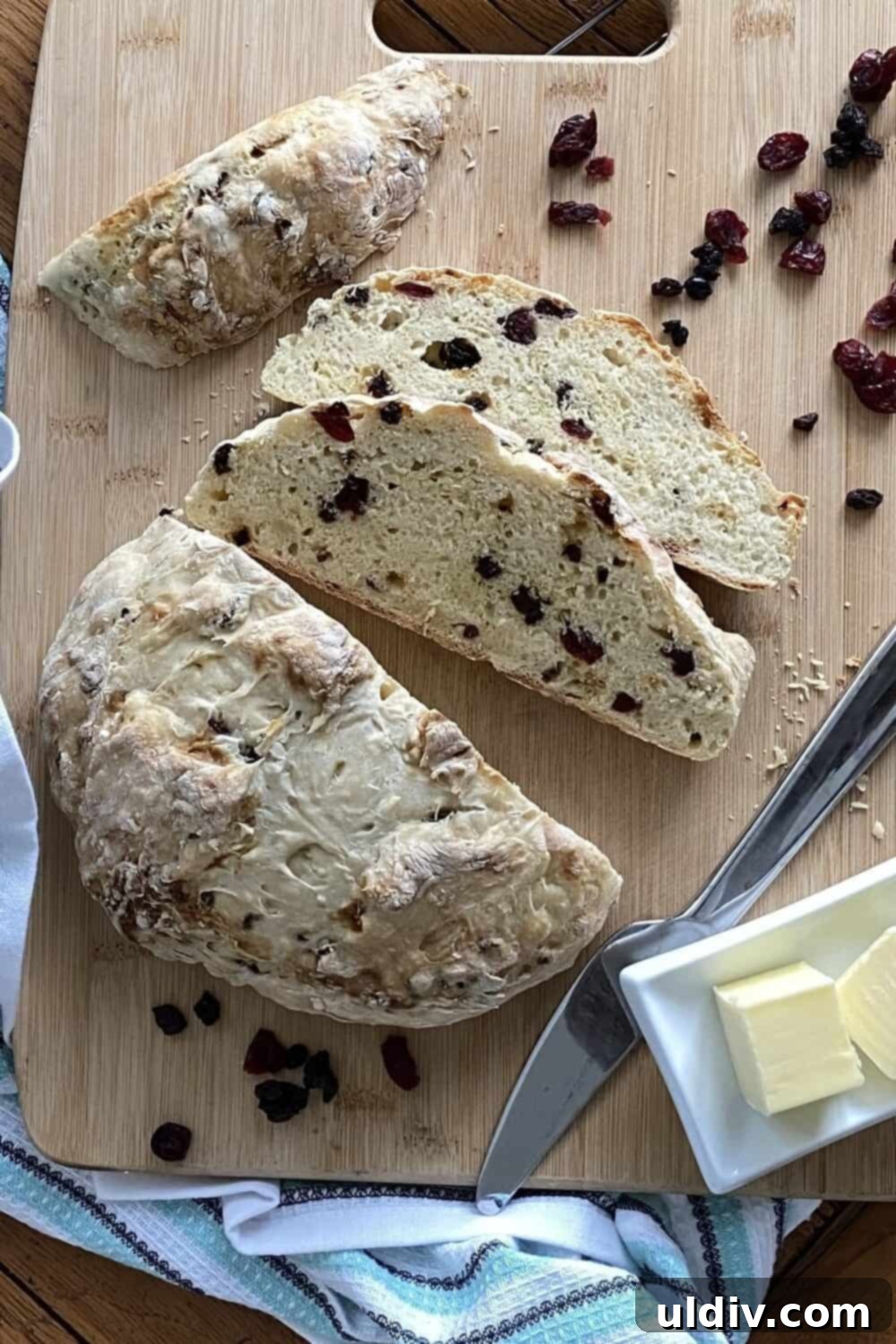
- Perfect Texture: This quick bread boasts a delightful density while remaining wonderfully soft and moist on the inside, encased in a beautifully sturdy, golden crust. It strikes the perfect balance between rustic charm and tender deliciousness.
- Balanced Sweetness and Tang: The generous inclusion of plump dried cranberries and sweet currants infuses each bite with a captivating blend of tartness and natural sweetness, elevating the bread’s flavor profile beyond a simple savory loaf.
- Remarkably Easy to Make: One of the greatest appeals of this simple soda bread recipe is its simplicity. By harnessing the power of baking soda and baking powder, it eliminates the need for yeast, meaning no lengthy proofing or rising times. You can enjoy homemade bread in a fraction of the time typically required for traditional yeast breads, making it an ideal choice for busy schedules or spontaneous baking urges.
- Versatile and Comforting: Beyond its role in Irish celebrations, this bread is a comforting staple that can be enjoyed any day. It’s wonderfully adaptable and pairs well with a variety of meals, from breakfast to dinner.
Essential Ingredients for Authentic Irish Soda Bread
Crafting this delicious cranberry currant soda bread requires just a handful of straightforward ingredients, each playing a crucial role in achieving the perfect texture and flavor. While you’ll find the precise quantities in the complete recipe card below, here’s a look at the key components:
- **All-Purpose Flour:** The foundation of our bread, providing structure and body.
- **Baking Powder:** Works in conjunction with baking soda to provide lift and lightness without yeast.
- **Baking Soda:** Reacts with the acidity in buttermilk to create carbon dioxide, essential for the bread’s rise and distinctive texture.
- **Kosher Salt:** Balances the flavors and enhances the overall taste of the bread.
- **Currants:** Small, intensely sweet dried berries that add a rich, fruity depth.
- **Dried Cranberries:** Contribute a delightful tartness that beautifully complements the sweetness of the currants and the subtle flavors of the bread.
- **Buttermilk:** Crucial for both its acidic properties, which activate the leavening agents, and for imparting incredible tenderness and moisture to the finished loaf.
Recipe Substitutions and Variations
One of the beauties of a classic recipe like traditional Irish soda bread is its adaptability. While the core ingredients create a truly authentic experience, don’t hesitate to experiment with these simple substitutions to tailor the bread to your taste or what you have on hand:
- **Leavening Agents:** This recipe intentionally uses both baking powder and baking soda. Baking soda alone can sometimes impart a slightly bitter or “soapy” taste if used in excess, especially when not fully neutralized by an acid. The combination ensures a robust rise and an optimal texture without any off-flavors, achieving that perfect balance that makes this no yeast bread so beloved.
- **Dried Fruits:** Currants, with their concentrated sweetness and slightly chewy texture, are a delightful traditional choice. They are a smaller, more intense cousin to raisins. If currants aren’t readily available, feel free to substitute with an equal amount of raisins. You can use all raisins for a sweeter loaf, or even a mix of golden and dark raisins for varied flavor.
- **Cranberry Options:** The dried cranberries introduce a lovely tanginess that cuts through the richness of the bread, adding a bright note that we adore. However, if you prefer a less tart profile or simply don’t have cranberries, you can easily omit them and double up on the currants or raisins. Alternatively, other dried fruits like chopped apricots, candied citrus peel, or even dried cherries could offer an interesting twist, though they would depart from the traditional Irish profile.
- **Buttermilk is Key:** Buttermilk is paramount for achieving the characteristic tender crumb of Irish Soda Bread. Its acidity reacts with the baking soda, creating a light yet sturdy interior. If you don’t have buttermilk on hand, it’s incredibly easy to make a substitute: simply add 1 tablespoon of white vinegar or lemon juice to a standard measuring cup, then fill the rest of the cup with regular milk (dairy or non-dairy works). Stir gently and let it sit for about 5 minutes until it thickens slightly and curdles. This DIY buttermilk substitute will activate the leavening agents just as effectively, ensuring your bread remains beautifully moist.
Mastering the Art of Baking Irish Soda Bread
Baking this easy soda bread recipe is a straightforward and rewarding process. Here’s a more detailed breakdown of each step, ensuring you achieve a perfect loaf every time:
- **Prepare Your Dry Ingredients:** Begin by combining all your dry ingredients – all-purpose flour, baking powder, baking soda, kosher salt, currants, and dried cranberries – in a large mixing bowl. Whisk them together thoroughly. This ensures that the leavening agents and fruits are evenly distributed throughout the flour mixture, guaranteeing a consistent rise and flavor in every slice.
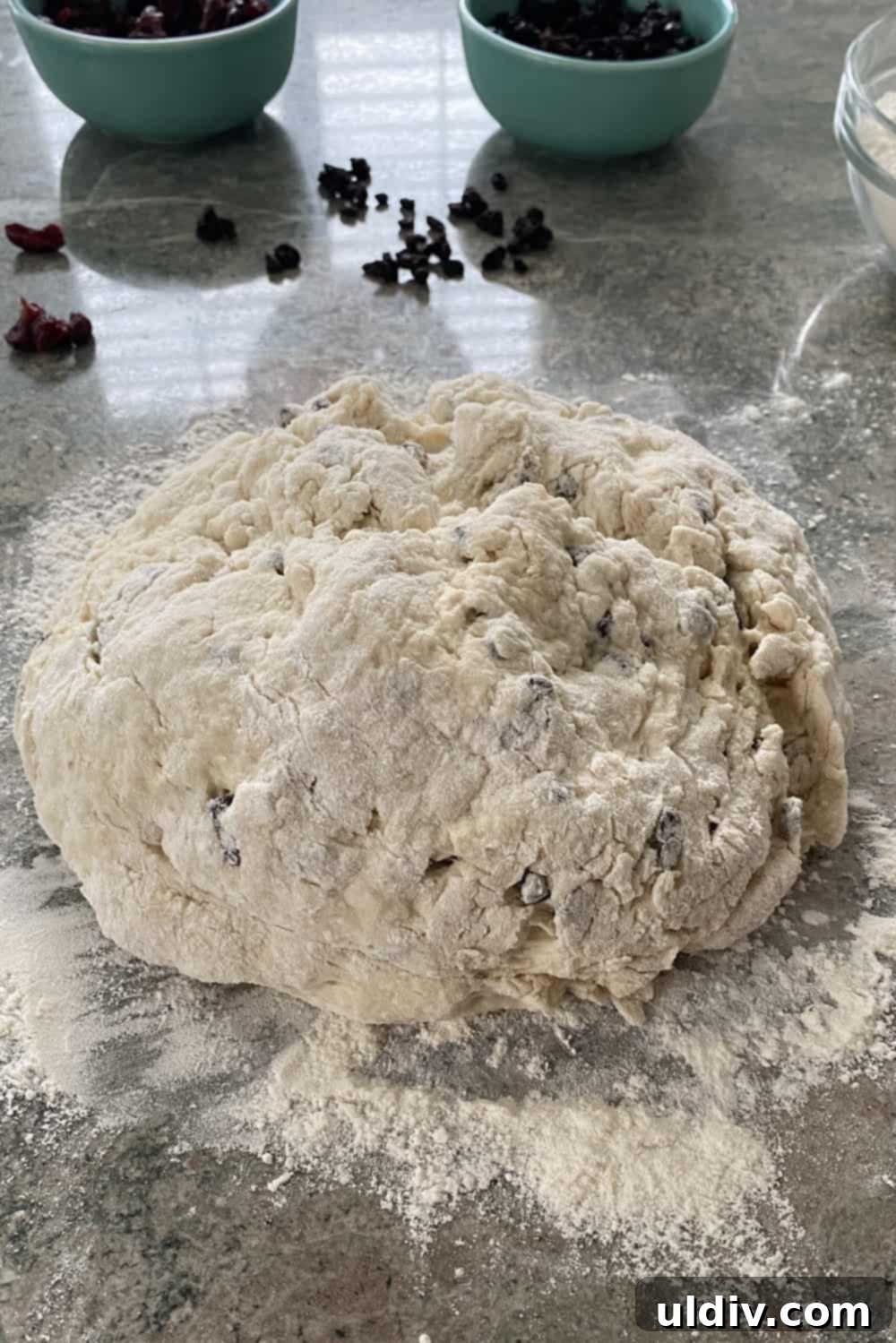
- **Incorporate the Buttermilk:** Gradually add the buttermilk to the dry ingredients. Stir gently, preferably by hand with a wooden spoon or spatula, until the dough just comes together into a coarse, crumbly mixture. The key here is to avoid overmixing. Overworking the dough can develop the gluten too much, leading to a tough, dense bread instead of the desired tender crumb. While you can use a stand mixer with a dough hook on a low speed, hand-mixing gives you better control and prevents over-development.
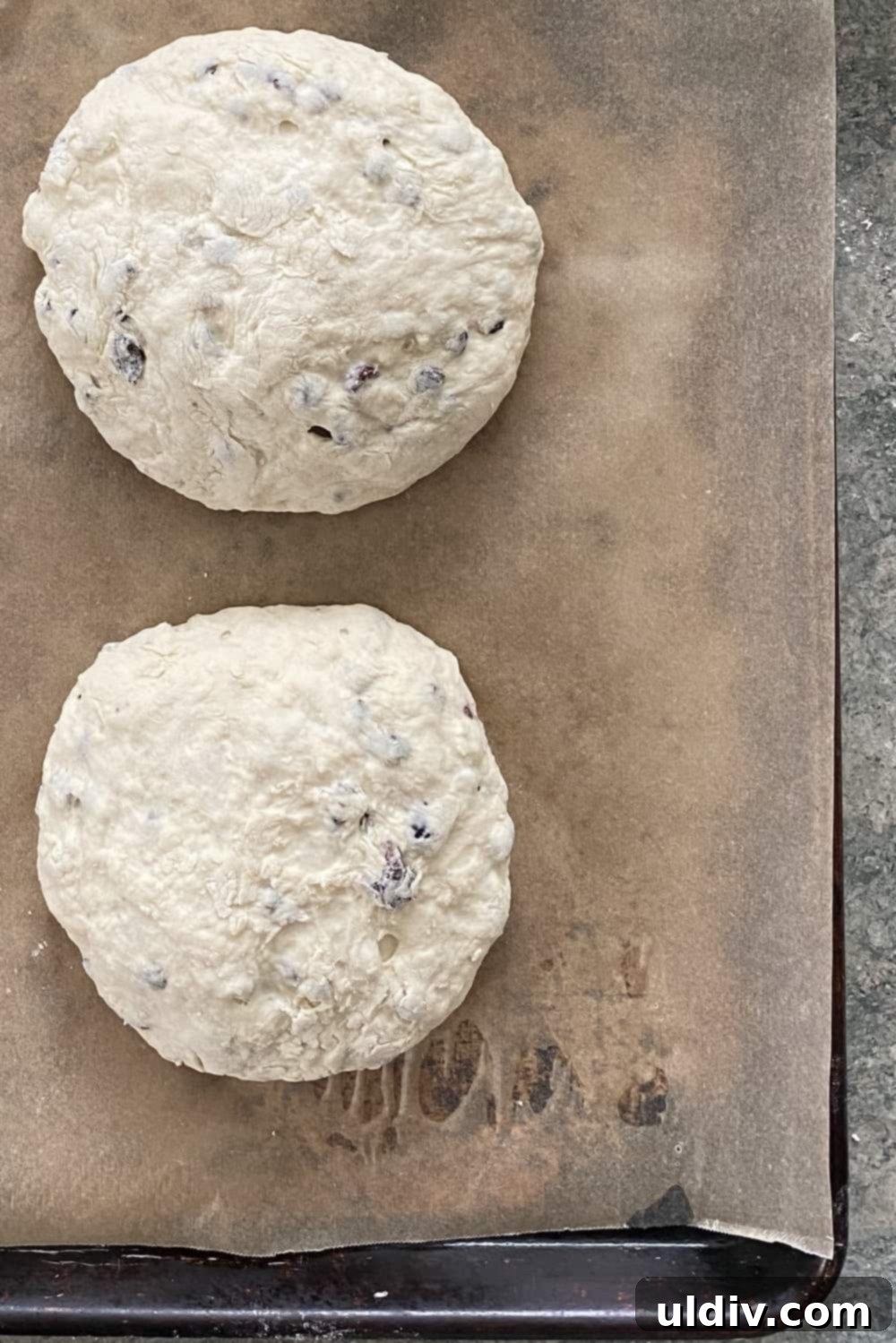
- **Light Kneading and Shaping:** Lightly flour a clean counter or work surface. Turn the coarse dough out onto it. Gently knead the dough for only 2 to 3 minutes, or just until it forms a rough, cohesive ball. Remember, this isn’t a yeast bread, so extensive kneading is neither required nor desired. Once formed, divide the dough in half and gently shape each portion into a round loaf. Place these loaves on a parchment-lined baking sheet. Before baking, use a sharp knife to cut a large “X” about ½ inch deep into the top of each loaf. This traditional incision isn’t just for superstition (warding off evil spirits, as some folklore suggests); it actually helps the center of the bread bake more thoroughly and evenly, ensuring a perfectly cooked interior.
- **Baking to Golden Perfection:** Bake the soda bread in a preheated oven until the crust turns a beautiful golden brown. The true test of doneness comes when you tap the bottom of the loaf – it should produce a hollow sound, indicating it’s thoroughly baked through. For absolute certainty, particularly for novice bakers, using a digital thermometer is highly recommended. The internal temperature of a perfectly baked loaf should register 195 degrees F (90 degrees C).
Once out of the oven, allow the bread to cool slightly on a wire rack before slicing. I find it absolutely irresistible straight from the oven, generously slathered with softened butter. Any leftover slices are truly divine when toasted the next morning and served with a dollop of your favorite jam or marmalade for a simple yet satisfying breakfast.
Expert Tips for Flawless Irish Soda Bread
Achieving the perfect homemade soda bread is well within reach, even for those new to baking. Here are a few invaluable tips to ensure your loaves turn out beautifully every time:
- **Ideal for Novice Bakers:** Irish Soda Bread is truly an ideal recipe for beginners. With its minimal ingredients, simple mixing process, and quick bake time, it’s incredibly forgiving. There’s no need to fuss with yeast activation or lengthy proofing, making it a “foolproof” introduction to the joys of bread baking.
- **The Traditional Cross:** Don’t skip cutting the traditional cross or “X” into the top of your loaves before baking. While its origins are steeped in folklore (some believe it wards off evil spirits or blesses the bread for the coming year), it serves a very practical purpose in baking. This incision allows heat to penetrate the thickest part of the loaf more efficiently, ensuring the center bakes thoroughly and prevents the crust from becoming too hard or cracking haphazardly.
- **Precision for Perfection:** One of the biggest challenges for many bakers, myself included, is knowing precisely when bread is done. Over-baked bread can be dry, while under-baked bread can be gummy. Eliminate the guesswork by using a digital thermometer. Insert it into the center of the loaf, and when it registers an internal temperature of 195 degrees F (90 degrees C), your Irish Soda Bread is baked to absolute perfection. This ensures a moist interior and a beautifully browned crust.
- **Avoid Overmixing:** As mentioned in the instructions, overmixing the dough is the enemy of tender soda bread. Mix only until the ingredients are just combined and a rough ball forms. A slightly shaggy dough is preferable to a smooth, overworked one.
- **Don’t Forget to Soak Fruits:** Soaking dried cranberries and currants in hot water for about 10 minutes (and then draining them thoroughly) before adding them to the dough helps to plump them up, preventing them from absorbing moisture from the dough during baking and potentially drying out your bread.
Serving and Storage Suggestions
Once your glorious rustic Irish soda bread emerges from the oven, the ways to enjoy it are endless. For the ultimate experience, serve it warm, sliced thick, and generously spread with softened butter. The way the butter melts into the tender crumb is pure bliss. It’s also fantastic with a drizzle of honey, a dollop of clotted cream, or your favorite fruit jam for a comforting breakfast or an afternoon tea treat. Savory pairings are equally delightful; this bread makes an excellent accompaniment to hearty stews, soups, or even a simple cheese board.
To store any leftover bread, ensure it’s completely cooled. Wrap it tightly in plastic wrap or aluminum foil, or place it in an airtight container. It will stay fresh at room temperature for 2-3 days. For longer storage, Irish Soda Bread freezes beautifully. Slice the cooled loaf, then wrap individual slices or the whole loaf in plastic wrap and then in foil. It can be frozen for up to 3 months. When ready to enjoy, simply thaw at room temperature or toast slices directly from frozen for a quick treat.
Share Your Irish Soda Bread Creations!
We absolutely adore hearing from you! If you decide to make this Irish soda bread recipe, please share your experience. Leave a comment below, and don’t forget to give the recipe a star rating. Your feedback is invaluable to us and helps other home bakers discover and enjoy this wonderful bread. For more fabulous foodie stories, cooking tips, and delicious recipes, be sure to connect with us on our social media channels. Find us on YouTube, Facebook, Pinterest, and Instagram. We can’t wait to see your baking triumphs!
Rustic Irish Soda Bread Recipe
Rustic Irish Soda Bread
One of my favorite bread recipes, rustic Irish Soda Bread is a quick bread that does not require yeast. Baking soda and baking powder are the leavening agents for this dense yet tender bread flecked with dried cranberries and currants.
Print Recipe
Pin Recipe
10 minutes
50 minutes
1 hour
2 loaves
111 kcal
Amy Casey
Ingredients
- 5 cups all-purpose flour
- 1 tablespoon baking powder
- 1 teaspoon baking soda
- 1 teaspoon kosher salt
- ½ cup each currants and dried cranberries (soaked in hot water for 10 minutes and drained)
- 2 ¼ cups low fat buttermilk
Instructions
- Preheat oven to 350 degrees F (175 degrees C) and line a large baking sheet with parchment paper.
- In a large bowl, combine the flour, baking powder, baking soda, salt, currants, and cranberries. Whisk well to ensure even distribution.
- Add the buttermilk to the dry ingredients and stir until the mixture resembles a coarse, crumbly dough. Do not overmix.
- Lightly dust your hands with flour and turn the dough out onto a clean work surface. Gently knead for about 2 to 3 minutes, or until a rough ball forms.
- Cut the dough in half and form each half into a round loaf.
- Transfer the loaves to the prepared baking pan. Using a sharp knife, cut a cross about ½ inch deep into the top of each loaf.
- Bake for 45 to 50 minutes, or until the loaves are golden brown and sound hollow when tapped on the bottom. For precise doneness, the internal temperature should reach 195 degrees F (90 degrees C).
Video
Notes
If you do not have buttermilk, you can easily make a substitute: Add 1 tablespoon of vinegar or lemon juice to each cup of milk, let it stand for 5 minutes before adding to the dry ingredients.
Feel free to substitute all currants or all dried cranberries in the recipe. Raisins also make a good substitution for the dried fruits.
The loaves are done when they yield a hollow sound when tapped on the bottom, and the bread has an internal temperature of 195 degrees F (90 degrees C).
Nutrition
Serving: 1 slice | Calories: 111 kcal | Carbohydrates: 23.7g | Protein: 3.5g | Fat: 0.5g | Saturated Fat: 0.2g | Cholesterol: 1mg | Sodium: 265mg | Fiber: 1.2g | Sugar: 7.8g
Did you make this recipe?
Tag @amycaseycooks on Instagram so we can all admire your work!