
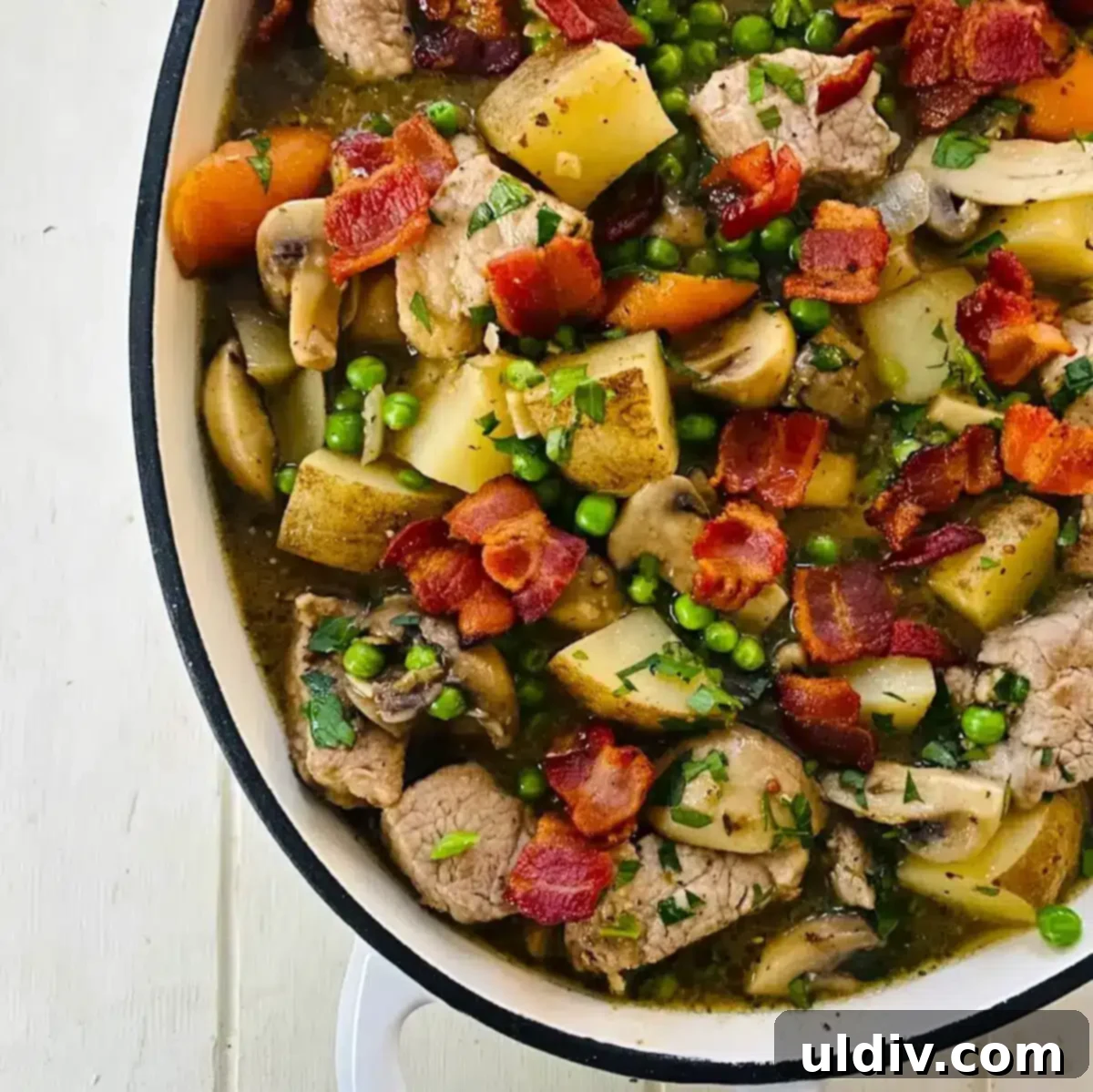
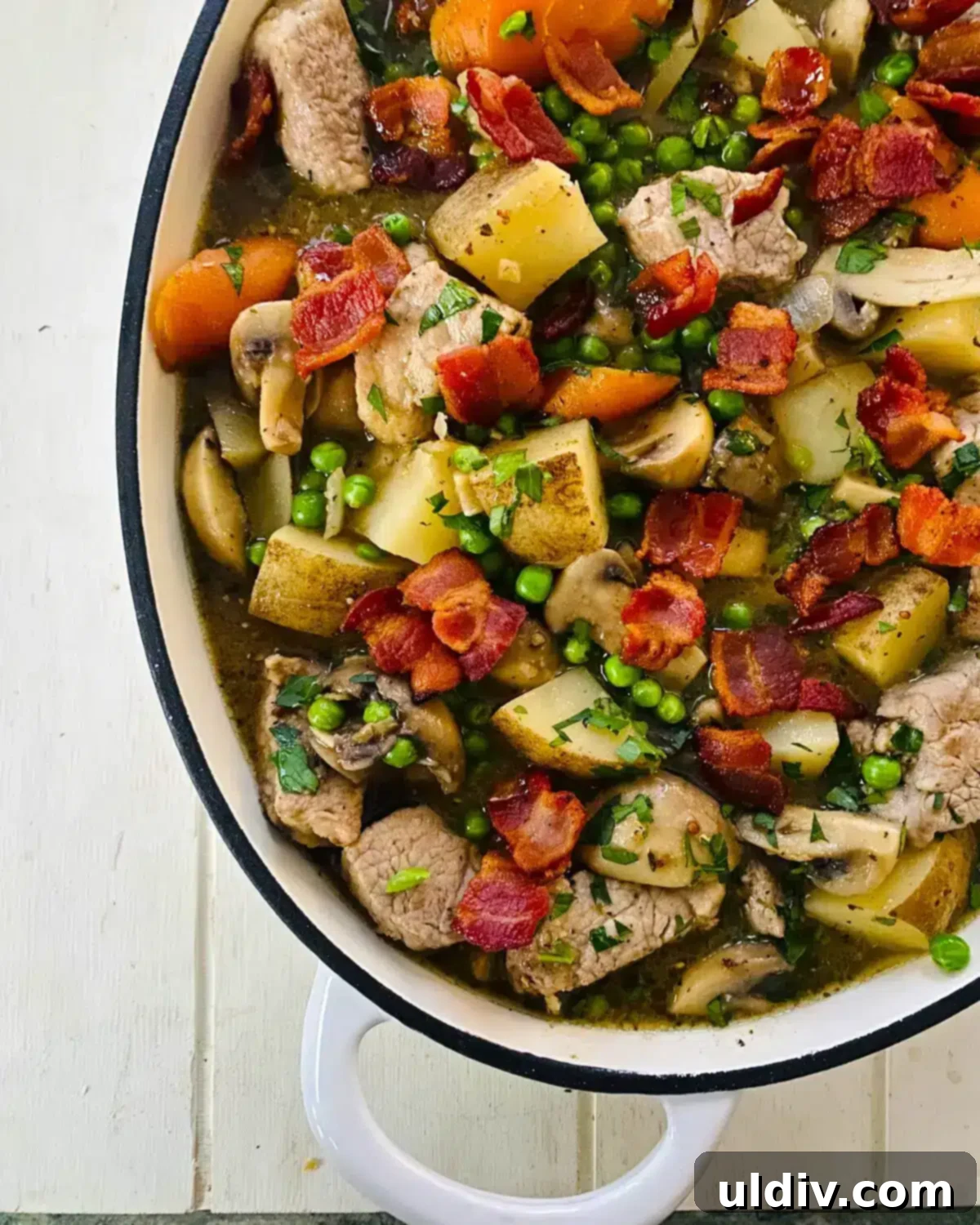
There’s nothing quite like a hearty, simmering stew to chase away the chill of a brisk day. This Pork Tenderloin Stew Recipe stands as the epitome of comfort food, promising warmth, richness, and incredible flavor in every spoonful. Imagine succulent pork tenderloin, cooked to melting perfection, nestled alongside tender carrots, sweet onions, aromatic garlic, earthy mushrooms, and wholesome potatoes. All these delightful ingredients are bathed in a thick, luxurious white wine sauce that truly elevates this dish to an unforgettable family dinner. It’s a culinary hug that satisfies the soul and warms you from the inside out, making it an absolute must-try for your winter or fall meal rotation.
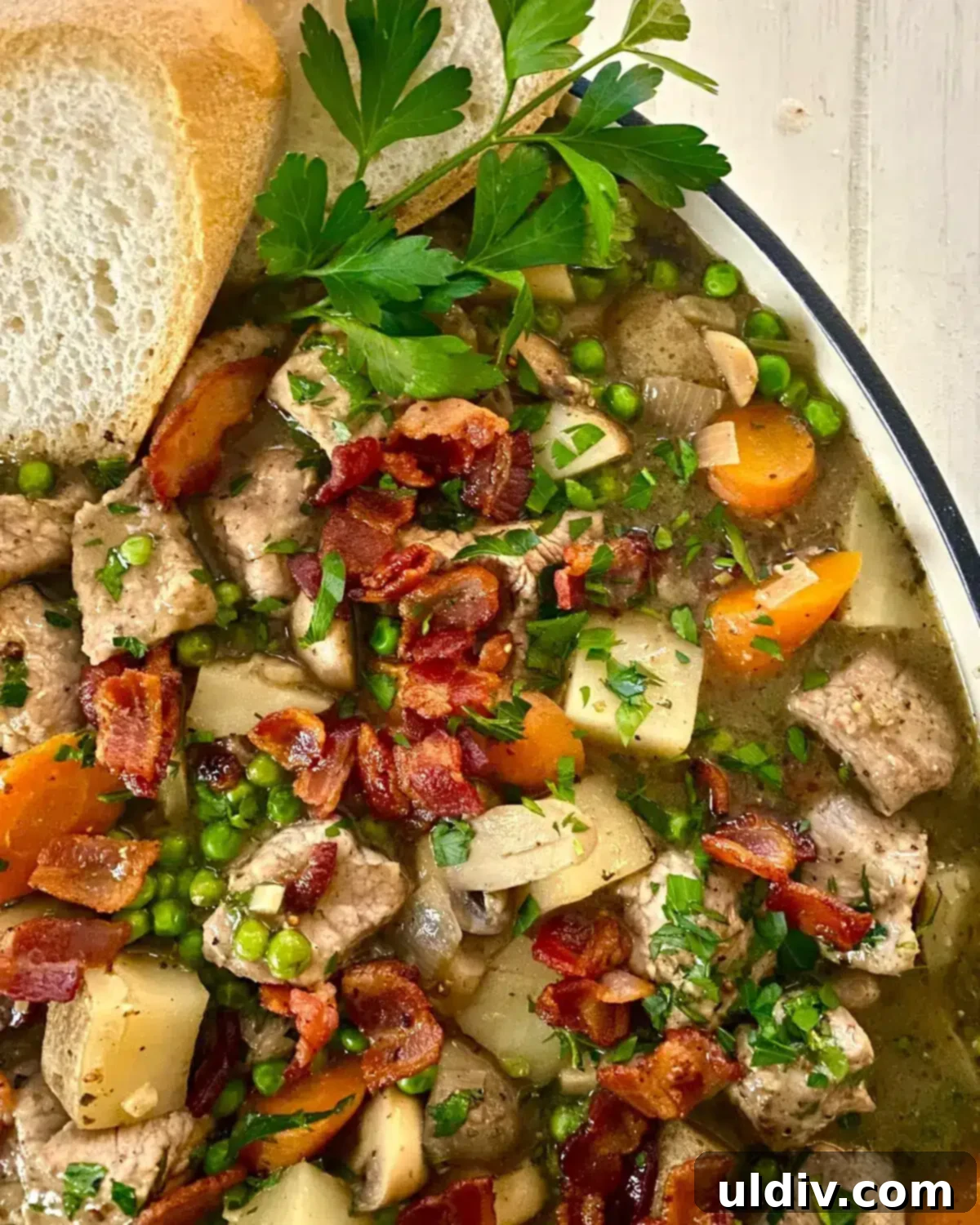
As the crisp air of autumn settles in, my kitchen inevitably fills with the comforting aromas of classic, warming dishes. Hearty stews are always at the top of my list, bringing a sense of coziness and tradition to the dinner table. Alongside beloved recipes like my Irish Lamb Stew with Guinness and a robust Beef Tenderloin Stew, this exquisite pork stew recipe is a consistent request from my husband the moment temperatures begin to drop. It’s more than just a meal; it’s an experience that brings everyone together.
What sets this particular classic pork stew apart is its remarkable efficiency. Despite its rich, complex flavors, this hearty and delicious meal is ready in approximately an hour, significantly cutting down on the typical cooking time associated with traditional stew recipes. The secret lies in using quick-cooking, incredibly tender pork tenderloin. Unlike other cuts of pork that require hours of simmering to break down tough connective tissues, pork tenderloin ensures a melt-in-your-mouth texture in a fraction of the time, making this a truly speedy and convenient stew recipe without compromising on taste or tenderness.
Beyond its quick preparation, this pork tenderloin stew also shines as the perfect make-ahead, one-pot meal. It’s ideal for busy weeknights or for feeding a crowd, as the entire dish comes together in a single pot, simplifying both cooking and cleanup. Moreover, its flavors deepen and meld beautifully over a couple of days when stored in the refrigerator. The pork, carrots, mushrooms, and potatoes eagerly absorb the rich, savory white wine sauce, transforming the stew into an even more amazing and intensely flavorful dish with each passing day. Explore more of my one-pan dinner recipes for effortless meal solutions.
Why You’ll Adore This Hearty Pork Tenderloin Stew
Discover the compelling reasons why this stewed pork recipe is destined to become a staple in your home:
- Incredibly Quick: Ready in About an Hour ~ Traditional stews often call for tougher cuts of meat like pork butt or shoulder, which contain dense connective tissue and typically demand 2-3 hours of slow simmering to become tender. Our recipe ingeniously utilizes lean and delicate pork tenderloin, a cut renowned for its rapid cooking time. This means you can achieve a wonderfully tender and flavorful stew in just a fraction of the usual time, making it perfect for weeknight dinners without sacrificing quality or depth of flavor.
- Effortless Cleanup: Made in One Pot ~ Simplify your cooking experience with this fantastic one-pot wonder. All the magic happens in a single large Dutch oven or stock pot, from browning the bacon and searing the pork to simmering the vegetables in their rich sauce. This not only streamlines the cooking process but also minimizes cleanup, allowing you more time to savor this delicious family meal. It’s the ultimate solution for a satisfying dinner with less fuss.
- Leftovers Are Even Better: A Make-Ahead Marvel ~ Like many cherished stew recipes, this classic pork stew’s flavors truly deepen and improve with time. When allowed to rest and meld overnight in the refrigerator, the ingredients fully absorb the rich white wine sauce, resulting in an even more harmonious and intense taste profile the next day. This makes it an excellent choice for meal prepping, entertaining, or simply enjoying delicious, ready-to-eat comfort food throughout the week.
Essential Ingredients & Clever Substitutions for the Best Pork Stew
To craft the most delicious pork tenderloin stew, gather these high-quality ingredients. We’ve also included thoughtful substitutions for your convenience. For a comprehensive list of exact measurements, please **scroll down to the recipe card**.
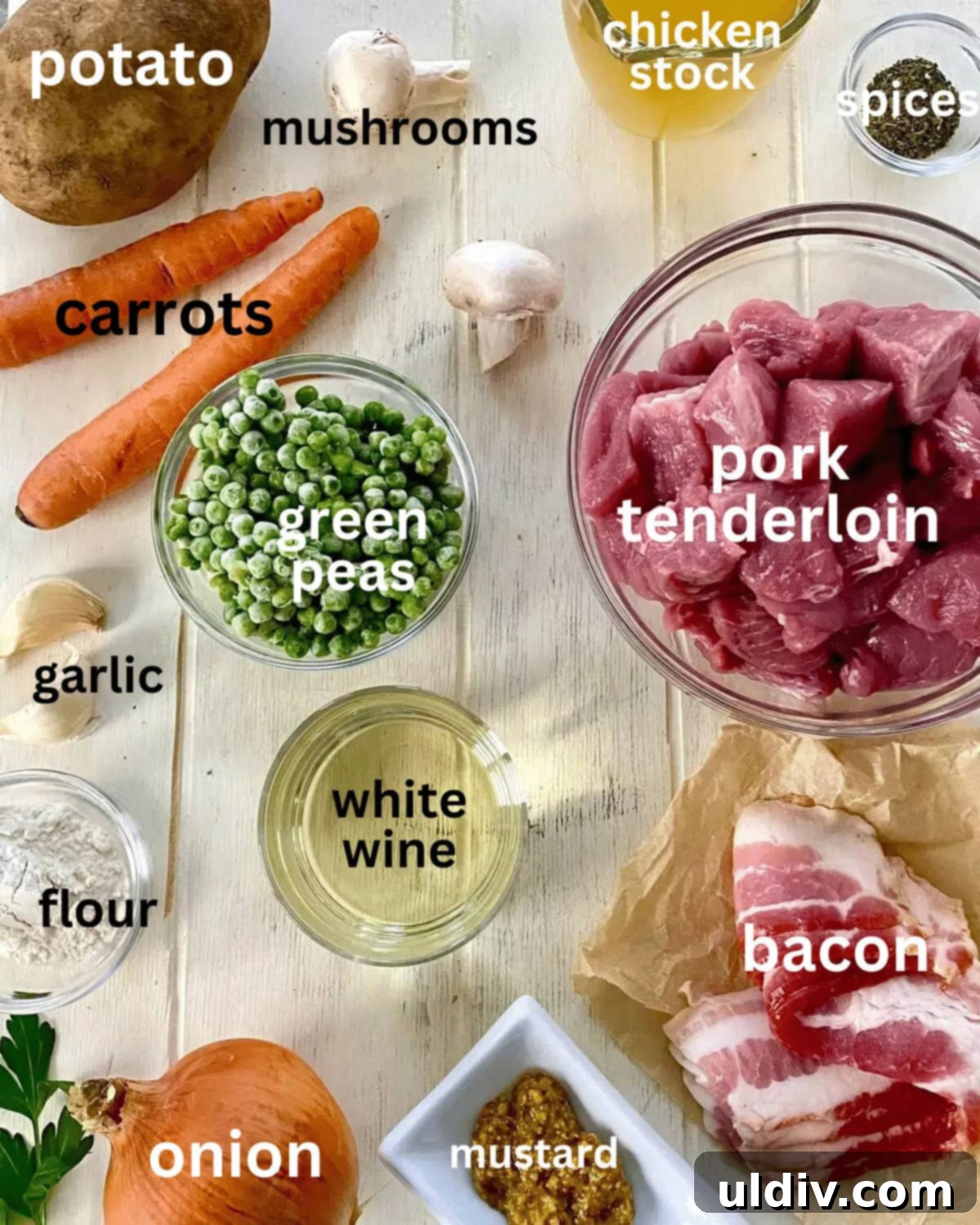
- Bacon ~ Diced bacon adds a crucial layer of smoky, savory depth to the stew, and its rendered fat is used for searing the pork and sautéing the vegetables, infusing the entire dish with flavor. For a slightly milder, saltier alternative, consider using diced pancetta.
- Pork Tenderloin ~ This recipe specifically calls for pork tenderloin due to its inherent tenderness and quick-cooking properties. It’s the key to achieving a speedy stew that remains incredibly juicy and melt-in-your-mouth. Avoid tougher cuts like pork butt or shoulder, as they necessitate significantly longer cooking times (2-3 hours) to become tender, altering the recipe’s quick-cook nature. While pork loin can be an option, it tends to be a tougher cut and might not yield the same exquisite tenderness.
- Kosher Salt ~ With its larger, coarser grain, kosher salt seasons food more effectively without making it overly salty. It enhances the natural flavors of all the ingredients, bringing balance and depth to the stew.
- Fresh Ground Black Pepper ~ The vibrant, pungent notes of freshly ground black pepper are far more aromatic and flavorful than pre-ground varieties, adding a superior kick and fragrance to your stew.
- All-Purpose Flour ~ A small amount of all-purpose flour is used both to coat the pork, aiding in browning, and later to thicken the rich white wine sauce, giving the stew its characteristic luxurious consistency. If you need a gluten-free alternative, 1 tablespoon of cornstarch mixed with 2 tablespoons of cold water can be used as a thickening agent.
- Salted Butter ~ The subtle saltiness in salted butter not only adds richness and a beautiful sheen but also skillfully accentuates all the wonderful flavors present in the stew. Unsalted butter can be used, just be mindful to adjust the overall salt level to your taste.
- Yellow Onion ~ Diced yellow onion provides a sweet and savory aromatic base for the stew. Vidalia onion makes an excellent, slightly sweeter alternative if available.
- Carrots ~ Sweet and vibrant carrots add both color and a subtle sweetness that balances the savory elements. For an interesting earthy twist, try substituting parsnips in place of some or all of the carrots.
- Button Mushrooms ~ These add a delightful umami depth and a tender texture to the stew. Meaty cremini mushrooms (also known as baby bellas) are a fantastic option if you prefer a richer, more intense mushroom flavor.
- Russet Potatoes ~ Starchy russet potatoes break down slightly to contribute to the stew’s hearty texture and absorb the delicious sauce. Yukon Gold potatoes are an excellent first choice for a substitute, offering a creamy texture. Sweet potatoes can also provide a delightful sweetness, while red potatoes hold their shape well.
- Garlic ~ Freshly minced garlic is indispensable, infusing the stew with its pungent, aromatic goodness. Pre-chopped garlic is a convenient alternative if you’re short on time.
- Italian Herb Blend ~ This versatile mix of dried basil, oregano, thyme, marjoram, and rosemary provides a classic, aromatic backdrop for the stew. It’s readily available at most grocery stores and adds a depth of herbaceous flavor. Feel free to use individual dried herbs if you prefer.
- Dry White Wine ~ A dry white wine, such as Pinot Grigio, Sauvignon Blanc, or unoaked Chardonnay, is crucial for deglazing the pan and adding a layer of sophisticated acidity and depth to the sauce. Always opt for a quality drinking wine over “cooking wines,” which are often high in sodium and can impart an unpleasant taste. For a non-alcoholic option, use extra chicken stock or a touch of white grape juice.
- Reduced Sodium Chicken Stock ~ This provides the primary liquid base for the stew, ensuring a rich broth without excessive saltiness. Regular chicken stock can be used, but be sure to adjust the amount of added salt accordingly to prevent the stew from becoming overly salty.
- Whole Grain Mustard ~ The robust, pungent flavor and delightful texture of whole grain mustard add an unexpected but welcome complexity and subtle bite to the stew. If you prefer a smoother texture or a slightly sharper flavor, Dijon mustard makes an excellent substitute.
- Green Peas ~ Added at the end, frozen green peas bring a pop of fresh color and a delicate sweetness, perfectly complementing the rich stew.
- Fresh Parsley ~ A sprinkle of chopped fresh parsley as a garnish brightens the dish with its vibrant color and fresh, herbaceous aroma, cutting through the richness of the stew beautifully.
Step-by-Step Pork Tenderloin Stew Recipe Details
Crafting this hearty pork tenderloin stew is a straightforward process, utilizing common kitchen tools to bring together a truly satisfying meal. This section offers a brief, visual overview of the recipe steps. For the complete, detailed instructions with precise measurements, please **scroll down to the comprehensive recipe card**.
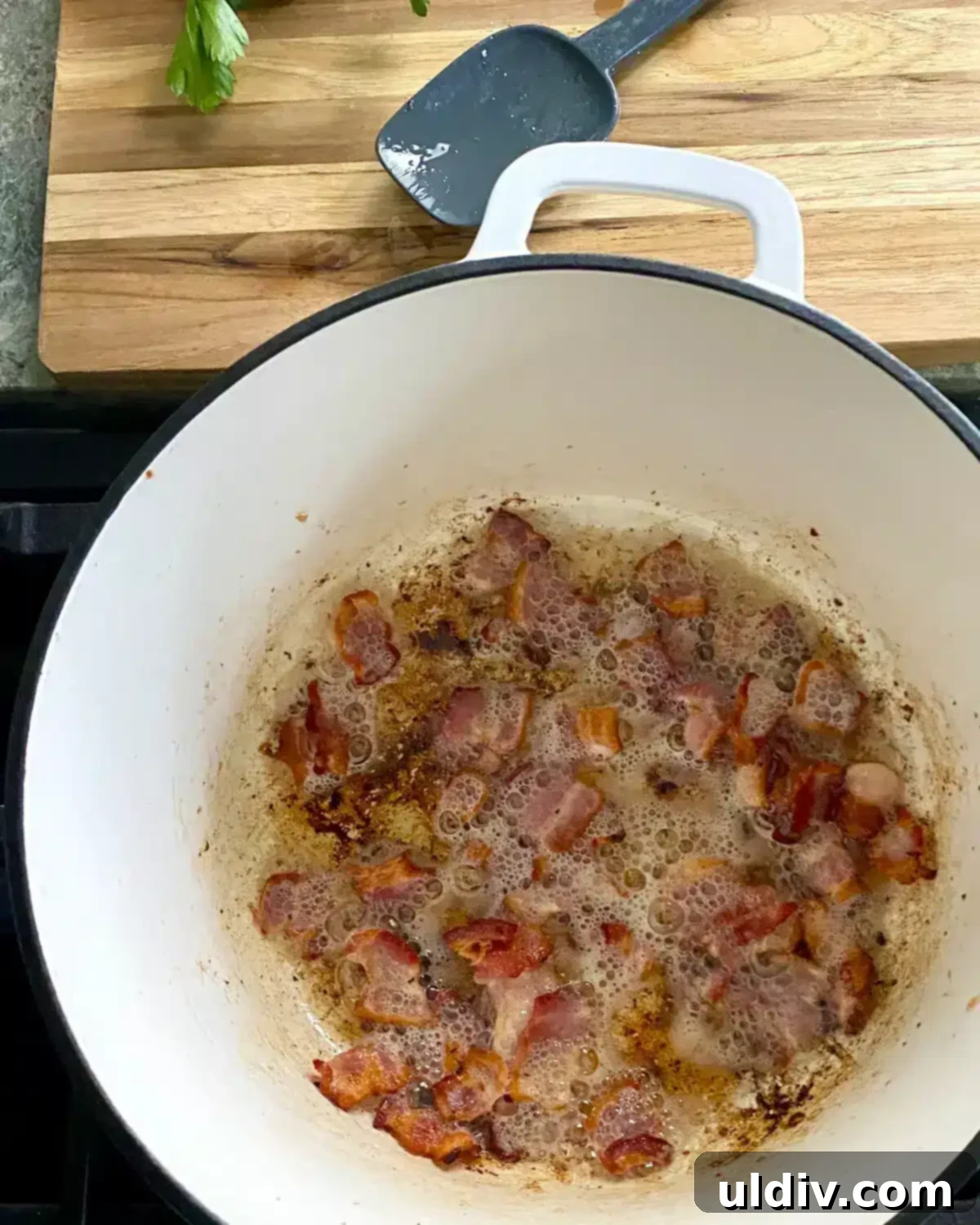
1. In a spacious Dutch oven or stock pot set over medium heat, cook the diced bacon until it achieves a delightful crispness. Once cooked, remove the crispy bacon pieces to a separate bowl, reserving the rendered bacon fat in the pot. This fat forms the flavorful base for our stew.
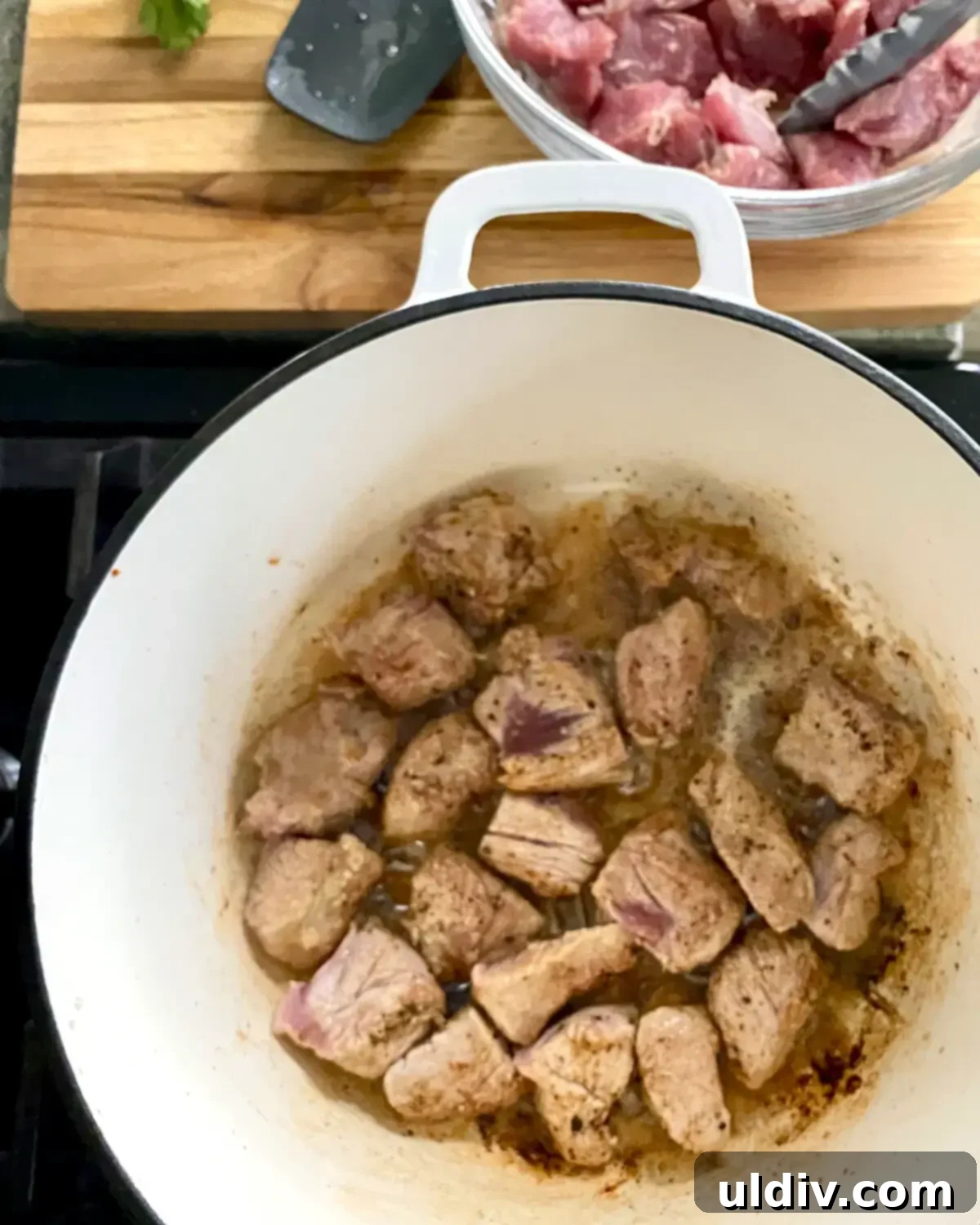
2. Lightly toss the cubed pork tenderloin with a seasoned mixture of flour, kosher salt, and fresh black pepper. Increase the heat slightly and quickly sauté the pork in the hot bacon fat until beautifully browned on all sides. This brief sear locks in flavor. Once seared, transfer the pork to a bowl and set aside.
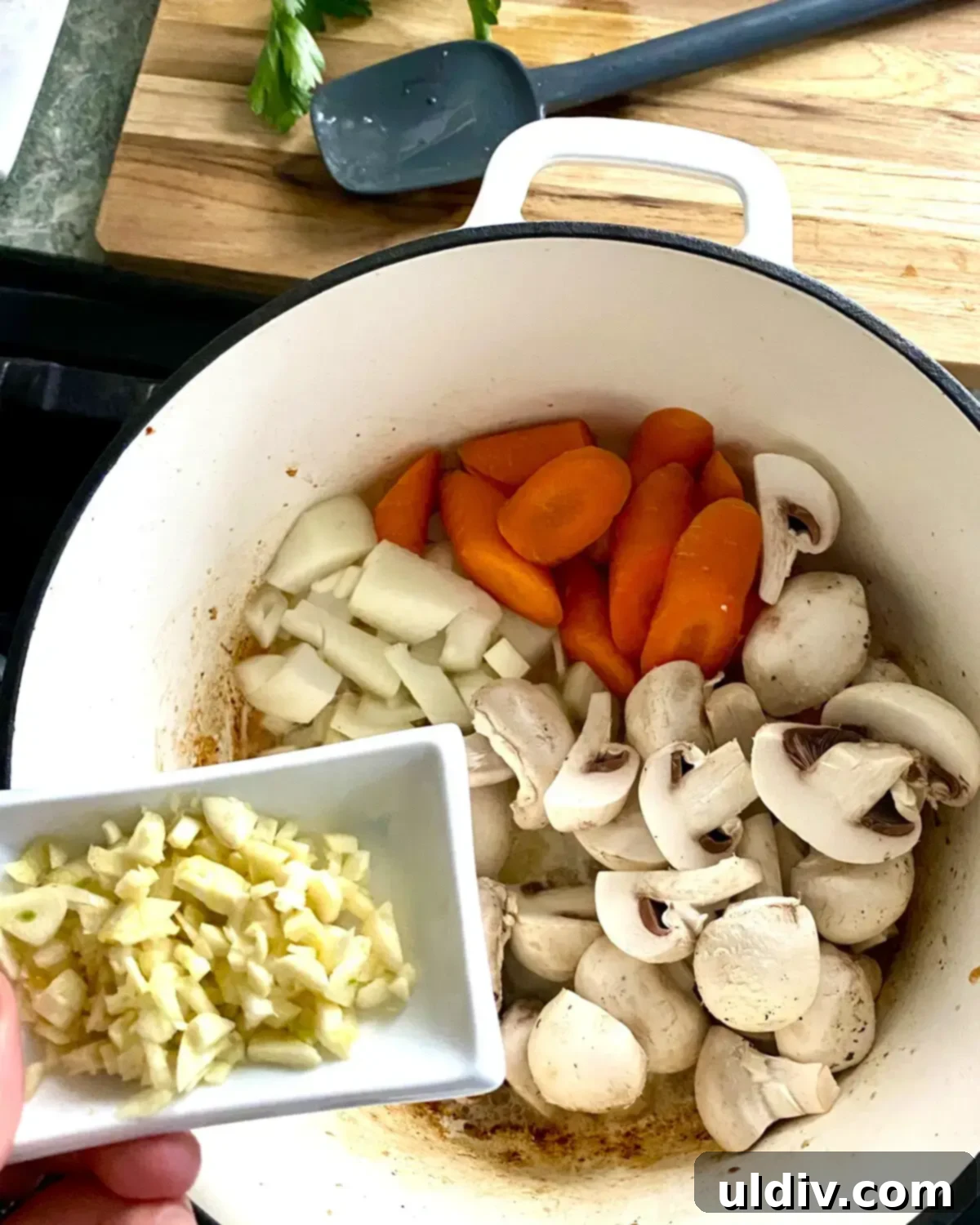
3. Reduce the heat back to medium. Add the salted butter to the pot, followed by the diced onion, carrots, sliced mushrooms, and minced garlic. Sauté these aromatic vegetables for about 5-6 minutes, or until the onions become translucent and the mushrooms begin to soften, developing deeper flavors.
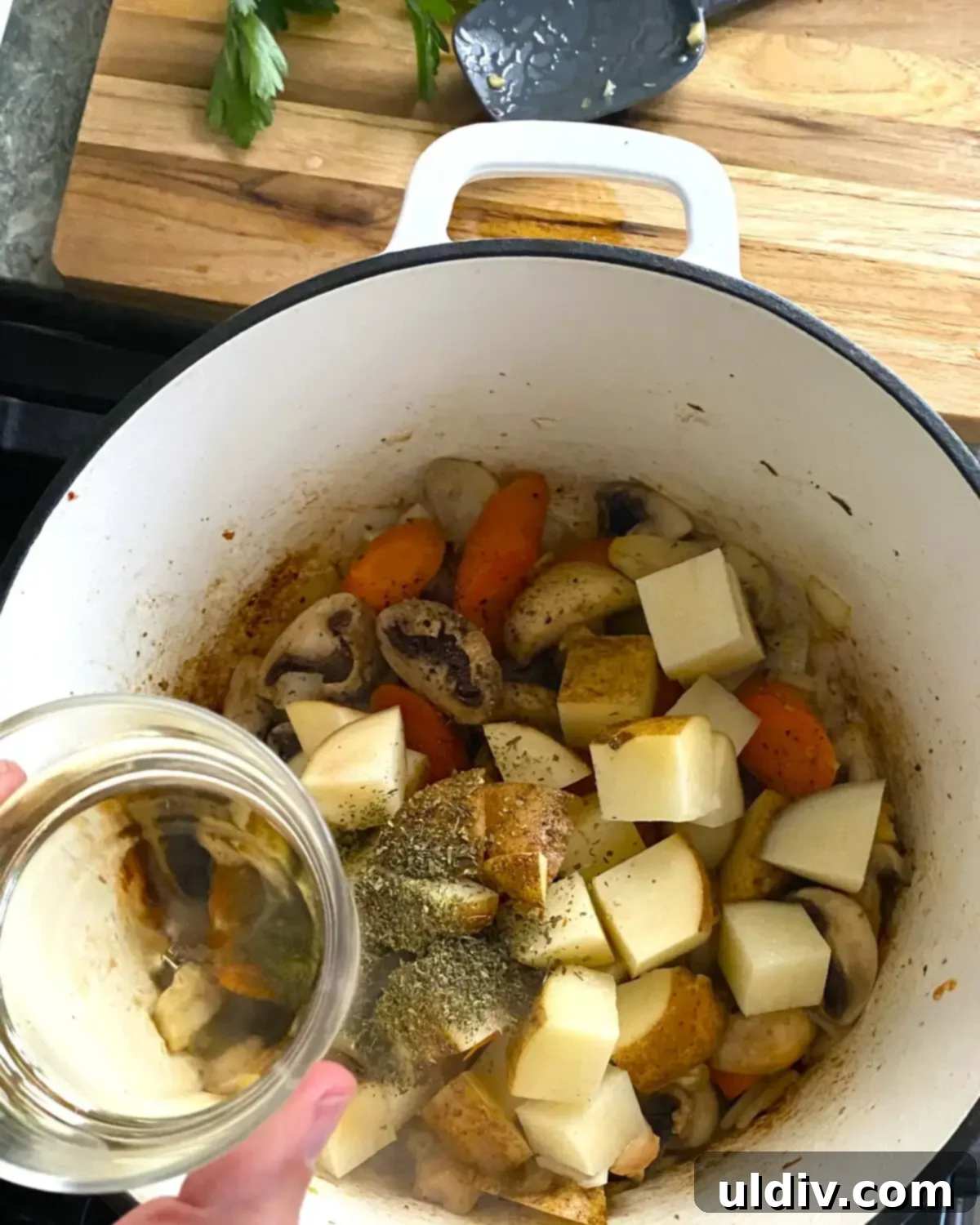
4. Introduce the chopped potatoes, your chosen Italian herb blend, and the dry white wine to the pot. Stir all ingredients thoroughly to combine. Bring the mixture to a low boil, allowing the liquid to reduce by approximately half. This step concentrates the wine’s flavor and helps deglaze the pot, releasing all the delicious browned bits from the bottom.
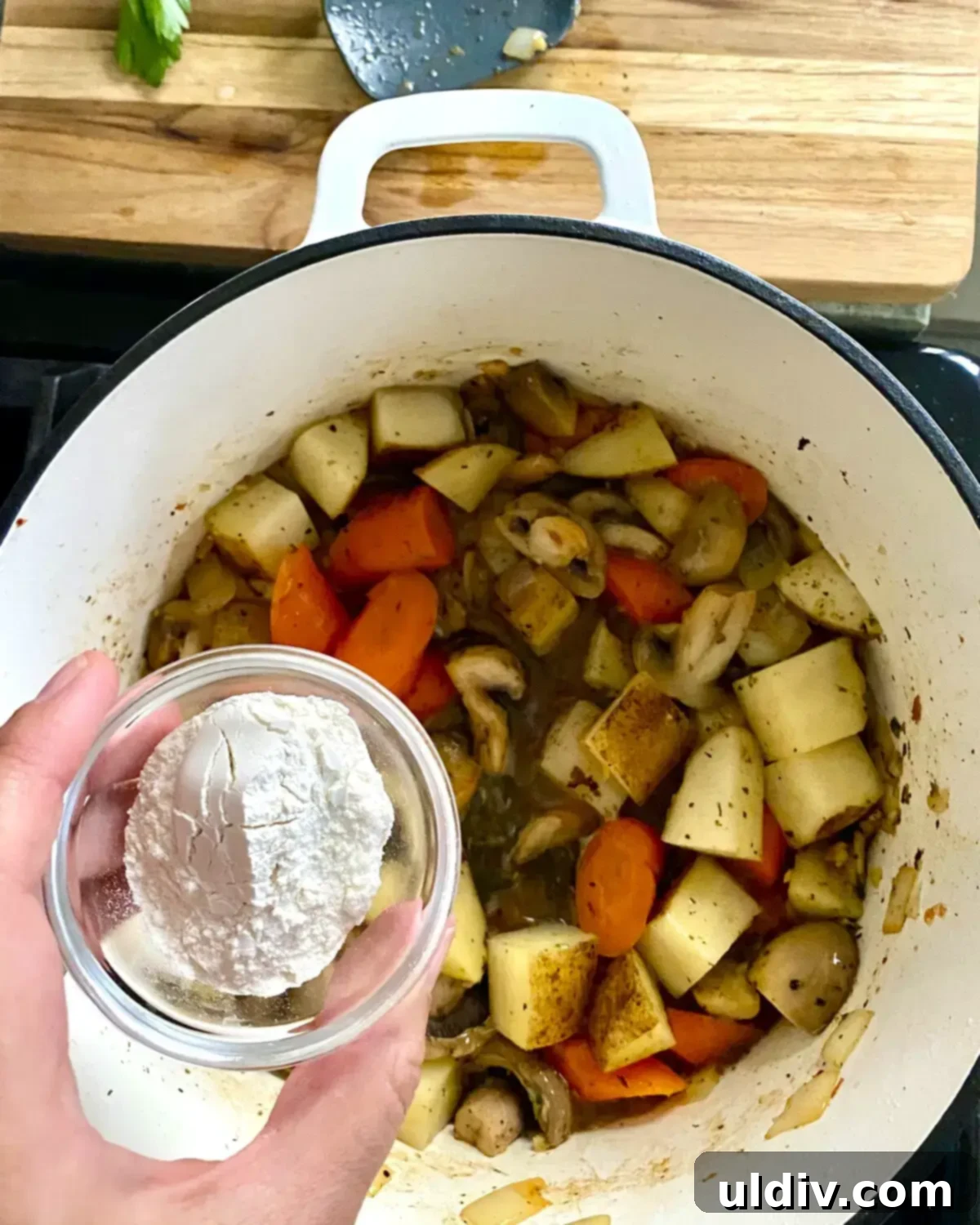
5. Sprinkle the remaining all-purpose flour over the vegetables and liquid. Stir continuously for 1-2 minutes, allowing the flour to cook out its raw taste and integrate fully, beginning the thickening process for our rich sauce.
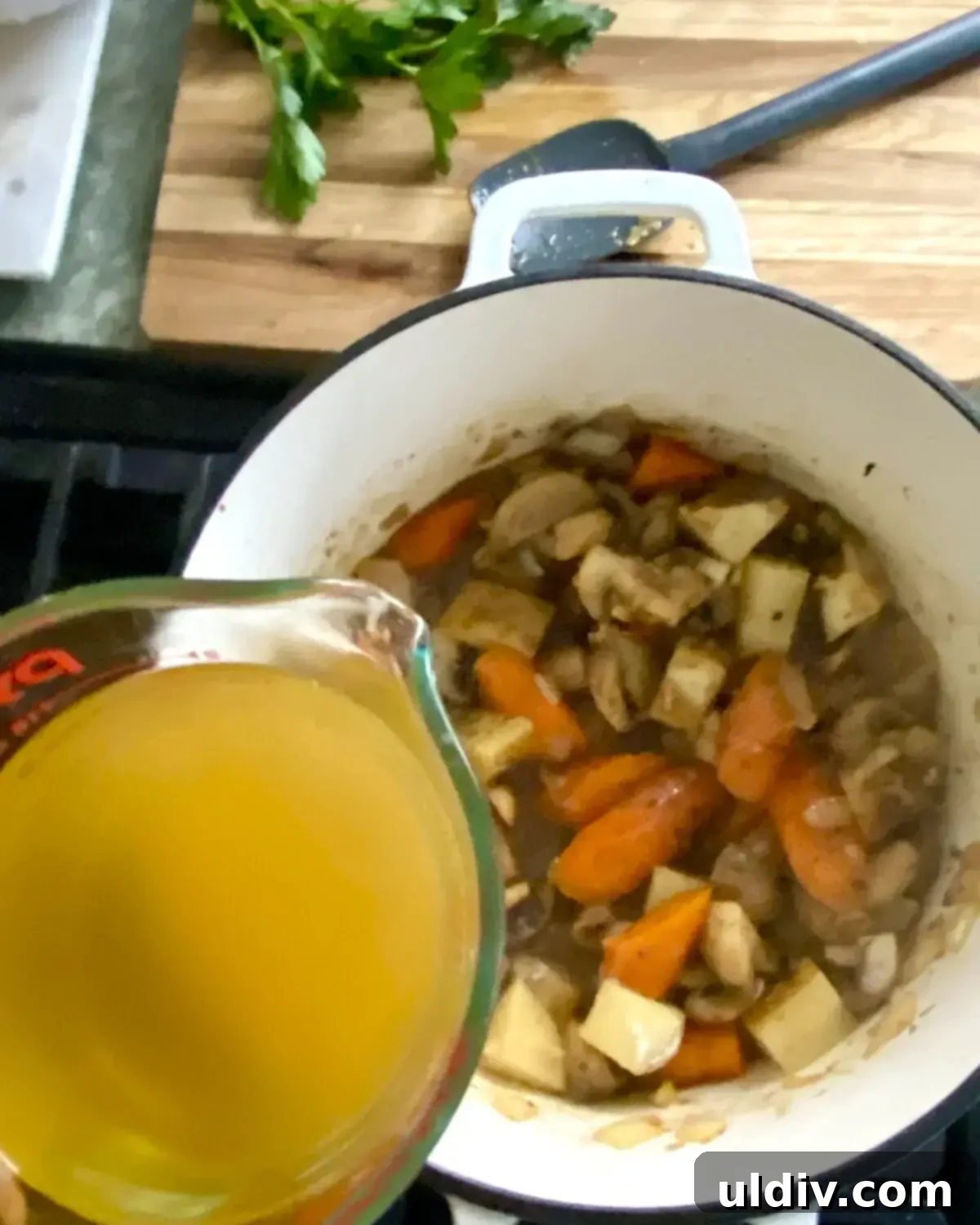
6. Gradually pour in the chicken stock, stirring constantly to prevent lumps and create a smooth sauce. Incorporate the whole grain mustard, stirring again until all ingredients are well combined. Bring the stew to a gentle boil, then reduce the heat to a simmer and let it cook for 10-15 minutes, or until the potatoes are tender when pierced with a fork.
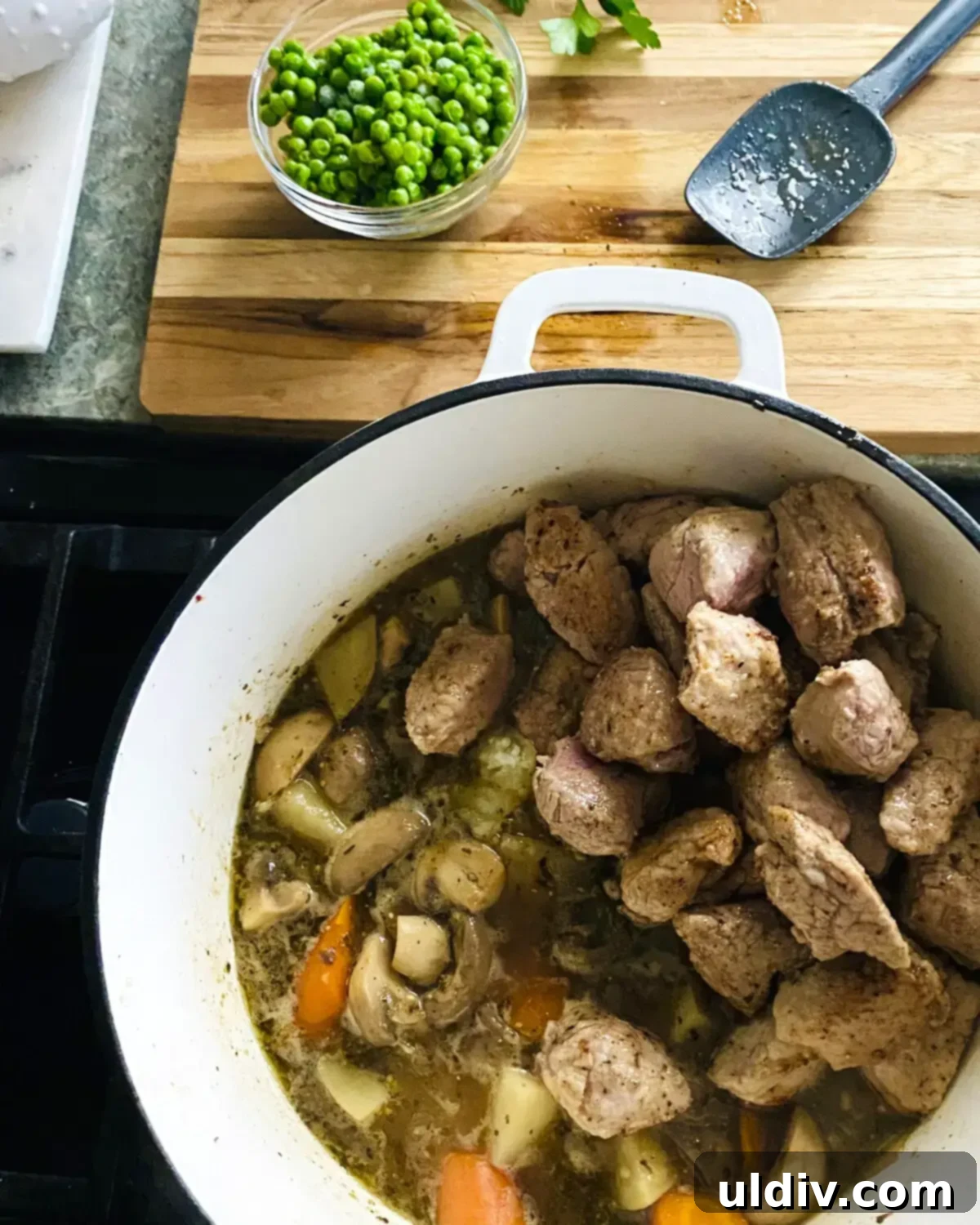
7. Carefully return the seared pork tenderloin, along with any delicious accumulated juices from its resting bowl, to the pot. Stir everything together gently to distribute the pork evenly. Simmer for an additional 5 minutes, allowing the pork to finish cooking through and absorb the rich flavors of the stew.
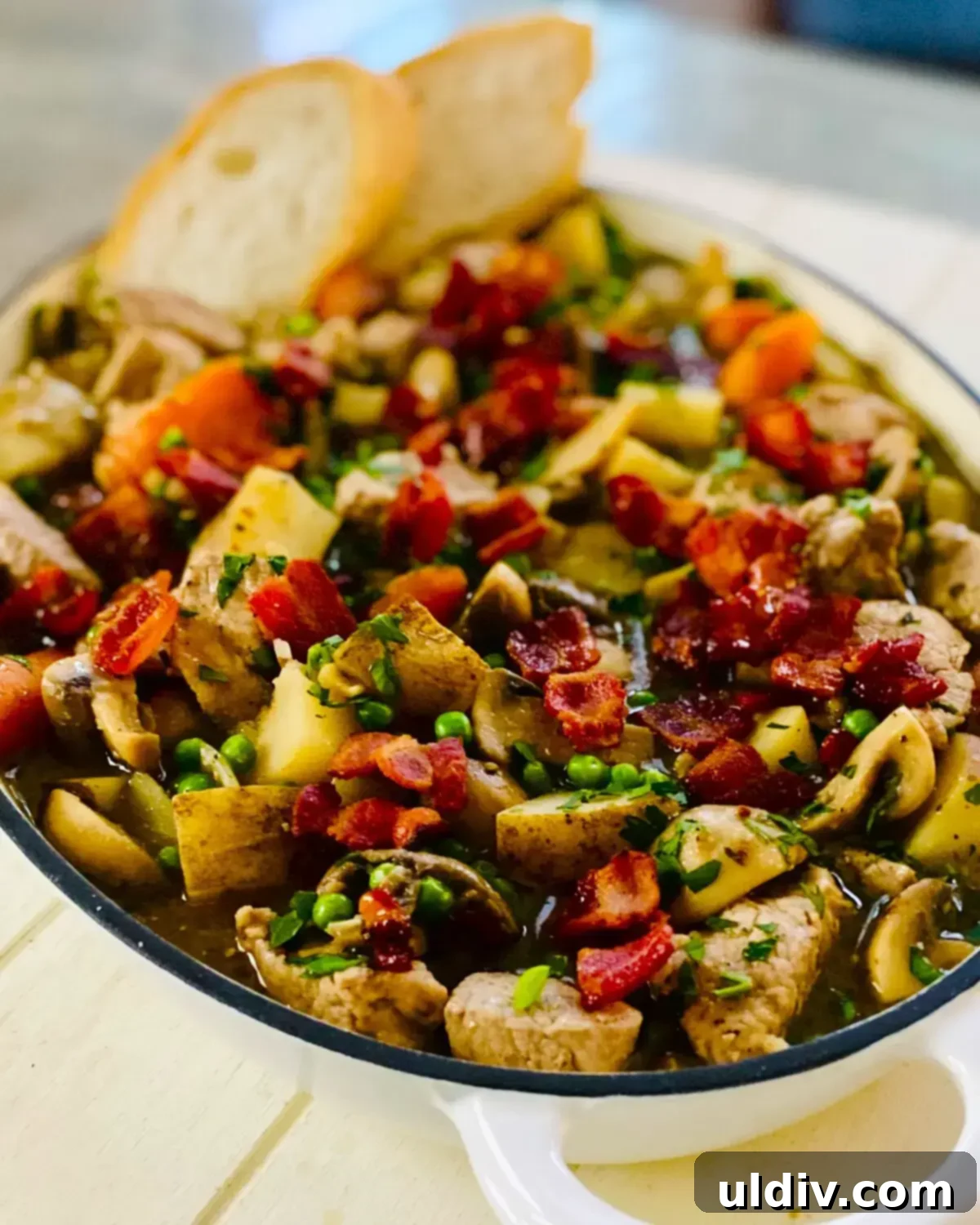
8. Stir in the vibrant green peas during the last minute of simmering. Finally, ladle the piping hot stew into bowls and generously top with the reserved crispy bacon bits and a sprinkle of fresh parsley for an irresistible aroma and a beautiful finish. Serve immediately and enjoy!
Chef’s Hint: To ensure your pork tenderloin remains incredibly tender and juicy, quickly sear the cubes to a medium-rare doneness – this typically takes just about 3-4 minutes per batch. The pork will then gently finish cooking within the simmering stew, preventing it from drying out. Moreover, those delectable browned bits left in the pot after searing, known as fond, are essential for developing a deep, rich flavor in your stew, so don’t clean the pot until the stew is complete!
Delicious Variations to Customize Your Pork Tenderloin Stew
This versatile pork tenderloin stew recipe is easily adaptable to suit your personal preferences or dietary needs. Explore these delightful variations to make it uniquely yours:
- For a Spicy Kick – If you appreciate a little heat, elevate the flavor profile by adding some chili pepper flakes or incorporating ½ to 1 teaspoon of chili powder along with the Italian herb blend. For those who love a fiery finish, a few shakes of your favorite hot sauce drizzled over a piping hot bowl of the stew just before serving will provide a fantastic zing.
- Explore Different Root Vegetables – While carrots and russet potatoes are classics, feel free to get creative with other root vegetables. Substitute some or all of the existing vegetables with hearty chunks of parsnips for an earthy, slightly sweet note, sweet potatoes for a touch of natural sweetness and vibrant color, or even butternut squash for a rich, autumnal flavor and creamy texture.
- Lower Carbohydrate Option – For a delicious low-carb alternative, simply replace the russet potatoes with an equal amount of fresh cauliflower florets. Cauliflower absorbs the stew’s rich flavors beautifully while keeping the carbohydrate count down.
- Gluten-Free Adaptation – Making this stew gluten-free is simple. Omit tossing the pork in flour before searing. When it comes to thickening the sauce, instead of flour, use 1 tablespoon of cornstarch mixed with 2 tablespoons of cold water to create a slurry. Ensure you use a certified gluten-free chicken stock to maintain the integrity of the recipe.
Recommended Kitchen Equipment for Your Hearty Stew
Having the right tools at hand can significantly enhance your cooking experience and make preparing this pork tenderloin stew an absolute breeze. Here are the essential kitchen utensils and equipment I recommend for this recipe:
- Cutting Boards: Essential for safely preparing your vegetables and pork, preventing cross-contamination.
- Chef’s Knife: A sharp, versatile chef’s knife is indispensable for dicing onions, carrots, and potatoes, as well as cubing the pork tenderloin efficiently.
- Dutch Oven or Stock Pot: A heavy-bottomed Dutch oven or large stock pot is critical as it allows for even heat distribution, perfect for searing, sautéing, and simmering the entire stew in one vessel. This is your primary “one-pot” tool.
- Measuring Cups: For accurately measuring liquids and dry ingredients, ensuring consistent results every time.
- Metal Measuring Spoons: Necessary for precise measurements of spices and smaller quantities of ingredients.
- Heat-Resistant Spatula: Ideal for stirring, scraping the bottom of the pot to incorporate fond, and serving without scratching your cookware.
Storage and Reheating Tips for Your Pork Tenderloin Stew
Properly storing and reheating your delicious pork tenderloin stew ensures that you can enjoy its comforting flavors for days to come. Follow these simple tips to maintain its quality and taste:
- Refrigerator Storage ~ After cooking, allow any leftover stew to cool completely at room temperature for no more than two hours. Transfer the cooled stew into an airtight container (I highly recommend using durable meal prep containers for convenience) and store it in the refrigerator for up to 4 days. The flavors will continue to develop, making it an even more delightful meal.
- Reheating from Refrigerator ~ To gently reheat, microwave individual portions on 60 percent power for 1-2 minutes, then continue heating in 30-second intervals, stirring occasionally, until thoroughly warmed through. Alternatively, you can reheat the stew in a sauté pan over medium-low heat on the stovetop, stirring frequently, or in a 350°F (175°C) oven for 15-20 minutes, covered, until hot.
- Freezer Storage ~ For longer storage, allow the stew to cool completely before transferring it to freezer-safe airtight containers or heavy-duty freezer bags. Ensure there’s minimal air in the container to prevent freezer burn. The stew can be safely stored in the freezer for up to 2 months. Thaw frozen stew overnight in the refrigerator before reheating.
- Reheating from Freezer ~ Once thawed, reheat the stew using the same methods as refrigerated stew: microwave on 60 percent power in short intervals, or gently warm in a sauté pan over medium-low heat or in a 350°F (175°C) oven until heated through.
Expert Tip: Preserve Tender Pork During Reheating
To ensure your pork tenderloin remains deliciously tender and juicy when reheating, it’s crucial to avoid overcooking it. You want to gently warm the stew through, not cook it again. Always reheat on a lower heat setting, whether in the microwave, on the stovetop, or in the oven, and stir the stew occasionally. This helps to evenly distribute the heat, preventing any part of the pork from becoming tough or dry. Patience during reheating will reward you with perfectly tender pork every time.
Frequently Asked Questions About This Hearty Pork Tenderloin Stew
Absolutely! Browning the pork cubes before adding them to the stew is a critical step that significantly enhances the overall flavor of the dish. This process creates a rich, savory crust on the meat and develops a “fond” – those delicious browned bits – at the bottom of the pot. These bits will later be deglazed by the wine and stock, adding incredible depth to your sauce. Remember to brown the meat in batches, ensuring the pot isn’t overcrowded, which would cause the meat to steam rather than sear, missing out on those flavorful charred spots.
Yes, certainly! For non-drinkers or those who prefer to avoid wine, you can easily substitute it. Simply replace the dry white wine with an equal amount of reduced-sodium chicken stock. While the wine adds a unique depth and acidity, using extra chicken stock will still yield a wonderfully flavorful and comforting stew.
If you’re looking for alternatives to pork, this stew recipe is quite adaptable. You can successfully substitute the pork tenderloin with cubed beef tenderloin for a richer, beefier flavor, or use boneless chicken breast or chicken thighs cut into similar-sized pieces for a poultry-based stew. Adjust cooking times slightly as needed, ensuring the chosen meat cooks through while remaining tender.
When properly stored, this delicious pork tenderloin stew will last in the refrigerator for up to 4 days. Its flavors actually improve with a day or two in the fridge, making it excellent for meal prep. For longer preservation, the stew can be safely frozen in an airtight container for up to 2 months. Always ensure it’s cooled completely before refrigerating or freezing.
What to Serve with This Comforting Pork Tenderloin Stew
This rich and hearty pork tenderloin stew is a meal in itself, but it pairs wonderfully with a variety of sides that complement its flavors and texture. Here are some of my favorite dishes to serve alongside this comforting recipe:
- Crispy Everything Bagel Puff Pastry Cheese Twists
- How to Cook Perfectly Fluffy White Rice {No Fail}
- Cauliflower Rice Pilaf {20 Minute Recipe}
- Rustic Irish Soda Bread with Cranberries and Currants
Beyond these suggestions, a simple green salad with a light vinaigrette offers a refreshing contrast, or a side of creamy mashed potatoes would be perfect for soaking up every last drop of that incredible sauce. Crusty bread, like a baguette or sourdough, is always a fantastic choice for scooping up the rich stew.
Explore More Delectable Pork Recipes to Try
If you’ve fallen in love with the versatility and flavor of pork tenderloin, or simply enjoy cooking with pork, you’ll be delighted to explore these other fantastic recipes from my kitchen. Each offers a unique way to enjoy this wonderful meat:
- Smothered Pork Chops with Mushroom Gravy
- Pork Chops with Apples and Onions
- Sweet and Spicy Pork Tenderloin with Mango Salsa
- Cuban Pork Sandwiches {Instant Pot Recipe}
Discover all my enticing Pork Recipes here.
Should you try my Pork Tenderloin Stew Recipe, I would be absolutely delighted to hear your feedback! Please take a moment to give it a rating and/or leave a comment below sharing your experience. If you capture a photo of your magnificent creation, remember to tag @amycaseycooks on Instagram so we can all admire your culinary artistry. Thank you for cooking with me!
Recipe Card
Pork Tenderloin Stew Recipe with Bacon
Print
Pin
Rate
Ingredients
- ¼ pound bacon cut in 1-inch pieces
- 2 pounds pork tenderloin cut in 1½-inch cubes
- kosher salt to taste
- fresh ground black pepper to taste
- 4 tablespoons all-purpose flour divided
- 2 tablespoons salted butter
- 1 medium yellow onion diced, about 1 cup
- 2 medium carrots cut in 1-inch pieces, about 1 cup
- 10 ounces white button mushrooms quartered, about 2 cups
- 2 medium russet potatoes cut in 1-inch chunks, about 2 cups
- 4 garlic cloves minced
- 1 teaspoon Italian herb blend
- ½ cup dry white wine (Pinot Grigio, Sauvignon Blanc, or unoaked Chardonnay recommended)
- 2 cups low-sodium chicken stock
- 1 tablespoon whole grain mustard
- 1 cup frozen green peas
- 2 tablespoons chopped fresh parsley for garnish
Instructions
-
Cook the Bacon: In a large, heavy-bottomed stock pot or Dutch oven over medium heat, add the diced bacon. Cook until it is beautifully crispy and rendered. Carefully remove the cooked bacon from the pan and set it aside in a bowl, leaving the flavorful bacon fat in the pot to form the base for the stew.
-
Season and Sear the Pork: Season the cubed pork tenderloin generously with kosher salt and fresh black pepper. Toss the seasoned pork with 2 tablespoons of the all-purpose flour until lightly coated. Increase the heat to medium-high. Add the floured pork to the hot bacon fat and sear until it develops a golden-brown crust on all sides, about 3-4 minutes. This step is crucial for developing deep flavor. Transfer the seared pork to a clean bowl and set it aside. If necessary, sear the pork in batches to avoid overcrowding the pot, which would steam the meat instead of browning it. The pork should be cooked to medium-rare at this stage, as it will finish cooking in the stew.
-
Sauté the Aromatics and Vegetables: Reduce the heat back to medium. Add the salted butter to the same pot. Then, add the diced onion, carrots, quartered mushrooms, and minced garlic. Sauté these vegetables for 5-6 minutes, or until the onions begin to soften and become translucent, and the mushrooms start to release their moisture and brown slightly, deepening their flavor.
-
Add Potatoes and Deglaze with Wine: Stir in the cubed russet potatoes and the Italian herb blend. Pour in the dry white wine. Stir everything to combine thoroughly, making sure to scrape up any browned bits from the bottom of the pot (this is called deglazing and adds immense flavor). Bring the mixture to a low boil and allow the liquid to reduce by about half, which concentrates the wine’s rich essence, approximately 3-4 minutes.
-
Thicken the Sauce: Sprinkle the remaining 2 tablespoons of all-purpose flour over the simmering vegetables and liquid. Stir vigorously for about 1 minute, ensuring the flour is fully incorporated and cooked to prevent a raw flour taste. This step will begin to thicken your delicious stew sauce.
-
Simmer to Perfection: Gradually add the low-sodium chicken stock to the pot, stirring constantly to create a smooth, lump-free sauce. Stir in the whole grain mustard until well combined. Bring the stew back to a gentle boil, then reduce the heat to a steady simmer. Continue cooking for 10-15 minutes, or until the potatoes are fork-tender and the sauce has reached your desired consistency.
-
Combine and Finish Cooking: Return the seared pork tenderloin and any accumulated juices from the bowl to the pot. Stir in the frozen green peas. Gently mix to combine all ingredients. Continue to simmer for approximately 5 minutes, or just until the pork is thoroughly heated through and the peas are tender-crisp. Avoid overcooking the pork at this stage to maintain its tenderness.
-
Garnish and Serve: Ladle the comforting pork tenderloin stew into individual bowls. Garnish generously with the chopped fresh parsley and the reserved crispy bacon pieces. Serve immediately with your favorite crusty bread or side dish and savor every spoonful!
Video
Notes
Spicy: For those who enjoy a bit of heat, consider incorporating ½ to 1 teaspoon of chili powder or a pinch of red pepper flakes along with your Italian herb blend. For an extra kick, a dash of hot sauce can be added to individual servings.
Alternate Root Vegetables: Feel free to swap out some or all of the carrots and russet potatoes for other root vegetables like parsnips, sweet potatoes, or even chunks of butternut squash. These additions will introduce different sweet and earthy notes to the stew.
Low-Carb Option: To reduce the carbohydrate content, simply replace the potatoes with an equal volume of cauliflower florets. The cauliflower will absorb the rich flavors beautifully.
Gluten-Free: To make this stew gluten-free, omit coating the pork in flour. Instead, use a gluten-free chicken stock. For thickening the sauce, create a slurry with 1 tablespoon of cornstarch mixed with 2 tablespoons of cold water, adding it in place of the flour.
Nutritional information provided is an estimate only and may vary based on specific ingredients and preparation methods used.