
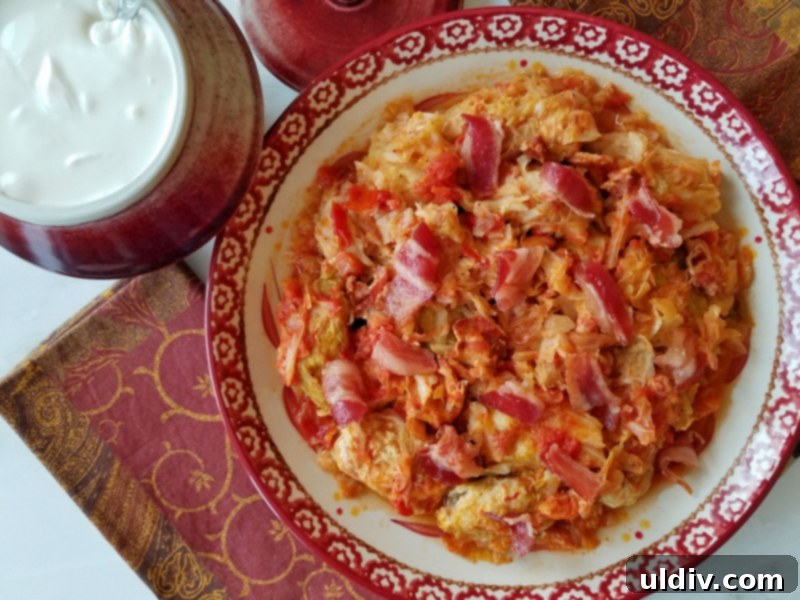

Embrace the Comfort: The Timeless Appeal of Homemade Cabbage Rolls
There’s an undeniable charm in the profound simplicity of certain dishes. These aren’t meals defined by intricate techniques or fleeting culinary trends, but rather by honest ingredients, dedicated effort, and the heartfelt wish that they bring joy to those gathered around the table. What begins as a collection of humble components often transforms, over time and slow cooking, into a harmonious symphony of deep, comforting flavors. This transformation defies the initial modesty of the dish, leaving one to ponder: how can something so seemingly basic evolve into such delightful goodness?
Such is the enchanting paradox of cabbage rolls – a dish that, at its core, relies on a relatively small number of readily available ingredients. While it may not boast the sophisticated presentation or avant-garde fusion appreciated in modern cuisine, a single bite reveals its true magic. The tender, succulent ground meat filling, infused with the subtle, earthy notes of cabbage and a delicate whisper of bay leaves, demonstrates that even the most fundamental recipes can capture hearts and satisfy appetites with unparalleled depth.
A Culinary Journey: The Global Heritage of Stuffed Cabbage
Cabbage rolls hold a special place in our family, particularly during festive occasions like Easter. However, as I’ve recently discovered, this beloved dish transcends geographical boundaries and cultural affiliations. Far from being exclusive to Eastern Europe, variations of stuffed cabbage can be found across a multitude of cultures worldwide. Its widespread presence spans from the sun-drenched kitchens of Italy to the intricate culinary traditions of Japan, and from the northern reaches of Sweden to a myriad of Middle Eastern countries. This global embrace highlights the universal appeal of combining flavorful fillings with tender cabbage leaves.
Historically, many sources suggest that cabbage roll recipes flourished extensively throughout the Balkans, largely influenced by the centuries-long occupation of the former Ottoman Empire. This profound historical connection is even reflected in the language: the Romanian word for cabbage roll, “sarma,” is directly derived from Turkish, signifying a dish that is “wrapped” or “rolled.” This etymological link serves as a testament to the dish’s enduring legacy and its journey across continents, adapting and evolving with each new culture it embraced. From the Turkish dolma (which often uses vine leaves but has similar preparation principles) to the Greek lahanodolmades, Polish gołąbki, Hungarian töltött káposzta, and Swedish kåldolmar, the concept of stuffed cabbage unites diverse culinary landscapes under a single, delicious banner.
Crafting the Perfect Filling: Ingredients and Preparation Insights
Traditionally, our family prepares cabbage rolls using homemade sour cabbage leaves. While these fermented leaves impart a distinct tangy flavor that is truly authentic, I understand they can be challenging to find in regular grocery stores, and even more daunting to prepare from scratch at home. For this particular recipe, I opted for fresh savoy cabbage leaves, which my mother expertly blanched in a pot of salted boiling water for approximately five minutes, or until they reached a tender, pliable consistency. Savoy cabbage is an excellent choice due to its crinkly texture, which holds the filling beautifully, and its mild flavor that complements the robust meat without overpowering it.
The heart of any good cabbage roll lies in its filling. While a classic combination often involves ground beef and pork, I wanted to create a lighter version suitable for the spring season. To achieve this, I used a flavorful blend of ground chicken and pork. This mixture strikes a perfect balance, offering richness from the pork and leanness from the chicken. To this, we added white rice, finely chopped onion, a touch of room-temperature water for moisture, and a generous seasoning of salt and pepper. The rice expands during cooking, binding the meat and absorbing the delicious juices, while the onion contributes a foundational sweetness and aromatic depth.
When preparing the savoy cabbage leaves, after they have cooled sufficiently to handle, my mom carefully uses a knife to remove the tough, central stems. This crucial step ensures that the leaves are flexible enough to roll without tearing and that every bite is tender.

Each prepared leaf is then filled with approximately one tablespoon of the savory meat mixture. The amount can vary slightly depending on the size of the cabbage leaf and your preference, but it’s important not to overfill, which can make rolling difficult, or underfill, which can result in a loose roll.
The Art of Rolling: Ensuring a Secure and Flavorful Wrap
The process of folding the cabbage leaf around the meat filling is often a personal endeavor, with different individuals developing their own preferred techniques. For instance, the method my mother uses is distinctly different from my mother-in-law’s approach! What truly matters, regardless of the specific folding style, is to ensure that the meat mixture is securely encased within the leaf. A tight, compact roll prevents the filling from escaping during the long cooking process, ensuring each cabbage roll remains intact and flavorful. As with many culinary skills, practice makes perfect. Don’t be discouraged if your first few rolls aren’t flawless; keep practicing, and you’ll soon master the art of the perfect cabbage roll.
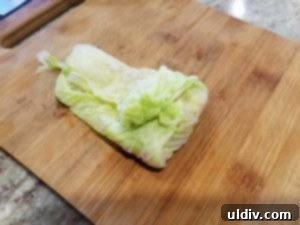
Together, my mom and I managed to prepare a substantial quantity of these delicious parcels.
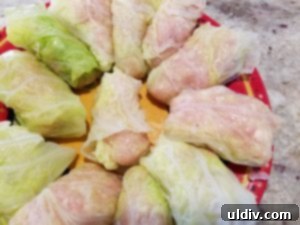
To be precise, we lovingly crafted 36 individual cabbage rolls, each promising a mouthful of savory delight!
Layering for Flavor: The Art of Assembling Cabbage Rolls
Once the labor of stuffing the cabbage leaves was complete, the next crucial step involved layering them in the cooking pot. We began by covering the bottom of a sturdy pot with a generous layer of shredded savoy cabbage. This shredded base, unlike the leaves used for rolling, does not require pre-boiling; it will tenderize beautifully during the slow cooking process and contribute additional cabbage flavor and texture to the final dish. Over this base, we meticulously arranged a first layer of cabbage rolls, nestled closely together to maximize space and ensure even cooking.
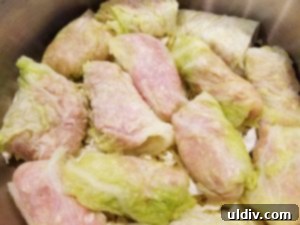
Following the initial layer of rolls, we added another layer of shredded cabbage, along with pieces of freshly cooked bacon and fragrant bay leaves. The bacon renders its fat and infuses the entire dish with a smoky, savory depth, while the bay leaves contribute a classic aromatic note that is essential to traditional cabbage rolls. This layering ensures that the flavors are distributed evenly throughout the pot.
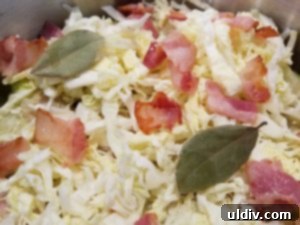
We then proceeded with a second layer of carefully arranged cabbage rolls. The grand finale of the layering process involved a final blanket of shredded cabbage, the remaining bacon pieces, and the last of the bay leaves. In summary, our pot featured a structured assembly: three distinct layers of shredded cabbage with two robust layers of stuffed cabbage rolls nestled in between them, ensuring every component contributes to the rich, complex flavor profile.
The Slow Simmer: Unlocking Deep Flavors
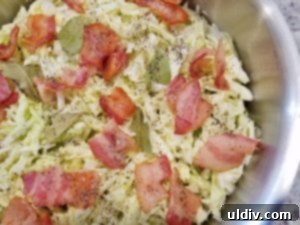
To ensure optimal moisture retention and even cooking, we always cover the uncooked dish with a small lid that fits snugly inside the larger pot. This internal lid helps to press down on the cabbage rolls, keeping them submerged in the liquid and preventing them from drying out, while also allowing the flavors to meld beautifully. The entire pot is then covered with its main lid, creating a moist, steamy environment perfect for slow simmering.
The cabbage rolls require approximately two hours of gentle simmering to reach their tender perfection. About halfway through the cooking time, we typically introduce a 14.5-ounce can of diced tomatoes, spreading them evenly over the top of the dish with a spoon. The diced tomatoes serve multiple purposes: they provide a welcome boost of acidity that brightens the rich flavors, deepen the overall taste profile, and contribute a lovely reddish hue to the finished sauce, making the dish visually appealing as well as delicious.
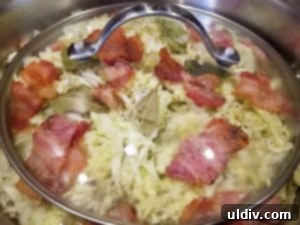
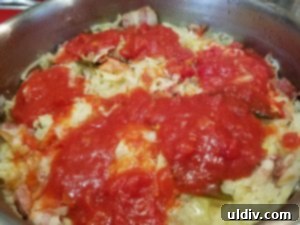
After a full two hours of patient cooking, the cabbage rolls emerge wonderfully moist, incredibly tender, and brimming with flavor – truly ready to be savored. At this point, it’s essential to taste the dish and adjust the seasoning as needed. If the sauce presents with a touch too much acidity for your palate, a small addition of about half a tablespoon of sugar can help to temper and balance the flavors beautifully, creating a more harmonious profile. A final stir ensures everything is perfectly integrated.
Serving Suggestions: Elevating the Cabbage Roll Experience
Once cooked to perfection, these savory cabbage rolls can be enjoyed in several delightful ways. While they are wonderfully satisfying on their own, perhaps with a sprinkle of extra crunchy bacon on top for added texture and smoky flavor, we typically pair them with complementary accompaniments. The mild, creamy tang of sour cream provides an exquisite counterpoint to the natural acidity of the cabbage and tomato sauce, creating a balanced and incredibly comforting bite.
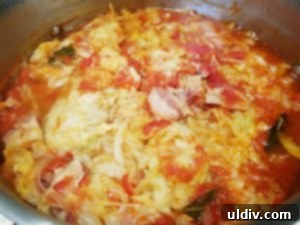
Another cherished tradition in our family is serving cabbage rolls alongside creamy polenta, or “mămăligă” as it’s known in Romania. The combination of the hearty cabbage rolls, the cooling sour cream, and the warm, golden polenta is, in our humble opinion, truly unbeatable. The polenta soaks up the rich sauce, adding another layer of texture and satisfaction to this already remarkable meal. This trio creates a complete and incredibly satisfying dining experience that is deeply rooted in tradition and flavor.

We sincerely hope you find as much joy and comfort in these homemade cabbage rolls as we do. For us, this is not merely a dish; it is a profound culinary emblem, a national treasure that eloquently speaks volumes about our culture, our rich history, and the enduring traditions of our family. It’s a taste of home, a connection to our past, and a source of immense pride. In the words of our daughter, it is unequivocally “the best food ever.” We invite you to try this recipe, share it with your loved ones, and perhaps, create new cherished memories around this timeless classic.
Cabbage rolls
| Prep Time | 30 minutes |
| Cook Time | 2 hours |
| Servings |
6 people
|
Ingredients
- 2 medium size savoy cabbage
- 1 lb ground pork
- 1 lb ground chicken
- 1 chopped medium white onion
- 1/4 cup white rice
- 1/4 cup water, at room temperature
- 8 oz cooked bacon cut into pieces
- 5 bay leaves
- 1 14.5oz can diced tomatoes
- 4 tsp salt
- 2 tsp pepper
- 1/2 tbsp sugar (optional)
- Sour cream and/or polenta (optional)
Ingredients
|
|
Instructions
-
Bring a pot of salted water to boil over a medium heat. Take the leaves of one cabbage and boil them the hot salted water for about 5 minutes or until soft. Set the leaves aside to cool.
-
In a mixing bowl add the ground pork and chicken, chopped onion, rice, water, 2 tsp salt and 1 tsp pepper. Mix until well combined.
-
Once the cabbage leaves have cooled, remove the tough stems using a knife and then fill each leaf with about one tablespoon of meat mixture. Make sure the meat is packed securely inside, otherwise chances are the filling will get out during the cooking process.
-
Cut the leaves of the other cabbage (which doesn’t need boiling in advance) into shreds. Cover the bottom of a cooking pot with a layer of shredded cabbage, and then add a first layer of cabbage rolls, neatly arranged next to each other. Continue with another layer of shredded cabbage, 4oz freshly cooked bacon cut into pieces and 2 bay leaves, and then with a second layer of cabbage rolls. Finish off with a layer of shredded cabbage, the remaining bacon and the 3 remaining bay leaves. To sum up, you must have three layers of shredded cabbage with two layers of cabbage rolls in-between!
-
Cook the cabbage rolls over a low heat. One hour into cooking, spread diced tomatoes on top evenly with a spoon.
-
After two hours cooking it total, the cabbage rolls are moist and tender and ready to be served. Taste and adjust seasoning accordingly by adding 2 tsp salt and 1 tsp pepper, if needed. If the sauce is too acidic, add 1/2 tbsp sugar. Stir well, taste again, and make any other needed adjustments, if at all.
-
Serve the cabbage rolls warm, with extra crunchy bacon on top or with sour cream and/or polenta on the side.
-
Enjoy!