
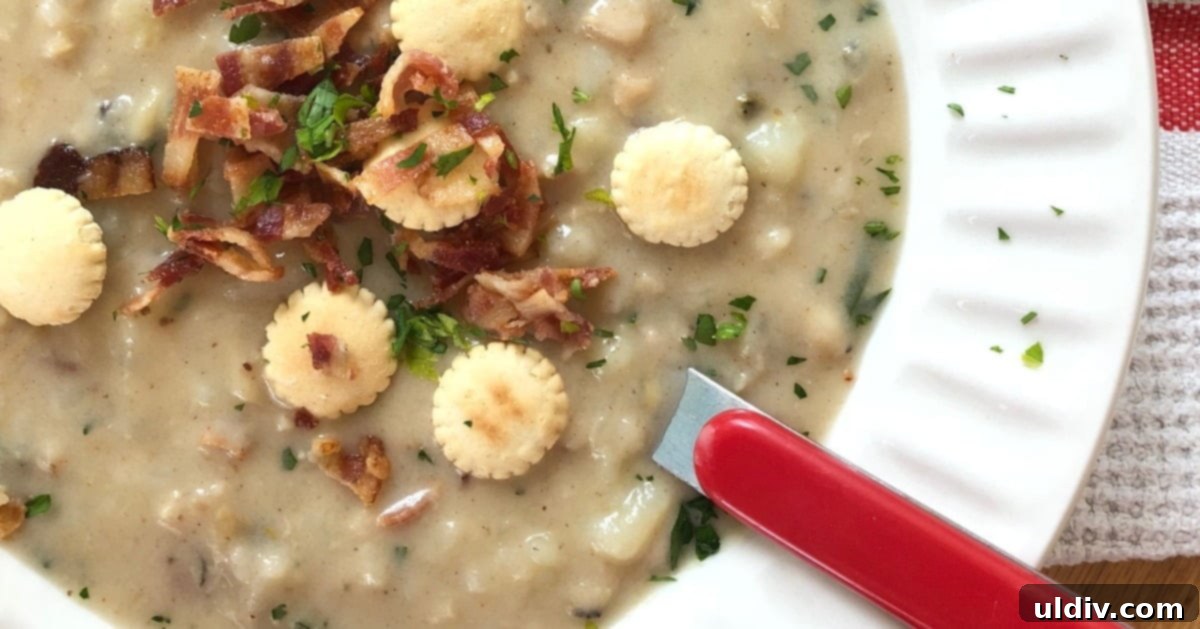
There’s nothing quite like a steaming bowl of homemade New England Clam Chowder. This incredibly creamy and deeply satisfying recipe is a culinary hug, brimming with tender, succulent clams, perfectly cooked chunks of potato, and finished with a scattering of crispy bacon. Forget any preconceived notions about canned versions; this homemade classic transcends them all, promising to become a cherished family favorite in your kitchen.

The Quintessential American Comfort Food: New England Clam Chowder
New England Clam Chowder stands as a true icon of American cuisine, particularly beloved in the Northeastern states where it originated. Its rich, milky base, often thickened with a roux, distinguishes it from its tomato-based cousin, Manhattan clam chowder. While many enjoy the vibrant, brothy flavors of Manhattan clam chowder—a recipe I also adore, brimming with chopped clams, diced zucchini, red potatoes, and fresh thyme—my heart truly belongs to the creamy, white variety. The velvety texture and subtle briny notes of a classic New England chowder offer an unparalleled comfort, making it a staple on dinner tables and in seafood restaurants alike, especially during cooler months.
For years, the pursuit of the ‘perfect’ homemade New England Clam Chowder recipe was a culinary quest. I sought a rendition that perfectly balanced a luxurious, thick consistency with the delicate flavors of the ocean, without becoming overly heavy or bland. Many attempts resulted in soups that were either too pasty from excessive flour or potatoes, or disappointingly watery due to an imbalance of clam juice. It was a journey of trial and error, a constant tweaking of ratios and techniques to achieve that elusive, quintessential chowder experience that evokes the essence of coastal New England.
My Journey to Crafting the Ultimate Creamy New England Clam Chowder
Every home cook has that one dish they strive to perfect, and for me, it was New England Clam Chowder. I’ve always been captivated by its promise of warmth and hearty satisfaction, but achieving that ideal blend of creaminess, flavor, and texture proved more challenging than anticipated. Previous attempts often veered off course: sometimes the soup would turn out unexpectedly thick and gluey, a common pitfall from adding too much flour or an overabundance of starchy potatoes. Other times, it would be too thin, lacking the comforting body characteristic of a true New England chowder, usually a result of an excess of clam juice or insufficient thickening from the roux. The goal was always that silky smooth, perfectly balanced consistency.
Then, during a particularly gloomy and rainy spring day this year, inspiration struck. I decided to embark on another attempt, armed with insights from past trials and a renewed determination to finally crack the code. This time, I focused intently on the precise balance of each ingredient, particularly the roux and the dairy, paying close attention to the cooking times and the order of additions. The outcome was nothing short of spectacular: a luscious, creamy chowder that was beautifully studded with delicate yet satisfyingly chewy clams, perfectly tender chunks of russet potatoes, and elegantly flecked with fresh thyme and smoky, crisp bits of bacon. This recipe finally achieved the harmony I had been seeking, proving that patience and persistence in the kitchen truly pay off, resulting in a chowder that’s truly better than any canned alternative.
Essential Ingredients for an Authentic New England Clam Chowder
Crafting the best New England Clam Chowder begins with selecting high-quality ingredients. Each component plays a crucial role in building the layered flavors and rich texture of this beloved soup. Here’s a breakdown of what you’ll need, along with tips for best results and potential substitutions:
- Bacon: Four slices of thick-cut bacon, rendered until crispy, provide a foundational smoky flavor. The rendered fat is then used to sauté the aromatics, infusing the chowder from the very beginning.
- Salted Butter: Two tablespoons of salted butter contribute richness and are essential for forming the roux, the thickening agent for the chowder.
- Onion: One cup of finely diced onion provides a sweet, aromatic base that mellows beautifully as it cooks.
- Garlic: Three cloves of minced garlic add a pungent depth of flavor that complements the briny clams. Freshly minced garlic offers the best aroma and taste.
- All-Purpose Flour: Six tablespoons of all-purpose flour are crucial for creating the roux, which gives the chowder its signature creamy consistency.
- Light Cream: One cup of light cream contributes to the chowder’s characteristic velvety texture without making it overly heavy. For a richer chowder, half-and-half or even heavy cream can be used. For a lighter version, whole milk is an option, though the final consistency will be thinner.
- Bottled Clam Juice: Three 8-ounce bottles of clam juice are an indispensable ingredient. This natural clam broth imparts a deep, briny essence of the ocean, significantly enhancing the authentic clam flavor of the soup.
- Old Bay Seasoning: One teaspoon of Old Bay seasoning, a classic seafood blend, adds a touch of spice and complexity, elevating the overall taste profile with its unique blend of herbs and spices.
- Kosher Salt and Freshly Ground Pepper: One teaspoon of kosher salt and half a teaspoon of freshly ground black pepper are basic seasonings to bring out and balance all the flavors. Always taste and adjust to your preference.
- Russet Potatoes: One medium russet potato, small-diced (about 2 cups), is ideal. Their starchy nature makes them perfect for chowder, as they break down slightly during cooking to contribute to the creamy texture while still holding their shape as tender chunks.
- Chopped Cooked Clams: Sixteen ounces of chopped cooked clams, or five 6.5-ounce cans, are the star. Canned chopped clams are incredibly convenient, readily available year-round, and yield excellent results, often packed in their own flavorful broth. If using fresh clams, steam them open, chop the meat, and reserve their liquor for an even more intense clam flavor.
- Fresh Thyme: One tablespoon of fresh thyme leaves adds a fragrant, earthy note that brightens the rich flavors of the chowder. Other fresh herbs like parsley or chives can also be used.
- Oyster Crackers: Essential for serving, these crunchy crackers offer a delightful textural contrast and are perfect for soaking up the rich chowder.
When it comes to clams, canned varieties are an excellent choice for convenience and consistent flavor. They are readily available in most grocery stores year-round and come pre-cooked and chopped, often in a flavorful broth that acts as a natural booster for your chowder. If you prefer, many seafood counters also offer cooked and shucked clams. Don’t underestimate the power of bottled clam juice; it’s a non-negotiable ingredient that infuses the chowder with that essential briny taste, reminiscent of a seaside meal and truly sets this recipe apart.
Expert Tips for Achieving the Best New England Clam Chowder
Achieving that restaurant-quality New England Clam Chowder at home is entirely possible with a few key techniques. These expert tips will guide you in mastering the delicate balance of flavors and textures, ensuring your chowder is perfectly creamy, flavorful, and never gluey or thin.
-
Mastering the Roux for Perfect Thickness
The roux – a mixture of cooked butter and flour – is fundamental to thickening the chowder. After incorporating the flour into the melted butter and sautéed aromatics, it’s crucial to stir and cook it for about 30 seconds to 1 minute. This brief but vital cooking time is essential for removing the raw flour taste, preventing your chowder from having an unpleasant starchy flavor. A well-cooked roux provides a smooth, stable base for your soup, ensuring a luxurious and consistent texture.
-
Room Temperature Cream for Smooth Blending
Before adding the light cream (or your chosen dairy), ensure it’s at room temperature. Cold cream, when added directly to a hot soup base, can cause the liquid to seize, curdle, or create an undesirable grainy texture. Allowing it to warm up slightly not only prevents this issue but also helps the chowder heat up more quickly and evenly, contributing to a smoother overall consistency and speeding up your overall prep time.
-
Timing is Everything: Adding the Clams Last
Clams, especially canned or pre-cooked ones, are already tender. Adding them too early in the cooking process or cooking them for too long will inevitably make them tough, rubbery, and chewy, detracting significantly from the chowder’s delightful texture. Instead, stir the well-drained clams into the chowder during the very last two minutes of cooking. At this point, you’re merely reheating them to integrate their delicious flavor into the soup, ensuring they remain wonderfully delicate and tender with every spoonful.
-
Potato Perfection: Consistency and Cooking
Dice your russet potatoes into small, uniform pieces (approximately ½-inch cubes). This meticulous dicing ensures that they cook evenly and become tender at the same rate. Overcooked potatoes can turn mushy and break down excessively, while undercooked ones will be unpleasantly firm. Simmer until just fork-tender, testing occasionally with a fork to avoid overcooking.
-
Seasoning Smartly: Balance and Depth
Always taste your chowder as you go, especially after adding the clam juice and Old Bay seasoning. The salt content of clam juice, bacon, and Old Bay can vary, so it’s best to add additional kosher salt and freshly ground black pepper incrementally until the flavor profile is perfectly balanced to your palate. A pinch of fresh thyme or a dash of fresh parsley at the end can also add a beautiful aromatic finish and brighten the rich flavors.
What to Serve with Your Hearty New England Clam Chowder
New England Clam Chowder is a satisfying meal in itself, but pairing it with the right accompaniments can elevate the dining experience to new heights. Here are some perfect partners for your creamy chowder:
-
Crunchy Oyster Crackers
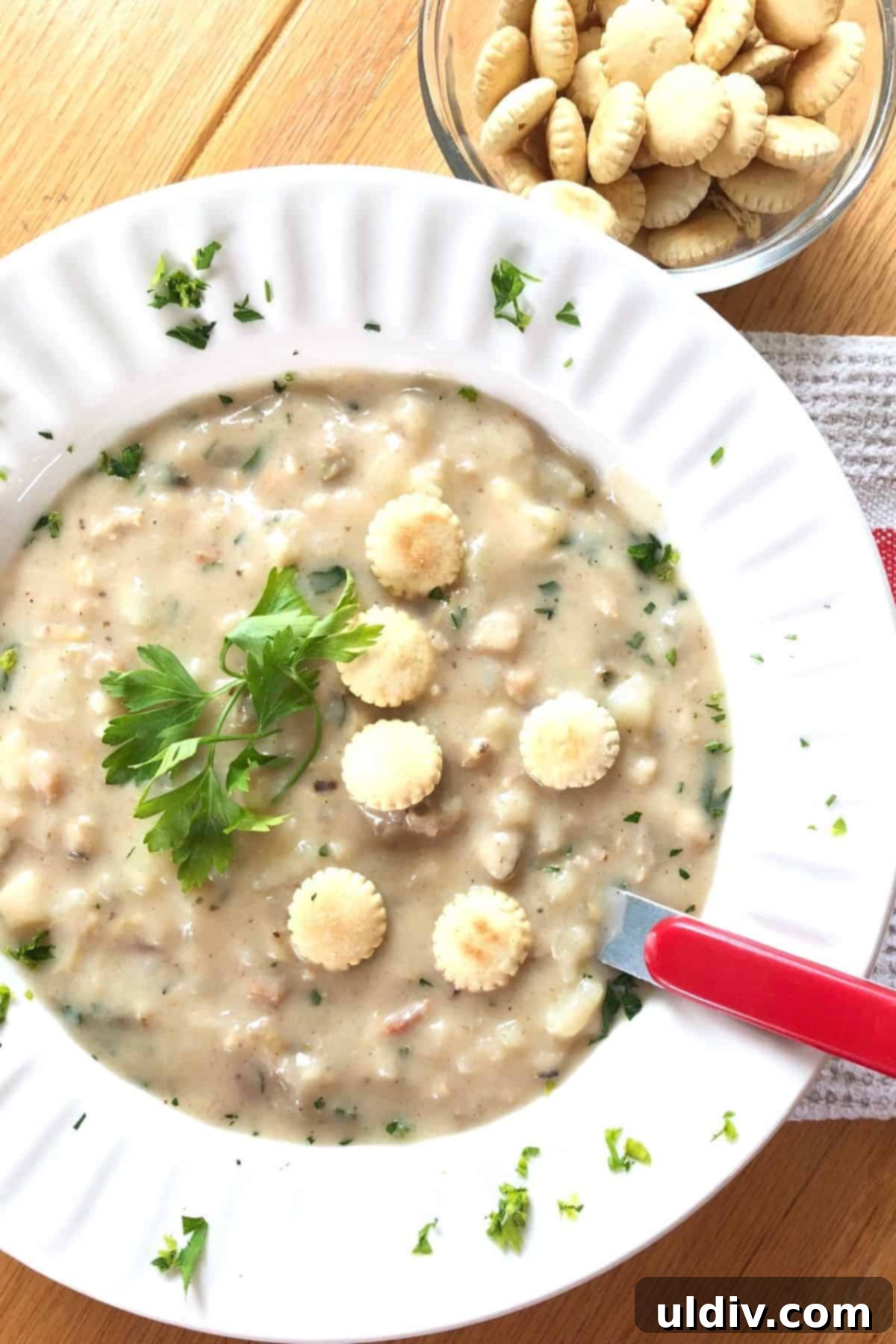
A classic and absolutely essential topping! A generous handful of crunchy oyster crackers sprinkled over a steaming hot bowl of chowder adds a satisfying textural contrast and effortlessly soaks up some of that rich, creamy broth. Don’t forget a sprinkle of fresh chopped parsley for a pop of color and herbaceous freshness, enhancing both presentation and flavor.
-
Simple Side Salad
To provide a refreshing counterpoint and cut through the richness of the chowder, a light and crisp side salad is ideal. Think mixed baby greens with a few sweet cherry tomatoes, perhaps some thinly sliced cucumber, dressed simply with a drizzle of balsamic vinegar and extra virgin olive oil, seasoned with just a touch of salt and pepper. This offers a bright, palate-cleansing element.
-
Crusty Bread or Dinner Rolls
A warm, crusty loaf of artisan bread, a baguette, or soft homemade dinner rolls are perfect for soaking up every last drop of the delicious chowder. Consider a side of garlic bread or toasted sourdough for an extra layer of flavor and satisfying texture.
-
Crispy Bacon Bits (Extra!)
While bacon is already integrated into the chowder, an extra sprinkle of freshly crumbled crispy bacon on top as a final garnish adds another layer of smoky flavor, delightful crunch, and an appealing visual touch that makes the dish even more inviting.
Storing and Reheating Your Homemade Clam Chowder
One of the best things about homemade chowder is that it often tastes even better the next day as the flavors have more time to meld and deepen! Here’s how to properly store and reheat your leftovers to maintain their delicious quality and creamy consistency.
Storage:
Allow the chowder to cool completely at room temperature (this should not exceed 2 hours to ensure food safety) before transferring it to an airtight container. Store it promptly in the refrigerator for up to 3-4 days. Freezing dairy-based soups can be tricky as the cream may separate or become grainy upon thawing. If you anticipate wanting to freeze portions, it’s best to freeze the chowder base *before* adding the cream and clams. Then, when ready to serve, thaw the base, bring it to a simmer, and stir in fresh cream and clams.
Reheating:
Gently reheat leftover chowder on the stovetop over low to medium heat, stirring frequently to ensure even heating and prevent sticking. Avoid bringing it to a rapid boil, as high heat can cause the cream to curdle or separate. If the chowder has thickened too much in the refrigerator, you can easily restore its creamy texture by adding a splash of milk, additional light cream, or clam juice while reheating, stirring until it reaches your desired consistency. Microwave reheating is also an option for individual portions; use short intervals and stir well between each to ensure thorough and even heating.
Delicious Variations to Explore with Your Clam Chowder Recipe
While this New England Clam Chowder recipe is perfect as is and a true classic, it also serves as a fantastic base for culinary experimentation. Don’t be afraid to try some of these delicious variations to customize it to your taste or incorporate seasonal ingredients:
-
Add More Vegetables
For additional flavor, texture, and nutrition, consider adding finely diced celery, sweet corn kernels (fresh, frozen, or canned), or even thinly sliced leeks (sautéed with the onion and garlic) to the chowder. Sweet potatoes can also be used in place of, or in addition to, russet potatoes for a slightly sweeter and vibrant profile.
-
Smoked Seafood Boost
For an even deeper, more complex smoky flavor, a small amount of finely flaked smoked haddock (also known as Finnan Haddie) can be added along with the clams. This is a classic addition in some traditional New England chowder recipes and provides a wonderful depth.
-
Herb Alternatives
While fresh thyme is highly recommended for its earthy notes, fresh parsley or finely chopped chives can also offer a lovely herbaceous touch, brightening the rich flavors of the chowder. Experiment with different fresh herbs to find your preferred aromatic complement.
-
A Hint of Heat
For those who enjoy a subtle kick, a tiny pinch of cayenne pepper, a dash of hot sauce, or a sprinkle of white pepper can be stirred in at the end of cooking. Be cautious not to overpower the delicate clam flavor; a little goes a long way.
-
Cheese Infusion
For an indulgent twist, a small amount of finely grated sharp white cheddar cheese or Parmesan can be stirred into the chowder just before serving, adding a savory, umami depth.
More Delicious Seafood Recipes to Try
If you’ve enjoyed this creamy New England Clam Chowder, you’ll love exploring other fresh and flavorful seafood dishes. Our kitchen is brimming with recipes that celebrate the bounty of the ocean. Here are some of our top recommendations to inspire your next culinary adventure:
- Blackened Tuna Bites with Sweet Pickle Dipping Sauce
- Pecan Crusted Honey Mustard Salmon
- Baked Cod with Crispy Garlic Panko
- Mussels Marinara
- Garlic Butter Shrimp Scampi
- Pan-Seared Scallops with Lemon Herb Sauce
Frequently Asked Questions About New England Clam Chowder
What makes New England Clam Chowder different from Manhattan Clam Chowder?
The primary difference lies in the base: New England Clam Chowder is a creamy, milk- or cream-based soup, typically rich and white in color. Manhattan Clam Chowder, on the other hand, features a clear, savory, tomato-based broth, giving it a characteristic reddish hue and a lighter consistency.
Can I use fresh clams instead of canned?
Absolutely! Using fresh clams will provide an even more vibrant ocean flavor. If using fresh clams, you’ll need to steam them open first (discard any that don’t open), then chop the meat and reserve the clam liquor. You’ll generally need about 2-3 pounds of fresh clams to yield 16 ounces of chopped meat. Be sure to strain the reserved clam liquor through a fine-mesh sieve or cheesecloth before adding it to the chowder to remove any potential sand or grit.
How can I make my chowder thicker or thinner?
To thicken a chowder that’s too thin, you can make a small slurry by whisking 1 tablespoon of cornstarch with 2 tablespoons of cold water, then gradually whisk this mixture into the simmering chowder until your desired consistency is reached. Cook for a minute or two after adding to ensure the cornstarch is cooked through. To thin a chowder that’s too thick, simply add a splash more milk, light cream, or clam juice, stirring until it reaches your preferred consistency.
Is New England Clam Chowder gluten-free?
Traditional New England Clam Chowder recipes typically use all-purpose flour to create the roux, which means it is not gluten-free. To make this recipe gluten-free, you can substitute the all-purpose flour with a gluten-free all-purpose flour blend (ensure it’s suitable for thickening) or use cornstarch to thicken the soup. If using cornstarch, follow the slurry method mentioned above.
Can I freeze leftover clam chowder?
Freezing dairy-based soups like clam chowder can sometimes lead to separation or a grainy texture of the cream upon thawing and reheating. For the best results, if you plan to freeze portions, it is highly recommended to freeze the chowder base *before* adding the cream and clams. Then, when you’re ready to enjoy, thaw the base, bring it to a gentle simmer, and stir in fresh cream and clams just before serving. This will help maintain the chowder’s desirable creamy texture.
Share Your Culinary Creation!
We absolutely love seeing your culinary triumphs! If you make this delicious and creamy New England Clam Chowder recipe, please let us know how it turned out. Your feedback is invaluable to us and other home cooks, so be sure to leave a comment and/or give this recipe a rating on the recipe card below. We do our best to reply to all your comments and truly appreciate your engagement.
Don’t forget to snap a photo of your beautiful, homemade chowder and post it to Instagram! Tag @amycaseycooks so we can admire your work and celebrate your cooking skills. We love sharing your creations on our Insta stories!
For even more fabulous foodie stories and videos, expert cooking tips, and inspiring recipes that make cooking a joy, be sure to check out our Facebook and Pinterest pages. Happy cooking!
New England Clam Chowder Recipe
New England Clam Chowder Recipe
Print
Pin
Rate
15 minutes
35 minutes
50 minutes
5
446
kcal
Amy Casey
Ingredients
- 4 slices bacon, chopped
- 2 tablespoons salted butter
- 1 cup diced onion (about 1 medium onion)
- 3 cloves garlic minced
- 6 tablespoons all-purpose flour
- 1 cup light cream (at room temperature)
- 3 8-ounce bottles clam juice
- 1 teaspoon Old Bay seasoning
- 1 teaspoon kosher salt
- ½ teaspoon freshly ground black pepper
- 1 medium russet potato, peeled and small-diced (about 2 cups)
- 16 ounces chopped cooked clams or 5 (6.5 ounce) cans, drained with liquid reserved if desired for extra flavor/thinning
- 1 tablespoon fresh thyme leaves
- oyster crackers for serving
- Fresh parsley, chopped (for garnish, optional)
Prevent your screen from going dark
Instructions
-
In a large heavy-bottomed pot or Dutch oven over medium heat, add the chopped bacon. Cook, stirring occasionally, until the bacon is crispy and its fat has rendered, typically 6-8 minutes. Carefully remove the cooked bacon from the pot with a slotted spoon, allowing excess fat to drain. Place the crispy bacon on a paper towel-lined plate to cool. Once cool, crumble the bacon into small pieces and set aside for garnish.
-
Discard all but about 2 tablespoons of the rendered bacon fat from the pot. Reduce the heat slightly if needed. Add the salted butter to the pot, allowing it to melt. Once melted, add the diced onion and minced garlic. Sauté the vegetables for about 4 to 5 minutes, stirring occasionally, until the onions become translucent and softened, and the garlic is fragrant but not browned.
-
Sprinkle the all-purpose flour into the pot with the sautéed onions and garlic. Stir continuously for about 30 seconds to 1 minute, cooking the flour to create a roux. This step is crucial to cook out the raw flour taste and ensure a smooth, well-thickened chowder without a starchy aftertaste.
-
Gradually pour the room-temperature light cream into the pot in a slow, steady stream, whisking constantly to prevent lumps from forming. Follow by slowly pouring in the three bottles of clam juice, continuing to stir until all liquids are well combined and smooth. Bring the mixture to a gentle simmer over medium-low heat and cook for approximately 2 to 3 minutes, stirring occasionally, until the chowder base begins to thicken slightly.
-
Stir in the Old Bay seasoning, kosher salt, and freshly ground black pepper. Taste the chowder and adjust seasonings as needed, remembering that the clam juice and bacon will also contribute to the overall saltiness.
-
Add the small-diced russet potatoes to the pot. Increase the heat to bring the chowder to a boil, then immediately reduce the heat to medium-low to maintain a gentle simmer. Cook, uncovered, for about 12 to 15 minutes, or until the potatoes are fork-tender. Ensure they are cooked through but still hold their shape and are not mushy.
-
Finally, stir in the well-drained chopped clams, fresh thyme leaves, and most of the crumbled bacon, reserving a small amount for garnish. Continue cooking the chowder for just about 2 minutes, allowing the clams to warm through. Avoid overcooking the clams, as this will make them tough and rubbery.
-
Ladle the hot, creamy New England Clam Chowder into large shallow bowls. Garnish each serving with the remaining crumbled bacon, a sprinkle of fresh chopped parsley (if desired for extra freshness and color), and a generous handful of crunchy oyster crackers. Serve immediately and enjoy this classic comfort food!
Video
Notes
- Butter and flour are used to make a roux that thickens the soup. After adding the flour, stir and cook it for 30 seconds to 1 minute. This cooking step is important to remove the raw flour taste from the roux, ensuring a smooth and pleasant flavor.
- Let the light cream come to room temperature before adding it to the chowder. This crucial step helps prevent the dairy from curdling when it hits the hot liquid and allows the chowder to heat up more quickly and evenly.
- Add the clams at the very end of the cooking time, typically just for the last 2 minutes. They are already cooked, so you are essentially just reheating them. Overcooking clams will make them tough, rubbery, and chewy, significantly detracting from the texture of your chowder.
- For an even richer and thicker chowder, consider using heavy cream or half-and-half instead of light cream, adjusting the amount of flour slightly if needed to achieve desired consistency.
- Fresh chopped parsley can be added as a garnish just before serving for an extra burst of color and a fresh herbaceous note.
Nutrition
Serving:
1
+ cup
|
Calories:
446
kcal
|
Carbohydrates:
26.5
g
|
Protein:
46.2
g
|
Fat:
16.1
g
|
Saturated Fat:
6.4
g
|
Cholesterol:
127
mg
|
Sodium:
1295
mg
|
Fiber:
2.1
g
|
Sugar:
4.1
g
Did you make this recipe?
Tag @amycaseycooks on Instagram so we can all admire your work!