
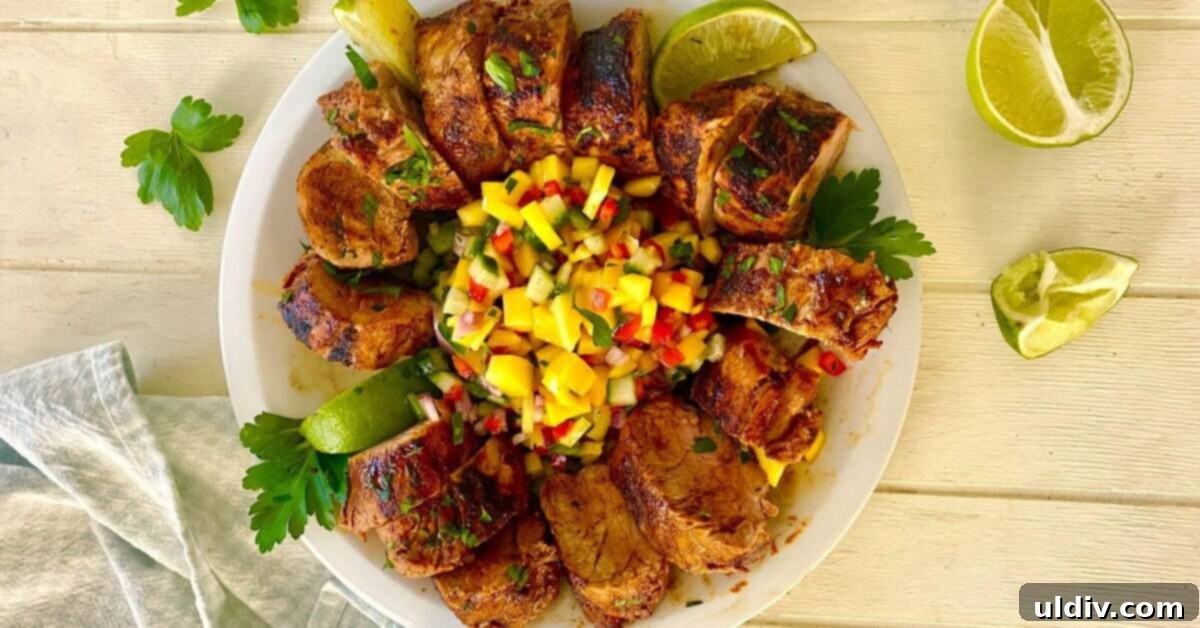
Embark on a culinary journey that tantalizes your taste buds with our sensational 30-minute Pork Tenderloin with Mango Salsa recipe. This dish is a vibrant symphony of flavors – perfectly balancing savory, sweet, salty, and a hint of spicy notes. Imagine tender, juicy pork tenderloin, expertly roasted to perfection, beautifully complemented by a tropical sweet mango salsa that delivers an invigorating kick from fresh jalapeños. This isn’t just an easy dinner; it’s an extraordinary dining experience designed for busy weeknights, special occasions, or whenever you crave an explosion of fresh, delicious taste. Prepare to impress yourself and your loved ones with this remarkably simple yet elegant meal that truly redefines quick and flavorful cooking.
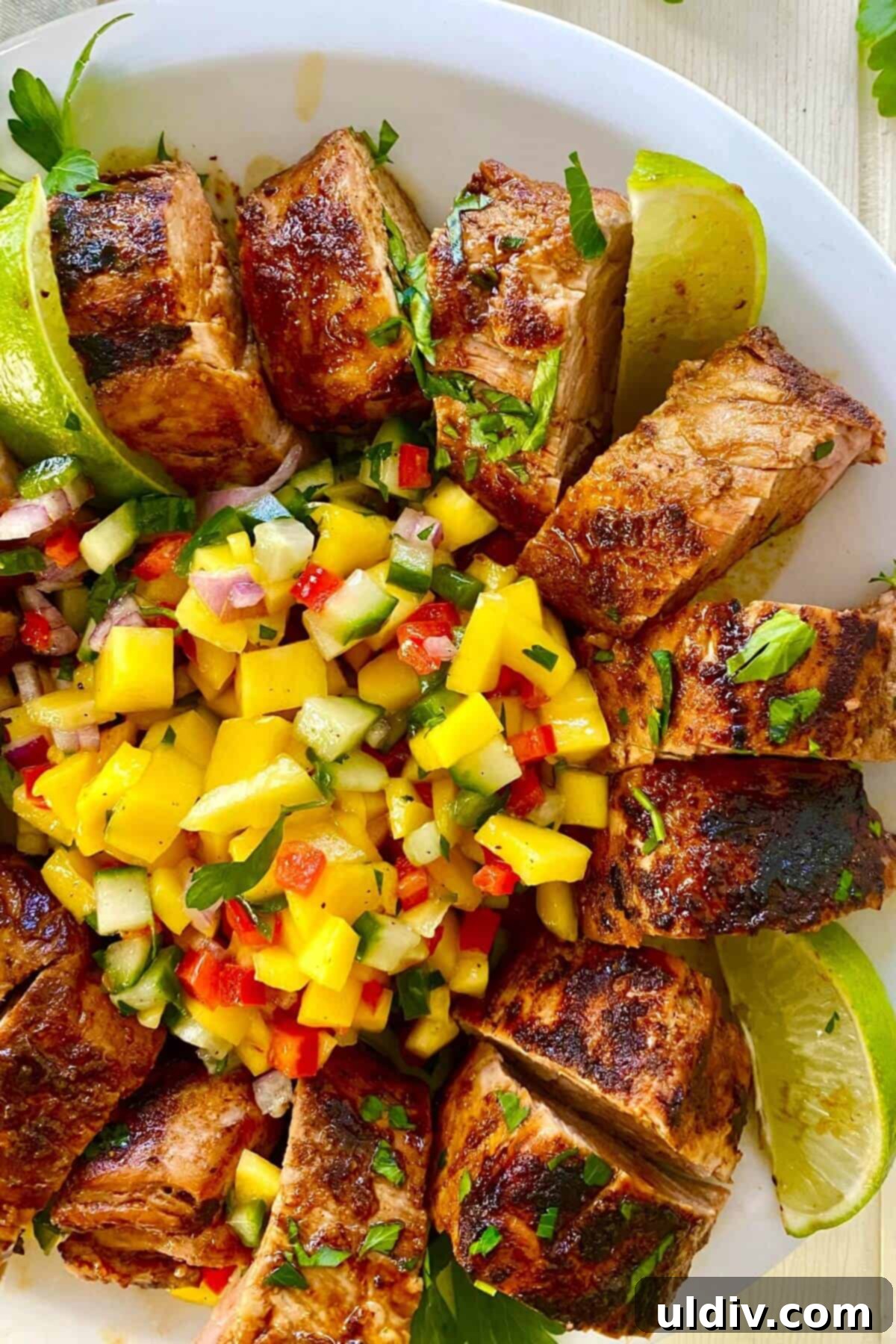
Discover the Magic of Pork Tenderloin with Mango Salsa
There’s a special kind of joy in discovering a dinner recipe that promises exceptional flavor without demanding hours in the kitchen. This Sweet and Spicy Roasted Pork Tenderloin with Mango Salsa fulfills that promise, delivering a gourmet-quality meal in a mere 30 minutes. Its appeal goes beyond just speed; it’s about the thoughtful combination of fresh, vibrant ingredients and a homemade spice rub that elevates the humble pork tenderloin to new heights. Each component plays a crucial role, from the succulent pork to the bright, zesty salsa, creating a harmonious and unforgettable dish.
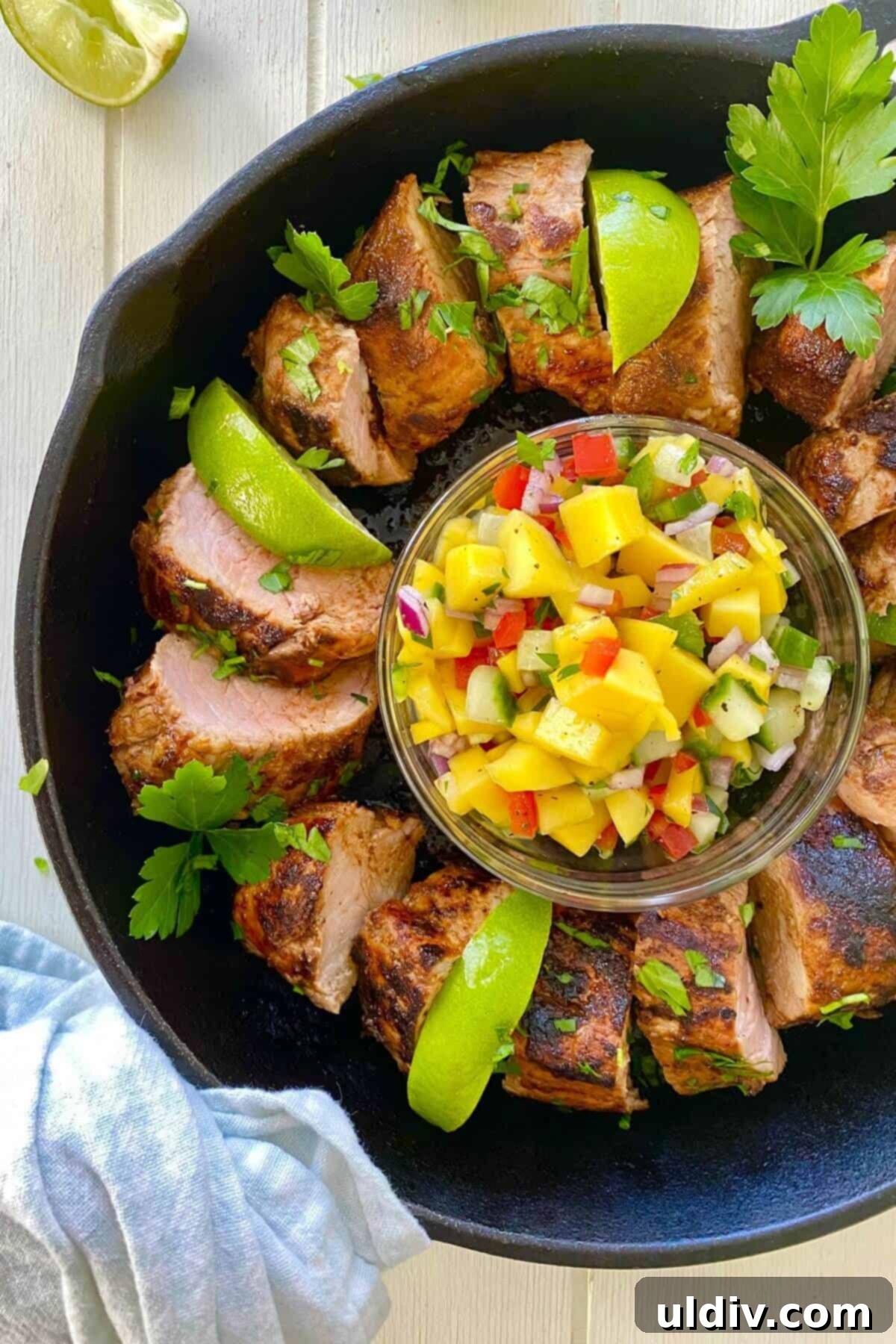
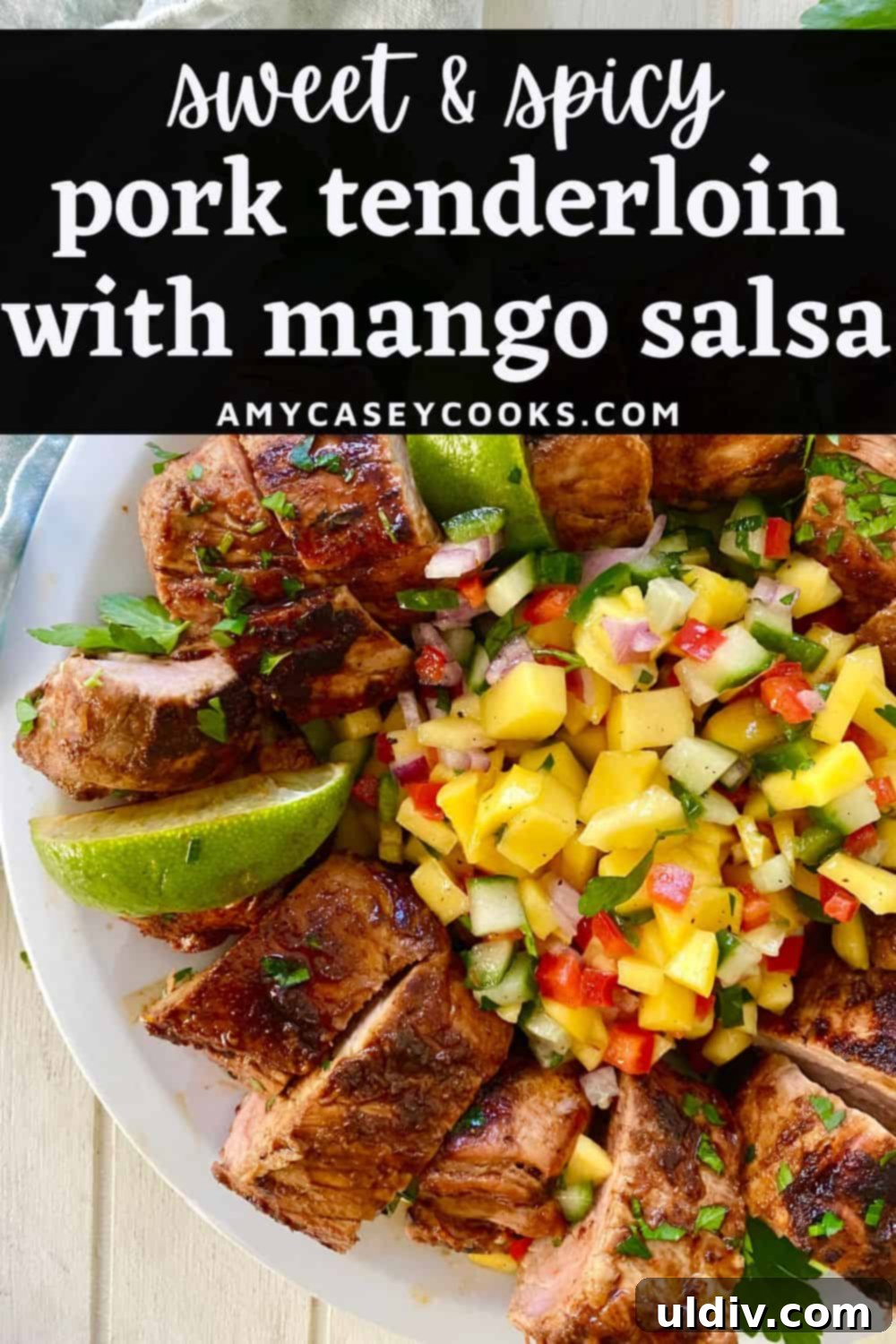
Beyond its incredible taste, this entrée is a feast for the eyes. As my mother always wisely said, “the eye eats first,” and this dish certainly lives up to that philosophy. The rich golden-brown hue of the perfectly seared pork, contrasted with the vivid colors of the mango, red bell pepper, and fresh parsley in the salsa, makes for a visually stunning presentation. It’s a dish that looks as good as it tastes, making it ideal for entertaining guests or simply brightening up your family dinner table.
The pairing of pork and fruit is a classic culinary combination, celebrated for its ability to create a delightful interplay of tastes and textures. Here, the tender, savory pork finds its perfect match in the cool, crunchy, and exquisitely sweet mango salsa. The melding of savory, spicy, salty, and sweet notes is what truly sets this recipe apart. The subtle heat from the jalapeños in the salsa adds an exciting dimension, preventing the sweetness from being overwhelming and creating a truly dynamic flavor profile. What’s more, any leftover mango salsa is incredibly versatile – it’s fantastic served with tortilla or pita chips, making it a delicious appetizer or snack on its own!
Let’s get cooking and transform these simple ingredients into something truly spectacular!
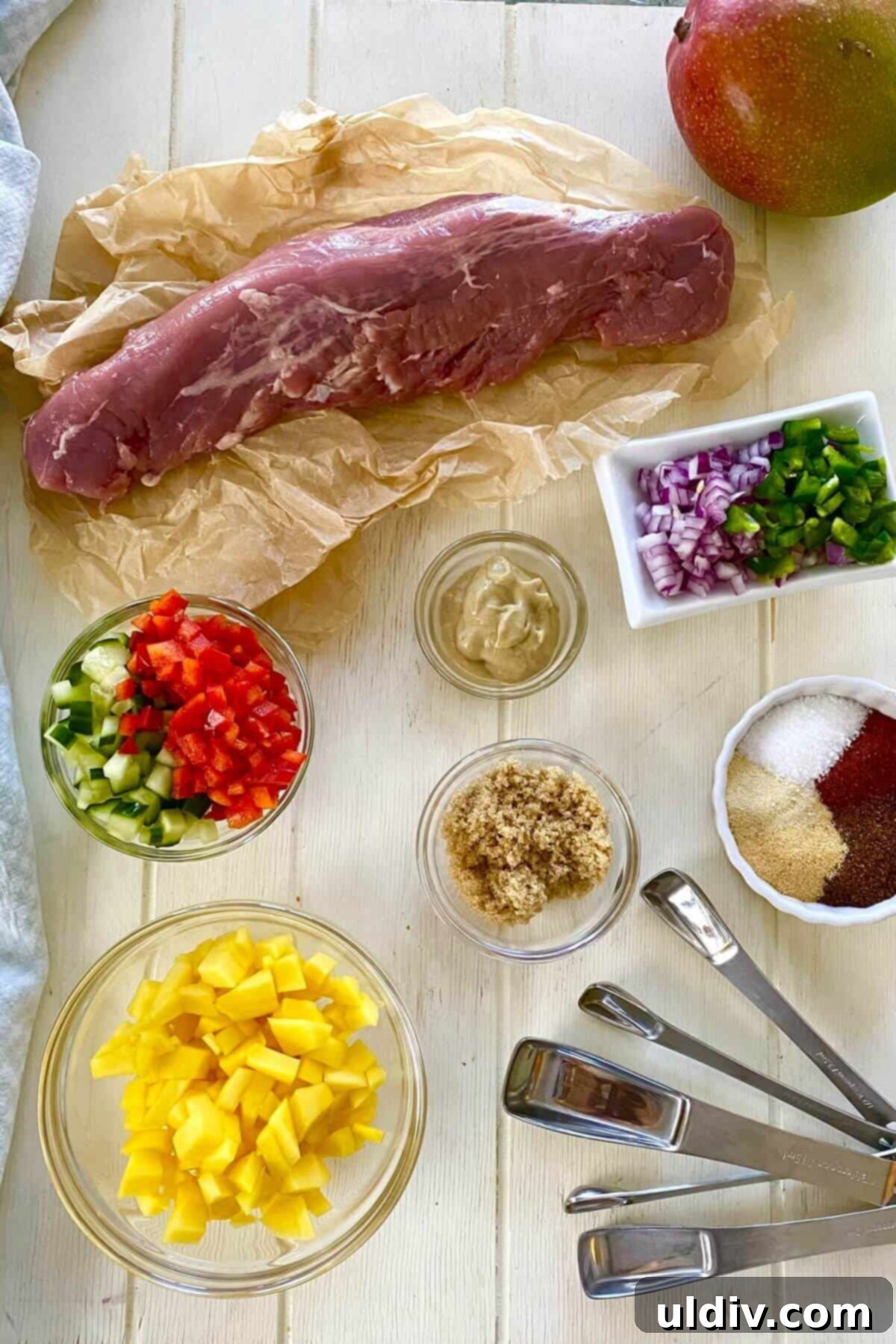
Essential Ingredients for a Flavorful Creation
Crafting this incredible dish begins with a selection of fresh, high-quality ingredients. Each item plays a vital role in building the complex and satisfying flavor profile of the roasted pork tenderloin and the vibrant mango salsa.
- Dijon mustard: Forms a tangy base for the pork rub, tenderizing the meat and adding a subtle, sharp flavor.
- Light brown sugar: Provides a hint of sweetness that caramelizes beautifully during searing, creating a delicious crust and balancing the savory notes.
- Chili powder: Offers warmth and depth to the spice rub without being overwhelmingly hot, contributing to the “sweet and spicy” theme.
- Smoked paprika: Infuses the pork with a rich, smoky aroma and a vibrant color, enhancing its overall appeal.
- Onion powder: Adds a foundational savory note, complementing the other spices and the natural flavor of the pork.
- Garlic powder: A classic seasoning that provides aromatic depth, essential for a well-rounded spice rub.
- Kosher salt: Crucial for seasoning the pork and salsa, it enhances all the other flavors and aids in tenderizing the meat.
- Pepper: A touch of freshly ground pepper adds a subtle bite and aroma to both the pork and salsa.
- Pork tenderloin: The star of the dish. Choose lean, tender cuts for best results. Its mild flavor makes it an ideal canvas for bold seasonings and fresh salsa.
- Mango: The heart of the salsa. Select ripe but firm mangoes for the best texture and tropical sweetness.
- Cucumber: Adds a refreshing crunch and cool contrast to the spicy elements in the salsa, balancing the flavors beautifully.
- Red bell pepper: Contributes a sweet, slightly peppery flavor and a beautiful splash of color to the salsa.
- Red onion: Offers a sharp, pungent kick that mellows when finely diced, providing crucial balance to the sweet mango.
- Jalapeño: Delivers the signature “kick of heat” to the salsa. You can adjust the amount or remove seeds for less spice.
- Parsley: Fresh parsley brings a herbaceous brightness and a pop of green to the salsa.
- Olive oil: Used for searing the pork to achieve a golden crust and as a light dressing for the salsa.
- Lime juice: A squeeze of fresh lime juice brightens both the pork and the salsa, enhancing the tropical flavors and adding a zesty finish.
For precise measurements, refer to the detailed recipe card at the bottom of this article.
Customizing Your Dish: Substitutions and Additions
One of the beauties of this pork tenderloin recipe is its flexibility. Feel free to experiment with these thoughtful substitutions and additions to tailor the dish to your personal preferences or what you have on hand.
- For the Dijon mustard in the rub, don’t hesitate to substitute with yellow or honey mustards. Each will impart a slightly different flavor profile – yellow mustard for a classic tangy kick, and honey mustard for an added layer of sweetness that pairs wonderfully with the brown sugar.
- While pork and fruit are a classic and highly recommended combination, if you’re looking for an alternative protein, boneless, skinless chicken breasts make an excellent choice. Simply follow the searing instructions, then bake them until they reach an internal temperature of 165 degrees F on a digital thermometer to ensure they are cooked through and juicy.
- Mangoes, while delicious, can sometimes be a bit tricky to cut. If fresh mangoes are out of season, difficult to find, or if you prefer a simpler prep, thawed frozen mango chunks are a perfectly acceptable and tasty substitute for the salsa. Ensure they are fully thawed and drained of any excess liquid before dicing.
- Consider adding a small amount of finely chopped cilantro to your mango salsa for an extra layer of fresh, herbaceous flavor, or a pinch of red pepper flakes to the pork rub for an intensified spicy kick.
Step-by-Step Guide: Crafting Your Masterpiece
Follow these simple steps to create a show-stopping meal that’s ready in just 30 minutes. This recipe focuses on efficiency without compromising on flavor, ensuring a perfectly cooked pork tenderloin and a vibrant, fresh salsa.
First, begin by preheating your oven to 425 degrees F (220 degrees C). This high temperature is key to achieving a quick cook time and a beautifully browned exterior on the pork while keeping the interior tender and juicy. While the oven heats, prepare your pork tenderloin. Lay it on a clean work surface and generously rub it all over with Dijon mustard, followed by a thorough coating of light brown sugar. This creates a sweet and tangy base that will caramelize during searing and add incredible depth of flavor.
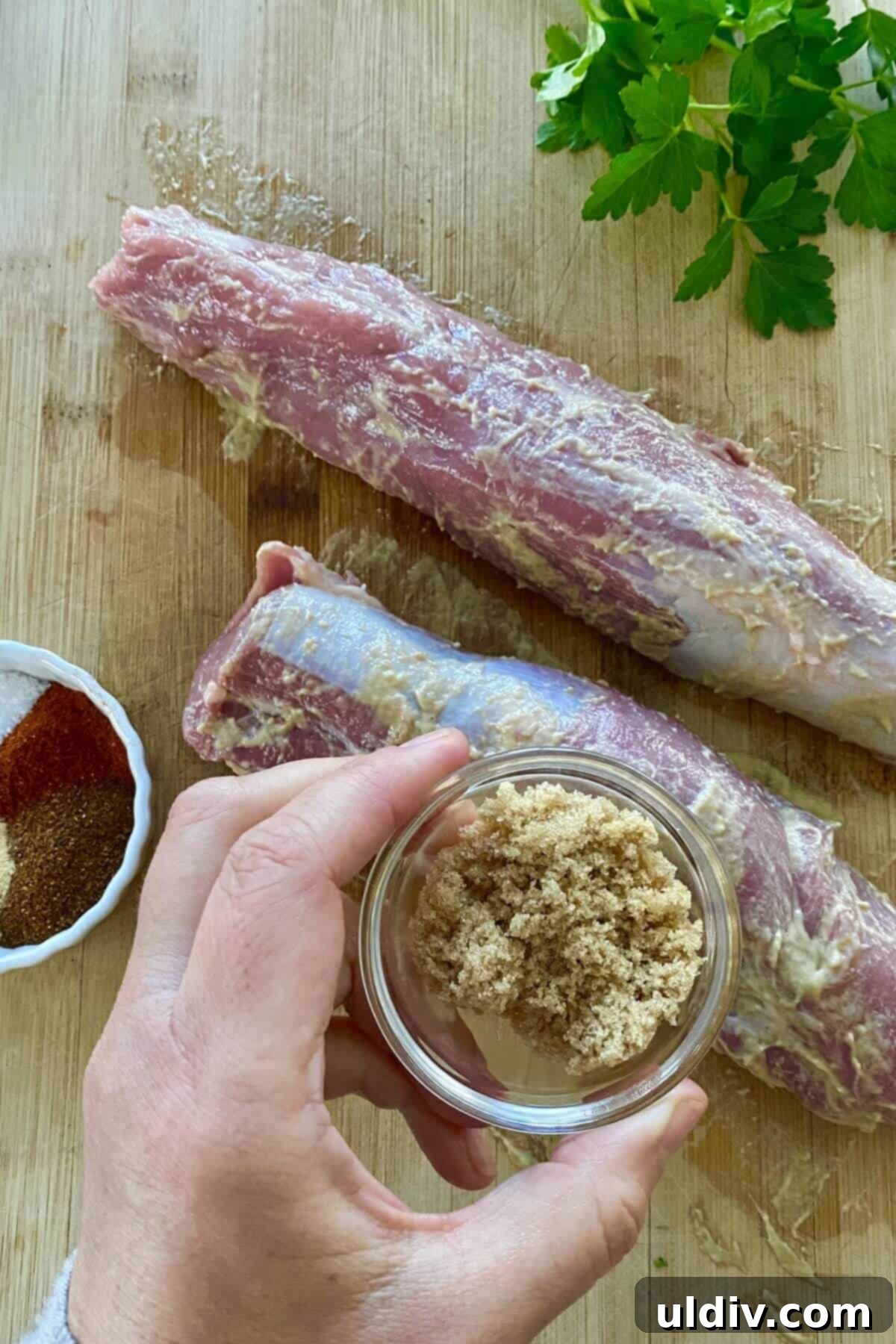
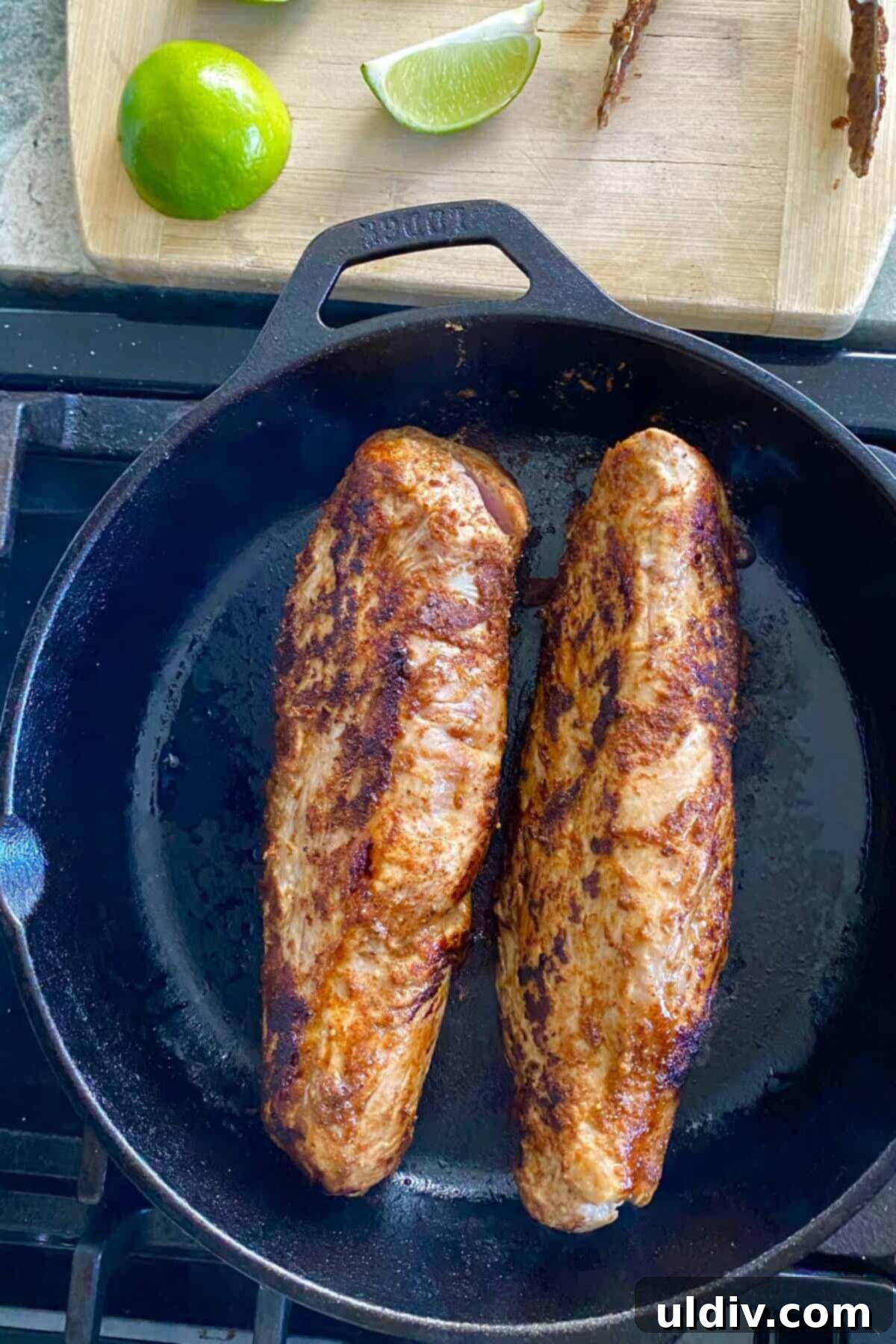
Next, in a small bowl, combine your easy yet potent spice mixture: chili powder, smoked paprika, onion powder, garlic powder, kosher salt, and pepper. This blend is designed to complement the mustard and brown sugar, adding savory, smoky, and subtly spicy notes. Once mixed, generously rub this spice blend over the mustard and brown sugar-coated pork tenderloin, ensuring all sides are covered for maximum flavor.
Heat a cast iron skillet or an oven-safe large sauté pan over medium-high heat. Add a tablespoon of olive oil. Once the oil begins to shimmer, carefully place the seasoned pork tenderloin into the hot pan. Sear the pork on all sides until it achieves a beautiful golden-brown crust, typically about 2 to 3 minutes per side. This searing step is crucial for locking in juices and developing a rich, caramelized flavor that truly enhances the dish.
Once seared, transfer the skillet or sauté pan directly into your preheated oven. Roast the pork for approximately 10 to 15 minutes. The exact cooking time will vary depending on the thickness of your tenderloins. The pork is perfectly cooked when its internal temperature reaches 145 degrees F (63 degrees C) when measured with a digital thermometer. Remove the pan from the oven and allow the pork to rest for 5 to 10 minutes before slicing. This resting period is essential for the juices to redistribute throughout the meat, ensuring a tender and moist result.
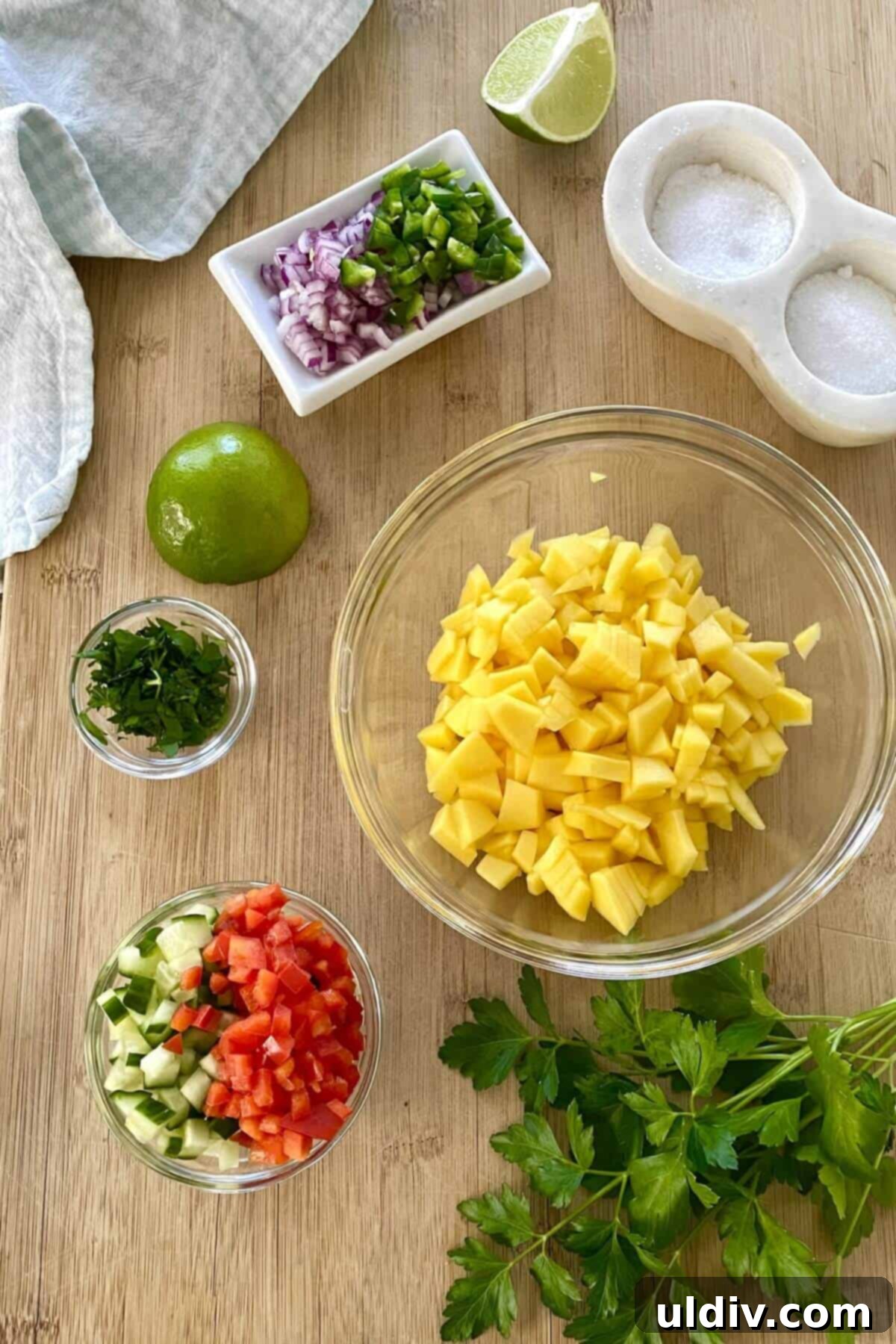
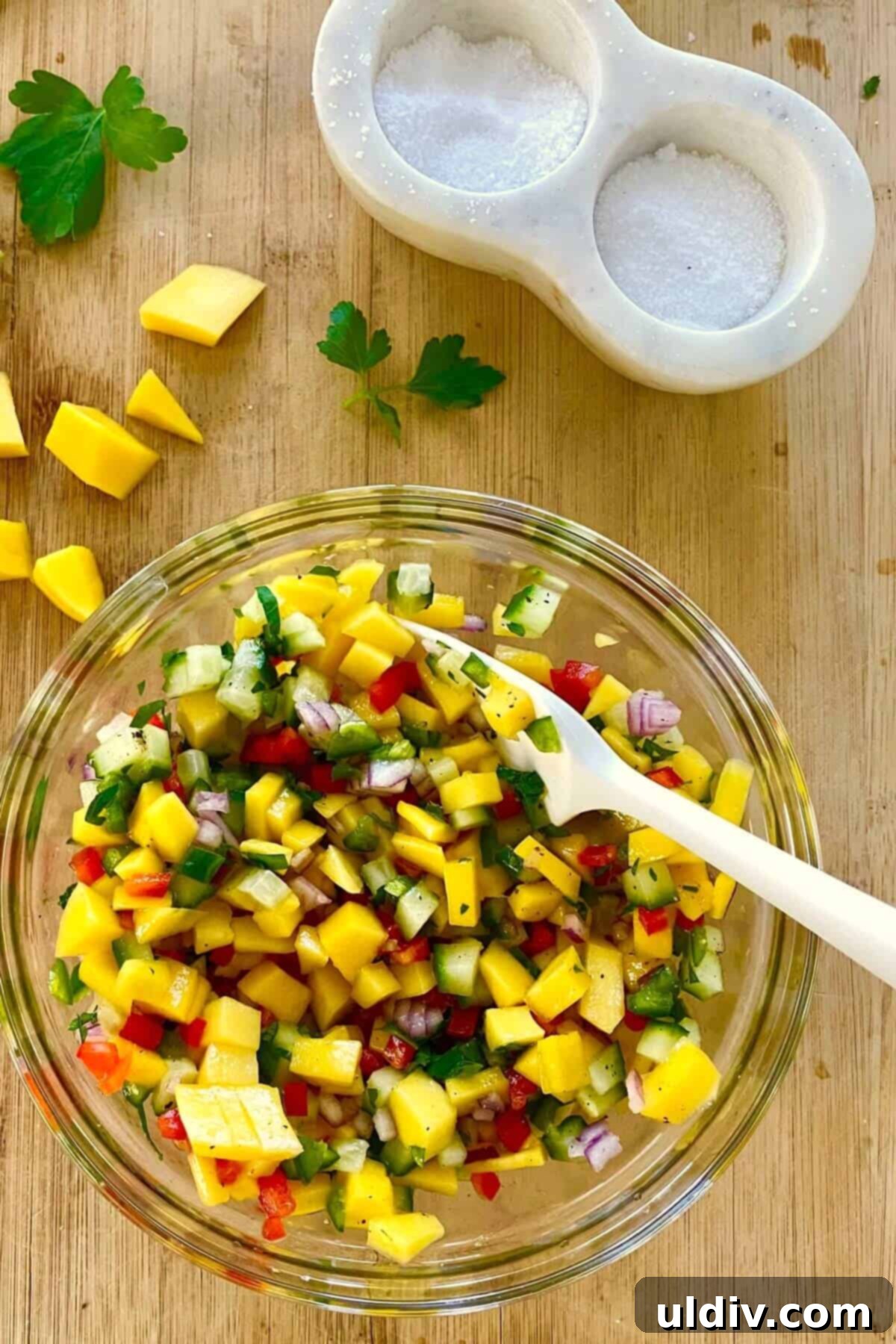
While the pork is roasting and resting, prepare your vibrant Mango Cucumber Salsa. In a medium-sized bowl, combine the diced mango, crisp cucumber, finely chopped red bell pepper, pungent red onion, diced jalapeño (remove seeds and ribs for less heat), fresh parsley, a drizzle of olive oil, and the bright squeeze of lime juice. Stir all the ingredients together gently until well combined, then season to taste with kosher salt and pepper. The salsa can be made a little ahead of time to allow the flavors to meld, but it’s best when fresh.
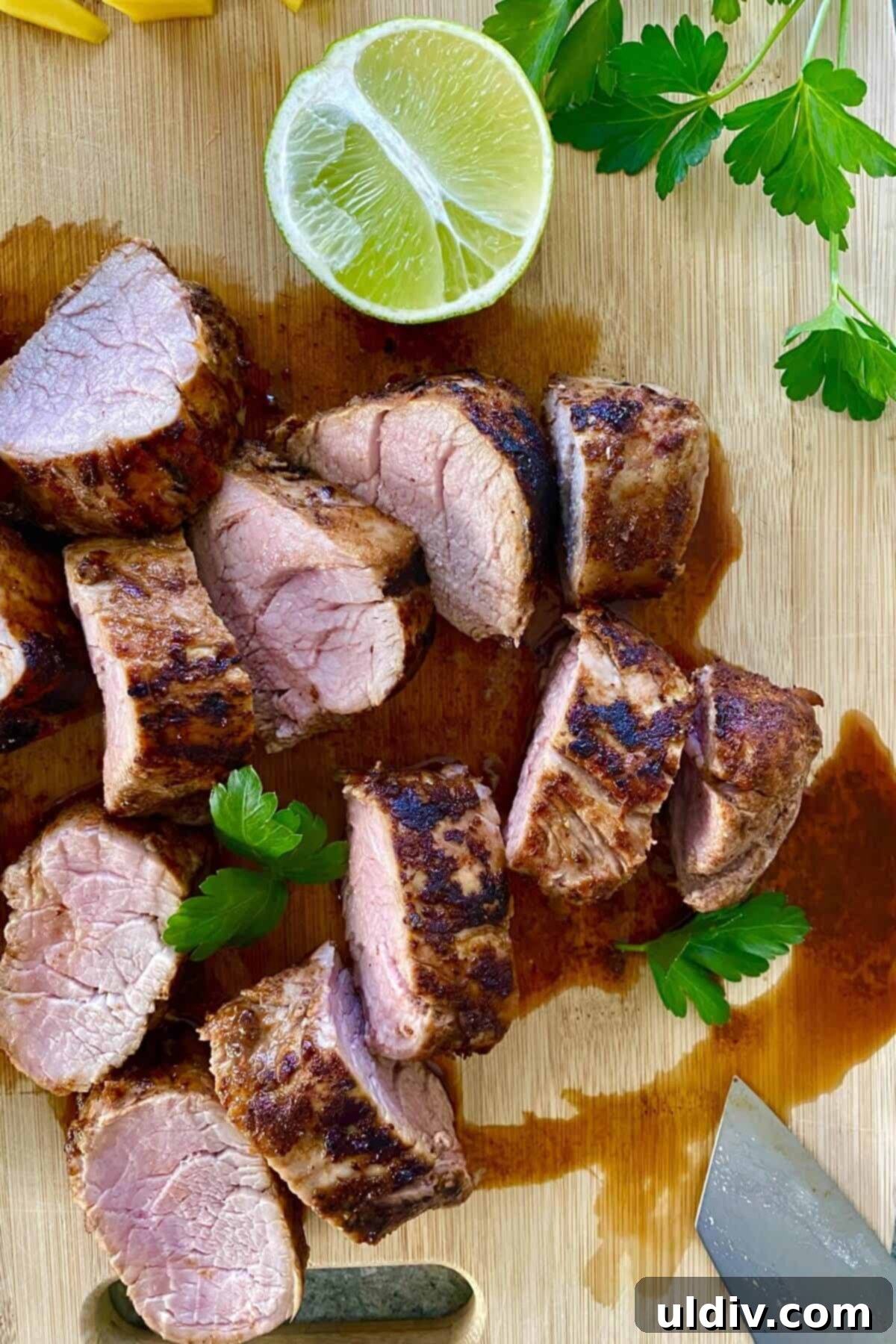
Once rested, slice the pork tenderloin into beautiful 1-inch medallions. Arrange them elegantly on a platter. Drizzle any accumulated pan juices over the sliced pork – these juices are packed with flavor! Finish with an extra squeeze of fresh lime juice for a final burst of brightness, then serve immediately with generous spoonfuls of your homemade Mango Cucumber Salsa. Enjoy this culinary delight!
Chef’s Tips for Perfect Pork and Salsa
Achieving a restaurant-quality meal at home often comes down to a few key techniques. Here are some essential tips and suggestions to ensure your Pork Tenderloin with Mango Salsa turns out perfectly every time:
- Temper the Pork: For the most even cooking, take your pork tenderloins out of the refrigerator at least 30 minutes before you plan to cook them. Allowing the meat to come closer to room temperature helps it cook more uniformly and efficiently, preventing the outside from overcooking while the inside remains raw.
- Don’t Skip the Sear: Searing the tenderloins before roasting is a non-negotiable step. This initial high-heat exposure creates a beautiful golden-brown crust, known as the Maillard reaction, which locks in moisture and develops a rich, smoky, and intensely flavorful exterior. It’s the secret to a truly delicious and visually appealing pork tenderloin.
- Rest is Best: After removing the pork from the oven, allow it to rest for about 5 to 10 minutes before slicing it into medallions. This crucial step permits the meat’s internal temperature to stabilize and its juices to redistribute throughout the muscle fibers, resulting in a significantly more tender and moist piece of pork. Cutting it too soon will cause all those precious juices to run out onto your cutting board. For optimal results, remove the pork from the hot cast iron skillet or sauté pan during this resting period to prevent residual heat from overcooking it.
- Adjust the Heat: For a milder salsa that still boasts all the tropical flavors, be sure to remove the seeds and the white ribs (placenta) of the jalapeño before dicing and adding it to the mixture. These parts contain most of the capsaicin, which is responsible for the pepper’s heat. If you love heat, feel free to leave some or all of them in.
- Freshness is Key for Salsa: While the salsa can sit for a short time, it truly shines when made fresh, just as the pork is resting. The crispness of the cucumber and bell pepper, and the vibrant taste of the mango and lime, are at their peak.
Frequently Asked Questions About Pork Tenderloin
Understanding the best practices for cooking pork tenderloin can significantly impact the success of your meal. Here are answers to some common questions:
Is searing pork tenderloin before roasting it necessary?
Absolutely, yes! Searing pork tenderloin before finishing it in the oven is highly recommended for the juiciest and most flavorful results. This initial high-heat step creates a beautiful, caramelized crust on the exterior, often referred to as a “bark,” which locks in the natural juices and develops a rich, smoky flavor. It also contributes significantly to the tenderloin’s appetizing golden-brown color and texture, making for a much more appealing and delicious dish.
What temperature should pork tenderloin be cooked at in the oven?
For optimal results when cooking pork tenderloin, roast it at a high temperature of 425 degrees F (220 degrees C). The intense heat ensures that the pork cooks relatively quickly, preventing it from spending too much time in the oven where it could dry out. This method promotes a lovely sear while maintaining a tender and moist interior, crucial for a truly enjoyable pork tenderloin.
How do you cook a pork tenderloin without drying it out?
Overcooking is the primary culprit behind dry and tough pork tenderloin. To prevent this common pitfall, the most important tool in your kitchen is a reliable meat thermometer. Always cook pork tenderloin until it reaches an internal temperature of 145 degrees F (63 degrees C). At this temperature, the pork will be perfectly cooked – still slightly pink in the center, tender, and incredibly juicy. Remember to account for a short resting period after cooking, during which the internal temperature may rise by a few degrees (carry-over cooking), further contributing to a succulent outcome.
Storage and Reheating Best Practices
Proper storage and reheating are key to enjoying your delicious pork tenderloin and mango salsa for days to come. To maintain their quality and flavor, follow these simple guidelines:
Before storing, ensure the pork tenderloin has completely cooled to room temperature. This helps prevent condensation which can lead to sogginess. Package the cooled pork and the mango salsa in separate airtight glass containers. Glass containers are ideal as they don’t absorb odors or flavors. Alternatively, you can tightly wrap the pork in plastic wrap, then foil, or place it in a resealable bag, squeezing out as much air as possible. Both the cooked pork and the vibrant mango salsa will remain fresh and delicious for up to 4 days when properly stored in the refrigerator.
When you’re ready to reheat the pork tenderloin, you have a couple of excellent options to keep it juicy. For a quick reheat, use the microwave: place the pork in a microwave-safe dish, cover it, and heat on 60 percent power in 30 to 45-second intervals, checking for warmth to avoid overcooking. For a more gentle and even reheat, use the oven: preheat to 325 degrees F (160 degrees C), place the pork in a covered, oven-safe dish, and warm for about 10 to 15 minutes. A chef’s tip for extra juiciness is to add a couple of tablespoons of chicken stock or water to the dish before reheating in the oven; this creates steam that helps keep the pork moist and tender.
Perfect Pairings: What to Serve Alongside Your Meal
This Sweet and Spicy Pork Tenderloin with Mango Salsa is a complete meal in itself, but it truly shines when paired with complementary side dishes. Here are some fantastic options to round out your dining experience:
- Roasted Brussels Sprouts with Honey and Mustard: The slight bitterness and caramelized notes of roasted Brussels sprouts, especially with a sweet and tangy glaze, perfectly echo the flavors in the pork tenderloin.
- Apple and Bacon Stuffed Sweet Potatoes: The creamy sweetness of baked sweet potatoes, combined with the smoky crunch of bacon and tart apple, provides a comforting and hearty contrast to the light, vibrant main course.
- Roasted Carrot and Parsnip Fries: Earthy, sweet, and slightly crispy, these root vegetable fries offer a wholesome and flavorful alternative to traditional potato fries, harmonizing well with the spice rub on the pork.
- Fresh Spinach and Blueberry Salad with Yogurt Dressing: A light, refreshing salad with the sweetness of blueberries and the tang of a yogurt dressing would provide a wonderful palate cleanser and a healthy green component.
- Super Cheesy and Easy Mac and Cheese: For those seeking a more indulgent and comforting side, a creamy mac and cheese can be a delightful contrast to the spicy and sweet flavors of the pork and salsa.
Explore More Delicious Pork Tenderloin Recipes
If you’ve fallen in love with the versatility and flavor of pork tenderloin, you’re in luck! This lean and tender cut of meat is incredibly adaptable and forms the base for many exquisite dishes. Here are some more delightful pork tenderloin recipes to inspire your next culinary adventure:
- Pepper Jelly Glazed Pork Tenderloin: A sweet and spicy glaze made with pepper jelly creates a sticky, flavorful crust that is simply irresistible.
- Roasted Pork Tenderloin with Strawberry Jalapeño Salsa: Similar to our mango salsa, this recipe features another fantastic fruit and pork pairing, with the sweet and slightly tart notes of strawberries balanced by a hint of jalapeño heat.
- Barbecue Pork Tenderloin Sliders with Tangy Cole Slaw: Perfect for a casual meal or entertaining, these tender pork sliders, slathered in barbecue sauce and topped with a zesty slaw, are always a crowd-pleaser.
- Maple Glazed Pork Tenderloin with Sautéed Apples: Embrace autumnal flavors with a sweet maple glaze and tender, caramelized sautéed apples that beautifully complement the savory pork.
- Grilled Pork Tenderloin with Berry Bacon Sauce: Take your pork tenderloin to the grill and serve it with a unique and flavorful sauce featuring sweet berries and savory bacon – a truly gourmet experience.
Connect With Us!
We absolutely love hearing from you and seeing your culinary creations! If you tried this delicious Pork Tenderloin with Mango Salsa recipe, please let us know. We’d be thrilled to hear about your experience! Be sure to leave a comment below with your thoughts or give this recipe a rating. We genuinely do our best to reply to all your comments and feedback.
Don’t forget to snap a photo of your magnificent meal and post it to Instagram, tagging us so we can admire your work! We’ll often feature your fantastic photos in our Insta stories. We truly love seeing all your amazing creations and how you make our recipes your own.
For a continuous flow of fabulous foodie stories, engaging videos, handy cooking tips, and all our latest recipes, be sure to check out our Facebook and Pinterest pages. And to ensure you never miss out on any of our new recipes, sign up for our newsletter – it’s the best way to stay updated and inspired in your kitchen!
Recipe
30 Minute Roasted Pork Tenderloin with Mango Cucumber Salsa
Print
Pin
Rate
Ingredients
- for the pork
- 2 tablespoons Dijon mustard
- 2 tablespoons light brown sugar
- 2 teaspoons chili powder
- 1 teaspoon smoked paprika
- 1 teaspoon onion powder
- 1 teaspoon garlic powder
- 1 teaspoon kosher salt
- ½ teaspoon pepper
- 2 1 pound pork tenderloins
- for the mango salsa
- 2 cups diced mango
- ½ cup diced cucumber
- ¼ cup diced red bell pepper
- ¼ cup diced red onion
- 1 small jalapeno diced
- 1 tablespoon chopped fresh parsley
- 1 tablespoon olive oil
- juice of ½ lime
- lime sliced for serving
Instructions
-
Preheat oven to 425 degrees F.
-
Place the pork tenderloin on a work surface and rub with Dijon mustard and brown sugar.
-
In a small bowl, combine chili powder, smoked paprika, onion powder, garlic powder, kosher salt and pepper. Rub the pork with the spice mixture.
-
Heat a cast iron skillet or an oven safe large sauté pan over medium high heat. Add 1 tablespoon of olive oil. When the oil begins to shimmer, add the seasoned pork tenderloin. Brown on all sides, about 2 to 3 minutes per side.
-
Place the skillet or sauté pan with browned pork tenderloins in the oven. Roast in for about 10 to 15 minutes. The cooking time will depend on the size of the tenderloins. The pork is ready when the internal temperature is 145 degrees on a digital thermometer. Remove from the oven and let rest.
-
While the pork is cooking, make the Mango Cucumber Salsa. In a bowl, combine the mango, cucumber, red bell pepper, red onion, jalapeno, parsley, olive oil and lime juice. Stir and season to taste with kosher salt and pepper. Set aside.
-
Slice the pork tenderloin in 1 inch medallions and place on a platter. Drizzle with any of the accumulated pan juices and squeeze lime juice over the top. Serve with the Mango Cucumber Salsa.
Notes
- In place of the Dijon mustard, yellow or honey mustards are tasty substitutes.
- Pork and fruit are a classic combination. Chicken breasts are an alternative. After searing, bake until it has an internal temperature of 165 degrees F on a digital thermometer.
- Mangoes can be tricky to cut. Thawed frozen mango can be used in its place.