
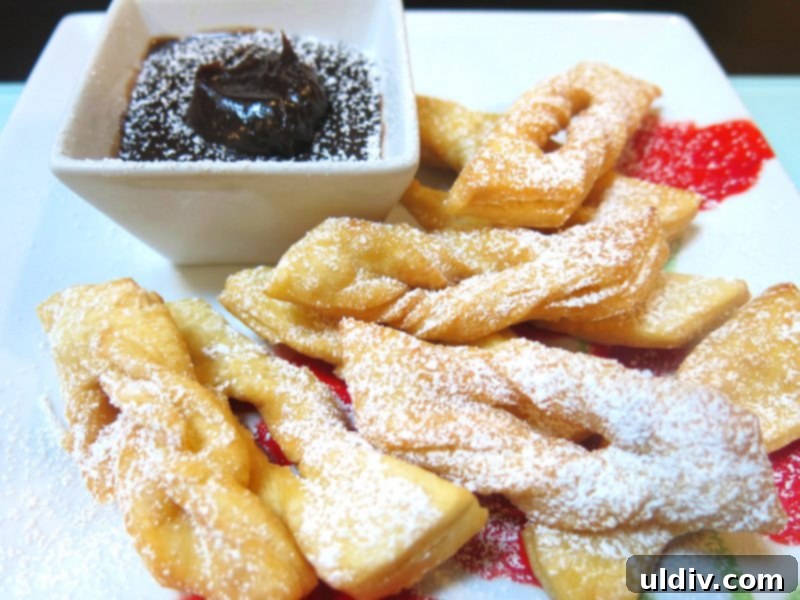
Unraveling the Sweet Mystery of “Little Lies” Cookies: A Traditional Fried Delight
“Tell me lies, tell me sweet little lies.” This iconic lyric from Fleetwood Mac’s timeless song resonates deeply, much like the charming cookies we’re about to explore today. These delightful treats, affectionately known as “Little Lies,” hold a special place in my heart, rooted in cherished family traditions and the simple joy of homemade sweets. Their name itself adds an intriguing layer to their appeal, promising a culinary adventure that is as simple to create as it is utterly delicious to savor.
This recipe for traditional fried cookies comes straight from my mother’s kitchen, a testament to generations of culinary wisdom. What makes these cookies truly fascinating is their name: “Little Lies.” You might also encounter them in Polish cuisine, where they are elegantly referred to as “Angel Wings” or “Chruściki.” In our family, however, they are simply “little lies,” a moniker that has always sparked curiosity. Is it because their delicate, seemingly crispy exterior playfully deceives you, leading you to expect something akin to a cannoli, when in reality, each bite reveals a surprisingly soft, light-as-a-feather texture? Or perhaps the “lie” lies in their deceptive appearance of complexity, hinting at an intricate baking process, when in fact, they are incredibly straightforward to prepare? Regardless of the origin of their whimsical name, one truth remains undeniable: these cookies are a quick, economical, and exceptionally delicious treat, yielding an abundant batch that is perfect for sharing.
The Enigma of “Little Lies” and Cultural Sweet Traditions
The name “Little Lies” (“Minciuni” in Romanian or “Fasolele” in some regions) is not just a quirky label; it tells a story of cultural nuances and the playful spirit of traditional cooking. While the exact etymology might be debated, the theories surrounding its origin add to the cookie’s charm. The contrast between their delicate, almost ethereal structure and the expectation of a heavier fried pastry is indeed a delightful “lie” that enhances their appeal. This light texture is a hallmark of expertly prepared fried dough, ensuring they melt in your mouth rather than feeling dense or greasy.
Across Eastern Europe, similar fried dough pastries are celebrated, with the Polish “Chruściki” or “Angel Wings” being perhaps the most famous counterpart. These Polish delicacies, often shaped into intricate ribbons, share the same fundamental characteristics: a rich, egg-yolk-heavy dough, thinly rolled, delicately fried, and dusted with powdered sugar. In Italy, you might find similar treats like “Chiacchiere” or “Frappe,” traditionally made during Carnival, highlighting a widespread love for light, crispy fried sweets. These variations underscore a universal culinary truth: simple ingredients, when prepared with care and tradition, can create extraordinary desserts that evoke warmth, comfort, and nostalgia.
Our “Little Lies” carry this legacy forward, offering a taste of tradition that is both accessible and deeply satisfying. They represent more than just a recipe; they are a connection to culinary heritage, a reminder of the joy of baking passed down through generations, and a testament to how simple ingredients can create profound flavor experiences.
Crafting Your “Little Lies”: Essential Ingredients
The beauty of “Little Lies” cookies lies in their simplicity, requiring only a handful of common pantry staples. Each ingredient plays a crucial role in achieving the cookies’ signature tender texture and delicate flavor. My mother’s recipe calls for half a cup of powdered sugar, which provides a subtle sweetness that balances the richness of the eggs and sour cream. If you prefer a sweeter cookie, feel free to add an extra tablespoon or two to the dough. Additionally, I highly recommend experimenting with flavor enhancers like vanilla extract or a pinch of cinnamon, which can elevate the aroma and taste profile of these already wonderful treats.
Ingredients:
- 2 cups all-purpose flour
- 4 tablespoons sour cream
- 1 whole large egg
- 4 large egg yolks
- 1/2 cup powdered sugar (plus extra for serving)
- 1 tablespoon rum (or brandy, for flavor and a hint of crispness)
- 2 cups vegetable oil (for frying)
Understanding the Role of Key Ingredients:
- Sour Cream: This is the secret to their incredible tenderness. The acidity in sour cream helps to tenderize the gluten in the flour, resulting in a remarkably soft and pliable dough that fries up beautifully light. It also imparts a subtle tang that complements the sweetness.
- Egg Yolks: The high number of egg yolks contributes significantly to the richness, color, and texture of the cookies. They provide emulsification, making the dough smooth, and contribute to the delicate crispness when fried, without making them heavy.
- Rum: Beyond adding a delightful aroma and a nuanced flavor, rum (or any alcohol like brandy or vodka) plays a practical role. Alcohol evaporates faster than water during frying, which can lead to a crispier cookie and potentially reduce oil absorption, preventing them from becoming greasy.
- Powdered Sugar: Incorporating powdered sugar into the dough ensures a finer texture and helps the sugar dissolve more easily, leading to a smoother dough and a more even sweetness throughout the cookie.
Step-by-Step Perfection: How to Make Little Lies Cookies
Creating these “Little Lies” is a straightforward process, making them an ideal project for both novice and experienced bakers. Follow these steps to achieve perfectly tender and delightfully crispy fried cookies.
1. Preparing the Dough
Begin by combining the wet ingredients and sweeteners in a large mixing bowl. Add the four egg yolks and the single whole egg (containing both yolk and white) along with the sour cream. Whisk these together until they are thoroughly combined and smooth. Next, incorporate the powdered sugar and rum into the mixture, stirring until the sugar is largely dissolved. This ensures even sweetness and flavor distribution.
Gradually add the flour to the wet mixture. I typically add the flour in stages, about half a cup at a time, mixing well after each addition. This gradual approach helps prevent lumps and allows you to better gauge the dough’s consistency. Continue mixing until the dough is homogeneous and begins to come together. While a stand mixer with a dough hook can certainly achieve this with ease, I often find the tactile experience of finishing the dough by hand incredibly satisfying and effective for judging its readiness. The dough should be soft, pliable, and not overly sticky. If it’s too sticky, add a tiny bit more flour; if too dry, a touch more sour cream.
2. Rolling and Shaping the Cookies
Once your dough is ready, lightly dust a clean, flat work surface with flour. Turn out the dough and roll it out evenly until it’s approximately 1/8 inch (about 3mm) thick. The thinner the dough, the crisper and lighter your “Little Lies” will be, so aim for a consistent, delicate sheet.
Now comes the creative part: shaping. You can use a knife to cut the dough into various shapes, or opt for cookie cutters for uniform designs. Traditionally, these cookies are cut into rectangles, about 1×3 inches. For the classic “ribbon” shape, make a small slit in the center of each rectangle, then gently pull one end of the rectangle through the slit, twisting it to create an elegant, bow-like form. This not only makes them visually appealing but also ensures they cook evenly and develop delightful pockets of crispness.
3. Frying to Golden Perfection
In a deep, heavy-bottomed pan or Dutch oven, heat about 2 cups of vegetable oil over medium heat. The ideal temperature for frying these cookies is crucial for their texture – too cool and they absorb too much oil, too hot and they burn quickly on the outside while remaining raw inside. A good indicator is to drop a tiny piece of dough into the oil; if it sizzles gently and floats to the top, the oil is ready. Aim for approximately 350-375°F (175-190°C).
Carefully place the first batch of cookies into the hot oil. Avoid overcrowding the pan, as this will lower the oil temperature and lead to uneven cooking. Fry them for just a few minutes, turning them over halfway through, until they achieve a beautiful golden-brown color on both sides. These cookies fry very quickly due to their thinness, so stay attentive. They will puff up slightly and become wonderfully light.
4. Draining and Cooling
Once fried to perfection, use a slotted spoon or tongs to remove the cookies from the hot oil. Immediately transfer them to a plate lined with several layers of paper towels. This step is vital for absorbing any excess oil, ensuring your “Little Lies” remain light, crisp, and not greasy. Repeat the frying process with the remaining dough, making sure to maintain the oil temperature between batches. If the oil starts to smoke, reduce the heat slightly. If it cools down too much, allow it to reheat before adding the next batch.
Elevate Your Little Lies: Tips for Success and Flavor Variations
While the basic recipe yields incredibly delicious results, a few extra tips and creative variations can elevate your “Little Lies” cookies to new heights, making them truly unforgettable.
Achieving the Perfect Texture:
- Dough Consistency: The key to light, crispy cookies is a soft, elastic dough that is rolled out very thinly. If the dough is too stiff, add a tiny splash of milk or extra sour cream. If it’s too sticky, a little extra flour will help.
- Oil Temperature: As mentioned, maintaining the correct oil temperature is paramount. If you have a kitchen thermometer, it’s a valuable tool. Otherwise, rely on the sizzle test with a small piece of dough.
- Batch Frying: Never overcrowd your pan. Frying in small batches ensures consistent oil temperature and even cooking, leading to a better texture.
Sweetness Adjustments and Aromatic Additions:
The original recipe provides a delicate sweetness. If you desire a richer flavor profile or a sweeter cookie, consider these enhancements:
- More Powdered Sugar: Feel free to increase the amount of powdered sugar in the dough by 1-2 tablespoons.
- Vanilla Extract: A teaspoon of good quality vanilla extract (or vanilla sugar) added to the dough mixture will impart a warm, comforting aroma and flavor.
- Cinnamon or Nutmeg: A pinch of ground cinnamon or nutmeg can add a cozy, spiced note, especially delightful during colder months.
- Citrus Zest: The finely grated zest of half a lemon or orange can brighten the flavor considerably, adding a fresh, aromatic dimension.
- Liqueur Choices: While rum is traditional, experiment with other liqueurs like brandy, Kirsch (cherry brandy), or even a hint of Amaretto for an almond nuance. The alcohol evaporates during frying, leaving behind only its exquisite flavor.
Serving Suggestions: A Sweet Symphony
Once your “Little Lies” cookies are cooled and drained, the final touch is often the simplest and most elegant: a generous dusting of powdered sugar. This creates a beautiful snowy appearance and adds an extra layer of sweetness that perfectly complements their delicate texture.
However, don’t stop there! These versatile cookies are excellent vehicles for a variety of sweet accompaniments. Consider pairing them with:
- Classic Powdered Sugar: The traditional and most beloved way to serve them.
- Chocolate Sauce: A drizzle of warm chocolate ganache or a simple chocolate syrup adds a decadent touch.
- Fruit Jam or Preserves: A dollop of your favorite fruit jam—raspberry, apricot, or strawberry—offers a burst of fruity freshness that contrasts beautifully with the fried dough.
- Vanilla Custard or Crème Anglaise: For a more sophisticated dessert, serve them alongside a rich, creamy vanilla custard or a light crème anglaise for dipping.
- Fresh Berries: A scattering of fresh berries like raspberries or blueberries can add a vibrant color and tangy counterpoint.
- Coffee or Tea: These cookies are the perfect accompaniment to a steaming cup of coffee or a comforting mug of tea, making for an ideal afternoon treat.
- Ice Cream: For an indulgent dessert, serve warm “Little Lies” alongside a scoop of vanilla bean ice cream, allowing the slight warmth of the cookies to gently melt the ice cream.
The possibilities are endless, allowing you to tailor the serving experience to your personal preference or the occasion.
Storing Your Sweet Secrets
One of the many appealing qualities of “Little Lies” cookies is their excellent shelf life. They remain fresh and delicious for several days when stored properly at room temperature. I typically keep them in a covered plastic bowl or an airtight container on the kitchen counter. This simple storage method helps them retain their delicate crispness and prevents them from becoming stale.
While they are best enjoyed fresh, directly after frying, their enduring quality means you can prepare a large batch and enjoy them over several days. They make for a perfect snack to grab as you go about your day – a sweet pick-me-up that can brighten any moment. Just imagine reaching for one of these delightful cookies, savoring its light texture and subtle sweetness, and feeling a little spark of joy infuse your day. They truly are a small pleasure that offers immense satisfaction.
Conclusion: More Than Just a Cookie
These “Little Lies” cookies are more than just a recipe; they are a delightful journey into the heart of traditional baking. From the intriguing origin of their name to the simple elegance of their preparation and the sheer joy of their taste, they encapsulate everything wonderful about homemade treats. They prove that you don’t need complex ingredients or elaborate techniques to create something truly special.
Whether you call them “Little Lies,” “Angel Wings,” or “Chruściki,” these fried cookies offer a perfect balance of lightness, sweetness, and a hint of nostalgic charm. They are economical, quick to prepare, and incredibly satisfying, making them an ideal dessert for any occasion, or simply as a comforting indulgence for yourself and your loved ones. So, take a moment, embrace the “sweet little lies,” and let these delightful cookies bring a little extra sweetness and brightness into your day. Happy baking!