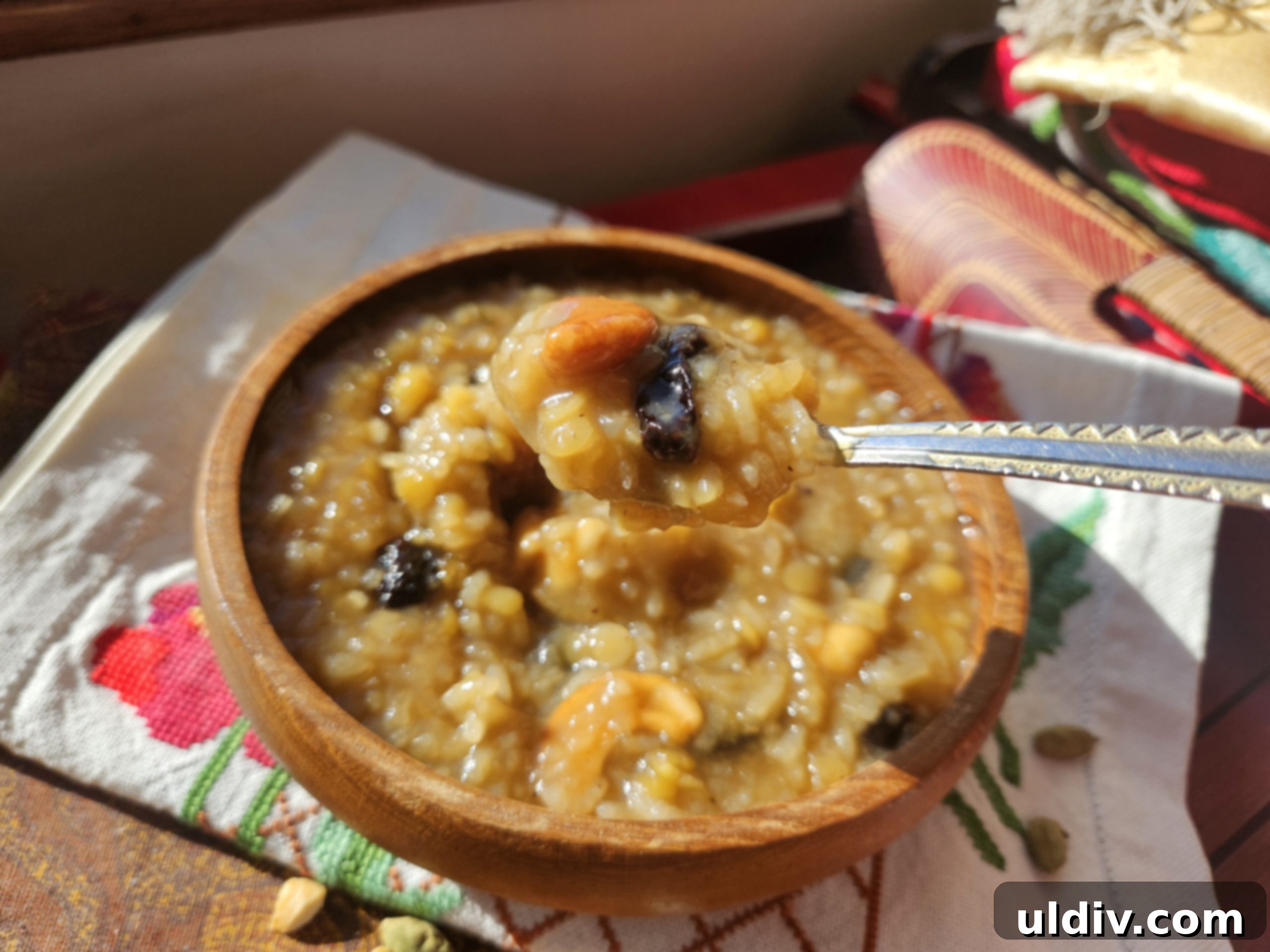
Embracing Warmth: Sweet Pongal and the Promise of Spring
As winter’s icy grip tightens around the northern hemisphere, bringing with it chilling temperatures and endless grey skies, there’s a special kind of magic to be found in turning inward, to the warmth of our homes and the comfort of our kitchens. This week, my journey to ward off the notorious “winter blues” led me straight to the heart of South India, to craft a dessert renowned not only for its rich, comforting sweetness but also for its profound cultural meaning and thought-provoking symbolism: Sweet Pongal. Against the backdrop of a freezing cold outside – brrrr! – preparing this dish became an act of defiance, a vibrant culinary embrace that promised warmth and coziness.
Indeed, while we might still be bundled in layers, anxiously awaiting the first signs of spring, in South Asia, nature orchestrates a different rhythm. The period when winter’s chill begins to recede, giving way to the gentle promise of renewed life, is a time of jubilant celebration across India. As eloquently captured by hindustantimes.com, “As the cold winter days give way to the promise of spring, India lights up with the vibrant celebrations of its harvest festivals—Lohri in Punjab, Makar Sankranti in North India, and Pongal in Tamil Nadu. These festivals mark the agrarian community’s gratitude for an abundant harvest and are celebrated with distinctive rituals, music, and, most importantly, food.” These festivals are more than just holidays; they are deeply ingrained cultural expressions of gratitude, community, and the eternal cycle of nature, with food always at the epicenter of these joyous gatherings.
A Culinary Connection: My Journey Through Indian Flavors
My admiration for Indian cuisine runs deep, a passion that often spills over into my own cooking and blogging endeavors. I frequently find myself re-posting captivating recipes from various regions of India, sharing them with my readers on my blog and vibrant community on my Instagram channel. The intricate spices, the diverse regional specialties, and the sheer culinary artistry consistently inspire me. Among my most treasured online resources for authentic Indian recipes is Hebbar’s Kitchen. It’s a site that has consistently delivered joy and deliciousness to my kitchen. So, you can imagine my excitement when Archana, who masterfully manages the site alongside her husband Sudarshan, recently unveiled her Sweet Pongal Temple Style recipe. This particular recipe immediately caught my eye, not just for its promise of a delectable dessert, but for its connection to a deeper tradition.
Sweet Pongal: A Dessert Rich in Flavor and Tradition
Delving into the essence of this celebrated dish, Archana’s description of Sweet Pongal illuminates its traditional significance. She beautifully articulates that it “is a traditional rich and creamy South Indian dessert recipe made with a combination of rice and moong dal with the sweetness of jaggery. Sweet Pongal, or as it’s more widely known as Chakkara Pongal or Sakkarai Pongal, is a quintessential Tamil Cuisine delicacy. It is typically prepared during the Makara Sankranti or Pongal festival and served as a Prasadam with other festival delicacies.” This definition highlights not just the ingredients but also the integral role Sweet Pongal plays in religious and cultural ceremonies, offered as a blessed food, or ‘Prasadam,’ to deities and then shared among devotees. The blend of simple, wholesome ingredients transforms into a dish that is deeply satisfying, embodying the spirit of celebration and gratitude.
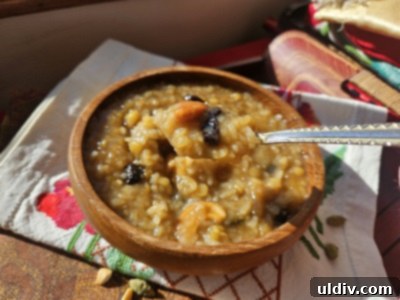
Crafting Your Perfect Pongal: Diverse Preparations and Ingredients
One of the beauties of traditional Indian cooking lies in its adaptability and regional variations, and Sweet Pongal is no exception. According to Archana, the preparation of this seemingly simple dish offers a spectrum of possibilities, catering to different tastes, available ingredients, and even dietary preferences. She explains, “There are many different ways to make this simple, Sweet Pongal Recipe. The traditional Sakkarai Pongal is made with a simple combination of rice, moong dal, jaggery and ghee with cardamom toppings. It can be extended by adding coconut to make it rich and creamy. Further, the rice can be skipped, and thick Poha can be added to make it a rice-free ponga recipe. Lastly, you can use a range of millets and broken wheat if you need a healthy variant.” This versatility means that whether you seek a classic, indulgent rendition or a modern, health-conscious alternative, Sweet Pongal can be tailored to your liking. The inclusion of coconut introduces an added layer of richness and aromatic depth, while the use of Poha (flattened rice) or various millets offers a gluten-free or healthier twist, without compromising the authentic essence of this beloved dessert. These variations speak volumes about the ingenuity of Indian culinary traditions, ensuring that the spirit of Pongal can be celebrated by everyone.
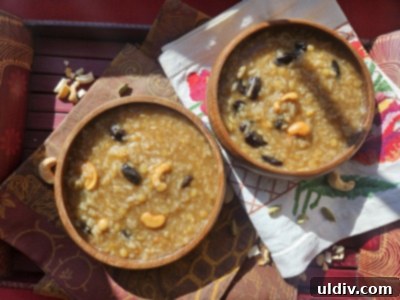
My Personal Culinary Adventure: Crafting Sweet Pongal at Home
Inspired by Archana’s wisdom, I embarked on my own Sweet Pongal journey. While her recipe suggested coconut, a staple I unfortunately didn’t have on hand, I confidently proceeded with a recommended substitution. Jaggery, the traditional sweetener, was replaced with a batch of homemade brown sugar – a simple yet effective trick I often employ by mixing 1 tbsp of rich blackstrap molasses into 1 cup of granulated sugar. This ingenious swap not only saved a trip to the store but also imparted a unique depth of flavor to the dish. The cooking process itself became a meditative act. On my stovetop, I gently combined the moong dal and rice, stirring them slowly and deliberately from time to time. This patient approach allowed the rice to gradually release its natural starches, creating an astonishingly luxurious creaminess that developed little by little. I was truly amazed by the transformation, as the grains softened and blended into a harmonious, velvety texture.
The magic didn’t stop there. With no milk needed, the dish achieved its incredible richness through generous amounts of ghee, which lent a nutty, fragrant base. Plump, sweet raisins burst with flavor, while the warmth of cloves and freshly ground cardamom infused every spoonful with an irresistible aroma. The final touch came with candied cashews, coated in the molasses-infused sugar syrup, adding a delightful crunch and an extra layer of sweetness. Each spoonful was a decadent celebration of wholesome ingredients, a symphony of textures and flavors that conjured vivid echoes of a blissful harvest, even as winter raged outside. This homemade Sweet Pongal was not merely a dessert; it was an experience, a connection to ancient traditions, and a deeply satisfying culinary triumph.
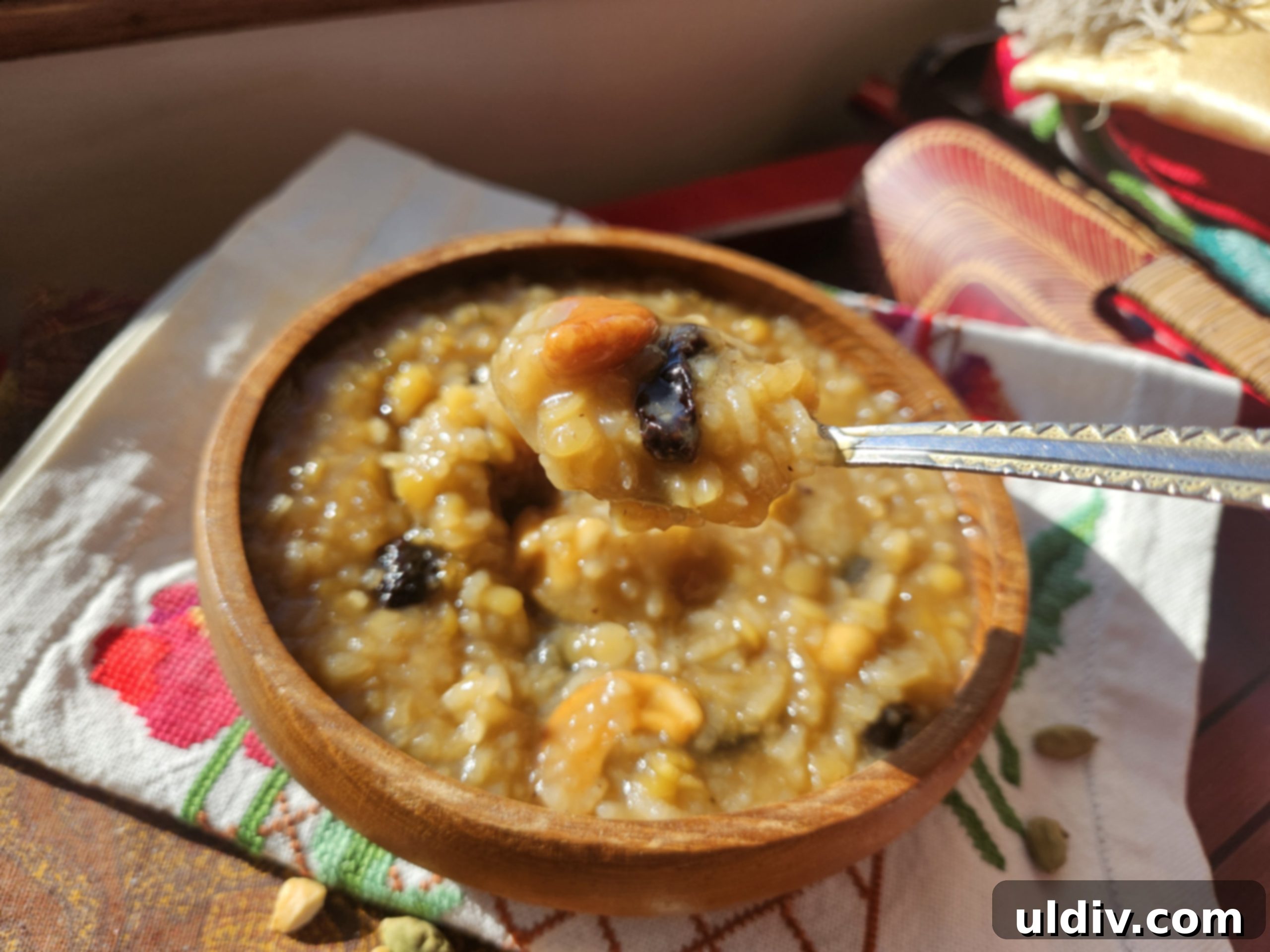
Winter’s Embrace, Spring’s Promise: A Taste of Joy
This morning, as I drove through a landscape blanketed in fresh snow, large, clumpy snowflakes fell thick and fast, clinging to trees and swirling against my windshield, beaten by the relentless winds. Yet, my mind found itself wandering far from the wintry scene. Instead, I envisioned fields under clear blue skies, brimming with fresh harvests, enmeshed in the vibrant beauty of community and belonging that defines the Pongal festival. A genuine laugh escaped me as a snowblower rumbled past, leaving a thick layer of powdery snow on my windshield. Here I was, truly happy at a frigid 10 degrees Fahrenheit, a sensation I hadn’t expected from such a cold day. This unexpected joy, this sense of warmth despite the cold, was undoubtedly a gift from the Sweet Pongal I had prepared.
The days and nights are undeniably snowy now, painting the world in shades of white and grey. But beneath this frosty veneer, there’s a quiet assurance that soon enough, the journey will resonate with the warmth and light of sunshine. In the interim, a simple, steaming bowl of Sweet Pongal is all that’s needed to quench my thirst for joy and the vibrant energy of summer. It’s a comfort food that transcends seasons, a culinary hug that warms from the inside out. I find myself laughing at you, winter, and surprisingly, I am loving you – unexpectedly – for giving me the perfect excuse to discover such a beautiful, heart-warming tradition. Food, in its purest form, has this incredible power to transport us, to connect us with cultures far away, and to instill an unexpected happiness even in the bleakest of seasons.
“The woods are lovely, dark and deep,
But I have promises to keep,
And miles to go before I sleep,
and miles to go before I sleep” – Robert Frost,Stopping by Woods on a Snowy Evening