
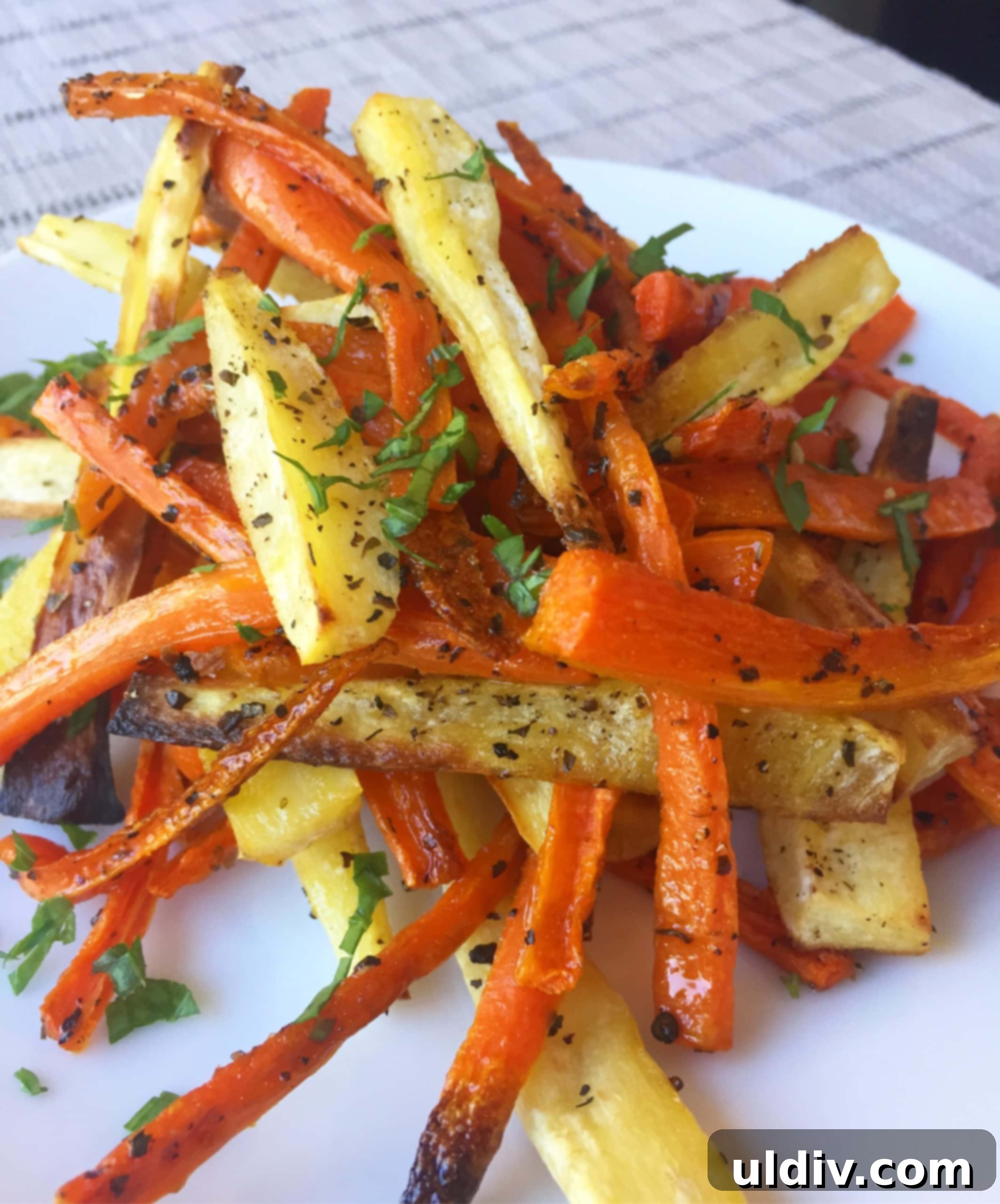
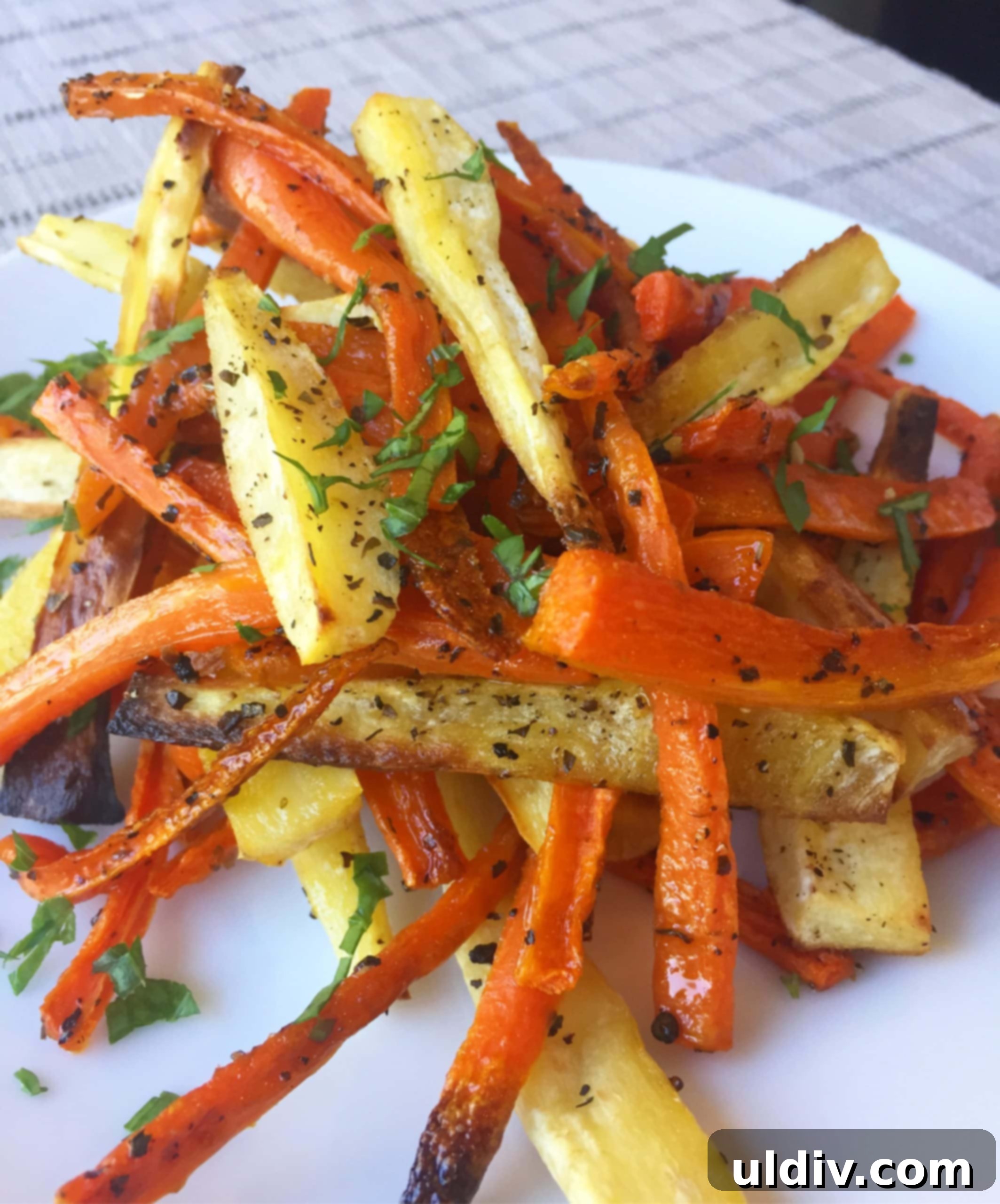
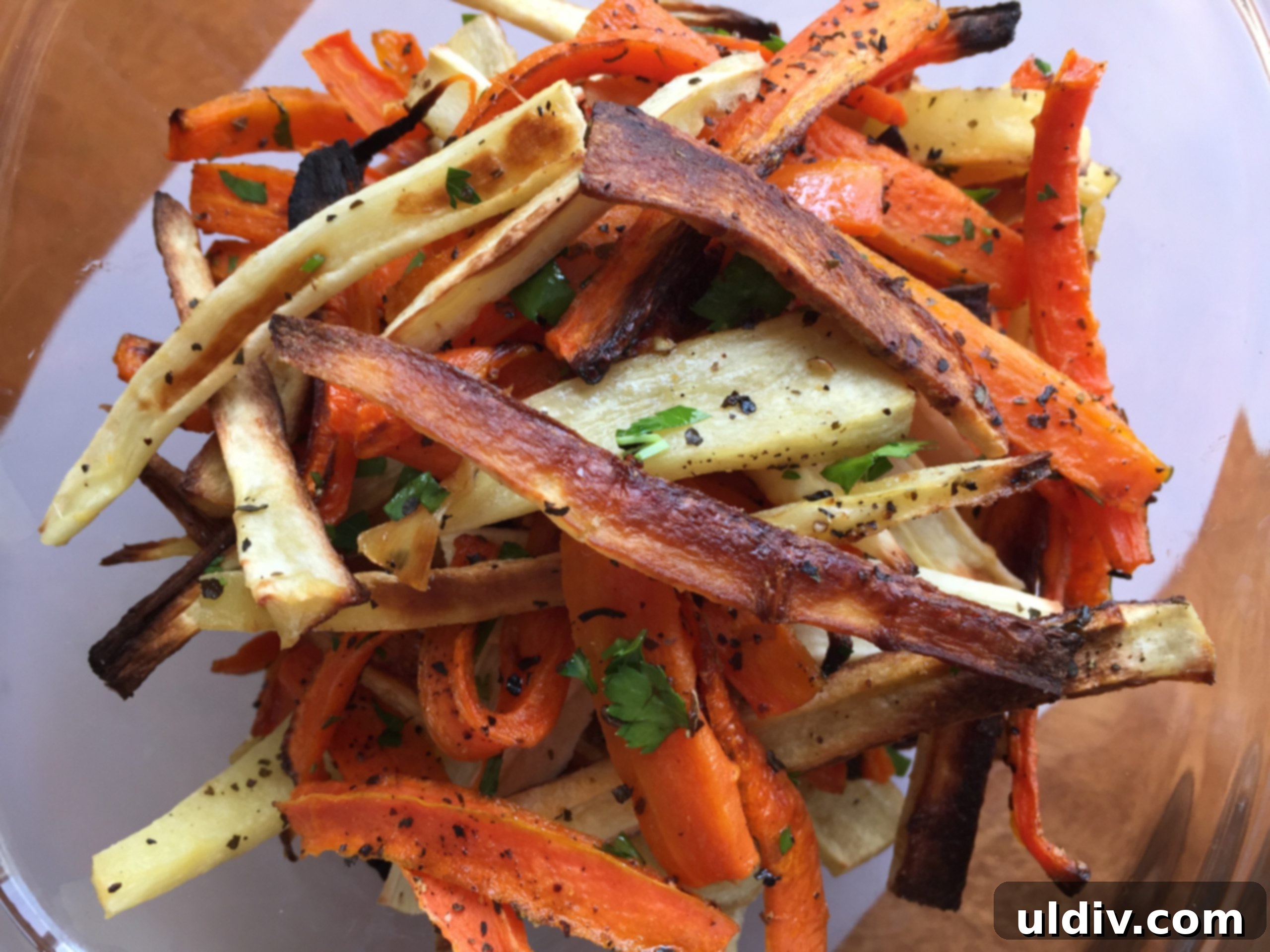
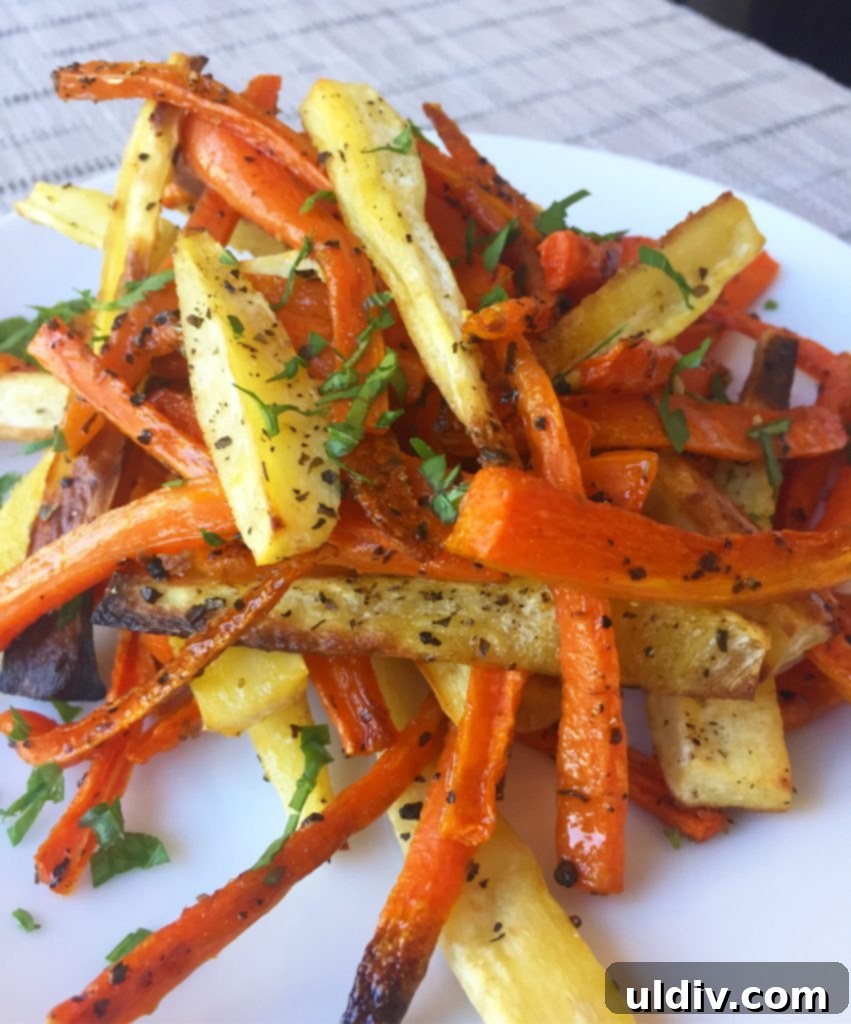
Transforming humble root vegetables into a culinary delight has never been simpler. Roasting carrots and parsnips is a remarkably easy, hands-off cooking method that significantly intensifies their natural sweetness and savory depth. This process creates a perfect, effortlessly delicious side dish that’s sure to impress your family and guests. Imagine tender yet crispy “fries” made from fresh carrots and parsnips, simply tossed with high-quality extra virgin olive oil, a touch of kosher salt, and freshly ground pepper, then roasted to perfection on a preheated baking sheet in a hot oven. These homemade roasted carrot and parsnip fries are not just a healthy alternative to traditional potato fries; they are a flavorful experience in their own right, promising a delightful blend of earthy and sweet notes with every bite.
Life can be incredibly busy, often feeling like you’re constantly on the go. On such demanding days, I rely on cooking methods that minimize my active time in the kitchen while still delivering delicious, wholesome meals. This is where the beauty of “hands-off” cooking truly shines. Strategies like sheet pan suppers, slow cooker entrees, and one-pot meals form the foundation of my culinary approach when time is of the essence. They allow me to prepare nourishing food with minimal fuss, ensuring that even on the busiest evenings, a home-cooked meal is within reach.
Among my collection of go-to recipes, a large baking sheet of roasted vegetables, such as these irresistible Roasted Carrot and Parsnip Fries, stands out as a consistently reliable and rewarding side dish. From the moment of prep to the serving stage, it demands barely any active attention, making it a dream for hectic schedules. This simplicity, combined with the incredible flavor development, makes it a staple in my kitchen and one that I believe will quickly become a favorite in yours too.
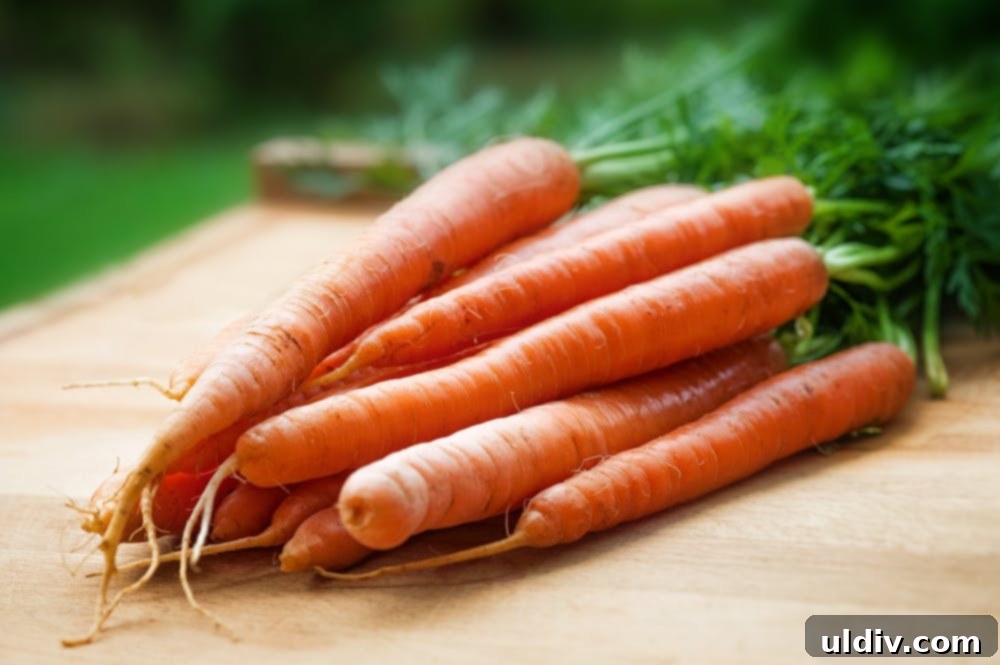
The magic of roasting lies in its elegant simplicity. Achieving beautifully roasted vegetables requires just a few basic components: a good quality oil, such as extra virgin olive oil, for flavor and crispiness; kosher salt and freshly ground pepper to enhance the natural taste; a sturdy baking sheet; and a scorching hot oven. These humble ingredients, when combined with the high heat of the oven, unlock a depth of flavor that other cooking methods simply cannot achieve. It’s a testament to how the most straightforward techniques can yield the most spectacular results.
Roasting is more than just cooking; it’s a transformative process that adds an unparalleled flavor punch to almost any vegetable. Whether you’re roasting potatoes, asparagus, bell peppers, or tomatoes, the results are consistently superior. The intense heat coaxes out the vegetables’ inherent sweetness, caramelizing their natural sugars and creating a delightful complexity. This caramelization also leads to those coveted smoky, charred edges and a wonderfully crisp exterior, adding textural contrast that elevates the entire dish. This is the Maillard reaction at its finest, creating hundreds of new flavor compounds that make roasted vegetables incredibly addictive and incredibly nutritious.
Mastering the Art of Roasting: Hard vs. Soft Vegetables
One of the keys to successful vegetable roasting is understanding the varying cooking times for different types of produce. For optimal results and even cooking, it’s always best to group vegetables with similar densities and water content together on the same baking sheet. This ensures everything cooks perfectly without some ingredients becoming mushy while others remain undercooked.
- Hard, Dense Vegetables: Root vegetables such as sweet potatoes, carrots, parsnips, and beets typically require a longer roasting time due to their firm texture and lower water content. Their ideal roasting duration can range from 25 to 60 minutes, largely depending on how thickly they are cut. Thicker cuts will naturally need more time to become tender throughout.
- Softer, Water-Rich Vegetables: In contrast, vegetables like zucchini, mushrooms, broccoli florets, and cauliflower have a higher water content and a more delicate structure, meaning they will roast much faster. These softer varieties are generally ready in a shorter window, typically 15 to 20 minutes, yielding beautifully tender yet slightly crisp results.
Regardless of whether you are roasting hard or soft vegetables, a consistent oven temperature of 425 degrees Fahrenheit (220 degrees Celsius) is generally recommended. This high heat is crucial for achieving that desired caramelization and crispy exterior without overcooking the interior. With a little practice, you’ll instinctively know when your vegetables have reached peak roasted perfection.
Expert Tips for Unforgettable Roasted Vegetables
Achieving perfectly roasted vegetables, with their golden-brown edges and tender interiors, is a simple task once you know a few key tricks. These expert tips will help you elevate your roasting game, ensuring every batch is a resounding success:
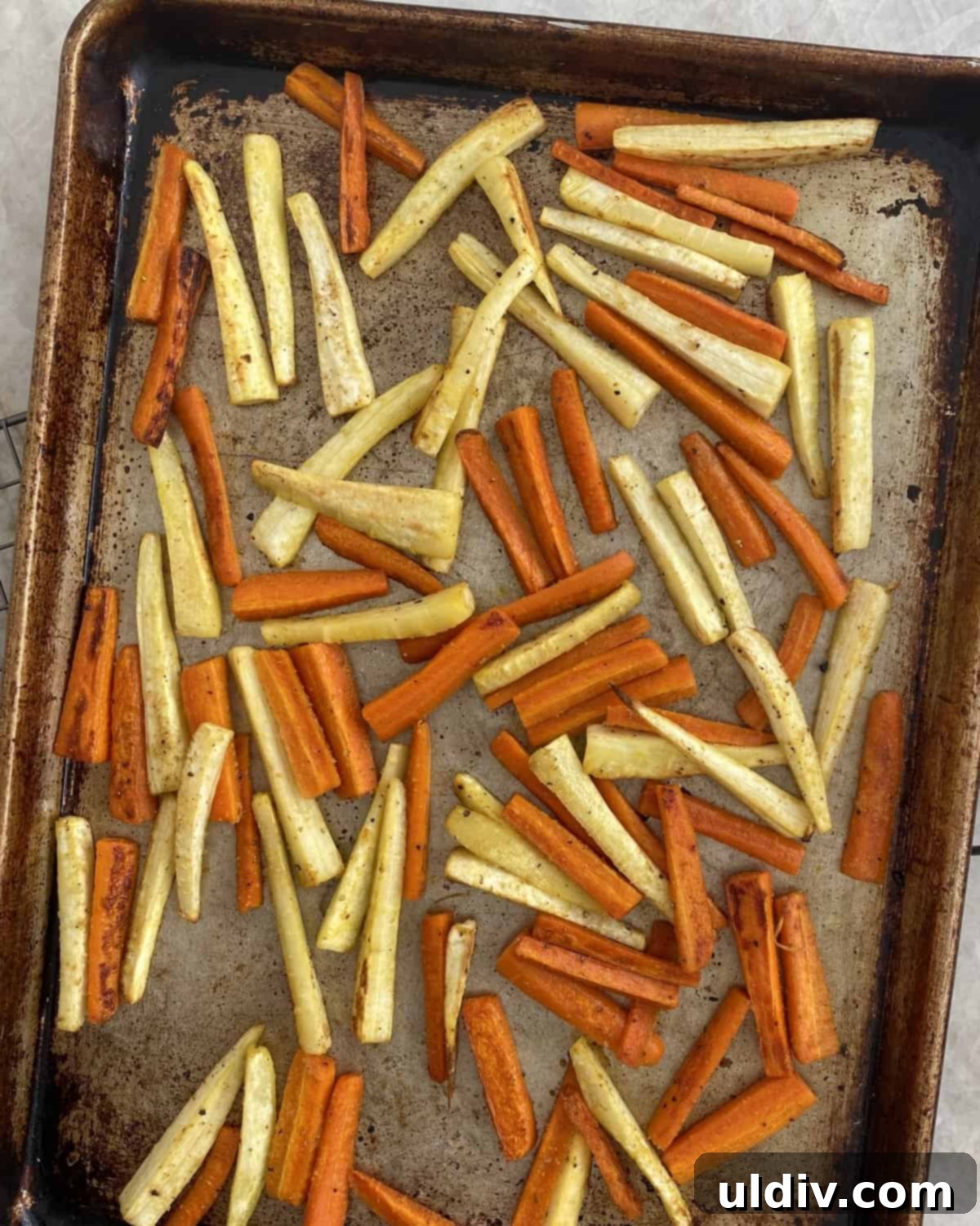
- Uniform Cutting is Key: To ensure all your vegetables cook evenly, it’s crucial to cut them into pieces of similar size and thickness. For our Roasted Carrot and Parsnip Fries, aim for thin, long pieces, roughly ½ inch thick and 3 inches long. This consistency ensures they all become tender and beautifully caramelized at the same rate.
- Don’t Skimp on the Oil: Oil is essential for flavor, crispiness, and even browning. Toss your cut vegetables generously with enough oil – such as extra virgin olive oil – until each piece has a visible shimmer. The oil acts as a heat conductor, facilitating the Maillard reaction and preventing sticking, resulting in that desirable toasty brown color and rich flavor.
- Preheat Your Baking Sheet: This might seem like an extra step, but preheating the baking sheet along with your oven is a game-changer. A hot baking sheet provides an immediate blast of heat to the vegetables upon contact, giving them a jump start on creating that crispy, caramelized exterior we all crave. It’s the secret to avoiding soggy roasted vegetables.
- Give Them Space: Crowding the baking sheet is one of the most common mistakes in roasting. If the sheet is overloaded, the vegetables will release their moisture and steam rather than roast, leading to a soft, limp texture instead of a crisp one. If necessary, use two baking sheets to ensure sufficient space between pieces, allowing the hot air to circulate freely around each vegetable.
- Flip for Evenness: About halfway through the total roasting time, give your vegetables a good flip or stir. This ensures all sides get exposed to the direct heat of the baking sheet and the circulating hot air, promoting even cooking and consistent browning on all surfaces.
- Season Thoughtfully: While you season before roasting, always taste and adjust your seasoning after the vegetables come out of the oven. Roasting can mellow some flavors, and a final sprinkle of salt, pepper, or a toss with fresh herbs (like parsley, thyme, or rosemary) can brighten and finish the dish beautifully.
Armed with these fundamental techniques and insider tips, the possibilities for creating delicious roasted vegetable side dishes are truly endless. Don’t hesitate to experiment with different vegetable combinations, spices, and herbs to discover your own unique and flavorful creations. Roasting transforms ordinary vegetables into extraordinary culinary experiences with minimal effort.
More Delicious Vegetable Dishes to Explore
If you’ve enjoyed the simplicity and incredible flavor of these roasted carrot and parsnip fries, you’ll love exploring other vegetable-centric dishes that are both easy to make and bursting with taste. Expanding your repertoire of vegetable sides is a fantastic way to introduce more nutrients and diverse flavors into your meals. Here are a few more recipes that promise to delight your palate and become new family favorites:
- Baked Crispy Oven Fries: A classic done right, achieving the perfect crispiness without the deep fryer.
- Crispy Garlic Broiled Broccoli: Quick, easy, and incredibly flavorful, with tender-crisp florets infused with garlic.
- Cheddar Stuffed Potatoes: A hearty and comforting side that can easily double as a light main course.
- Slow Cooker Summer Ratatouille: A vibrant and aromatic vegetable stew that simmers to perfection with minimal effort.
Recipe: Roasted Carrot and Parsnip Fries
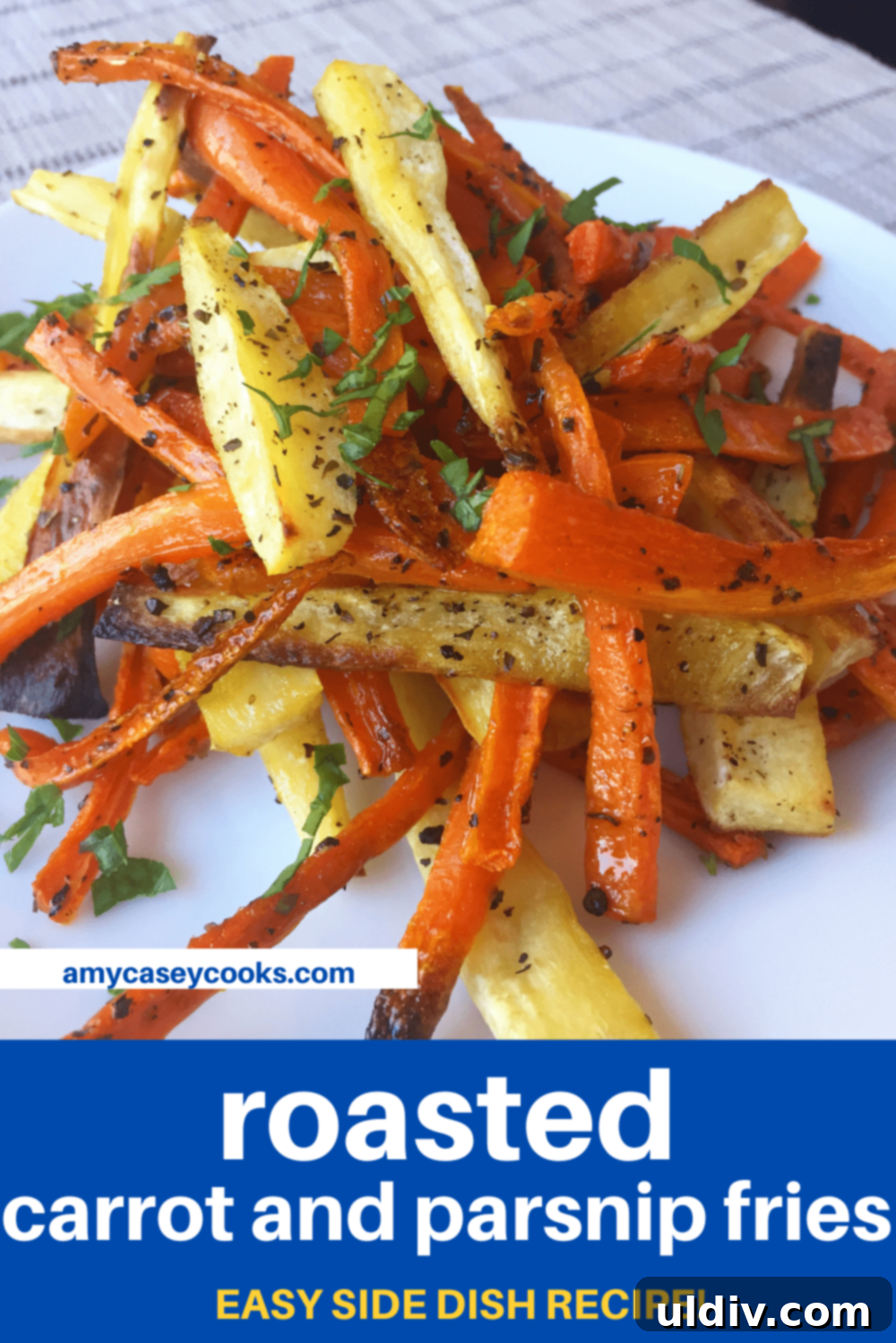
Roasted Carrot and Parsnip Fries
Roasting carrots and parsnips is a hands-off cooking method that intensifies their flavor, creating a delightful and easy side dish.
Pin Recipe
10 minutes
25 minutes
35 minutes
6
129 kcal
Amy Casey
Ingredients
- 1 pound carrots, peeled
- 1 pound parsnips, peeled
- 2 tablespoons olive oil
- ½ teaspoon garlic powder
- 1 teaspoon salt
- ½ teaspoon pepper
- 2 tablespoons chopped fresh parsley
Instructions
- Preheat oven to 425 degrees Fahrenheit (220 degrees Celsius). Place a large rimmed baking sheet on the lowest oven rack while the oven is heating. This step is crucial for achieving crispy fries.
- Cut the peeled carrots and parsnips into thin “fries,” approximately ½ inch thick and 3-inches long. Place the cut vegetables into a large bowl and toss thoroughly with the olive oil, garlic powder, salt, and pepper until every piece is lightly coated.
- Carefully remove the preheated baking sheet from the oven. Spread the seasoned carrots and parsnips evenly in a single layer on the hot baking sheet. Ensure not to overcrowd the pan, as this can lead to steaming instead of roasting. Return the pan to the oven and roast for about 25 to 30 minutes, flipping the vegetables once halfway through the cooking time to ensure even browning and crispiness. The fries should be cooked through, tender on the inside, and crispy brown in spots on the outside.
- Once roasted to perfection, remove the fries from the oven. Transfer them to a serving bowl, sprinkle generously with fresh chopped parsley, and adjust seasoning with additional salt and pepper to taste before serving immediately.
Nutrition
Calories: 129 kcal |
Carbohydrates: 21.4g |
Protein: 1.6g |
Fat: 4.9g |
Saturated Fat: 0.7g |
Sodium: 448mg |
Fiber: 5.7g |
Sugar: 7.4g
Tag @amycaseycooks on Instagram so we can all admire your work!